Travel back in time 114 years to the summer of 1912. This imposing figure is named Kopeli, the Chief of the Snake Clan Priests at the Hopi Snake Dance Ceremony in the Pueblo of Walpi, Arizona.
I have cleaned-up this stunning photo by Franklin Price Knott which was taken in 1912 but not published by the National Geographic until 1916. it was taken using an early colour glass-plate process and isn't colourised.
Head of failing Royal Mail sees his pay rise from 2.1 million to 6.9 million. That’ll go unnoticed by most, but when train drivers get a pay rise people are up in arms. What a pathetic country this is.
Sir John Major throws shade on the new prime minister in waiting. "Mr Burnham has had great success, I'm told, with buses," he says. "A little different from dealing with Xi, Putin, Trump, Macron, Merz."
Read more: https://t.co/MIGIjW42jj
Does anyone know why life saving air ambulances have to rely on funding from charities
But helicopters for the Royal Family are paid for by the tax payer?
BREAKING: I've secured a parliamentary debate next week on banning all MPs' second jobs.
Farage has pocketed over £1 MILLION from outside "work" since the General Election
Being an MP is a full-time job. No MP should be out chasing lucrative second jobs.
Let's end this racket!
Every British PM’s nightmare
With Keir Starmer expected to fall on his sword shortly, here is my take on the conundrum facing Andy Burnham, indeed any and every British PM.
The true nature of Britain’s ‘special relationship’ with the United States has far more to do with American financiers’ willingness to keep borrowing to purchase British government debt than with history, culture or Britain’s defence needs. This is the burden under which every UK Prime Minister must labour.
Mike Tyson famously said, “Everyone has a plan until they get hit”. The same could be said of prospective British prime ministers, especially after Liz Truss's spectacular defenestration. They all have a plan until the guilt market hits them. Andy Burnham, Nigel Farage, my friend Zack Polanski will have to face this, if they ever move into 10 Downing Street. I think they know it. But I doubt whether they appreciate the true magnitude or nature of their predicament.
Conventional wisdom has it that the bond market comprises people looking to invest their savings in a government's debt. They seek the right balance between a higher interest rate and the increased risk this implies. For example, higher bond yields may signal that the market expects future inflation to reduce the value of the fixed interest payments that their bonds will yield. Worse still, it may foreshadow a risk of government default, as occurred in Argentina and Greece.
That’s more or less what first year economics and finance students are taught. And it’s all true. Except that, in the case of the United Kingdom, this story misses the most fascinating and worrying aspect of its government bond or gilt market: The British government’s ability to refinance its public debt of almost 3 trillion pounds does not depend on savers choosing to invest in gilts. In fact, the British government’s ability to sell gilts hinges heavily on the willingness of numerous US-based financial institutions to borrow substantial sums of dollars to purchase British gilts, which they then use as collateral to borrow for their own purposes within the US.
And there’s the rub. There is a world of difference between needing to borrow from savers and from relying on speculators who borrow themselves to lend you. Savers who lend to you focus on your long-term ability to repay them. They may tolerate your desire to make infrastructural investments that could increase your debt in the short term, in return for future profits that will help you repay them when their bonds expire. However, speculators who borrow in order to lend are a different beast entirely. They are much jumpier and prone to margin calls: situations where, if the bonds they purchased from you begin to lose value, fearing they will not be able to repay their own creditors, they dump your bonds thus turning their decline into a crash.
The question arises: Why are British bonds, or gilts, so much more reliant on American speculators borrowing money to buy them than German bunds, Japanese bonds, Italian bonds or Greek bonds? Why does every British government rely so heavily on American leveraged capital inflows?
It all started in the 1950s when the City of London discovered how to avoid following the British Empire down the road to oblivion. The trick was to carve out a niche for the City within the emerging dollar empire, which was institutionalised within the Bretton Woods system. American financiers faced rigid capital controls within that system, but the City of London was able to alleviate these due to three invaluable features.
First, London’s trading expertise and legal system offered American financiers efficiency with immunity from all sort of interventions, including democratic accountability. Secondly, Britain’s network of offshore jurisdictions offered fabulous tax-minimisation opportunities. And, thirdly, London quickly became the holding depository of a torrent of petrodollars and eurodollars, not to mention the shadowy dollars created outside the United States by foreign bankers.
Thus, the Great British paradox: while the UK's real economy was in decline, the City of London was flourishing. When the Bretton Woods system collapsed in the 1970s, American financiers discovered another use for the City: they borrowed dollars in the US short-term to buy long-term UK government gilts, which they then sold quickly to repay their loans. They would then repeat this process again and again to profit handsomely. This is how the British government became reliant on leveraged US institutions. In order to continue operating as usual, London today requires American balance sheets that are willing to expand through borrowing and use British gilts as collateral in order to maintain liquidity in the US.
Put differently, the flipside of the City’s success story is that, even though it borrows in a currency that it prints, the UK is not financially sovereign. Yes, the City occupies a strategically important position within the global dollar system but the price for this is that the UK government’s sovereignty is circumscribed by its priority to maintain the City’s central position in American finance. While this remains the priority, the occupant of 10 Downing Street is like the captain whose powers are limited to re-arranging the deck chairs on the Titanic.
Is there an alternative to this peculiar form of financial subservience to US-based leveraged financiers? Yes, but it requires a willingness to accept a falling pound and falling house prices while increasing public investment through a new investment bank that issues bonds supported by the Bank of England.
Any Prime Minister who tries to maintain Britain’s financial servitude to US capital while also investing in public goods may well put Britain on a path towards the IMF, whose sole purpose, lest we forget, is to create the political leverage that will bring about – like it did in Greece – the permanent loss of sovereignty over tax and spending policy. The question is: Do the current contenders for Britain’s top job understand this?
https://t.co/xGrWjjcudY
"How on earth have have we ended up in this position?" asks Laura Kuenssberg, who along with Chris Mason, Henry Zeffman and co, have pushed long and hard for us to wind up in exactly this position
#bbclaurak#BBCBreakfast
It can take many leaders years to grow into the statesman you became in just two years.
European and Ukrainian security is stronger because of you.
Thank you, dear Keir.
Open letter to Prime Minister Sir Keir Starmer
Dear Prime Minister,
I am writing as a Labour supporter who is deeply concerned by the growing pressure surrounding your leadership, but also as someone who has developed a genuine admiration for the way you conduct yourself.
What I respect most about you is your seriousness.
You are not a political showman. You do not rely on constant drama, easy slogans or theatrical promises. You come across as disciplined, intelligent, decent and deeply conscious of the responsibility that comes with leading the country.
In an age when politics is increasingly dominated by noise, outrage and personality cults, your calmness is a strength.
Your resilience is also admirable. You have faced relentless criticism, personal attacks and an often hostile media environment, yet you have continued to behave with dignity. You rarely lash out. You do not appear consumed by ego. You keep returning to the work.
That matters to me.
Britain has already endured years of political chaos, revolving-door prime ministers and governments more interested in internal warfare than governing. The country does not need another leadership contest. It needs stability, seriousness and delivery.
You were elected with a mandate to govern. You inherited damaged public services, weak growth, overcrowded prisons, an NHS under enormous pressure and public trust worn down by fourteen years of Conservative government. None of that can be repaired overnight.
I hope you will remain Prime Minister and continue the work until the next general election in 2029.
Labour MPs should understand that removing you now could trigger weeks of division, uncertainty and damaging promises made during a leadership contest. The press would feed on the chaos, financial markets could react, and Nigel Farage and Reform would be handed exactly the political instability they want.
This is not the time for Labour to imitate the Conservative Party.
I also believe your personality is better suited to this difficult period than many people appreciate. You are methodical rather than impulsive, measured rather than reckless, and focused on governing rather than performing.
Those qualities may not always generate exciting headlines, but they are the qualities a serious Prime Minister needs.
Leadership is not only about popularity. It is about character.
It is about remaining calm when others panic, showing discipline when others chase attention, and continuing the difficult work when the noise becomes unbearable.
Please hold the line.
Many Labour supporters still believe in your integrity, your determination and your sense of duty. Britain needs less political theatre and more delivery, and you deserve the opportunity to complete the job the country elected Labour and you to do.
Yours sincerely,
Thomas Soede
If Keir Starmer does resign, history will look back on his reign and scratch its head as to why the hell he was so hated.
On paper, he's probably delivered more to working British people in such a short time than any PM for decades.
After inheriting an absolute mess: NHS waiting lists fallen. Worker's rights improved. Rail operators nationalised. Improved relations with EU and improved UK's global reputation. Removed non-dom tax status. Halved childcare costs. Boosted state pensions. Lowest homicide rate in 50 years. Lifted 550k children out of poverty. Immigration vastly reduced.
We are in the age of billionaire funded misinformation, whose sole purpose is to topple democratically elected leaders, and insert leadership that favours the wealthy elites over the working people. Looks like the game plan is working...
A) This a properly brilliant piece of investigative journalism by BBC & @hopenothate. Huge kudos to all involved.
B) The Kremlin operative who BBC names as directing arson attacks against Keir Starmer was taught his tradecraft by…drumroll…Sergei Nalobin !!! Pictured here with Boris Johnson. Also: the star of our podcast series, Sergei & the Westminster Spy Ring! Wtaf
If the Michelle Mone yacht worth £10 million is confiscated and the £148 million owed to taxpayers is 'paid back' that's £158 million right there in the defence pot.
Oh and let's not forget the £500 million owed in taxes by M'Lord Bamford.
#BBCLauraK
EXCLUSIVE: A multi-millionaire banker descended from royalty has been arrested by police hunting the 'Putney Pusher', the Daily Mail can exclusively reveal.
The suspect was detained today at his £1.4million home in west London.
A director at a private bank, he is a decorated former British Army officer who served in several major conflicts.
His arrest comes nearly ten years after a jogger shoved a female pedestrian into the path of a double-decker bus on Putney Bridge.
Did you know that many people working in supermarkets such as Tesco and Asda still qualify for Universal Credit because their wages aren’t high enough to cover the cost of living?
That’s not a welfare problem. That’s a low-pay economy.
Taxpayers end up subsidising low wages while working people are told to work harder. Britain doesn’t have a benefits culture problem. It has a wage problem.
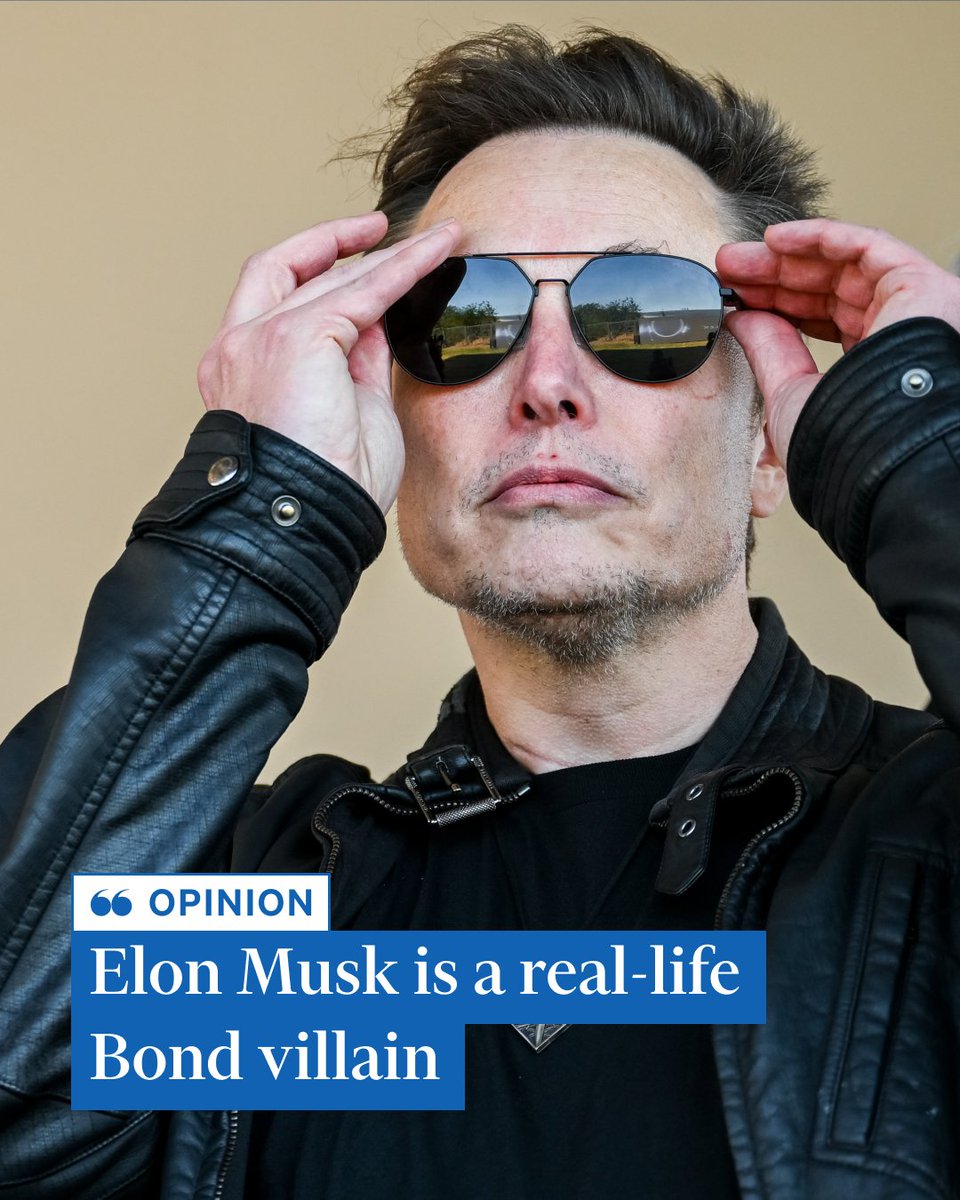
Opinion: You might have thought the world’s richest man had enough on his plate teeing up history’s biggest IPO. Yet he has been devoting many of his waking hours to stoking up racial hatred in Britain on his social media site. https://t.co/1C09ebAgPg