South African migrants from further away are doing more poorly. But a general pattern of decline for SA birds is best predicted by bird size (rather than dietary guild). The exception: the worst faring species is Botha's Lark https://t.co/9tcUmbmaE0
Latest issue of Ostrich features several articles on Cape Gannet (Bird of the Year). In celebration of the recent IOCongress, all articles are free to view for a limited time only (so download while you can!) @ostrichJAO https://t.co/p9HB2duJsS
Global change resulting in the loss of pristine natural environments results in ‘ecological grief’. In this article I used ‘sentiment analysis’ to explore if this is reflected in a set of scientific journals and the articles published therein.
https://t.co/bXZNfsXHQi
It's a full day ahead of us today with great speakers and a program that is jam-packed with fascinating content!
Don't forget to tag us in your posts when you share your thoughts!
See you online at #IOCongress2022
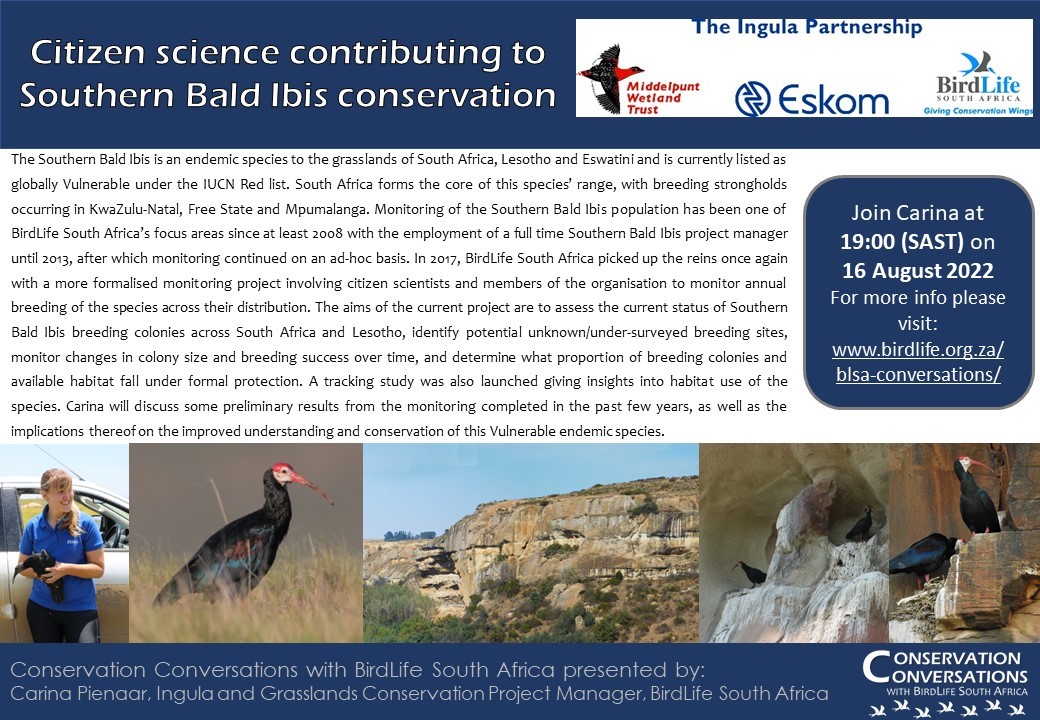
Do not miss Carina Pienaar's talk about Southern Bald Ibis research and conservation on Tuesday 16 August. There's more information at https://t.co/LF7xeAhbkK @BirdLife_SA@BirdLifeAfrica@BirdLife_News
It is pleasing to see results like this: constant monitoring reveals how birds are responding to a conserved landscape in Nigeria, a refuge for palearctic migrants https://t.co/9R4PEywE3C @BirdLife_SA@BirdLifeAfrica#ornithology
No good news for Africa’s Storks! Jonah Gula and his team report on range and population declines for most species.
https://t.co/4JXSkBOR11 #ornithology
Which birds do and don’t respond to ‘pishing’? Eckhart Buchmann & Chevonne Reynolds report on a neat control experiment to find out: https://t.co/u24y2pzTIm @ostrichJAO
As part of a round table on Advancing African Ornithology @io_congress we're doing a short survey for anyone who has worked in Africa https://t.co/ZI6cCanZWx Please complete & share #ornithology @krista_natasha @aplori_org @Fitztitute