@NoHelmetsReq I was amongst the Samoa fans and the atmosphere was the best I’ve ever experienced in any sporting arena, bar none. It was truly fantastic and it will forever be remembered.
#EPP ‘Or maybe a different storage solution would be preferable – more on-shore salt caverns, for example, which comprise most of the rest of Britain’s storage capacity’ https://t.co/0OOd0Kc6I3
#EPP This message suggests @energy_pathways is highly likely to get Government financial support either through GB Energy or National Wealth Fund! Just a matter of when in my opinion.
https://t.co/Y7SjlifIax
#EPP 👉 Long duration energy storage is increasingly part of the answer, with annual LDES additions set to quadruple to 2 GW in 2026.
https://t.co/Ce9pDxGZXW
#EPP The message can’t be any clearer from the UK Government. They want clean technology and energy security and are prepared to financially support it. That’s why I’m confident GB Energy will invest in the MESH Project. https://t.co/qRUH2cRNXb
So let’s look closer at #EPP EnergyPathways
Progressing and not reliant on the gas storage license:
World’s Largest CAES project (UK’s largest LDES): Based on the storage capacity, output duration and benefitting from massive curtailed wind energy, estimates for revenue pa are around £150m+ (may be higher with cavern expansion and government subsidy or cap and floor benefits)
The Irish Sea has two huge wind farms to come online in the shape of Mona and Morgan. So expansion of the salt caverns with Siemens Energy is likely. Also EPP own the IP for CAES tech.
The project lifespan is 25 years+ so LDES alone is a company maker.
Reliant on Gas Storage License:
Gas Production: Marram alone has 46BCF of gas, based on current spot pricing that’s worth £500m (this doesn’t include Knox or Lowry fields) the figure will be a little lower due to the provision of cushion gas needed to facilitate storage.
46BCF is just natural gas and doesn’t include nitrogen in the mix which will be utilised to create clean ammonia.
Gas Storage: Marram alone has the equivalent storage capacity of Centrica’s Rough Facility 50-60BCF
The revenue value of gas storage is based not just on gas in place, but the opportunity for volatility trading (fill with cheap summer gas to sell on winter peaks)
Based on Marram alone annual revenues are approx £400m+ (but based on the UK’s low gas storage capacity this is conservative)
Hydrogen/Ammonia: This is a harder market to asses as an emerging sector. So based on the initial projected feedstock of 20,000 tonnes let’s value it when it’s used to create Ammonia as that market is very real.
Production of 110,000 tonnes pa is projected. The last domestic UK ammonia producer closed in 2023 and as of 2027 there’ll be a border levy on imports so this will affect chemical & farming Industries. Annual revenues for ammonia, based on volatile pricing could be between £55-100m pa.
Graphite: High grade synthetic Graphite (circa 60,000 tonnes pa) is set to be refined (With Mitsui Japan) to create nuclear/military grade graphite, elevating the price dramatically. Company estimates revenues of £500m pa
EnergyPathways has a suite of revenue streams offering diversification through products and industries at a time where they’ll be the only domestic producer of graphite and ammonia, they’ll effectively be doubling the UK energy storage capacity at a time of critical need and urgent demand. And it requires little or no government funding (however GB Energy or National Wealth Fund may invest)
The offering is also diverse enough to be valuable to any government from Labour to Reform so it is in effect apolitical. (Is Reform going to turn down homegrown North Sea gas, domestic graphite for defence and Ammonia for Jeremy Clarkson and the farming community?)
The tier one partnerships with Siemens Energy, Wood & Costain give the project credibility in the eyes of the government, as does the fact the world’s and UK’s largest CAES/LDES facility is going ahead at pace and it makes the project very real.
MESH is proposed as the flagship project for EPP and Siemens and “one of many” projects that will target favourable geology/infrastructure in the North Sea Continental Shelf.
The risk was that the storage license wouldn’t be granted… But that is now a thing of the past 👏🏻
The second argument is that “it’s not operating until 2030, so why buy now”, the counter is that at £12m MCAP, when project level funding hits and now the GSL is granted and the government and media takes up the story this stops being worth £12m.
The project will no longer be a “retail” focussed stock and with projected yields for investors to be 25% per annum over a 25 year lifespan then pension funds, institutions and family offices take over the register, and they invest for significant and sustained future growth not a quick 10% slice.
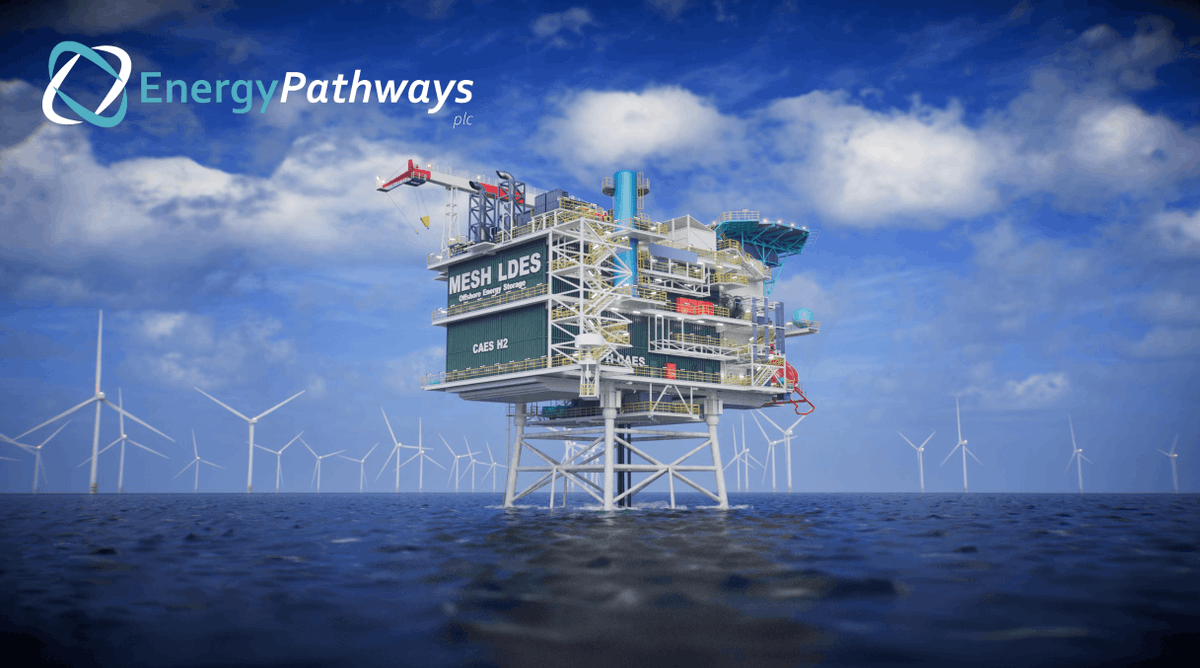
@ftenergy The planned MESH Project has already been designated by the UK Government as a project of “national significance” and will comprise compressed air energy storage (CAES), natural gas storage transitioning to hydrogen storage and complementary hydrogen production #epp
EnergyPathways #EPP is delighted to announce it is to be awarded a Gas Storage License (GSL) by the North Sea Transition Authority for its flagship MESH project located in the East Irish Sea and onshore in Barrow-in-Furness.
This decision marks a major milestone in the development of the wider MESH project, with the GSL spanning a substantial offshore area that could support up to 60 large-scale salt storage caverns with potential for multi terawatt-hour scale energy storage and is expected to be Britain’s largest integrated energy storage facility.
The planned MESH Project has already been designated by the UK Government as a project of “national significance” and will comprise compressed air energy storage (CAES), natural gas storage transitioning to hydrogen storage and complementary hydrogen production for clean power and sustainable industry uses.
EnergyPathways plans the following:
· A natural gas storage facility that will double Britain’s meagre gas storage capacity and provide up to 6 days of national energy supply, securing Britain’s energy future and reducing its over-dependence on expensive gas imports.
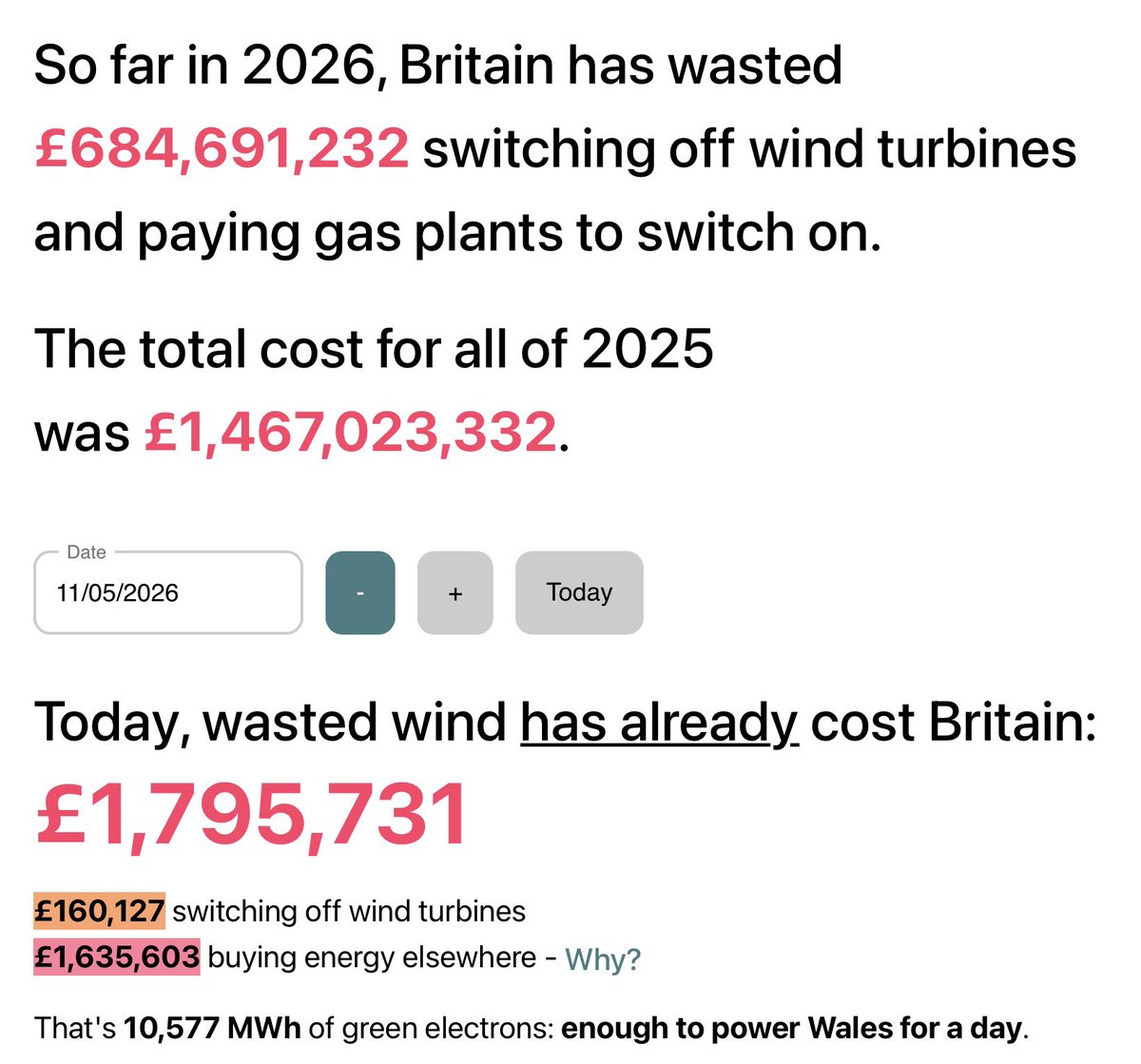
· CAES storage of 300 MW / 55 GWh capacity, which is expected to be Britain’s largest LDES facility. This will provide game-changing “days not hours” of electrical storage, essential to harness the billions of pounds of wind power currently being wasted and passed on to consumer bills;
· Low-carbon dispatchable power generation that will be far cheaper than the expensive gas-fired power upon which Britain relies and which sets the power prices for all of Britain’s electricity, including renewables;
· Low-cost hydrogen production capability that will be used to further decarbonise MESH dispatchable power and new sustainable industries planned in Barrow-in-Furness, including EnergyPathways’ proposed graphite production plant; and
· A project that delivers homegrown energy and requires little or no government support at no added cost to consumer bills.
EnergyPathways, along with its Tier One partners, including Siemens Energy, Costain plc, Wood plc and Zenith Energy will now progress the MESH project to a Final Investment Decision in 2028 and start up by late 2031. The Company has already initiated several funding and capacity offtake discussions.
EnergyPathways CEO, Ben Clube said:
“I am delighted that we have met the NSTA’s criteria to offer EnergyPathways this crucial Gas Storage Licence, one of only two NSTA energy licence awards in the last two years.
“The UK Government recognises MESH and other forms of long-duration energy storage as having a vital role in lowering energy prices, bolstering energy security and achieving a clean energy system."
#MESH #EnergyStorage #CleanEnergy #LDES #GasStorage @energygovuk@Siemens_Energy@CostainGroup@ZenithEnergy
#EPP UK’s ‘invaluable asset’
CEO Ben Clube says the project, when brought online, will be an “invaluable asset” for the UK’s electricity network
“Importanrtly, we expect UK consumers will see the benefits of our CAES project through lower power bills,” https://t.co/d2tTXo310h
#EPP Great British Energy plans to deploy capital, from floating offshore wind and long-duration storage to community energy and UK supply chains. Clear ambition: back high-potential technologies, signal confidence to the market, and accelerate delivery https://t.co/Xuxbyccl6R