Staff Engineer & Cloud Architect
.NET | Microservices | Distributed Systems
Tech, opinions, and occasional real-world frustrations. tweets are personal
After endless harassment by @OlaElectric, I finally filed a case in Consumer Court (since @nch1915 is useless).
Case includes:
– Pathetic service & long wait times
– Scam in the name of Care Plan & Home Service
– False promises & customer harassment
If you’ve faced similar issues, DM me — I’ll make this case stronger. Also building a website to track all OLA complaints so the world sees the truth.
Coming with full force against @olaelectric & @bhash.
#OlaScam #OlaElectric #EVIndia #ConsumerRights
@BandBajaateRaho please amplify.
All countries should immediately STOP ALL FLIGHTS to and from Russia
Don’t wait until this becomes another pandemic.
If it turns out to be nothing, at worst it’s just a two week flight restriction. If it’s something serious, it would be distrarous.
Thank you, but this is not just a matter for “review.” Electricity has been unavailable since around 5 PM and it is now 11:36 PM, more than 6.5 hours without power. Please share the actual reason for the outage, the current restoration status, and a specific expected restoration time. A generic acknowledgement after such a prolonged outage is not sufficient.
No electricity since 5:00 PM. It is now 11:15 PM, more than 6 HOURS without power.
Temperature is still around 29°C+ with humidity above 80%. Families, elderly people and small children are expected to somehow spend the entire evening and night in these conditions because the electricity distribution company cannot maintain a reliable supply?
We pay our electricity bills on time, every month. What exactly are consumers paying for if such prolonged outages are considered acceptable?
What is even more frustrating is the complete lack of accountability and a clear restoration timeline. Consumers shouldn’t have to keep calling, tweeting and begging for a basic essential service after paying their bills.
In my personal experience, I have never faced this level of prolonged and unreliable electricity service earlier. Instead of improving, the experience seems to be getting worse.
@tpnodl_odisha , please don’t reply with the standard “issue has been escalated” message. Tell us clearly:
• What caused this outage?
• Why has it taken more than 6 hours?
• When exactly will power be restored?
• Who is accountable for such prolonged interruptions?
Requesting immediate intervention from @EnergyOdisha@KVSinghDeo1@CMO_Odisha@MohanMOdisha@SecyChief@oercodisha@DM_Bhadrak.
People are not asking for a favour. Reliable electricity is a service we are PAYING for.
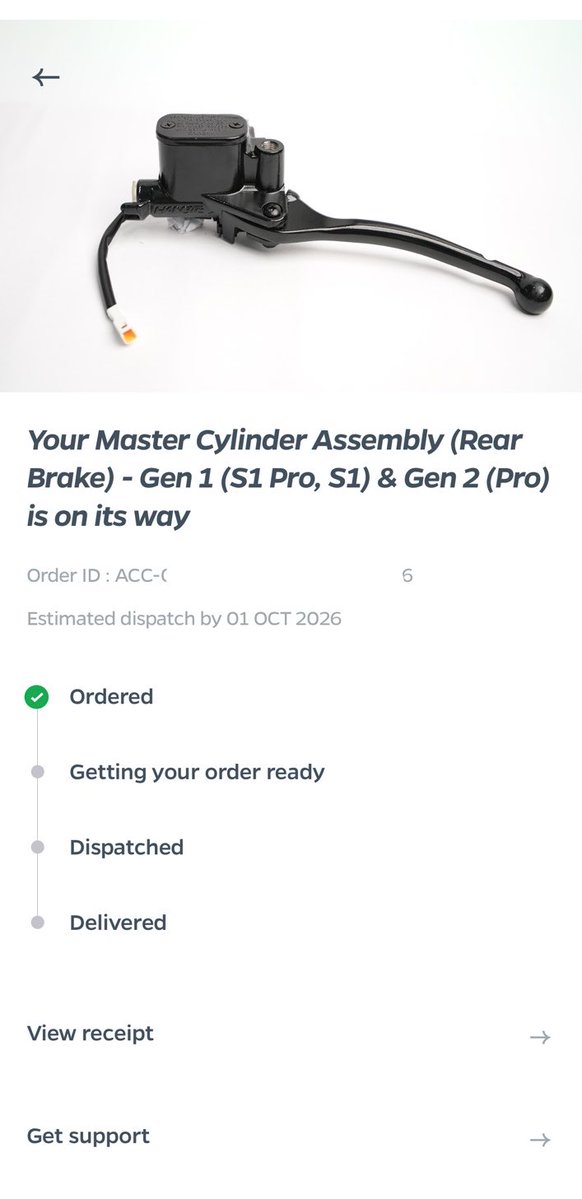
@OlaElectric@bhash What a pathetic state of after-sales service. The part wasn’t available at the service centre, so I was forced to order it from your online store almost 20 days ago. Estimated dispatch was 1 Oct. Today is 2 Oct and it STILL hasn’t even been dispatched.
For years you’ve talked about taking everything online and letting customers buy parts directly. What’s the point if you can’t dispatch a basic brake master-cylinder assembly in 20 days?
If you can’t provide spare parts either at service centres or online, what exactly are customers supposed to do with their scooters? How much lower can Ola Electric’s service standards go? At this point, why even keep the showrooms open?
@NEWS7Odia Fine. Look at the plans already on the JIO app.
28 days is ·349.
1 month is ·379.
13 recharges of 7349 comes to 74,537.
12 recharges of 7379 comes to 74,548.
So after all the celebration, we pay ·11 MORE a year. They sold us the same loot in a new packet.
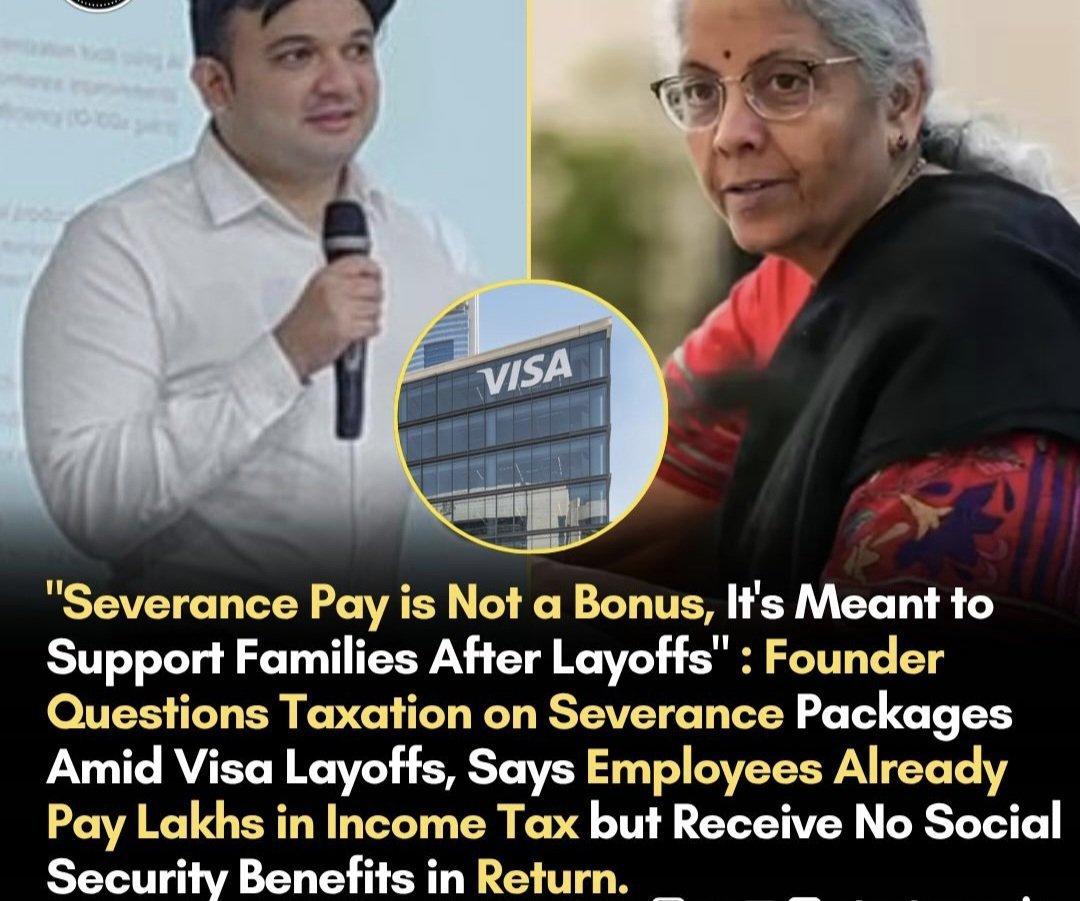
That comparison is incomplete. Countries that tax severance often also provide unemployment insurance, social security, healthcare support and other safety nets when someone loses a job. India has limited unemployment relief for certain ESI-covered workers, but nothing comparable for most salaried taxpayers. You can’t compare only the tax on severance while ignoring what taxpayers actually receive in return.
@DoT_India@TRAI@jagograhakjago@JM_Scindia
Please look into this. This is no longer just a ₹350 billing dispute.
A telecom company’s recovery caller allegedly using abusive/slang language with a customer for questioning a disputed bill is completely unacceptable.
The connection had already been requested for disconnection after repeated service outages, yet billing continued. I request the concerned authorities to intervene and have both the billing issue and the conduct of the recovery caller investigated.
@BandBajaateRaho
@reliancejio@JioCare@JIOAIRFIBERIN Is this how you treat customers?
I requested disconnection of my Jio AirFiber after nearly 2 months of frequent interruptions and repeated outages. Whenever there was a power cut, the connection simply stopped working. Even after my disconnection request, Jio kept the connection active for another 10–12 days.
By then I had already moved to Airtel. Now, a month later, I have received a bill of around ₹350 despite having suffered 7–8 days without internet and despite requesting disconnection.
Worse, I am now receiving calls from +91 92301 96028 regarding this payment, and the caller is allegedly using abusive/slang language when I dispute the bill.
What exactly is happening at Reliance Jio? Is abusive recovery calling acceptable over a disputed ₹350 bill?
Please investigate the billing, my disconnection request, and the conduct of the caller. I expect the disputed charges to be reviewed and these calls to stop.
Purchased a plot under Bhandaripokhari Tahasil, Bhadrak. While obtaining the certified RoR, Khewat No. 1 is generated with the digit “1” missing. Tahasil staff say this system issue has existed for months and remains unresolved. @DM_Bhadrak kindly help get it fixed.
@atherenergy Konarc created a lot of buzz when it was announced, and I was genuinely waiting to buy it. But even after more than a month since the launch, both the excitement and the buzz are gone.
I finally gave up waiting and booked another EV scooter today.
This is where the marketing and launch strategy has completely failed. You create hype, get potential customers interested, and then make them wait so long that they simply move on.
And more importantly, it affects trust. If a company takes this long just to properly launch and make a product available, as a customer I naturally start wondering: what happens after I buy it and need service, support or spare parts?
The product may be good, but by the time it actually reaches customers, many who were initially excited may have already bought something else.
I also have doubts about the original story. A few possibilities:
A one or two-digit mistake in the account number is absolutely possible, but the claim about the exact last four digits matching does make the story harder to believe.
The receiver may itself have provided the wrong account number, and the sender simply used whatever details were given.
The sender may have ignored or failed to verify the beneficiary name before authorising the transfer.
The transaction may have happened in 2024 or earlier, before beneficiary-name lookup became commonly available in banking apps.
Or, of course, the entire story could simply be made up or missing important details.
Yes, I agree that beneficiary-name lookup is an additional validation and definitely helps prevent mistakes.
But I don’t understand the IFSC argument here. IFSC is a routing identifier for a bank/branch. It has no mathematical relationship with the digits of the account number. Thousands of completely different account numbers belonging to the same branch will obviously have the exact same IFSC. So saying that two accounts with different last four digits having the same IFSC is “questionable” doesn’t make sense.
Also, many banking apps today abstract or automatically fetch the IFSC instead of making the customer manually enter it. With CBS, the account number is unique within the bank, and some banks can internally resolve transactions even when another valid IFSC of the same bank is supplied, although that behaviour can depend on the bank. RBI still formally asks customers to provide the beneficiary branch IFSC for NEFT/RTGS.
The main point of the original post is still perfectly possible: if someone enters a wrong account number and that happens to be another valid account, the credit can go to that account. RBI explicitly states that NEFT credit is afforded based on the account number supplied by the remitter.
So yes, name verification adds an important safety layer. But the “different account number, same IFSC” part by itself is not suspicious at all.
Nope, that’s still not correct.
And when I say payee name, I am NOT talking about the nickname. A nickname is only for your own convenience inside the banking app. I’m specifically talking about the payee/beneficiary name field.
Yes, since last year banks have started automatically fetching and displaying the beneficiary’s registered name based on the account number and IFSC. That facility is there so the customer can verify that the money is going to the intended person before confirming the transaction.
But that does not mean there is a hard rule that the payee name you enter must exactly match the bank-registered account holder name, otherwise the beneficiary cannot be added or the transaction will fail.
I can confirm this at least with Kotak and Axis. I can edit the payee name, enter a different name, save the beneficiary and transact without any issue.
The actual transaction is still routed based primarily on the account number and IFSC. The beneficiary-name lookup is an additional verification facility for the customer, not an exact-name-match routing mechanism.
So please don’t confuse nickname, payee name, and the registered beneficiary name displayed by the bank. They are different things.
I don’t say something like this without understanding what I’m talking about. I would have posted a screenshot from the banking app as well, but both apps block screenshots.
I don’t know how many years of IT experience you have, but I have around 14 years in IT, including nearly 9 years in the banking domain, and I currently work as a Solution Architect. So I know exactly what I’m writing.
The original post was about money being transferred to the wrong account, and that still happens regularly. Even today, people enter a wrong account number, skip or overlook the beneficiary-name verification, and authorize the transaction.
And as I already explained earlier, a few years ago this standardized beneficiary-name verification facility wasn’t even available the way it is today. Transactions were still being processed based primarily on the account number and IFSC.
So the point was never that banks cannot show or validate a beneficiary name today. The point was that name verification and the actual routing/crediting of a transaction are two different things.
Please understand the context of the original post and what I actually wrote before calling others ignorant.