Dept of Stat and Data Sci at @Yale. Formerly @CMU_Stats, @ESPN, @univmiami, @FlaPanthers, @WestPoint_USMA. data science/statistics/education/sports/ice cream.
One of the wildest stats in sports:
This is the 46TH CONSECUTIVE SEASON in which a former teammate of Jaromir Jagr has appeared in the Stanley Cup Final.
This year, it's Golden Knights defenseman Rasmus Andersson, who played with Jágr in Calgary in 2017-18.
Interesting storyline for NHL Finals: Carolina Hurricanes GM Eric Tulsky has a PhD in Chemistry from Berkeley.
Before joining them in 2014, he was offered a job with Apple to work on battery tech (but turned it down).
Started in the analytics department and since hired neuroscientists and mechanical engineers for the NHL team.
The Athletic profile has this anecdote:
➡️ “In 2021, Tulsky was the Carolina Hurricanes assistant GM and had built a small analytics department in the organization, with a web developer, a data engineer and a neuroscientist helping him lead the team’s push into new frontiers for the sport.
But because of what he saw in the tracking data, Tulsky believed his next addition needed to be someone who was working on autonomous vehicles — perhaps “a robot submarine,” he says now — and had an advanced mechanical engineering background.
“I knew that that was the kind of problem that put people thinking about the kinds of data that we had and the kinds of problems we faced,” Tulsky explained.
It goes without saying that there aren’t many robot submarine engineers working in NHL front offices. So Tulsky began a deep search through universities’ mechanical engineering departments.
He would scour the faculty listing and professors’ research interests to see if they might align with what he was looking for, then reach out to learn more about their work. He started with the top schools in Canada, reasoning that there was a greater chance he would find someone interested in working on a hockey problem.
And that was how an NHL team came to fund the PhD research of a young engineering student named Jonathan Arsenault at McGill University in Montreal.
His thesis, the first to be backed by a professional hockey team? “Quantitative Analysis of Hockey Using Spatiotemporal Tracking Data.” ⬅️
***
NYT/The Athletic: https://t.co/EgO3Qoo6Wq
@damnang2 Any recommendations for good books to read? Assume I studied EE in undergrad (though sadly remember less than I would like), math in grad school, and currently focus on data science.
I have these books from college but I'm afraid they might be a bit out of date: :)
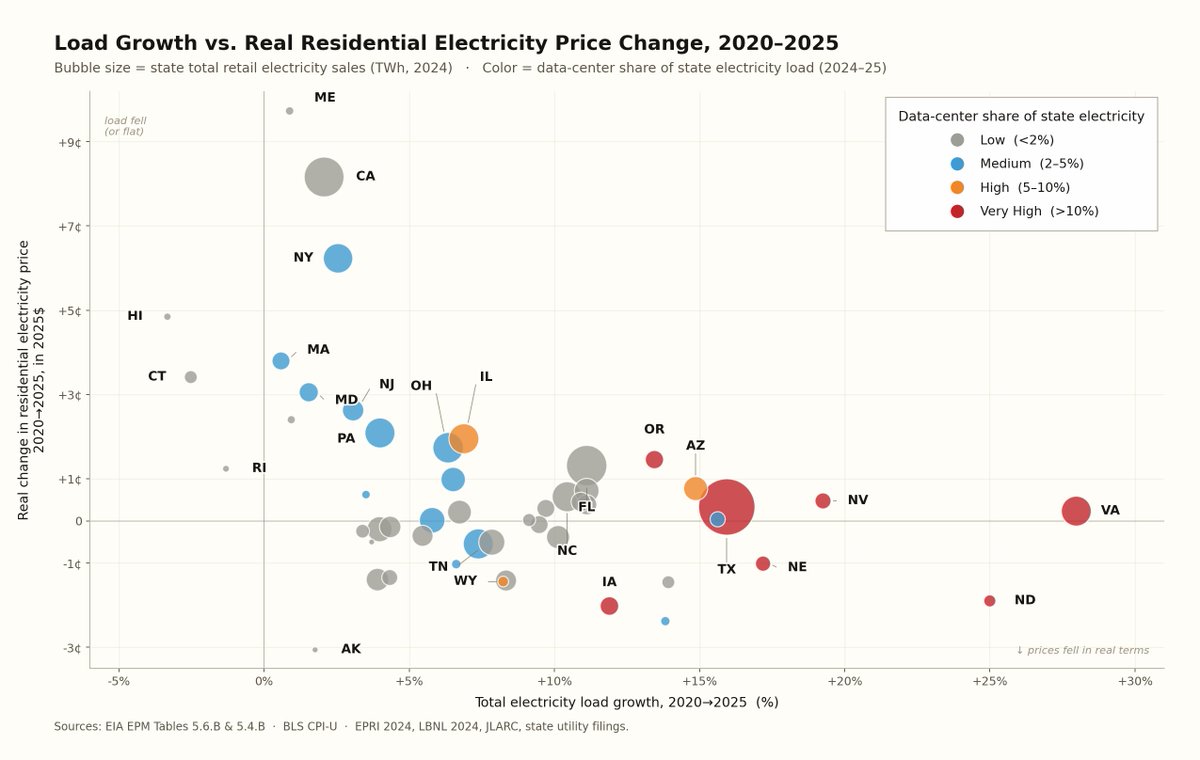
This is the single most important chart.
If AI were driving prices, you'd see a cluster top-right. You don't.
States with huge load growth (VA, TX, NV, ND, IA) sit at ~0c change in 5y. States with massive price hikes (CA, NY, MA, CT) have basically NO load growth.
Lehigh set an NCAA record for most runs in the top of the 1st inning…
Here’s how it happened 🤯
HBP
BB
HBP
2 RBI 2B
BB
RBI 1B
HBP
HBP
(Pitching change)
K
BB
RBI BB
RBI BB
RBI HBP
RBI HBP
(Pitching change)
RBI BB
BB
RBI BB
RBI BB
RBI BB
(Pitching change)
Grand Slam
F9
6-3
Final: 38-6
Intel and Qualcomm have a lot in common:
>Large tech company with minimal exposure to AI chips
>Not their 1st attempt at it (Nervana, Gaudi, AI 100)
>Announced new chips for 2026 with lots of LPDDR (Crescent Island 160GB, AI 200 768GB) with hardly any details or performance targets
>Tries to stay relevant by scaling up IP from legacy businesses (PC iGPU, Mobile NPU)
>Wants to compete on TCO with LPDDR because they've missed the boat with HBM
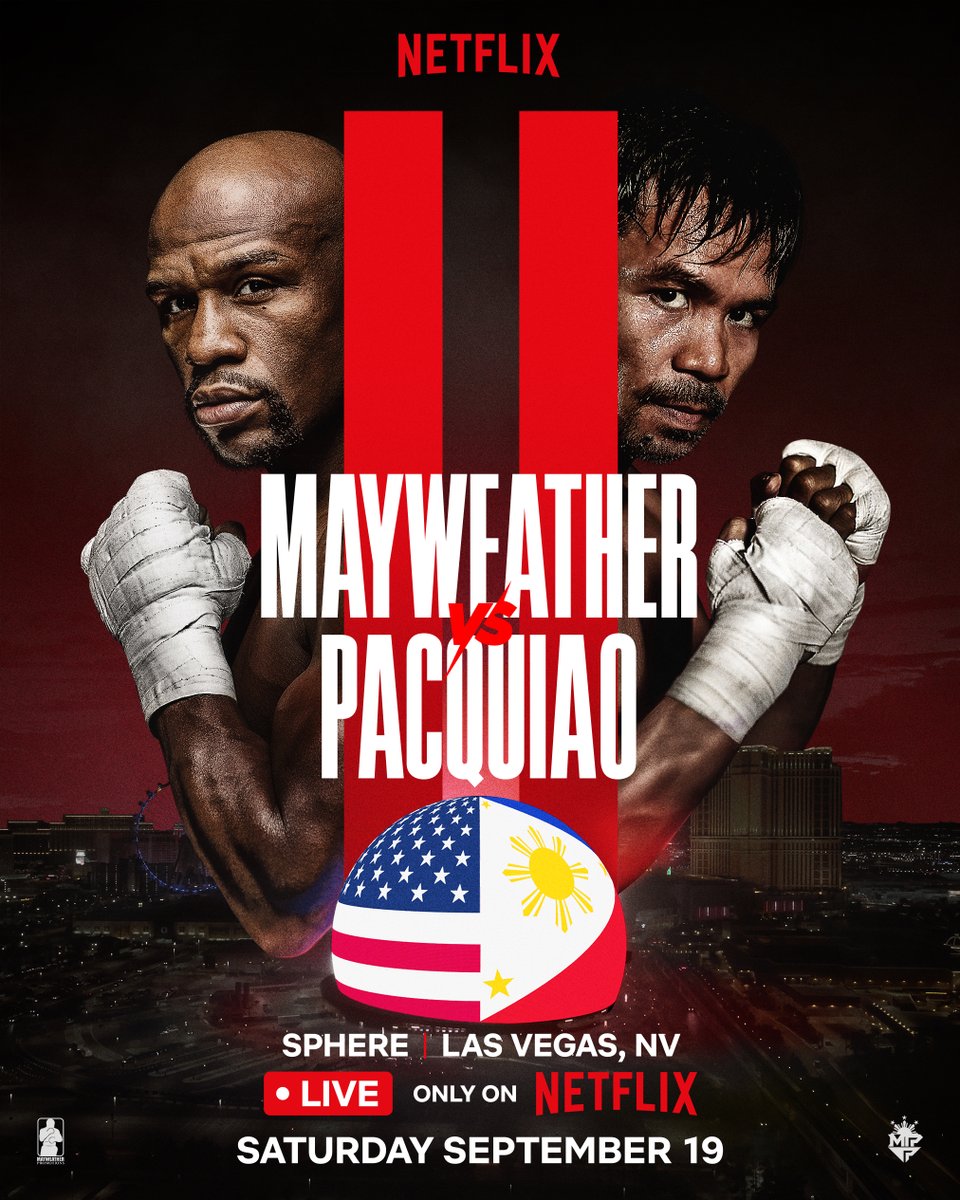
FLOYD MAYWEATHER vs. MANNY PACQUIAO
Two of the greatest icons in boxing history will meet again in the first-ever professional boxing match at Sphere in Las Vegas.
Saturday September 19
LIVE globally only on Netflix
#MayPac2