bro to bro: if you like skinnier girls, get yourself a skinny girl. if you like thicker girls, get yourself a thick girl. if you like fitness girls, get yourself a fit girl. you are entitled to your own preferences.
but what you are not going to do bro, is date a girl who is not your type and make her feel inferior to other girls.
Good people have high levels of empathy, but once that empathy is exhausted, they switch to a state of objective observation. They see you for exactly who you are, without the filter of their love. This is why their anger feels so cold, it is the absence of the warmth you took for granted
See, thing is in most instances we’ve given our friends more chances than we’d give a relationship without mentioning. We’ve tolerated & dismissed hurtful behaviour. So when a breakup is due, it’s due. Close that chapter.
Dear @Spotify when I play Kenyan music on shuffle avoid adding afrobeats in my playlist please. I am tired of skipping. Please learn my preferences. Thank you sincerely. @SpotifyCares
Safaricom: "New app!"
Kenyans: "I didn't ask for this."
S: "It's a free update!"
K: "I can't log in."
S: "Needs your sim, just the first time 😄"
K: "This is the 4th time 😡"
S: "Just buy bundles 😘"
K: "What if I'm abroad? It's expensive 😡"
S: "It's for security! Mwa-est 😘😘"
BREASTMILK
She thought she was studying milk.
What she uncovered was a conversation.
In 2008, evolutionary anthropologist Katie Hinde was working in a primate research lab in California, analyzing breast milk from rhesus macaque mothers. She had hundreds of samples and thousands of data points. Everything looked ordinary—until one pattern refused to go away.
Mothers raising sons produced milk richer in fat and protein.
Mothers raising daughters produced a larger volume with different nutrient balances.
It was consistent. Repeatable. And deeply uncomfortable for the scientific consensus.
Colleagues suggested error. Noise. Statistical coincidence.
But Katie trusted the data.
And the data pointed to a radical idea.
Milk is not just nutrition.
It is information.
For decades, biology treated breast milk as simple fuel. Calories in. Growth out. But if milk were only calories, why would it change depending on the sex of the baby?
Katie kept digging.
Across more than 250 mothers and over 700 sampling events, the story grew more complex. Younger, first-time mothers produced milk with fewer calories but significantly higher levels of cortisol—the stress hormone.
The babies who drank it grew faster.
They were also more alert, more cautious, more anxious.
Milk wasn’t just building bodies.
It was shaping behavior.
Then came the discovery that changed everything.
When a baby nurses, microscopic amounts of saliva flow back into the breast. That saliva carries biological signals about the infant’s immune system. If the baby is getting sick, the mother’s body detects it.
Within hours, the milk changes.
White blood cells surge.
Macrophages multiply.
Targeted antibodies appear.
When the baby recovers, the milk returns to baseline.
This was not coincidence.
It was call and response.
A biological dialogue refined over millions of years. Invisible—until someone thought to listen.
As Katie reviewed existing research, she noticed something unsettling. There were twice as many scientific studies on erectile dysfunction as on breast milk composition.
The first food every human consumes.
The substance that shaped our species.
Largely ignored.
So she did something bold.
She launched a blog with a deliberately provocative name: Mammals Suck Milk.
It exploded. Over a million readers in its first year. Parents. Doctors. Scientists. People asking questions research had skipped.
The discoveries kept coming.
Milk changes by time of day.
Foremilk differs from hindmilk.
Human milk contains over 200 oligosaccharides babies can’t digest—because they exist to feed beneficial gut bacteria.
Every mother’s milk is biologically unique.
In 2017, Katie brought this work to a TED stage. In 2020, it reached a global audience through Netflix’s Babies. Today, at Arizona State University’s Comparative Lactation Lab, she continues reshaping how medicine understands infant development, neonatal care, formula design, and public health.
The implications are staggering.
Milk has been evolving for more than 200 million years—longer than dinosaurs walked the Earth. What we once dismissed as simple nourishment is one of the most sophisticated communication systems biology has ever produced.
Katie Hinde didn’t just study milk.
She revealed that nourishment is intelligence.
A living, responsive system shaping who we become before we ever speak.
All because one scientist refused to accept that half the story was “measurement error.”
Sometimes the biggest revolutions begin by listening to what everyone else ignores.
@lyrverse Nobody is coming to save you. Not your parents, not your partner, not society. You either take responsibility for your life or you slowly become a victim of it. Motivation fades, excuses feel good, but only discipline changes anything. The world rewards effort, not intention.
I think the purest form of love is just wanting someone to notice life with you. "taste this. look at that. hear this song." again and again. until you can't imagine noticing life without them
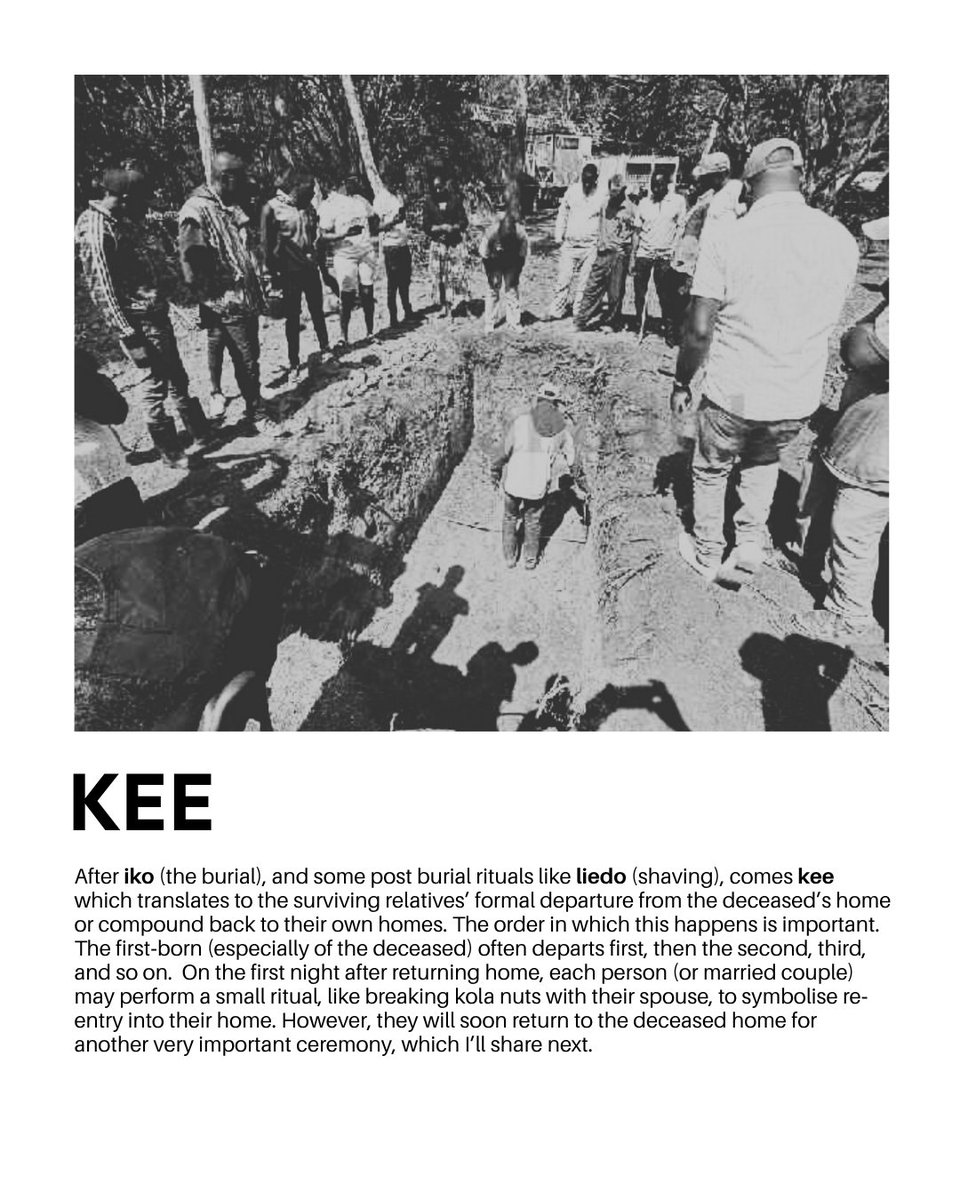
One of the most difficult times for the bereaved is after the burial, when everything goes silent abruptly as people go back to their lives. This is why I love the intentional staggering of Kee. Slowly easing the bereaved into a new normal.
Dear @ntvkenya -- tero buru doesn't happen right after the burial. Stop calling what is happening now as tero buru. This happens two or three days after the burial.
I told my mum about conversations on social on how Luos have been mourning, and she said,'pok kata wadengo maber yawa JoNairobi notemo dimbre huku ndio kesho tutaachilia vizuri.
Translation: She said kesho kutakua na cinema when son of the soil arrives.
Also, in the Luo culture we say 'liel ok ti' meaning, a funeral never gets old. You can show up even 5 years later na upige nduru moja safi & people will still hold space for you, they could even join you. When it comes to grief, we don't hold back