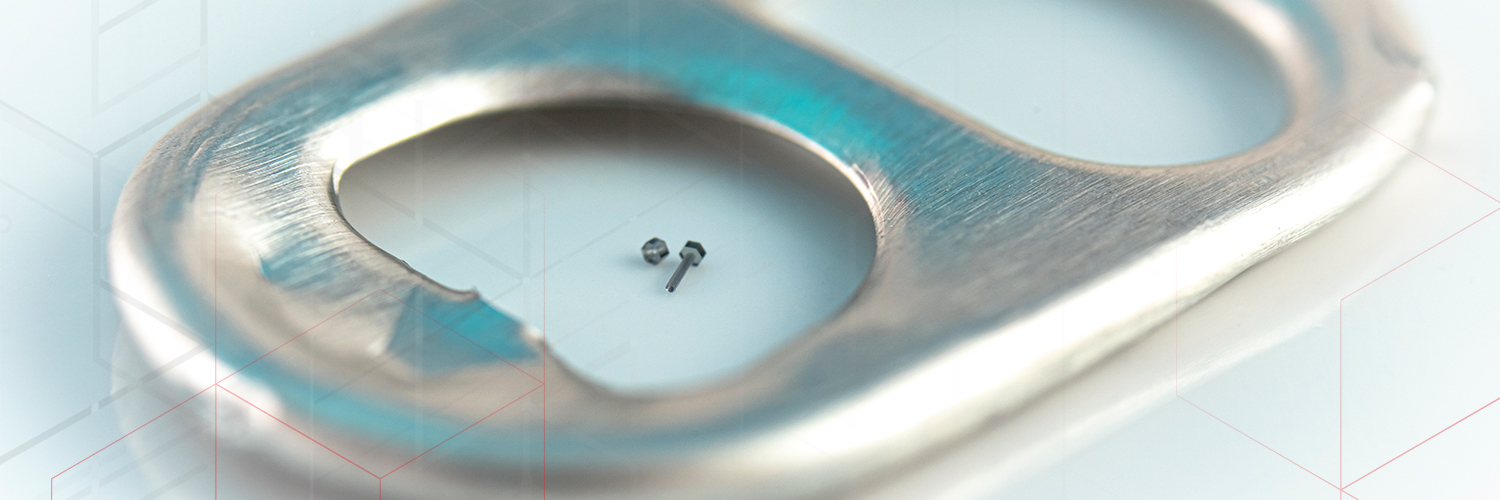
🛠️ How much of your product development process is still influenced by constraints that no longer exist?
Too often, parts are designed for machining, molding, or stamping first, and only later adapted for additive manufacturing. Sometimes that works. Sometimes it doesn't.
But when engineers know from the beginning that a part will be 3D printed, they can take advantage of design freedoms that simply aren't possible with traditional processes.
The result?
✅ Lighter parts
✅ Stronger parts
✅ More functional designs
✅ New possibilities that weren't previously manufacturable
As our CEO, John Kawola, recently discussed with https://t.co/kjdFwnrgyX, the future of engineering will likely be driven by a combination of additive manufacturing, generative design, and AI. Instead of designing around manufacturing constraints, engineers will increasingly define performance requirements and let advanced tools generate optimized solutions.
The companies that embrace "design for additive" will not just manufacture differently, but innovate differently.
For engineers working on high-precision applications, what design constraint do you encounter most often today?
👇Read the full article. Link in comments.
🔬 If you work in micro-scale engineering, this one's for you.
We publish a monthly newsletter covering micro 3D printing applications, new materials, industry resources, and what's happening at BMF — written for engineers and product developers working at the limits of miniaturization.
👉 Here's our latest edition, free to read: https://t.co/7WgfHGkO9h
👉 If you'd like it delivered straight to your inbox each month, you can sign up here: https://t.co/9EiPU0QZst
No spam. Just useful content for people building small, precise things.
🏆 Enabling TIME’s Best Inventions - one micron at a time.
The University of Tokyo’s lab-grown chicken “nugget,” named one of TIME’s Best Inventions of 2025, uses a micro-scale circulatory system to grow thicker, more structured tissue - moving cultured meat closer to real cuts.
That level of controlled microarchitecture was enabled by BMF's PµSL technology, making it possible to fabricate the precise, perfusable structures needed to support tissue at scale.
👉 Read more: https://t.co/4lGoHgjuh9
BMF's microArch® S150 changes the game!
✅ Industrial-grade printing for microfluidic devices
✅ 25 μm ultra-high resolution
✅ Leveling-free = faster setup, more uptime
🔧No more slow iterations. Start building smarter and go from design → functional device in record time. Ideal for small-batch production and rapid R&D validation.
🎥 Live Webinar: Advancing Fiber Optics with Micro 3D Printing
Join Jason Bassi and Jake Collins of BMF for a deep dive into how micro-precision additive manufacturing is enabling engineers to design and fabricate parts that traditional manufacturing simply can’t achieve.
In this session, they’ll cover:
• How micro 3D printing achieves ±10 µm tolerances critical for fiber optic alignment
•Applications including precision fiber guides, insulators, and complex grommet geometries
•Advantages over traditional manufacturing, such as rapid prototyping and design freedom
•The role of micro 3D printing in advancing high-performance fiber optic communication systems
If you're exploring designs where size, precision, and complexity all matter, this session will provide practical insight into what’s possible with micro-precision technology.
👉 Save your seat: https://t.co/6VB1XSWTsd
#Micro3DPrinting #PrecisionEngineering #FiberOptics #ElectronicsDesign
🔬 Micro-Precision 3D Printing: Trends & Breakthroughs in Medical Device Manufacturing
Medical device design is evolving rapidly, and micro-precision additive manufacturing is playing a growing role in enabling next-generation innovation. A recent Today's Medical Developments Magazine article explores how ultra-high-resolution 3D printing is reshaping medical device workflows — with insights from BMF CEO John Kawola on where the technology is headed.
As John highlights, the ability to reliably print complex micro-scale features, tight tolerances, and enclosed internal geometries is changing what engineers can realistically design and manufacture. From microfluidics and implantable components to integrated sensing and diagnostic devices, micro-precision AM is helping teams move faster while reducing assembly complexity and development risk.
This shift isn’t just about making parts smaller — it’s about unlocking new functionality and enabling medical devices that weren’t previously feasible with traditional manufacturing.
Worth a read for anyone designing at the limits of precision in medtech: https://t.co/QZCCacAujQ
#MedicalDevices #Micro3DPrinting #PrecisionEngineering #MedTech
🚀 MD&M WEST, here we come - we’ll be sharing how high-resolution additive manufacturing is helping medical device teams iterate faster, validate earlier, and push design boundaries. 👉 Check out this sneak peek of medtech suppliers that will be there: https://t.co/mlUezNIPpu