How does one detect anomalies and reach scores close to state of the art methods, while reducing runtime use by more than half? By fitting a Dirichlet process mixture model to DINOv2 patch embeddings of images from healthy patients!
In this paper published in Nature Communications, Erdil et al. proposed a method for predicting active brown adipose tissue from CT scans. Read more here: https://t.co/jhEIFIwE3t
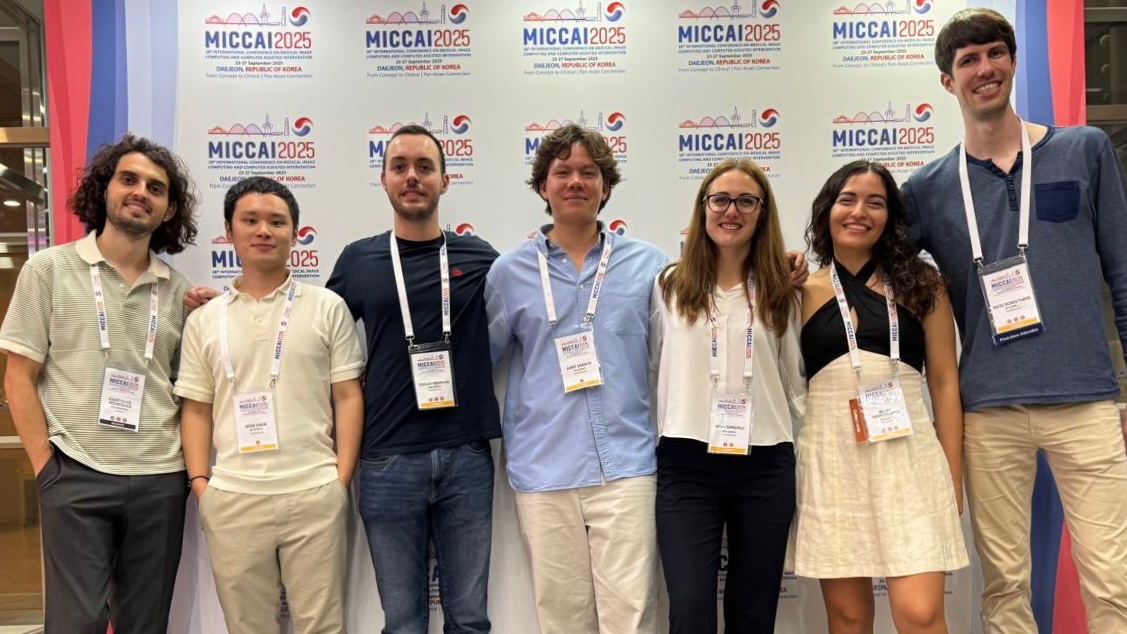
We have two papers accepted to #MICCAI2025! "Anomaly Detection by Clustering DINO Embeddings using a Dirichlet Process Mixture” by Nico Schulthess and "Conformal forecasting for surgical instrument trajectory” by Sara Sangalli & Gary Sarwin. Excited to see you in Daejeon!
We are happy to announce that the article "Learning to segment anatomy and lesions from disparately labeled sources in brain MRI” from Meva Himmetoglu et al. is accepted to Medical Image Analysis journal!
https://t.co/nMRG355JTl
We have 2 papers accepted to #ICLR2025! 🎉
"Uncertainty modeling for fine-tuned implicit functions" by Anna Susmelj et al. and "Multimodality Helps Few-Shot 3D Point Cloud Semantic Segmentation" by Zhaochong An et al. !
https://t.co/0kxUhBi7ur
https://t.co/dJzpErYqSa
Congrats!
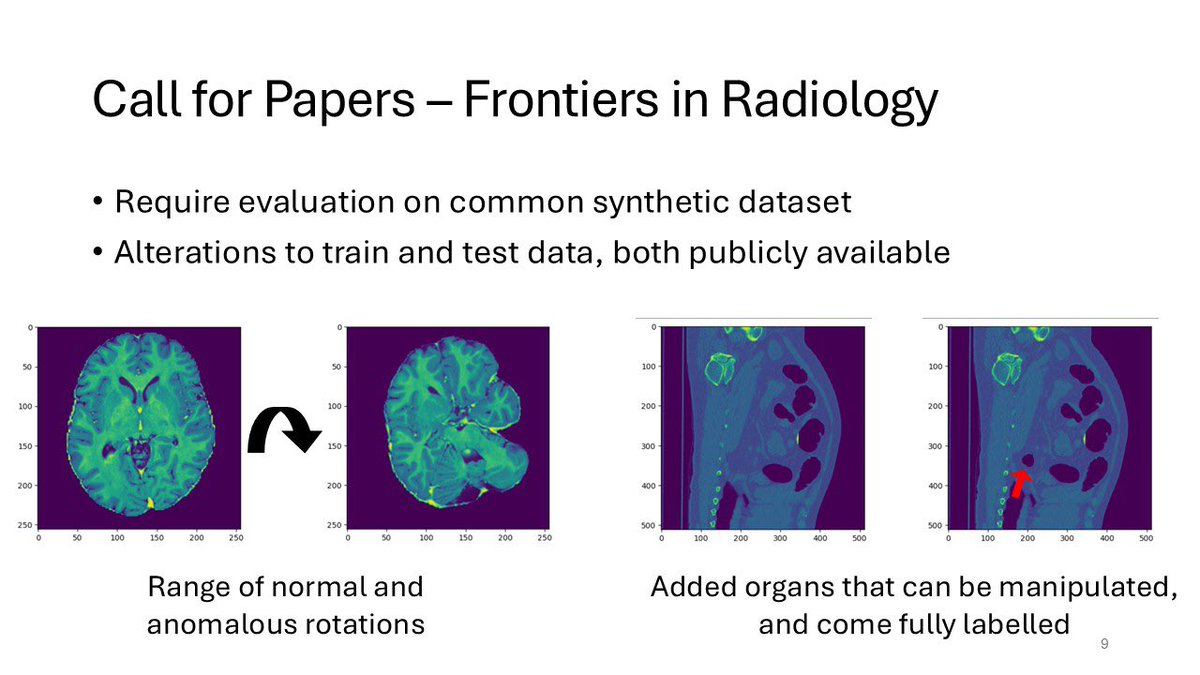
Thanks again @d_zimmerer for the chance to address the MOOD community at #MICCAI2024! Our call for papers and accompanying dataset with @FrontMedTech are in the works. https://t.co/CnEXC1DPdj Until then, we’d love everyone’s input on how best to advance anomaly detection.
When the model confidence on predictions is low, we rely on experts for inspection. But the time experts have is limited and very expensive! In her paper, @salusanga proposes to maximize the "area under confidence operating characteristic curve" to address this trade-off.