To
Shri Narendra Modi
Hon’ble Prime Minister of India
South Block,
New Delhi – 110011
Subject: Urgent Appeal for Action Against Rising Racism and Communal Violence in India
Dear Hon’ble Prime Minister,
I am writing to you not only as an Indian born on Indian soil, but as someone who has proudly represented India across the world for more than three decades. It pains me deeply to write this letter, but my conscience leaves me no choice.
A 24-year-old MBA student from Tripura, Anjel Chakma, lost his life in Dehradun after a brutal assault that reportedly followed a racially motivated altercation. This young man - full of dreams, potential, and hope - succumbed to injuries inflicted solely because he looked different.
Prime Minister, this is not just a crime.
This is a tragedy for India’s soul.
For decades, millions of our fellow Indians from the North-East have faced stereotyping, humiliation, and racism in their own country. They are 100% Indian - in identity, history, and sentiment. Yet they often walk through our cities with the fear of being mocked, targeted, or worse. Anjel’s death is not an isolated incident; it is a reflection of a deeper social problem that requires immediate national attention.
But this tragedy does not stand alone.
In recent months, India has witnessed a sharp rise in violence against Dalits, Muslims, and Christians - communities that have long contributed to the fabric of our nation. Reports of killings, assaults, and targeted intimidation have become disturbingly frequent. Regardless of who the victims are, hate-driven violence is an assault on the very idea of India.
Whether the victim is from the North-East, a Dalit, a Muslim, a Christian, or any other community, the message must be loud and clear:
Communal hatred is wrong. Racism is wrong. Targeting people because of their identity is wrong. And it must stop.
India is home to 1.4 billion people who look different, speak different languages, pray in different ways, and follow diverse cultural practices. And yet, for 76 years, we have shared one national identity - Indian.
If our diversity becomes a trigger for violence, we lose the essence of who we are.
I respectfully urge you to consider the following urgent actions:
1. Make an unequivocal national declaration condemning racism and communal violence.
Your voice can set the tone of the nation and reassure communities living in fear.
2. Direct a transparent, time-bound investigation into the death of Anjel Chakma.
His family - and our nation - deserve justice.
3. Initiate a national program to address racism and inter-community hatred.
Sensitization in schools, colleges, workplaces, and public institutions is long overdue.
4. Strengthen legal protections against hate crimes, racism, and targeted violence.
India must demonstrate that it values every citizen equally.
Prime Minister, no parent in India - whether in Tripura, Uttar Pradesh, Kerala, or Nagaland - should fear for their child’s life because of their identity. Not in 2026. Not in a nation that aspires to global leadership.
As someone who has spent his life building technology that connects people, I cannot remain silent when our own society risks becoming disconnected from compassion, respect, and unity.
I sincerely hope that under your leadership, India will confront this issue with honesty and courage, so that Anjel Chakma’s death becomes a turning point - a moment when the nation chose unity over prejudice, justice over silence, and humanity over hate.
With respect,
Sabeer Bhatia
Co-Founder, Hotmail
Co-Founder Hotcoin & Education Reformer
San Francisco
I was briefed this morning on the U.S. military capture of Venezuelan President Nicolás Maduro and his wife, as well as their planned imprisonment in federal custody here in New York City.
Unilaterally attacking a sovereign nation is an act of war and a violation of federal and international law.
This blatant pursuit of regime change doesn’t just affect those abroad, it directly impacts New Yorkers, including tens of thousands of Venezuelans who call this city home. My focus is their safety and the safety of every New Yorker, and my administration will continue to monitor the situation and issue relevant guidance.
A kotha gives women an opportunity to construct a powerful and autonomous life, argue courtesans from Lucknow in their conversations with historian Veena Talwar Oldenburg.
In Lifestyle as Resistance: The Case of Courtesans of Lucknow, Oldenburg presents the account of the lives of Lucknow’s courtesans—women who defied patriarchy not by public protest but through a personal form of resistance by creating spaces of autonomy for themselves outside the institution of marriage. Her study, based on colonial records (1858-78) and interviews with thirty courtesans (1976-84), reveals how they subverted patriarchal as well as colonial control.
Tax records from 1858-78 list Lucknow’s courtesans among the wealthiest taxpayers, owning extensive assets. Their financial influence posed such a threat that after the 1857 revolt, colonial authorities confiscated much of their wealth for their support to the revolt. Measures like the Contagious Diseases Act of 1864 sought to control them further, subjecting them to invasive medical checks ostensibly to protect European soldiers from venereal disease. Yet, they resisted—bribing officials, falsifying records, and refusing taxation, even at the risk of imprisonment.
Contrary to portrayals in popular works like the novel Umrao Jaan Ada (1905), Oldenburg’s interviews reveal that many courtesans were not kidnapped victims but child widows, domestic violence survivors, or women who actively chose financial independence. As one remarked, no “angel” abducted her—she orchestrated her own escape from an abusive marriage.
In post-colonial India, these courtesans prioritize financial independence for their daughters and nieces, ensuring they enter professions like banking and law. Yet, they feel that without the refuge of the kotha, women may have to marry to survive in polite society and face oppression enforced by institutions like that of marriage.
James Scott argues that to ignore these instances of quiet defiance from history is to overlook the many ways in which oppressed groups resist systemic control. This Women’s History Month, read about these extraordinary women who subverted patriarchy and shaped their own destinies. Link in bio.
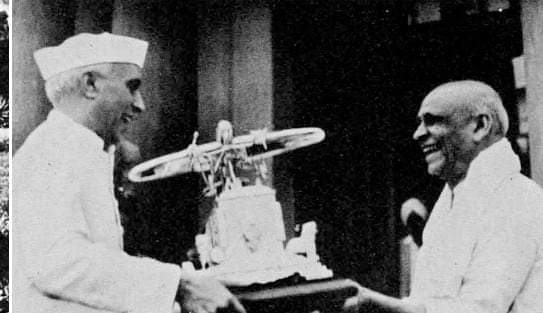
It is to this priceless possession of a free India that we pay homage today on the occasion of the 💎 jubilee of his birth. May he secure greater & greater triumphs in the cause of his country & in the pursuit of his ideals!
-Vallabhbhai Jhaverbhai Patel
Nehru Exposed. 🙏🏾 18/18
His thoughts have sometimes a depth which it is not easy to fathom, but underlying them all is a transparent sincerity and a robustness of youth which endear him to every one without distinction of caste and creed, race or religion. 17/18
It is obviously impossible to do justice to his great and pre-eminent personality in these few considered words. The versatility of his character and attainments at once defy delineation. 16/18
Yet, with all this he has maintained that original youthful look, that balanced poise, that sense of perspective and that sang-froid and bonhomie which are the results of a disciplined philosophy and trained intellect. 15/18
He has never spared himself in the cause of the refugees who have seldom knocked at his door without redress. In the councils of the Commonwealth his has been a most notable contribution; on the world’s stage he has played a very remarkable part. 14/18
No one knows better than myself how much he has laboured for his country in the last 2 yrs of our difficult existence. I've seen him age quickly during that period, on account of the worries of the high office that he holds & the tremendous responsibilities that he wields. 13/18
that in the twilight preceding the dawn of independence he should have been our leading light, and that when India was faced with crisis after crisis, following the achievement of our freedom, he should have been the upholder of our faith and the leader of our legions. 12/18
The sincerity of his convictions, the breadth of his outlook, the clarity of his vision, and the purity of his emotions—all these have brought to him the homage of millions in this country and outside. It was, therefore, in the fitness of things... 11/18
That was the beginning of that international phase of his life and character which has throughout been noticeable in his approach to internal and world problems. Ever since, Jawaharlal has never looked back. He has grown in stature both in India and abroad. 10/18
remarkable in any gathering of the world’s foremost men, Jawaharlal has gone from strength to strength as a political leader. His trip to foreign countries necessitated by the ailment of his wife raised his conception of Indian nationalism to an ethereal international plane. 9/18
of the great institution to which we all dedicated ourselves as an instrument of our emancipation. Gifted with idealism of a high order, a devotee of beauty & art in life & equipped with an infinite capacity to magnetize and inspire others & a personality which would be... 8/18
crusader in the war against poverty & with an instinctive sympathy for the poor he threw himself heart & soul into the struggle for the amelioration of the lot of the peasantry. His sphere of activities widened & he soon blossomed forth into a silent organizer... 7/18
Having received the baptism of fire in his early 30s as an organizer of the peasants’ movement in the UP he imbibed to the full the knowledge of the art & science of nonviolent warfare. His ardent emotionalism & his hatred of injustice & oppression converted him into a... 6/18
the idol of the nation, the leader of the people, the PM of the country & the hero of the masses, whose noble record & great achievements - an open book, hardly needs any commendation from me.
A clean & resolute fighter he always fought hard & straight against foreign Govt. 5/18