Entrepreneur/father/musician/mentor who loves to help with tech product strategy, finance, marketing, partnering, and building great teams to get sh*t done!
Kevin Warsh refusing to give forward guidance is a majorly important move - removing a signal that was essentially just sophisticated-seeming noise that forced every business owner (and investor) to guess the guidance, then guess what the guidance would do to the market price of the stock, then guess what all of that guessing will do to business activity, investments, prices, etc... THEN try to run a business based on all of this new, uncorrelated activity and how it affects actual business and market activities. Less noise, similar to reducing regulations, makes business simpler - a rare gift in a time where greater complexity is almost always the trend.
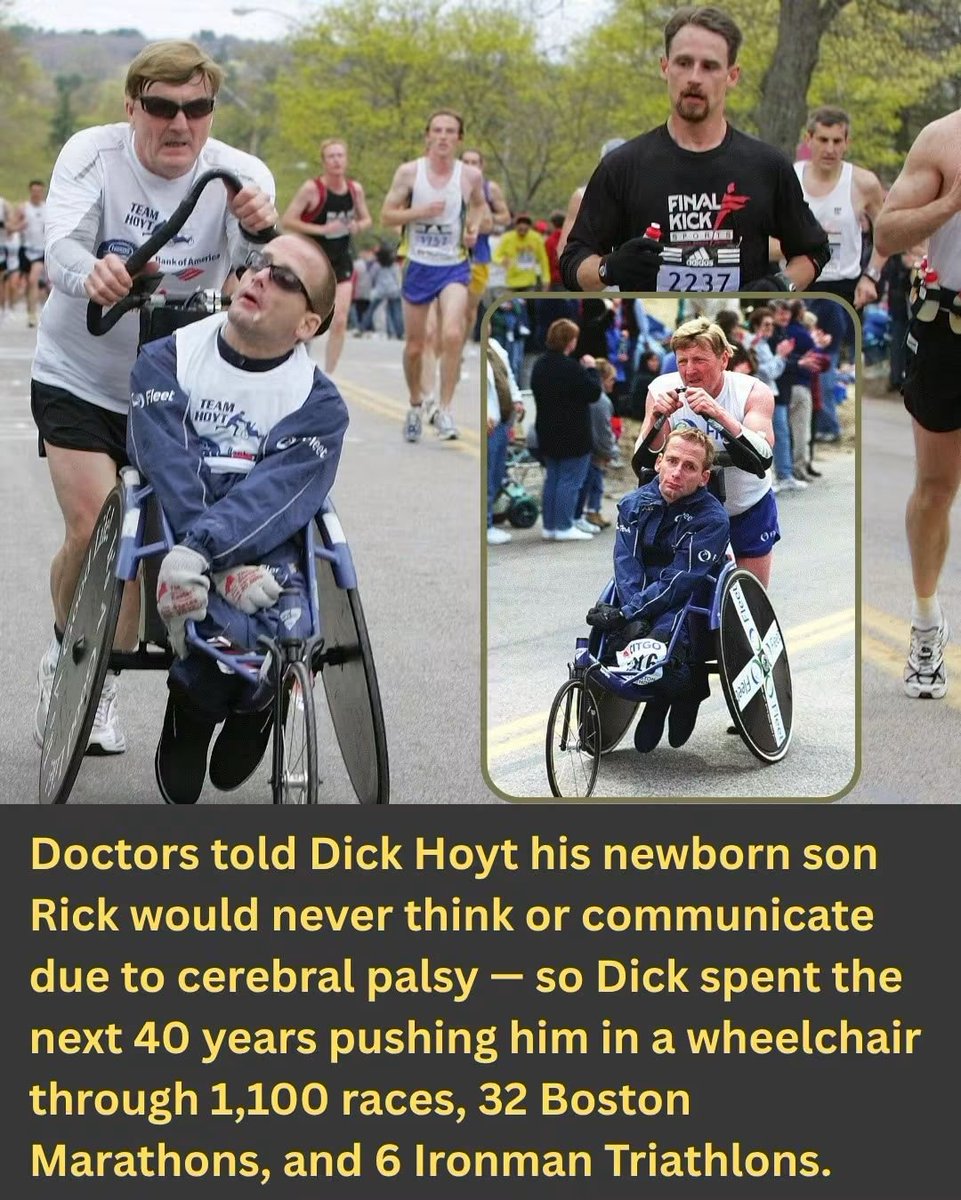
When Rick Hoyt was born, his umbilical cord wrapped around his neck and cut off oxygen to his brain. He couldn't walk, talk, or control his muscles.
Doctors told his father Dick to put him in an institution. "He will never think. He will never communicate. He will be nothing more than a vegetable."
Dick took his son home.
For years, the only sign of life inside Rick's mind was his eyes — they followed his parents around the room. That was enough.
When Rick was 11, engineers built him a communication device. A cursor moved across letters of the alphabet. Rick selected each one by tapping his head.
His family gathered around, expecting "Hi Mom" or "I love you Dad."
Rick typed: "Go Bruins." The Boston Bruins were in the Stanley Cup Finals. He had been following every game in silence, from his wheelchair, for years.
In 1977, Rick asked his father if they could enter a 5-mile charity race. Dick had never run a race in his life. He said yes, and pushed Rick the whole way. They finished second to last.
That night, Rick typed: "Dad, when I'm running, it feels like I'm not handicapped."
Dick broke down crying. Then he started training.
Over the next four decades, Team Hoyt competed in over 1,100 races — 72 marathons, 32 Boston Marathons, and 6 full Ironman Triathlons. Dick pulled Rick through open water in a boat tied to his waist, carried him on the front of a bike, and pushed him in a wheelchair to every finish line.
Rick graduated from Boston University. Later in life, he helped develop communication technology for others with disabilities — giving a voice to people like himself.
When asked what one gift he would give his father, Rick said: "I would like my dad to sit in the chair, and I would push him for once."
Dick passed away in 2021, aged 80. Rick followed in 2023, aged 61.
Dick once said: "I'm not a hero. I'm just a father. All I did was tie on a pair of running shoes and push my son."
Rick said: "He was my motor. I was his heart."
Not to make too much of a comparison, but in many ways that is how the conversation about Larry Bird should be - he was great in many aspects of basketball, but his greatest superpower was how he made everyone else better. Remember that he took Indiana STATE, a smalltime team before and since, to the NCAA Finals singlehandedly (he was so terrific that he also took the center all the way to the NBA with him...). His court sense and impact were always far beyond statistical analysis. Love Messi for the same reason...
In 1997, actor John C. McGinley’s son, Max, was born with Down syndrome. Shortly after, John's talent agent pulled him aside to deliver what was framed as practical advice: Do not talk about this publicly. Keep it quiet. People will stop hiring you.
For some, that might have sounded like reasonable career preservation. Protect the livelihood, avoid the spotlight, and pretend nothing had changed.
John’s response was immediate. He fired the agent.
Then, he did the exact opposite of what he had been told. He brought Max everywhere. Red carpets, talk shows, film sets, and public events. Wherever John went, Max was right beside him. At a time when society still largely preferred to keep individuals with developmental disabilities out of sight, John made a different choice. He made his son visible. Openly, proudly, and entirely without apology.
What began as a father's protective instinct grew into decades of fierce advocacy. John became one of the country's most recognizable voices for Down syndrome awareness. He spoke at global conferences, testified before Congress, and fought hard for employment law reforms that created real opportunities for people with disabilities to work, earn, and live independently.
During this journey, a reporter asked John a question that revealed far more about society's biases than it did about Max. The reporter asked if John ever wished his son were normal.
John didn't hesitate. He replied that Max was normal. The question wasn't. It was a blunt rejection of the idea that a person’s worth is measured by how well they fit into a narrow, conventional box.
Decades have passed since that conversation. Max is now 27 years old. He works, navigates his community, and lives an independent life filled with possibilities that the critics in 1997 never could have imagined for him.
Reflecting on their journey, John often says that Max never limited his life. He expanded it. Through his son, he learned what love, patience, and true commitment require.
The world signaled early on that it would have preferred Max to remain hidden in the shadows. John spent nearly three decades ensuring that the world looked Max right in the eye. Some fathers protect their children by shielding them from the world. Others protect them by refusing to let the world look away.
True inclusion begins when we stop treating differences as deficits. Max didn't need to change to fit into the world.
The world needed to change to make room for Max.
In 2019, a photo from a soccer game in Orlando went viral.
A little boy named Joseph stood at the edge of the field.
A professional player named Carson Pickett walked over.
Both were born with a limb difference.
Without saying a word, they raised their arms and bumped them together.
The image spread around the world.
But that moment started long before the photograph.
Carson Pickett grew up in Florida knowing what it felt like to stand out.
Born without her left forearm and hand, she spent years trying not to be noticed.
She has spoken about wearing sweatshirts in the middle of summer just to hide her arm.
She knew what it felt like to wonder if she would ever fit in.
What she also knew was soccer.
She started playing at five years old.
By high school, she was winning state championships.
At Florida State University, she became one of the best defenders in college soccer.
In 2016, she was selected fourth overall in the NWSL Draft.
Then she kept proving people wrong.
She became one of the league's top defenders.
She earned Best XI honors.
She led the league in assists.
And on June 29, 2022, she made history.
Wearing the jersey of the United States women's national soccer team, Pickett became the first player with a limb difference ever to appear for the national team.
She played all 90 minutes in a 2-0 victory over Colombia.
A dream achieved.
But perhaps not her most important accomplishment.
Because somewhere along the way, Carson realized that children weren't just watching her play soccer.
They were watching to see if someone like them belonged there too.
That's why the photo with Joseph mattered.
He didn't need a speech.
He didn't need encouragement.
He didn't need someone to tell him he could do anything.
He just needed to see someone who looked like him standing on a professional soccer field.
Representation isn't about headlines.
It's about possibility.
It's about a child realizing they're not the only one.
Carson Pickett became the person she needed when she was young.
And because of that, thousands of kids now know something she spent years learning:
Different doesn't mean limited.
Sometimes it just means you'll be the first.
At Alpha School, parents are asked to live by 8 rules. As a parent of 3 rambunctious, mishief making, ambitious and intelligent boys, I would be delighted if these 8 somehow got embodied into the way they live their life.
1. Kids are limitless
Alpha teaches that kids can things today that yesterday seemed impossible. They ask parents to look for things their kids are doing which fit this "not possible -> now possible" framework. It's an awesome way for parents to start looking at their kids as people who can take on new and difficult challenges and complete them.
In our family, I am consistenly referencing achievements my kids have already done to show them that they can do what is impossible to them today.
2. Learning is self-driven
Your child's learning path is their own. You should not solve problems on their behalf. Helping kids take ownership of their own learning and to solve problems on their own today means they will do so when they are teenagers and adults.
We like to say: "If you want your driver's license at 16, there are things you can do today to earn the responsibility for later on.
3. Failure is a coach
We tell our kids: You win or you learn. And the more you fail, the more you will succeed.
4. Change is constant
Change is like the rain: Everyone agrees it is necessary. Dealing with it is can be uncomfortable. But it's going to come, so figure it out.
5. The rigor is real
The key to success is to raise the support level you give your kids so they can meet the challenge of a hard goal. That's what creates fulfillment.
6. Motivation leads to mastery
When you have a big enough why, you'll break through brick walls. Since 90% of a great learner is a motivated kid, figure out the incentives to get the results you want.
Privileges are earned — the trip to San Diego means more because you earned it.
7. Privileges are earned
When you do the hard work, the celebration is sweeter. The feeling of having accomplished is visceral. Most importantly, the sense of confidence you get from earning the thing you wanted gives you a strong identity of being able to control your own destiny.
8. Feedback is fuel
If 5-year-olds can learn to take feedback without crying; you can learn to go seek it out at age 10 or 15. This skill of receiving feedback is what lets you go after bigger things.
The world will hand your child enough limits. A great school, combined with a great parent does the opposite. With high standards, high support, and an unshakable belief that the kid is capable of something impossible, kids will rise to the challenge and become incredibly capable adults.
Building places where this combination of guiding principles power the education of young people is why I'm building Toronto into the first 1,000+ student Alpha School city. Reach out if you are interested.
@MsMelChen In Los Angeles, we have the pleasure of watching the exemplary sportsmanship of Yoshinobu Yamamoto, Rōki Sasaki and Shohei Ohtani.
https://t.co/CuNLG5W9xc
My waiter had dementia and forgot my order.
I visited a cafe in Japan that ONLY hires people with Dementia. It's called the Cafe Of Mistaken Orders.
Sometimes the servers bring you the wrong food, never bring your order, or sit down and join you instead.
But the point of this cafe is to be a place for dementia patients to feel needed and have purpose.
And this cafe is working. Japan has discovered that being socially connected actually slows down the progression of dementia.
So now there are 8,000 dementia cafes all over Japan!
The U.S. should be more like Japan. We should keep elders out of nursing homes, find ways to give them purpose, and part of society until their last days.
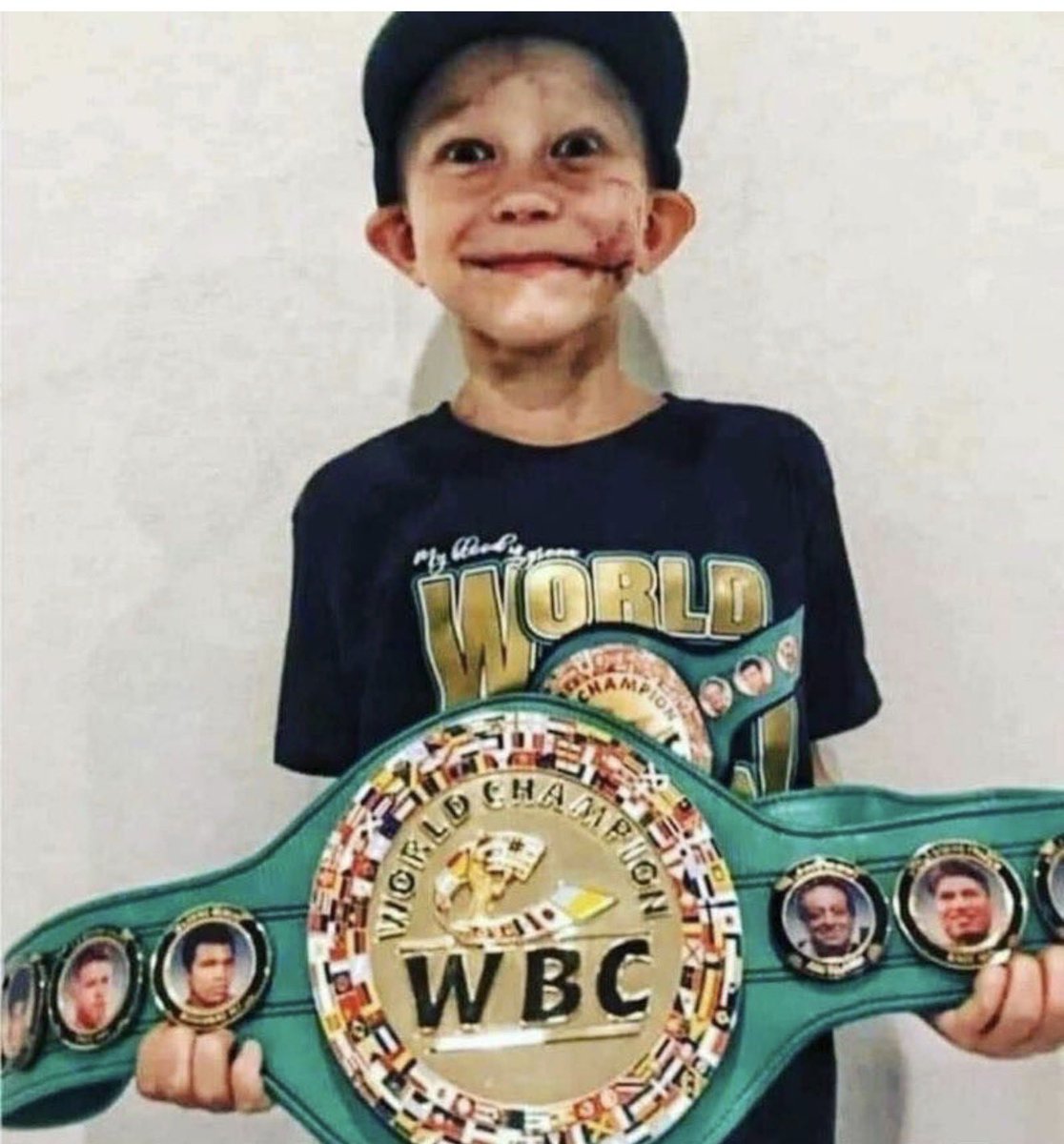
"Bridger Walker is the boy who saved his younger sister from a vicious dog attack...
He received ninety stitches throughout his body, but saved his three-year-old sister from certain death.
"If someone was going to die, it must be me, I'm the older brother."
The World Boxing Council (WBC) recognized him as a World Heavyweight Champion for a day!
It will remain in the official historical record of the WBC.
For that one day, he was the best fighter in the world."
The Pope rightly warns that AI must serve human dignity, not become a tool of domination or exclusion.
But if we hand governments sweeping power over AI development in the name of safety, how do we prevent it from being used to censor, surveil, and control citizens — as Orwell foretold in 1984?
This is the real alignment problem.
“Quis custodiet ipsos custodes.” Who will guard the guardians?
“Power tends to corrupt, and absolute power corrupts absolutely.”
The oldest questions of human nature and authority don’t disappear in the AI age. They become newly relevant.
@kuaroo_@elonmusk Jeff Bezos just made a funny insight about this: a farmer in 1900 was encouraged to buy a tractor - he questioned the impact on labor and was told that a serious job in 100 yrs would be massage therapy. And another : dog therapy. Impossible, he exclaimed…