Husband, father, grandfather, photographer, cook & traveler + aspiring guitarist, gardener. Lucky to get paid to be a tech marketer. Lucky to live in Texas.
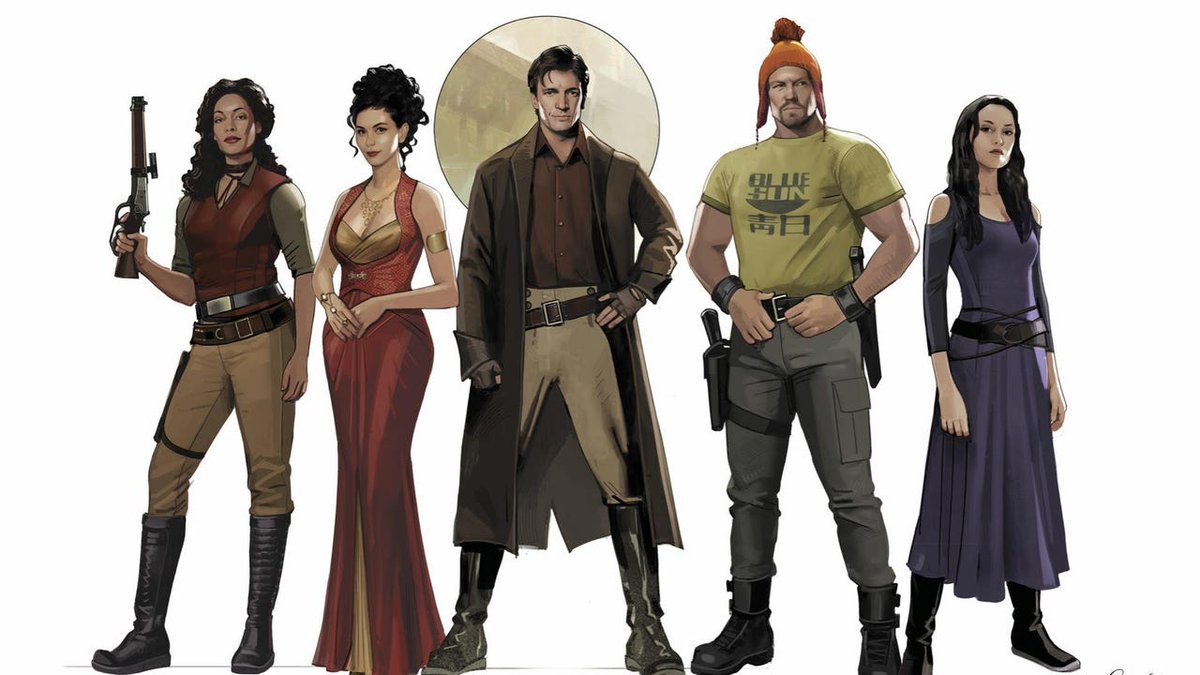
I’ve seen a lot of folks saying an animated show is dumb and people just want a live action sequel. Well, that might be fun for a season or two but the aging of the characters is a lot of narrative baggage to carry. An animated show picking up where Season 1 left off has a wide open storytelling landscape.
I’m all in for the animate sequel and suggests fans stop their whining and get on board and give @NathanFillion and team a chance to sell this thing.
My 2 cents.
#Firefly
First promo for the animated 'Firefly' series just dropped
They need fans to like their post on IG "to convince folks that this is something people want."
(via IG | https://t.co/6A8rICEQhF)
Nathan Fillion’s big Firefly tease has been revealed as a new animated series set between the original live-action TV show and the Serenity movie — but there's a catch. https://t.co/EI7TvbRMEQ
@TeamKClark This is the silliest thing I’ve ever heard. Grown women can handle the paperwork to get valid ID for voter registration. The only reason to not have voter ID is to enable cheating.
Name another country that allows ID-less voting @TeamKClark. It’s OK, I’ll wait.
As a former Special Forces Warrant Officer with multiple rotations running counterinsurgency ops—both hunting insurgents and trying to separate them from sympathetic populations—I’ve seen organized resistance up close. From Anbar to Helmand, the pattern is familiar: spotters, cutouts, dead drops (or modern equivalents), disciplined comms, role specialization, and a willingness to absorb casualties while bleeding the stronger force slowly.
What’s unfolding in Minneapolis right now isn’t “protest.” It’s low-level insurgency infrastructure, built by people who’ve clearly studied the playbook.
Signal groups at 1,000-member cap per zone. Dedicated roles: mobile chasers, plate checkers logging vehicle data into shared databases, 24/7 dispatch nodes vectoring assets, SALUTE-style reporting (Size, Activity, Location, Unit, Time, Equipment) on suspected federal vehicles. Daily chat rotations and timed deletions to frustrate forensic recovery. Vetting processes for new joiners. Mutual aid from sympathetic locals (teachers providing cover, possible PD tip-offs on license plate lookups). Home-base coordination points. Rapid escalation from observation to physical obstruction—or worse.
This isn’t spontaneous outrage. This is C2 (command and control) with redundancy, OPSEC hygiene, and task organization that would make a SF team sergeant nod in recognition. Replace “ICE agents” with “occupying coalition forces” and the structure maps almost 1:1 to early-stage urban cells we hunted in the mid-2000s.
The most sobering part? It’s domestic. Funded, trained (somewhere), and directed by people who live in the same country they’re trying to paralyze law enforcement in. When your own citizens build and operate this level of parallel intelligence and rapid-response network against federal officers—complete with doxxing, vehicle pursuits, and harassment that’s already turned lethal—you’re no longer dealing with civil disobedience. You’re facing a distributed resistance that’s learned the lessons of successful insurgencies: stay below the kinetic threshold most of the time, force over-reaction when possible, maintain popular support through narrative, and never present a single center of gravity.
I spent years training partner forces to dismantle exactly this kind of apparatus. Now pieces of it are standing up in American cities, enabled by elements of local government and civil society. That should keep every thinking American awake at night.
Not because I want escalation. But because history shows these things don’t de-escalate on their own once the infrastructure exists and the cadre believe they’re winning the information war.
We either recognize what we’re actually looking at—or we pretend it’s still just “activism” until the structures harden and spread.
Your call, America. But from where I sit, this isn’t January 2026 politics anymore.
It’s phase one of something we’ve spent decades trying to keep off our own soil.
You’re not confused. You’re attempting to be clever.
Of course he can carry at a protest if he has a valid permit and it doesn’t break some local (probably unconstitutional) law. What he can’t do is commit a crime while carrying. Did he commit a crime? I don’t know. Let’s allow the investigation to sort that out. Did he and thousands of others show up with the intent to obstruct law enforcement in the execution of their lawful duties? Yes. Bad choices.
You know, my dad used to say and I in turned shared with my kids - “nothing good happens after 2am”.
Maybe some grown up should share something similar with these activists - “nothing good happens when you get between a cop and a valid arrest suspect”.
Seems like a good take. I hope for the cessation of violence against the protesters. More importantly I hope for their success in toppling the regime and Iran rejoining the global community.
1) 5 conditions are often needed for a revolution: fiscal crisis, divided elites, a diverse opposition, a convincing narrative of resistance, and a favorable international environment. Iran meets nearly all of them. My @TheAtlantic essay w/ @jgoldsto 🧵 https://t.co/Imc7x9avHf
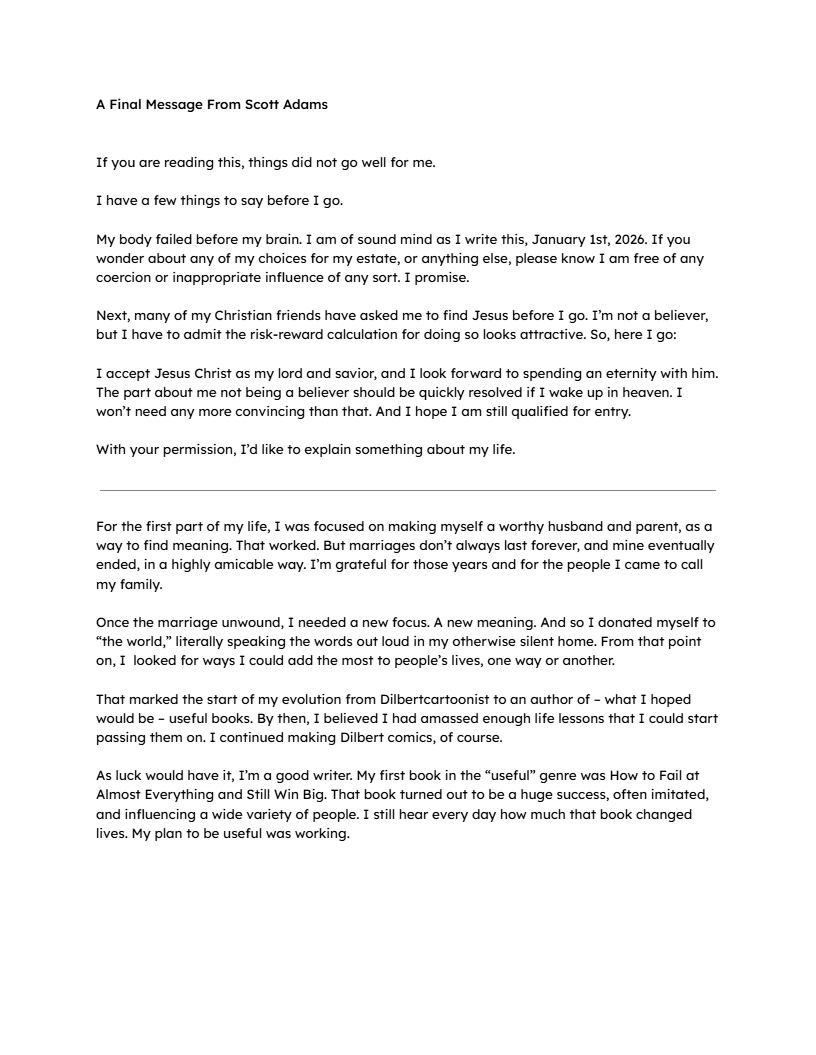
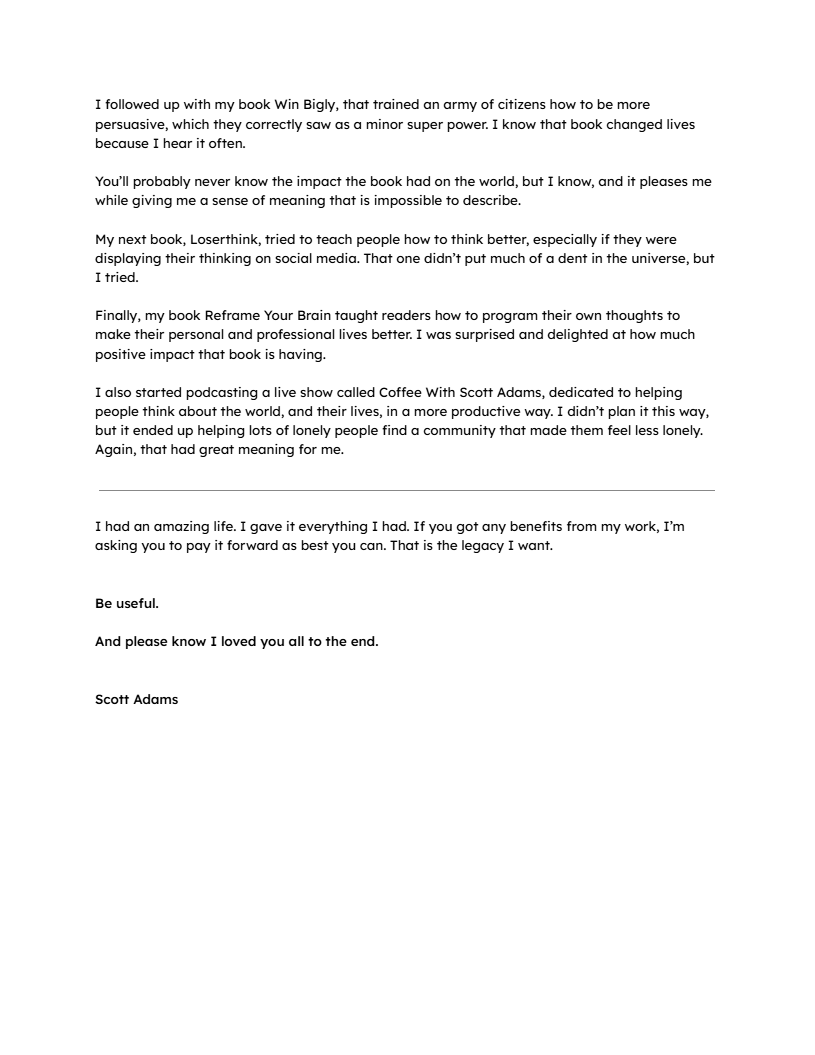
@JoshuaLisec Definitely a thoughtful non-simultaneous sipper, listening to @ScottAdamsSays most nights. If you want to stay ahead of the curve you have to listen and learn from curve bender like Scott.