@DaleVince You do your part and eat the insects and rabbit food, a cow, pig etc is greener than the pistachios you chomp on you muppet. Educate yourself and stop spouting shite trying to brainwash folk. We see through you.
Creatine is the best-selling muscle supplement on earth, and the word itself is Greek for meat.
A French chemist found it in 1832, in a pot of boiled beef. He named it after kreas, flesh, because that was the only place it existed. A few years later a German chemist confirmed it and noticed that wild foxes, which hunted for a living, carried about ten times more of it in their muscle than foxes kept in a cage.
That is everything you need to know about creatine, and it was all known before 1850.
It is the molecule muscle uses to recharge itself during hard effort. Animals store it in their muscle. When you eat their muscle, you get theirs. Your body also makes about a gram a day, and tops up the rest from dinner.
There is none in plants. Not a milligram. No grain, bean, nut, seed, leaf or fruit has ever contained any.
So for most of history, people got their creatine from the place it's named after. Then we were told to eat less red meat, and a few decades later the same population was buying it back as a white powder, made in a chemical plant, sold in a tub with lightning on it.
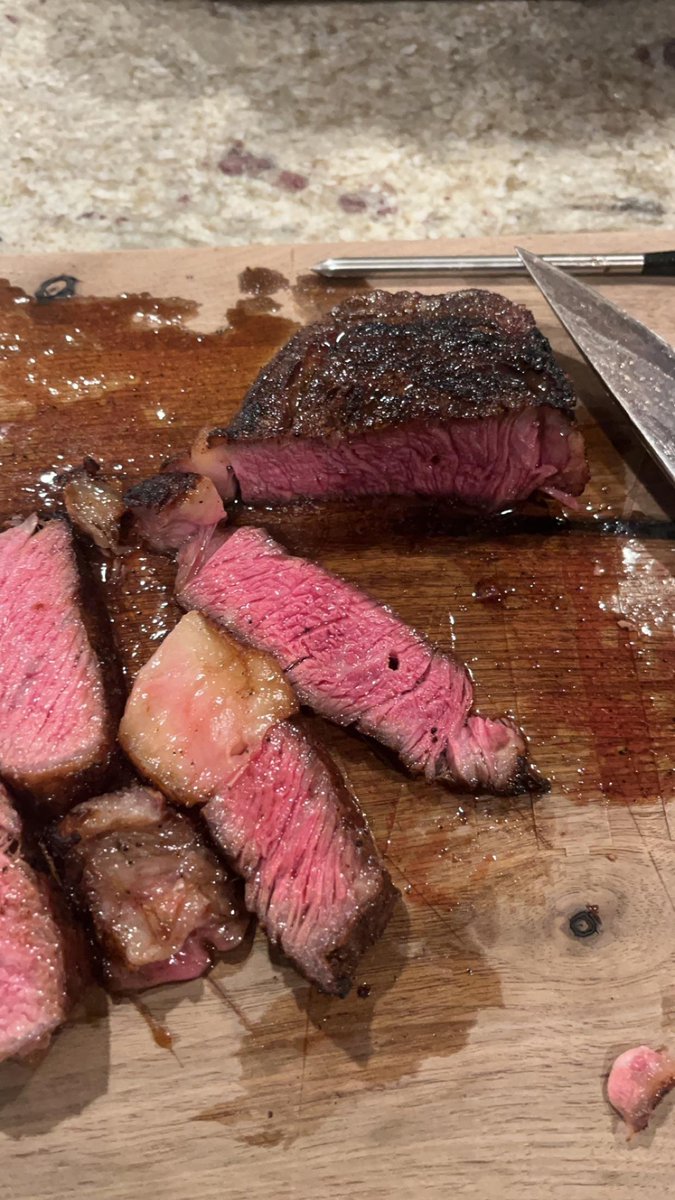
A pound of beef has about two grams in it. It also comes with the steak.
Trump promotes a new book about angels.
"puts coincidences into the proper perspective and reminds us that there is a Higher Power behind the scenes, working all things together for GOOD."
Trump believes in angels more than any other Christian doctrine.
All roads lead to Galactic Federation.
The companies that make your medicines have criminal records, and the convictions are for lying about the medicines.
2007: Purdue pays $600 million for misleading doctors about OxyContin. It carries on trading.
2009: Eli Lilly pays $1.4 billion for pushing an antipsychotic onto dementia patients. It carries on trading.
2009: Pfizer pays $2.3 billion for promoting a painkiller at doses the regulator had refused. It carries on trading.
2010: AstraZeneca pays $520 million for marketing an antipsychotic to children and the elderly. It carries on trading.
2011: Merck pays $950 million over Vioxx. It carries on trading.
2012: Abbott pays $1.5 billion for selling an epilepsy drug to nursing homes as a way of keeping residents quiet. It carries on trading.
2012: GlaxoSmithKline pays $3 billion, part of it for selling an antidepressant for children on a trial that had failed. It carries on trading.
2013: Johnson & Johnson pays $2.2 billion for pushing an antipsychotic onto children and dementia patients. It carries on trading.
Eight companies, more than $12 billion, and not one executive in a cell.
The antipsychotic in that last case had taken about ten times the fine in sales. The fine was a line in the accounts, entered in advance.
These are the firms that run the trials under your guideline, brief your doctor on the results and print the sheet folded inside the box.
A man with one of those convictions could not get a job behind a pharmacy counter. They stock the pharmacy.
@Kabamur@lanacle Hi kab, slightly off topic but related to cloning, do you think the Brazilian football player vini jr has been replaced? Looks and acts different lately, somethings not right
England’s new school food standards will require pulses such as beans, lentils and chickpeas to be served at least once a week.
The government guidance also encourages schools to use tofu, soya and mycoprotein for vegetarian meals and encourages a meat free day each week.
At the same time, schools are told to reduce saturated fat, use smaller amounts of hard cheese and choose lower fat milk.
This is a deliberate change in what children are being encouraged to eat.
And it matters nutritionally. Meat provides complete, highly digestible protein, haem iron, zinc and B12. Pulses contain non haem iron and phytate, which can reduce iron and zinc absorption.
This is also happening while UK climate and food policy is pushing towards lower meat consumption and greater use of alternative proteins.
So children’s school meals are moving in the same direction: more plant protein, less emphasis on animal foods and continued restriction of animal fat.
That’s the policy. The question is whether that’s the diet we actually want for growing children.