How can @Arsenal win games when players don't take shots at goal? In the last 10 games in all competitions Arsenal had an average of about one shot per game. Time for @m8arteta to go.
Knocked out of two cups in two weeks...@m8arteta is a Conference League manager. He is wasting the talent of many great players at Arsenal. @Arsenal deserves a world class manager.
Together with fellow leaders,we joined the people of Torbi,Marsabit County, for a fundraiser supporting 30 women groups. This initiative strengthens grassroots empowerment, boosts women-led enterprises, and advances inclusive economic growth.Women thrive,our communities prosper.
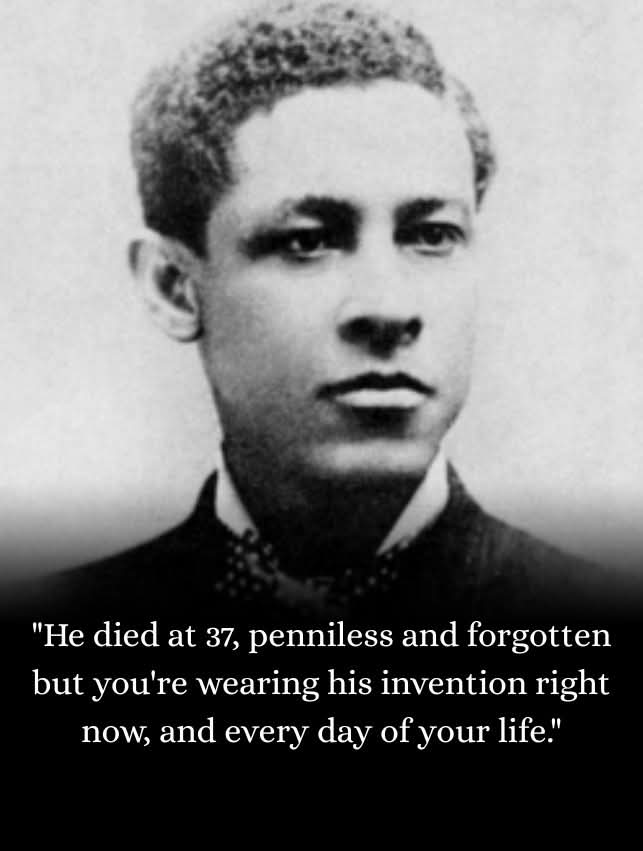
He died at 37—penniless, unseen, and uncelebrated. Yet, every step you take today carries his genius. You’re literally walking on his dream.
In 1880, a pair of shoes cost more than most families earned in a week. Not because leather was rare or cobblers were greedy, but because one maddening process stood between human hands and mass production. It was called lasting—the delicate art of joining the upper part of a shoe to its sole. It demanded a precision so intricate that only a few master craftsmen could do it, producing no more than 50 pairs a day. They were the irreplaceable elite of the industry.
Inventors across continents had tried to build a machine for this. All failed. The work was too alive, too nuanced—too human.
Then came a quiet young man from Suriname. A Black immigrant with oil-stained fingers, broken English, and a mind built for miracles.
Jan Ernst Matzeliger was born in 1852, to a Dutch father and a Black Surinamese mother. From his father’s machines and his mother’s resilience, he inherited both logic and endurance. As a boy, he tinkered with gears and pulleys like they were instruments of destiny.
At 19, he left home, working on ships that ferried him into uncertainty. At 21, he stepped onto the cobblestone streets of Lynn, Massachusetts—the global capital of shoemaking. What others saw as opportunity, he saw as inefficiency waiting to be conquered.
No one believed a Black machinist could solve the problem that had humbled the greatest engineers. So he didn’t ask. He just started.
He worked 10-hour shifts in a noisy factory, then went home to a dimly lit room where he taught himself English from torn pages, mechanical drawing from old manuals, and engineering from raw will. His hands were blistered; his dreams, relentless.
For six years, he battled failure. He built, tested, broke, rebuilt—again and again. Each setback was a teacher. Each rejection, a hammer shaping his resolve. His coworkers laughed. Investors mocked. America ignored him. But he persisted.
And then, on March 20, 1883, Patent No. 274,207 was granted to Jan Ernst Matzeliger.
His machine worked. Perfectly.
What had taken human hands all day, his invention accomplished in minutes—producing up to 700 pairs of shoes daily. The impossible had been mechanized. The industry would never be the same.
Prices plummeted. Families who’d once walked barefoot could finally afford sturdy shoes. Children went to school without cuts on their feet. Workers walked to factories in dignity. He didn’t just make shoes cheaper—he made life kinder.
But the system wasn’t kind to him. Investors demanded control. They got rich; he stayed poor. The United Shoe Machinery Corporation rose on the back of his brilliance, while Jan lived in obscurity, coughing blood in a rented room.
Years of overwork, hunger, and exhaustion consumed him. Tuberculosis finished what poverty had started. In 1889, at just 37, Jan Ernst Matzeliger died—unknown, unprotected, unpraised.
The men who stole his genius became legends. He became a ghost. For over a century, his name vanished from textbooks and museums. Until 1991—102 years later—when he was finally inducted into the National Inventors Hall of Fame.
But history’s silence could not bury his impact. His invention still lives—inside every sneaker, boot, loafer, and heel ever made on an assembly line. Every footstep you take is powered by his mind. Every road, every journey, carries the echo of his defiance.
He came to America with nothing but belief—and gave the world the gift of affordable shoes. He turned metal and willpower into compassion. He proved that genius has no color, no passport, and no permission.
Jan Ernst Matzeliger didn’t just change an industry. He changed humanity’s stride.
He is the man who put the world on its feet.
Moyale Municipality: A New Era Begins
Today, we mark a historic milestone—the launch of the Moyale Municipality Charter. This is more than a document; it’s a commitment to better governance, structured urban growth, and improved service delivery for all.
Moyale has long been a town of great potential, but rapid growth has stretched resources and exposed gaps in planning. With this Charter, we take charge of our destiny—ensuring progress is planned, inclusive, and sustainable.
To the people of Moyale: this is your moment. Be involved. Hold leaders accountable. Together, let’s build a thriving, prosperous Moyale.
The journey begins now!
Keep your hands off community land unless authorised by 2/3rd of the community assembly. Such a progressive ruling that sets a great precedent in Kenya.
https://t.co/46sdLsaNql
This morning, I attended a Consultative Breakfast Meeting focused on expediting the registration of community land in Kenya, organized by the @NLC_Kenya in collaboration with @NamatiKenya.
Our gathering was driven by a shared commitment to the needs of our communities. The National Land Commission is pleased to present an advisory aimed at accelerating the registration of community land, a vital step in protecting the rights of our people
Our advisory draws on research regarding the transition of group ranches to community land, highlighting the current registration status, the challenges faced, and the importance of inclusivity in this process.
Included in the advisory are policy recommendations designed to improve community land registration, developed through consultations with community members, Community Land Management Committees (CLMC), and other stakeholders.
I extend my gratitude to Namati Kenya for their steadfast support and partnership with the National Land Commission. I also wish to thank the Community Land Management Committees, community members, and all key stakeholders for their invaluable contributions to the advisory.
The meeting was graced by; Hon. Alice Wahome,EGH - the Cabinet Secretary of Lands, Public Works, Housing and Urban Development, who served as our chief guest, alongside H.E. FCPA Ahmed Abdullahi, EGH- Chair of the Council of Governors, Gershom Otachi,EBS - Chairperson of the NLC, Hon. Esther Murugi,EGH - NLC Commissioner who is in charge of the Land Use Planning, Research and Counties Committee, and other important stakeholders and community representatives.
#CommunityLand
Our Land, Our Wealth, Our Heritage.
@WilliamsRuto@KindikiKithure@koske_felix@WahomeHon@HEAhmedJiir@MinistryOfLands@SamburuWtrust@AKabelo@SamatarGuleid@Mohamedida@ASALs_Regional
@Kabale_arero@NLC_Kenya@NamatiKenya Kudos madam CEO for that important step.
The snail pace with which community land registration is moving has been nauseating but such reassurance from these major stakeholders is undoubtedly a step in the right direction.