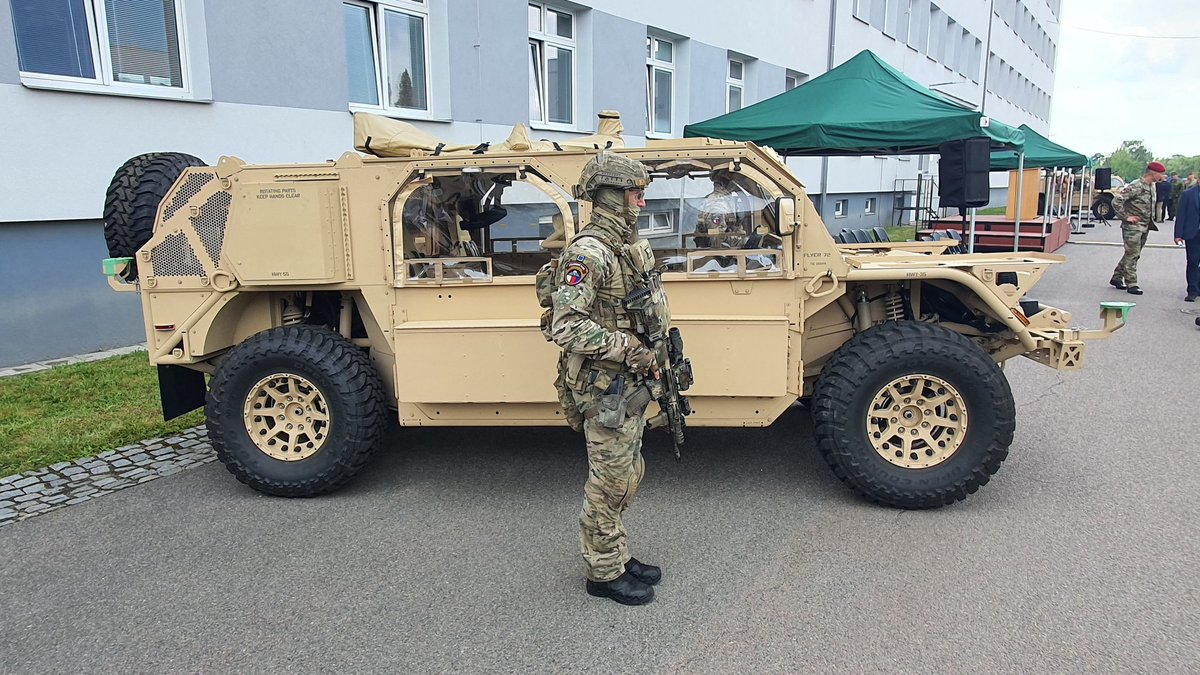
První dvě ze 46 lehkých útočných vozidel Flyer 72 HD dnes předal velvyslanec USA @USEmbassyPrague v ČR Nicholas Merrick vojákům ze 43. výsadkového pluku v @mChrudim. Vozy (2,5 t) jsou darem americké vlády ČR jako náhrada za pomoc Ukrajině. Dodávku dárce dokončí do konce roku.
“Islam has a problem with gays, democracy, bacon, dogs, music, Christmas, Hindus, Jews, Buddhists, Christians, women who show their hair, people who leave their religion, and even people who draw pictures of their prophet, who, by the way, married a six-year-old. But if I have a problem with Islam, for some reason, I'm an Islamophobe.”
In 1982, the FIA introduced Group B, the most extreme regulations in rally history, demanding only 200 road cars be built to compete.
Porsche's saw an opportunity to develop technology for the next generation of the 911, using Group B as the testing ground.
The result was the 959 - a sequential twin-turbo 2.85L flat-six derived directly from the 956 and 962 Group C Le Mans prototypes, an electronically controlled all-wheel drive system called PSK that could vary torque split between axles in real time, a six-speed gearbox with a dedicated off-road gear, and a Kevlar-reinforced composite body.
By the time it was ready, Group B had already been cancelled following a string of fatal accidents.
Porsche entered it in the Paris-Dakar Rally instead, taking first and second in 1986 against the Mitsubishi Pajero and Mercedes G-Wagen.
444 HP, nearly 197 mph - the fastest production car in the world at launch.
The PSK all-wheel drive system went directly into the 911 Carrera 4 that followed.
A homologation special that was part of the holy trinity.
🏁 Ultimate showdown: A twin 13L triple-turbo diesel rally truck versus a sub-1,000 kg, 400-hp Group B monster. Raw power meets pure agility—who takes the win? 🔥🚛💨🏎️