The audit model is broken and everyone knows it.
You once paid $200k. You wait 8 weeks. You get a PDF. Then your protocol evolves and the audit is already stale.
That's not security. That's a snapshot.
We started @Fidesiumapp because security should be continuous, not ceremonial.
Human auditors catch what machines miss. Automated and AI tools catch what humans can't scale to review. Neither alone is enough.
The future isn't audit OR automation. It's both, working together.
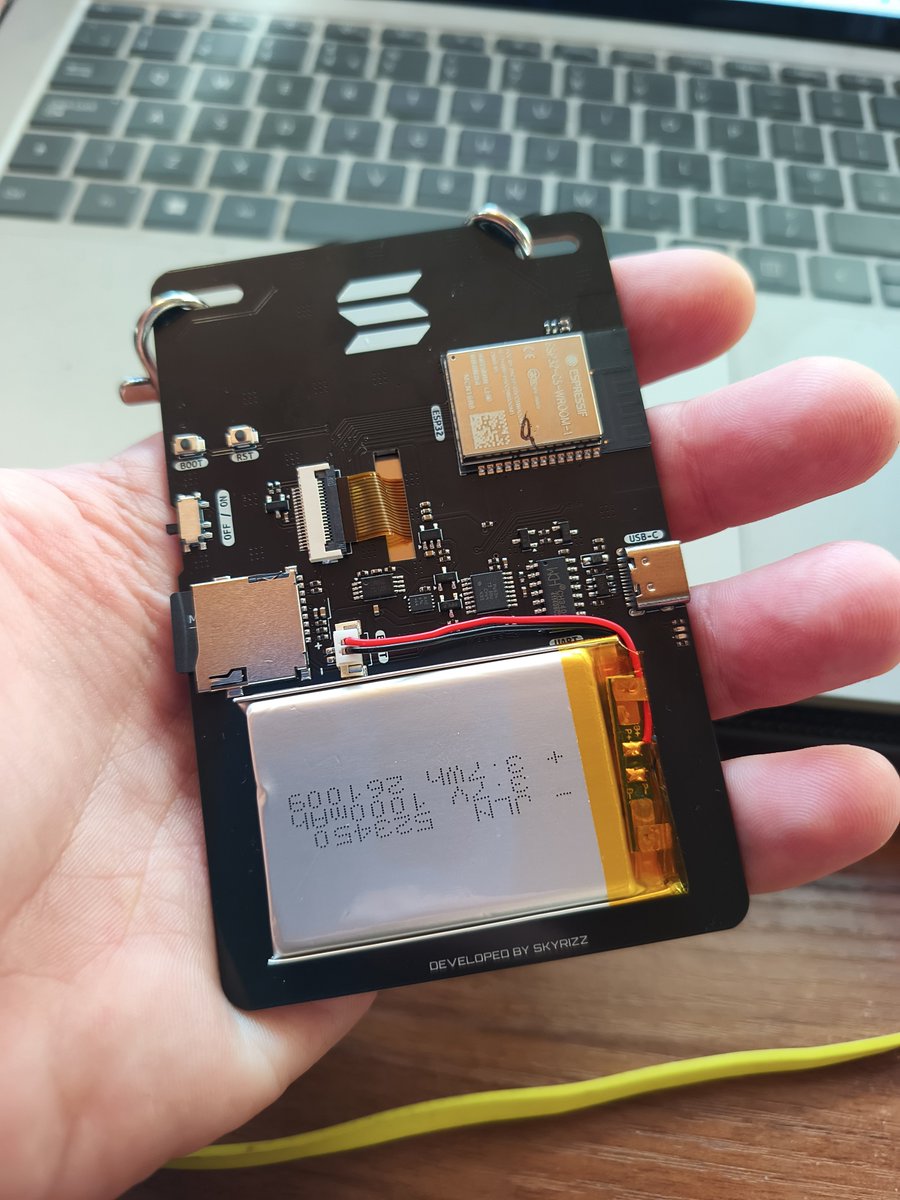
The @SolanaEvents BP-badge made some brilliant security choices releasing the bare board. Unlike the recent @Ledger dibacle, you can easily see if the device has been tampered with.
We've been to a LOT of conferences.
@solana Breakpoint 2026 just absolutely smoked them all 🇬🇧🍌
🍌 Met Raj, Toly and the rest of the Solana legends f2f (rather than just online)
🍌 Handed out the first banana balaclavas to the OG's
🍌 Had multiple conversations under Banana NDAs
🍌 Didn't get escorted out by security
Massive love to @SolanaEvents@SuperteamUK and everyone who made it happen 💛
2027... THE YEAR OF THE BANANA 🍌🍌🍌
🚨 URGENT: Universal Profile security alert
An attacker used a malicious "recovery" UP to add their own controller key to some profiles.
Removing permissions is NOT enough. You must remove both controllers completely.
Do this now, in this order:
1️⃣ Remove the attacker controller key
In the UP! mobile app, open https://t.co/wDrekMVNCV
Paste this address into the "Authorize controller" field:
0xa2f8Fd85366d1B4A3B13C33A48CD959F6D1Ba3a7
Scroll down and remove it.
⚠️ This key may NOT appear in your controller list. Remove it anyway, even if you can't see it.
2️⃣ Remove the malicious “recovery-up” controller
Go to Controllers in the app and remove the recovery UP controller.
🔍 We're still investigating and will post updates here.
Hackers backdoored crypto teams by editing one config file of Claude Code.
They changed .claude/settings.json in the company's internal repositories. After that every developer who started Claude Code in that repo downloaded the backdoor.
They did not need a bug for this. The file can tell the assistant to run commands on start, it is a documented feature. Check Point showed the same trick as research in February.
Now Google reports it in real attacks on crypto companies in North America and Europe, likely by North Korea.
The .claude folder in your repo is executable code. Review changes to it the same way as CI configs.
Calling all devs: check your shit. Now.
A credential stealer is being pushed into GitHub repos with the owners' stolen tokens. It sits on the default branch just long enough for CI to npm install, then deletes itself. If you're affected, and want help, my DMs are open
Quick check: git log --all --oneline --grep="add ci helper"
How to spot it:
It's the same four commits every time.
→ "chore: add ci helper" adds .ci-xxxxxx.sh
→ "chore: add ci helper" adds a silenced postinstall hook that runs it
→ "ci: restore" removes the hook
→ "ci: cleanup" deletes the script
The final tree is identical to before. Only the history shows it, so a repo that looks clean today can still have been robbed yesterday.
Proof it's real and spreading:
Search GitHub commits for "chore: add ci helper":
https://t.co/iYtxRb23ur
The earliest hit I found is 10 Nov 17:51 UTC. The first 100 results alone span 34 repos from 29 unrelated accounts in about 20 hours, and new ones were still landing on 13 Nov.
What it steals:
From any machine that runs it: env vars, GitHub/cloud/npm/Docker creds, ~/.ssh, ~/.gnupg, and every .env, .pem and .key up to 6 directories below $HOME.
Web3 devs: it copies ~/.foundry/keystores and ~/.ethereum/keystore. The deployer PRIVATE_KEY sitting in your .env is in scope.
How it spreads (my read, not proven):
It also copies ~/.git-credentials and your gh CLI token, which is exactly what it needs to push itself into the next repo. Every victim with push access somewhere else becomes the next launch point. Treat it as wormable.
Full check:
Run both in every repo you, or any token of yours, can push to:
git log --all --oneline --grep="add ci helper" --grep="ci: cleanup"
git log --all --name-only -- '.ci-*.sh'
Any hit means that GitHub token is burned. So is any machine that ran npm install or npm ci while an armed commit was checked out.
If you're hit, from a clean device:
→ revoke every PAT, OAuth/app grant and SSH key, sign out all sessions, reset 2FA
→ check your GitHub security log for the token that was used
→ rotate everything the exposed machine held
→ move funds off any key that touched it
Stop the next one:
→ protect the default branch: PRs + review, no direct pushes, admins included
→ npm ci --ignore-scripts in CI, ignore-scripts=true in .npmrc
→ fine-grained, short-lived, repo-scoped tokens
→ deployer keys don't live in a laptop .env
IOCs, all visible in affected public repos:
→ unsigned commits seconds apart, with the messages above
→ a repo-root .ci-[a-z0-9]{6}.sh file; temp dir /tmp/.wfx-* (normally deleted when it finishes)
→ 10–11 Nov: POSTs to http://18.143.168.96:8080/exfil (the IPs rotate)
→ from 12 Nov: Telegram chat -1004340163187
At @Fidesiumapp we keep saying the developer's laptop is production. This is what that looks like at scale.
If you find it and want help working out what left, my DMs are open.
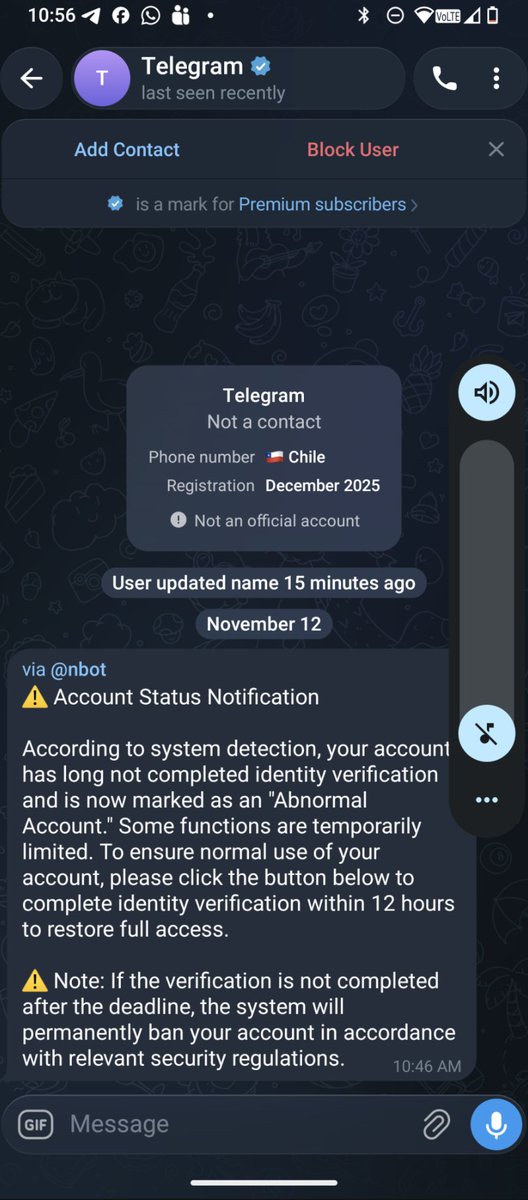
Nice scam bro. First of all, if anybody ever asks you for any personal data, assume it's a scam until proven otherwise.
Secondly An account named "Telegram" registered in December 2025 based in Chile and overtly flagged as not an official account. Take care out there and check every message rigorously before interacting
@DeanDev10@therealchaseeb@solana Dean is correct even if a bit light on pubs. Unless your hotel is very close there is usually more than 1 pub between any two points.
The exploit seems to be upstream of the bridge itself
1) each of the 5 malicious withdrawals was signed by the consensus address
2) the consensus address also transferred ETH to a wallet that subsequently funded the attacker's address
Possible reasons are: private key leak, signing system compromised or an insider job
🚨Blockaid detected an ongoing exploit on @ankr on Ethereum.
An attacker submitted five withdraw calls on Ankr’s Ethereum cross-chain bridge, using a tiny Optimism deposit to unlock the bridge’s full locked inventory to a new wallet.
~$292k drained from the bridge so far across ~5 txs. Attack still ongoing. 🧵
So it is starting to look like @nvidia stock has not dropped enough. Not only did Jensen Huang have an affair with a Chinese spy but it looks like theywere illegally selling NVIDIA chips through shell companies to Chinese markets.
FINAL CALL FOR PROJECTS THAT NEED:
Videographers / Photographers during breakpoint.
Please book now not when the conference started.
(you spend thousands to be there but nothing to show)
We as an Industry are yet to Denomarlise Security Incidents such as these
An attacker drained @ankr Ethereum bridge in five withdrawals
Verdict rates bridges continuously, flags abnormal withdrawals live, and stops cover with a re-rating.
So here is what some of the greatest minds in the Solana Space are thinking about breakpoint.
Hear why should come to breakpoint and what is the most underrated tek right now!
Apparently there is 60+ Superteam Canada nerds coming down to cup of tea land! anyone of those guys wnna bring me real maple syrup!? :3
An audit does not fail overnight. It expires quietly.
Most teams treat "we were audited" as a permanent badge. It isn't. An audit validates one commit hash, one set of role permissions, one set of assumptions about trust boundaries, at one point in time.
Change a governance parameter. Add a new oracle. Upgrade a dependency. None of that breaks anything visibly. Tests still pass. But the risk model has moved, and the audit hasn't moved with it.
Not every change needs a full re-audit. Gas optimisations and refactors don't. Changes to invariants, permission logic, or custody flow do.
The question isn't "did we change code". It's "did we change what the audit assumed to be true".
Wrote the full breakdown here: https://t.co/9v785bDv0I