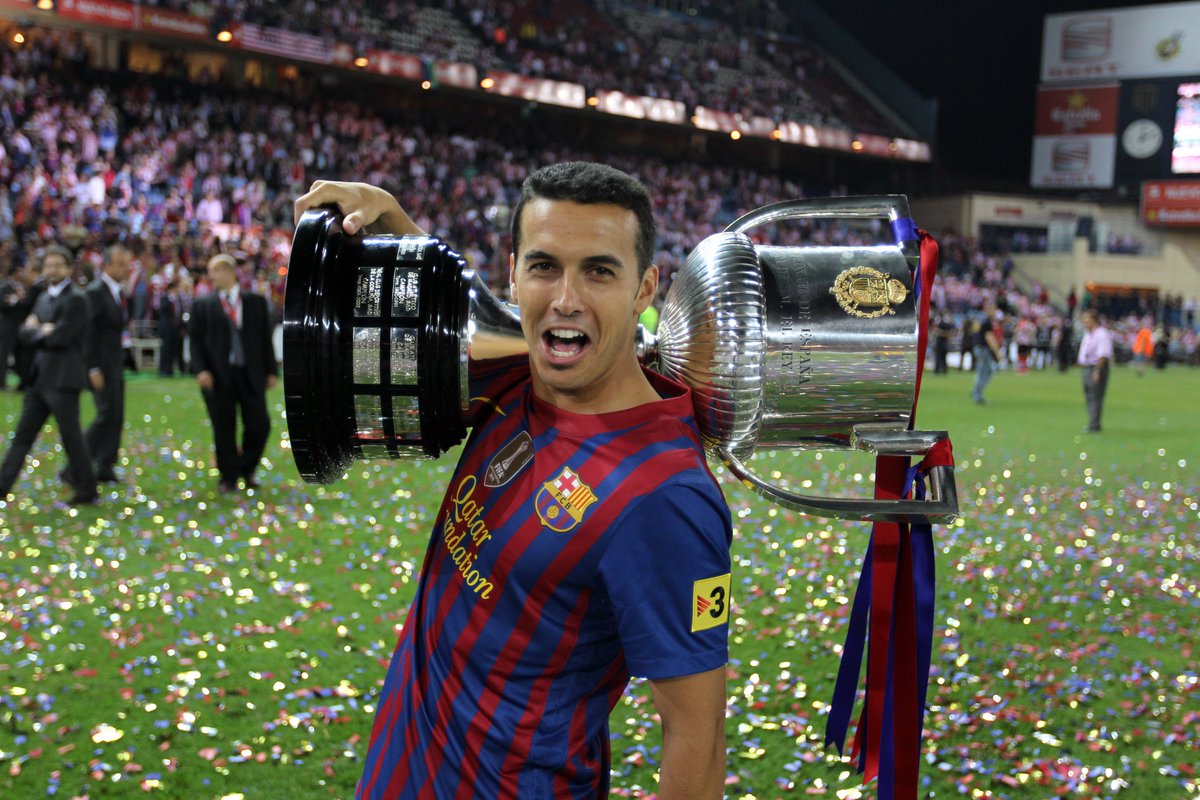
Every single journalist in France voted for Mbappé. Every single journalist in England voted for Harry Kane. But every single journalist in Spain voted against Lamine Yamal. Spain might be the only country whose journalists don’t want their own star player to win the Ballon d’Or.
De un Barça arruinado económica y futbolisticamente y un Madrid poderoso ganando Champions y con un “nuevo” Bernabéu, a construir el mejor equipo y estadio del mundo y con una decadencia merengue en todos los niveles, dirigida por Florentino Pérez.
Don @JoanLaportaFCB.
I am a member of the Norwegian Nobel Committee.
There are five of us. Five people, appointed by a parliament most of the planet could not find on a map, who decide, once a year, which human being the world has agreed to call good.
I know. I know. I think about it on the tram.
We meet in a building on Henrik Ibsens gate, a street named after a man who wrote almost exclusively about people discovering they are frauds, which nobody on the committee finds funny except me. There is a room with a long table and the portraits of the dead laureates looking down, Mandela, the Dalai Lama, a great many earnest men in spectacles, and one portrait we do not discuss, which is Kissinger, 1973, awarded while the bombs were still falling, after which two of our predecessors resigned and the satirist Tom Lehrer said political satire was now obsolete. We keep him on the wall. A reminder. Every family has the uncle.
It is October in Oslo, which means the sun gives up around four in the afternoon like a civil servant, and it rains the particular Norwegian rain that isn’t quite falling, just hanging there, judging you. I arrive with wet shoes. I always arrive with wet shoes. There is coffee, because this is Norway and there is always coffee, we drink more of it per person than almost anyone alive, and someone’s wife has sent kanelboller, the cinnamon buns, and we sit, five Norwegians, damp, caffeinated, sugared, and we decide the moral standing of the entire species.
Let me tell you how it actually works, because the world imagines a cathedral and it is, I promise you, a book club with a mandate.
287 nominations this year. 208 people, 79 organizations. Anyone can nominate, that’s the secret nobody understands: a professor, a parliamentarian, a former laureate, so the “nominee” list is meaningless, it’s a suggestion box, and every autumn some congressman nominates his own golden retriever and the press writes “SHORTLISTED.” Nobody is shortlisted. There is no short list the public ever sees. There is us, and the coffee, and the rain, and the portraits, and a Norwegian stubbornness that is older than the prize itself.
We read reports. The institute’s advisers write them, thick dull documents, and we argue. Our chairman told the BBC once that in the final meeting “there is a high temperature.” High temperature, for a Norwegian, means someone slightly raised an eyebrow and then apologized for it. We don’t do high temperature. We do a long silence, and then Kristin says “well,” and everyone knows exactly what “well” meant, and it’s settled. That’s our shouting. “Well.” You’d have to be raised here to hear the violence in it.
Now. This year. I will not say the name, because we never say the name, but you know the name.
A certain head of state wanted this prize the way a child wants a thing in a shop window, which is to say loudly, and in public, and with the full belief that wanting it was itself the argument. He said he deserved it. He said he’d ended eight wars, a number that grew most times he said it, like a fish. He had other heads of state phone us. Israel’s prime minister posted it on the internet, “Give him the Nobel.” The leaders of Cambodia and Pakistan announced they’d nominated him, as though announcing it were part of it, as though we tally mentions. A man flew around the globe collecting endorsements for a Norwegian committee the way you’d collect signatures for a petition to the council about a noisy dog.
And here, uff da, is the detail I treasure, the one that makes me smile into my coffee. The nomination deadline is the 31st of January. He took office on the 20th. So for all the phone calls, all the posts, all the gilded lobbying, the only nominations that could possibly count for this year’s prize were filed in the first eleven days of his term, before he had, by his own arithmetic, ended a single one of the eight wars. He campaigned all year for a prize whose window had shut while he was still hanging up his coat. We didn’t have to reject him. The calendar did. We just watched. Norwegians are very good at watching. We have long winters.
People think we sit there weighing his deeds. We don’t. That’s the thing I can’t make the world understand. We’re not grading his homework. We don’t owe anyone the prize for a ceasefire, however real, however loud the announcement. “He made peace” is not a sentence that ends in a medal, the way he believes it does, the way he believes every good thing ends in his name on it. The will of a dead Swede says the prize goes to whoever did the most for fraternity between nations. A dead Swede, I should add, who made his entire fortune inventing dynamite and selling arms, and spent his last years horrified at his own obituary, which called him a merchant of death, and so bought his way to immortality as a man of peace. The whole prize is one guilty arms dealer’s attempt to launder his name. We are, all of us, administering a dead man’s public relations. I find this clarifying. It keeps me humble. It should keep everyone humble, and it keeps, by my count, no one humble at all.
So who did we give it to?
An eighty-five-year-old woman. A judge. Born in Durban, under apartheid, granddaughter of a Tamil man who came to South Africa as indentured labor, a bus driver’s daughter from the poor Indian quarter, who became the first non-white woman to run a law practice in her province, who defended Mandela’s people when defending them was dangerous, who sat on the Rwanda tribunal and the court at the Hague, and who, at eighty-five, is right now a judge weighing whether a genocide is a genocide. When we told the world, our chairman said the rule of law “underpins the system we have set up to ensure peace,” and that “peace requires justice.” She wasn’t even in Oslo. She was in Nuremberg. In courtroom 600. The actual room where they tried the Nazis. You cannot stage that. God staged that, and God, it turns out, is a better satirist than any of us.
She did not phone us. She did not post. No prime minister demanded it for her on the internet. She had, as far as our deliberations are concerned, the one qualification the loud man could never manufacture, which is that she wanted the work and not the medal. The medal finds those people. It flees the ones who chase it. This is not a rule we wrote. It’s just the only pattern the hundred-odd years of our mistakes has ever shown.
The reaction from across the ocean was immediate. His spokesman posted that we “place politics over peace.” Ja. Perhaps. We’re five damp pensioners in a rainy city; of course it’s political, it was always political, it was political when we gave it to a sitting American president nine months into his first term for the promise of things he had not yet done, and we have been quietly embarrassed about that one for fifteen years, so believe me, we had a particular reason this year to prefer a woman with fifty years of verdicts behind her over a man with eight wars in front of him and a deadline already behind him.
Here is what he will never understand, the thing I’d tell him on the tram if he ever took one. We are the one prize he cannot buy, cannot post his way to, cannot have a friendly dictator phone in for him. Not because we’re incorruptible, nei, we’re as vain and wrong and human as the portraits on our wall. But because the entire point of the thing, the only power a small cold country’s book club has ever held, is that it goes to the person not performing the wanting. The moment you demand it, you’ve proven you don’t understand what it’s for, and proving that is itself the disqualification. He ran the most expensive campaign in the history of the prize and the campaign was the reason. He was never losing to Navi Pillay. He was losing to the concept.
It’s dark now. Four o’clock dark. The buns are gone. Kristin said “well” an hour ago and we all went home. I’m on the tram with my wet shoes, and somewhere across the water a very powerful man is explaining to a camera that the prize is rigged, that we’re corrupt, that he’ll win it next year, and he genuinely might, we’re only five idiots and we’ve been wrong before, Kissinger is still on the wall.
But not this year. This year an old woman in Nuremberg, in the room where the law once stared down the exact kind of man who thinks wanting a thing loudly enough should make it his, got a phone call she didn’t ask for.
That’s the job. We don’t reward the man who ends the war and announces it.
We reward the woman who spent fifty years deciding what a war was.
He’ll never see the difference. That’s rather the whole point of him.
Takk for i dag. I have to change trams.
¿Apoyan los futbolistas BRASILEÑOS a BOLSONARO por la IGLESIA EVANGÉLICA?
Neymar haciendo el símbolo político de Bolsonaro; Dani Alves pidiendo su voto…
Hoy te cuento en el Fútbolradar por qué apoyan tantos jugadores a Bolsonaro, y qué relación hay con la iglesia evangélica.
Junts y ERC llevan ocho años negociando "cesiones" con el PSOE. La realidad es que Pedro Sánchez solo les ha cedido efectivamente su salvación judicial: indultos y amnistía. Para todo lo demás, ni la financiación autonómica, ni las competencias en inmigración, ni la co-gestión de Rodalies, ni nada relativo a autogobierno o infraestructuras, ha sido una cesión real o eficaz –solo titulares que los partidos del 'procés' se han dedicado a inflar para justificar su regreso a la gobernabilidad. Ni el president Salvador Illa puede decir hoy que el "posibilismo" esté sirviendo de mucho. El independentismo está adormecido, en la abstención, pero si vuelve a resurgir no será porque gobierne la derecha, sino por el fracaso de la idea de que pactar con España pueda realmente servir para tener una Cataluña mejor.
I can confirm that this is the most democratic sport in the world! Literally!
What I saw impressed me deeply. Of course, it all looks very unsafe, even dangerous. But these people have trained very thoroughly and know well what they are doing. Every step, every movement is developed in advance through lengthy training sessions. Yet the main takeaway is that this is how Catalans learn to mobilize together very quickly, to completely rely on one another, and to find a shared balance in a single breath, level by level, closer and closer to the goal. Families, friends, children, parents, and grandparents, Catalans of all nationalities and races unite this way. The stability of the tower is built on universal mutual reliance and trust. It is genuine, true human democracy, a manifestation of family and universal values without loud words, with a real sense of shared effort. The casteller movement is extraordinarily popular across Catalonia.
Here might lie the answer to the Catalan secret: the ability to mobilize very quickly, to cooperate productively and successfully to achieve great and beautiful goals. They have been learning and practicing this for decades, even centuries. Few sports in the world can be so unifying for people of all ages, genders, and nationalities at once. I think this tradition will allow Catalans to build their tower to achieve the highest goal.
They know what it means to have a shared shoulder, common stability, trust, and the courage to climb toward very complex summits. Castellers are ready for it in literally a couple of minutes. Nothing characterizes a nation better than its shared passions and traditions. The casteller movement is an impressive and beautiful testament to the Catalan spirit.
As I mentioned before: for the Balts, the choir movement was the mobilizing force; for Catalans, these clubs undoubtedly build the spirit of national unity. Casteller competitions and performances are admired by anyone who has had the good fortune to see them in person. It is only the fifth day of my trip, and once again I am truly amazed. From this day on, I look upon the castellers as heroes.
Notably, another tradition popular in Spain - bullfighting - has been banned by law in Catalonia for several years. Madrid is trying to force Catalonia to lift this ban. But Catalans do not want to allow an elaborate show of animal killing in their land. In the Catalan view, this is a brutally cruel practice unworthy of a civilized European society. The Spanish authorities disagree. Interestingly, Spanish media interpret this ban as politically motivated. In fact, several years ago, non-political animal welfare organizations requested the ban on brutal bullfighting. Seeing public support for this initiative, the Catalan Parliament banned this terrible medieval tradition. Their choice is the remarkably democratic casteller movement.
Such clubs are everywhere in Catalonia; hundreds of people from other countries come to learn, and the @BBC and other major world media dedicate special films to this unusual tradition. Shoulder to shoulder, level upon level, shared calm, shared balance, shared trust, a shared goal, shared courage, shared summits, and hearts in a single rhythm. That is the story of the Catalan castellers. That is Catalonia!
Siento que es el momento.
El momento para dar un paso adelante y comenzar una nueva etapa en mi vida.
Me voy orgulloso por haber vivido mi sueño y por todas las personas que estuvieron a mi lado para hacerlo realidad.
Gracias fútbol por hacerme tan feliz. ❤️⚽️
Fifteen years ago, issue #1 of New 52's BATMAN came out in comic book stores and changed my career forever.
The art from brothers @GregCapullo and @jonathanglapion is all time work, @Comicraft's letters made us look good, and our tireless editors steered the ship. So grateful!
¿Y quien dice que sólo los niños sueñan con salir a la cancha con sus ídolos?
El Betis saltó hoy al terreno de juego con los 11 socios más antiguos. Los tipazos no paran de hablar y de sonreír.
El sueño del abuelo🫶
La catalanofòbia està tan arrelada al sistema judicial espanyol que al judici del Roger Español les defenses s’han hagut de traduir a si mateixes perquè cap de les dues traductores jurades tenia prou domini del català per fer la seva feina.
És un insult i una indignitat que demostren la desídia de la justícia espanyola quan es tracta de respectar el dret a defensar-se en català. No teniu vergonya.
https://t.co/C3tuGJn43k
És evident - només cal mirar-los les cares - que tots aquests promotors i inversors immobiliaris son vinguts a la política a deixar-se la vida per la independència de Catalunya.
🔴 A diferència de TU jo tot el que público de contingut gràfic és produït per mi perquè vaig sempre els llocs. I si, vaig estar al Fossar i afins d'Aliança Catalana van increpar a varis periodistes, així que prou de fer desinformació. Ens van tocar la càmera a més d'un i en diverses ocasions. I amb les proves que adjunto... Ets capaç de retirar les teves afirmacions?