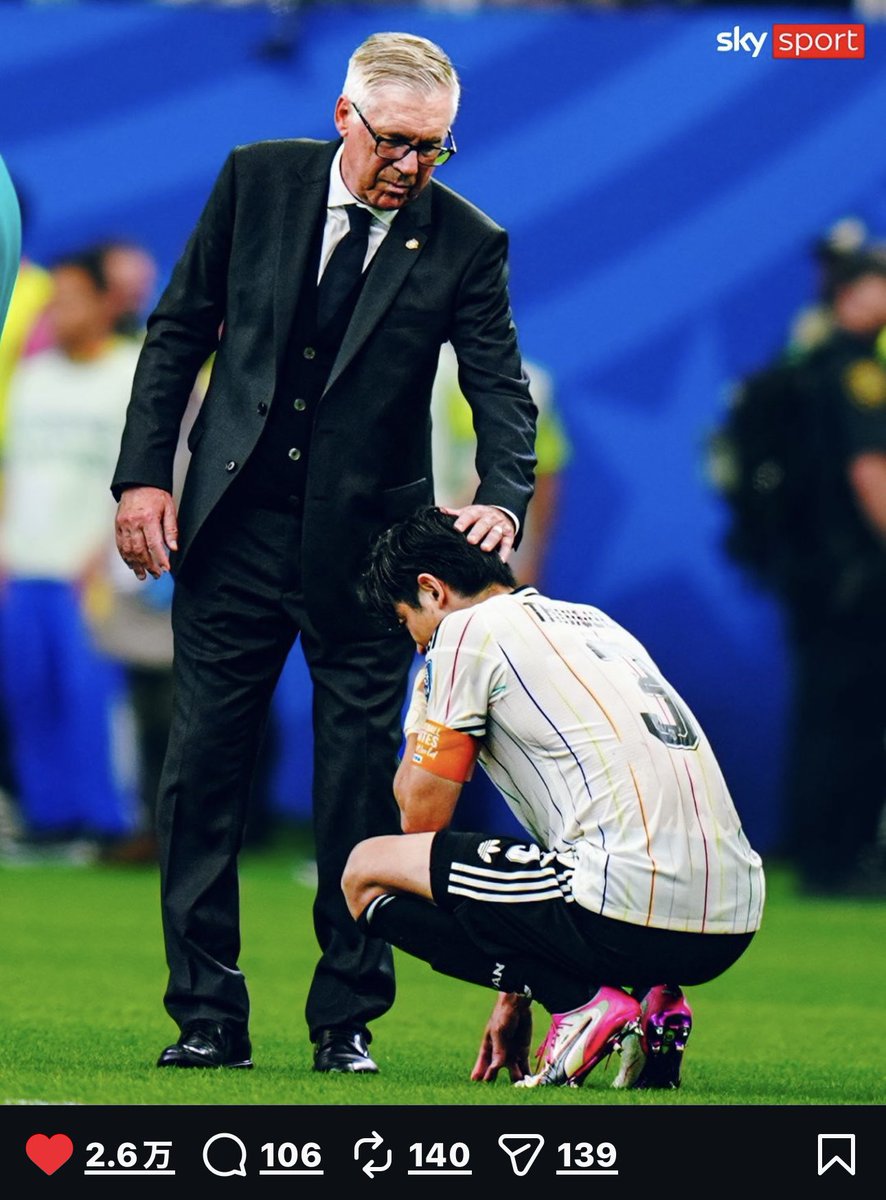
Former Premier League champion and Japan icon Shinji Okazaki delivered a harsh criticism on Moriyasu’s approach and admitted he could not understand his substitutions:
Japan removed Doan and Nakamura, lost two key attacking outlets, brought on Sugawara despite his defensive limitations, and then surrendered the initiative to Brazil in a passive, park-the-bus collapse.
Former Premier League champion and Japan icon Shinji Okazaki delivered a harsh verdict on Moriyasu’s substitutions: remove Doan and Nakamura, bring on Sugawara, lose Japan’s attacking outlet, and invite Brazil to suffocate the team.
In his special commentary published by Sports Hochi @hochi_football, Okazaki said he could not understand the intention behind some of Moriyasu’s substitutions, especially the use of Sugawara in a supposedly defensive shift.
That decision did not simply change Japan’s defensive shape. It deprived the team of two attacking outlets who were crucial in linking defense to attack, carrying the ball forward, and giving Japan any real transition threat.
Japan’s first half vs Brazil was excellent. The pressing, compactness, control of Vinícius, and defensive speed were close to perfect. But once Brazil raised the tempo in the second half, Japan collapsed into a passive survival mode.
Okazaki said Japan dropped too deep, could no longer get out, and looked mentally overwhelmed. That is the most worrying part. The players’ faces looked different from anything we saw in the group stage. They looked psychologically drained, almost unable to shift even into first or second gear.
And this is where Moriyasu’s game management becomes very difficult to defend.
Subbing off Doan and Nakamura killed Japan’s attacking connection. They were two of Japan’s main outlets in this tournament. Once they left the pitch, Japan lost the ability to keep the ball, link midfield to attack, or press higher. The team was reduced to clearing, defending, and hoping Ayase Ueda could somehow hold up long balls by himself.
Okazaki wonders: if the intention was defensive stability, why Sugawara?
He is more of an attack-minded player than a defensive one, and in this specific context, he offered less than Doan at both ends of the pitch. That made him hardly the obvious choice to protect Japan from Brazil’s pressure.
If Moriyasu wanted to defend the right side, a more coherent move would have been Tsuyoshi Watanabe on for Doan, Watanabe as RB/RCB, Tomiyasu as RWB, and Ito pushed higher as the right attacking midfielder.
That would at least have given Japan defensive strength without completely destroying the right-side structure.
Instead, Japan lost both courage and attacking impetus.
Okazaki said Japan’s approach looked like they were aiming for extra time and penalties at 1–1. Against Brazil, that is an extremely dangerous mindset. You cannot defend for 30 minutes or more, invite wave after wave of Brazilian attacks, and expect to keep a clean sheet until penalties.
What made it even more frustrating was watching Morocco and Paraguay later that same day against the Netherlands and Germany, they had the courage to raise their gears. They did not simply retreat out of respect for the opponent. They tried to compete with intensity, aggression, and belief.
Had Japan been facing Morocco, they may have played with greater freedom, aggression, and belief.
Against Brazil, however, the weight of the opponent’s name seemed to shrink Japan’s courage and made them smaller.
Okazaki’s point was clear: Brazil pinned Japan back not only because of their quality, but because Japan became mentally passive. The fear and excessive respect made the mission easier for Brazil. Once Japan stopped stepping forward, Brazil could attack again and again until the winner came.
At 1–1, Japan needed a message from the bench:
“Step forward. Don’t be scared.”
Instead, the message felt like:
“Survive. Hold on. Reach penalties.”