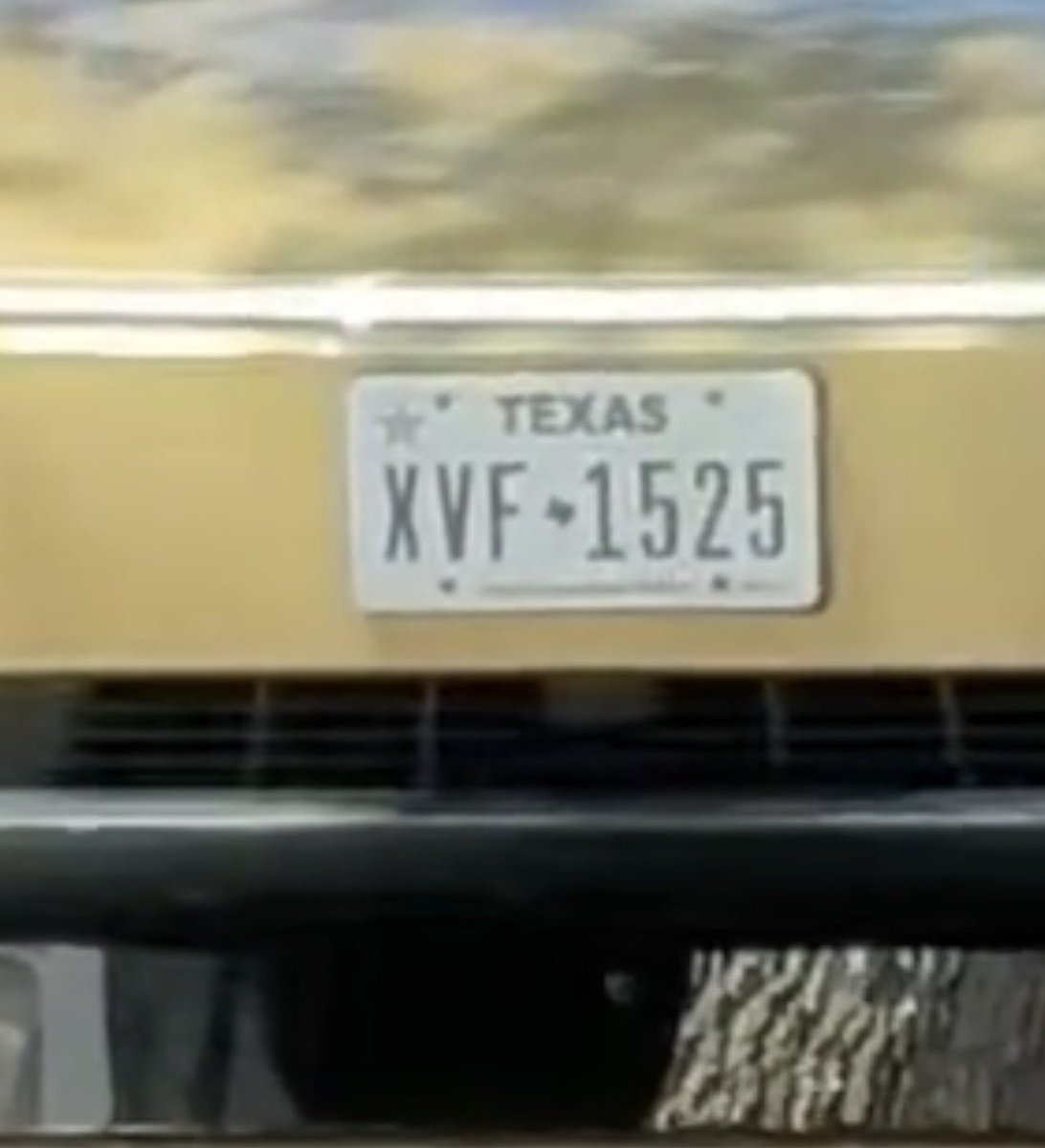
Lots of to unpack here
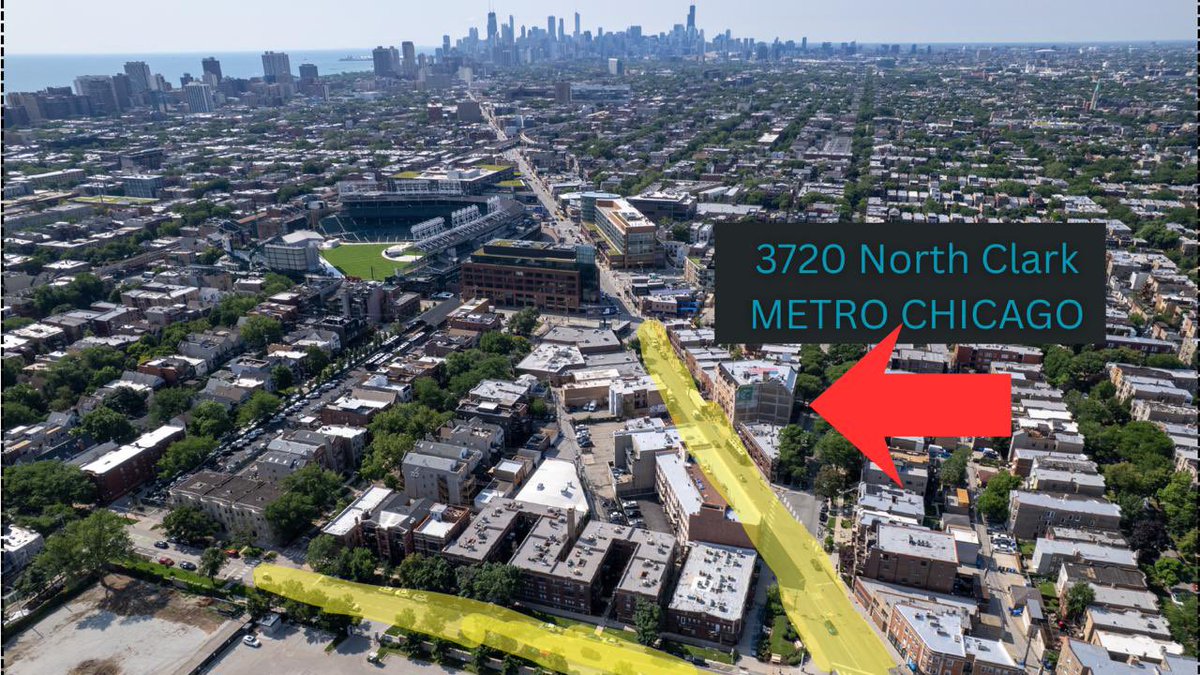
@tesla is commercially filming in Wrigleyville, Chicago next Monday 7/13 2pm-11pm. Production will take over the entire 3700 block of Clark from 8pm-9pm.
“West side of Clark st at 3720 North Clark St” is music venue Metro. There is no scheduled concert that day. The rest of the two blocks of permitted city blocks aren’t very notable.
Two Cybercabs did just get delivered to Chicago last week at a site 2 miles away from this production.
Speculation: maybe there’s a lobbying event at Metro to support the Autonomous Vehicle Pilot Project bills. Per @the_illinoize’s quote from @HastingsforIL, will be revisited during the Fall Veto Session in November/December. The pair of senate and house bills are needed to pass to legalize @robotaxi/@waymo/@zoox in Illinois.
Shoutout @chi_urbanist for first spotting the posted permit
@filming_chicago
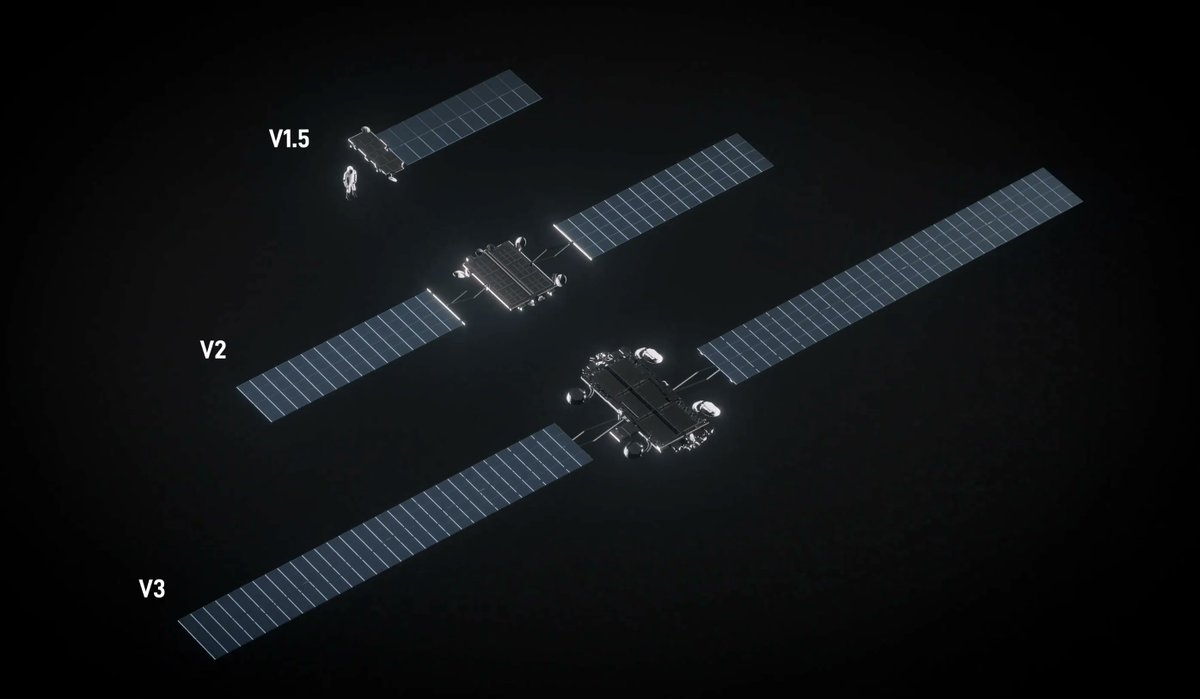
The path to launch is filled with obstacles and success is only possible through the tireless efforts of many working together towards a common goal. “Critical Path” continues the ongoing Starship series, following SpaceX engineers through the final days before launch of the first Starship V3 and the challenges that come with development of the world’s most powerful and fully reusable rocket.
Getting a sense of the scale involved with the construction of the @Tesla Optimus factory at Giga Texas can be difficult, but I think these with humans in the shot helps with that perspective.
Tesla Invents Breathable Glass?
Tesla has filed a patent for a new kind of panoramic roof glass that could make vehicles quieter, cooler, and more efficient.
Instead of being a normal solid glass roof, the design uses multiple layers of glass with a small air gap inside. The inner glass layer has tiny holes. Tesla can push heated or cooled air through that gap and into the cabin, turning the roof into part of the climate-control system.
The same holes and air chambers can also absorb road, wind, and tire noise. By changing the hole size, spacing, glass thickness, and air gap, Tesla can tune the roof to block specific sounds.
The big idea is that Tesla’s glass roof would no longer just let in light. It could also help cool the cabin, reduce HVAC energy use, improve range slightly in hot weather, and make the car quieter and more comfortable.
Starlink is delivering peak speeds of up to 10 Gbps symmetric in Utqiagvik, Alaska – the northernmost city in the United States, located 320 miles above the Arctic Circle
Through bonded gateways, Starlink can provide up to 20 Gbps symmetric, enabling high-capacity connectivity even in the most remote and extreme environments→https://t.co/qom2FdCsai
$TSLA
NEWS: LG Energy Solution will increase the number of cylindrical batteries at its plant in Nanjing, China.
This seems to be due to increased sales of Tesla's electric vehicles, including the Model Y, which is produced in Giga Shanghai.
Several sources within Tesla’s supply chain have indicated that Tesla has finally issued specific procurement guidelines for Optimus parts, requiring suppliers to increase production capacity to 1,000 units per week by September of this year, and then to 2,000–2,500 units per week by the end of the year.
SpaceXAI’s Grok 4.5 scores 54 to place fourth on the Artificial Analysis Intelligence Index following only Fable 5, GPT-5.5, and Opus 4.8. It scores on par with GPT-5.5 in Codex on the Artificial Analysis Coding Agent Index in the Grok Build harness, at much lower cost
Grok 4.5 improves 16 points over Grok 4.3 on the Intelligence Index, bringing SpaceXAI to the intelligence frontier behind only OpenAI and Anthropic, and outperforming all open weights models and notably Google’s Gemini models. Key standout areas of performance are agentic knowledge work and coding.
Grok 4.5 in Grok Build scores 76 on the Artificial Analysis Coding Agent Index, on par with GPT-5.5 (xhigh) in Codex and just below Fable 5 (max) in Claude Code, and at a small fraction of the token usage and price.
Congratulations to @SpaceXAI, @cursor_ai, and @elonmusk on the impressive release!
Key Takeaways:
➤ Grok 4.5 performs very strongly on agentic tasks. Grok 4.5 ranks #4 on GDPval-AA v2 with an Elo of 1543, between Claude Opus 4.8 (1600) and GLM-5.2 (1513). It achieves the top score on 𝜏³-Banking of 33%, above 31% from GPT-5.5 (xhigh), and sits on the cost vs performance Pareto frontier across all three agentic evaluations in the Intelligence Index
➤ Grok 4.5 is one of the most cost efficient models to run for near-frontier intelligence. It costs $0.31 per task on the Artificial Analysis Intelligence Index and $2.59 per task on the Artificial Analysis Coding Agent Index within Grok Build
➤ Low cost for Grok 4.5 is driven by both low pricing and token efficiency. Grok 4.5 has a headline price over 60% lower than Claude Opus 4.8 and GPT-5.5, and used ~14k output tokens per Intelligence Index Task - over 60% lower than Opus 4.8. On the Coding Agent Index, Grok 4.5 stands out on the Pareto frontier of Coding Agent Index score vs. Total Tokens, using only 1.9M tokens for the Coding Agent Index while scoring 76
➤ As a coding agent, Grok 4.5 in Grok Build is on par with GPT-5.5 and offers efficiency benefits: In our Artificial Intelligence Coding Agent Index that consists of DeepSWE, Terminal-Bench v2, and SWE-Atlas QnA, Grok 4.5 in Grok Build ranks third, on par with GPT-5.5 (Codex) and below Fable 5 (Claude Code). It is also very efficient in achieving this result: Grok 4.5 in Grok Build cost $2.49 per task while Fable 5 in Claude Code cost $11.80 and GPT-5.5 in Codex $5.07. This is driven by relatively low token pricing and the model using far fewer tokens than comparable models (1.9M average tokens used per task), significantly less than Fable 5 in Claude Code (7.2M) and GPT-5.5 in Codex (6.2M)
Other model details:
➤ Context window of 500k tokens - a reduction from Grok 4.3’s 1M token context, but retaining configurable reasoning and vision input
➤ Pricing of $2/$6 per 1M tokens of input/output; cache hits are discounted by 75% to $0.5 per 1M tokens, and costs still double with long (>200k token) inputs
➤ As Elon Musk has disclosed, Grok 4.5 is 3x larger than its predecessor at 1.5T parameters
Two sources close to the suppliers said that Tesla places orders about two months in advance, and they have already seen specific orders for hundreds of units in August. Based on this estimate, Tesla’s suppliers will have the capacity to supply parts for 100,000 Optimus units annually by the end of the year. It is understood that before placing orders with the supply chain, Musk approved the latest version of Optimus at an executive meeting in late June. This means that after more than three years of research and development, Optimus Gen 3 will finally leave the lab and enter mass production.
NEWS: Taiwan’s D-Link has secured a SpaceX order to supply network switches for Starlink.
• Around 20,000 switches expected
• Shipments planned from September 2026
• All units to be manufactured in Taiwan
• Built to meet strict U.S. NDAA/TAA security requirements
Grok 4.5 is built for real-world engineering. It excels in large codebases and handles long-running tasks that span multiple repositories, hundreds of skills, and a variety of tools.
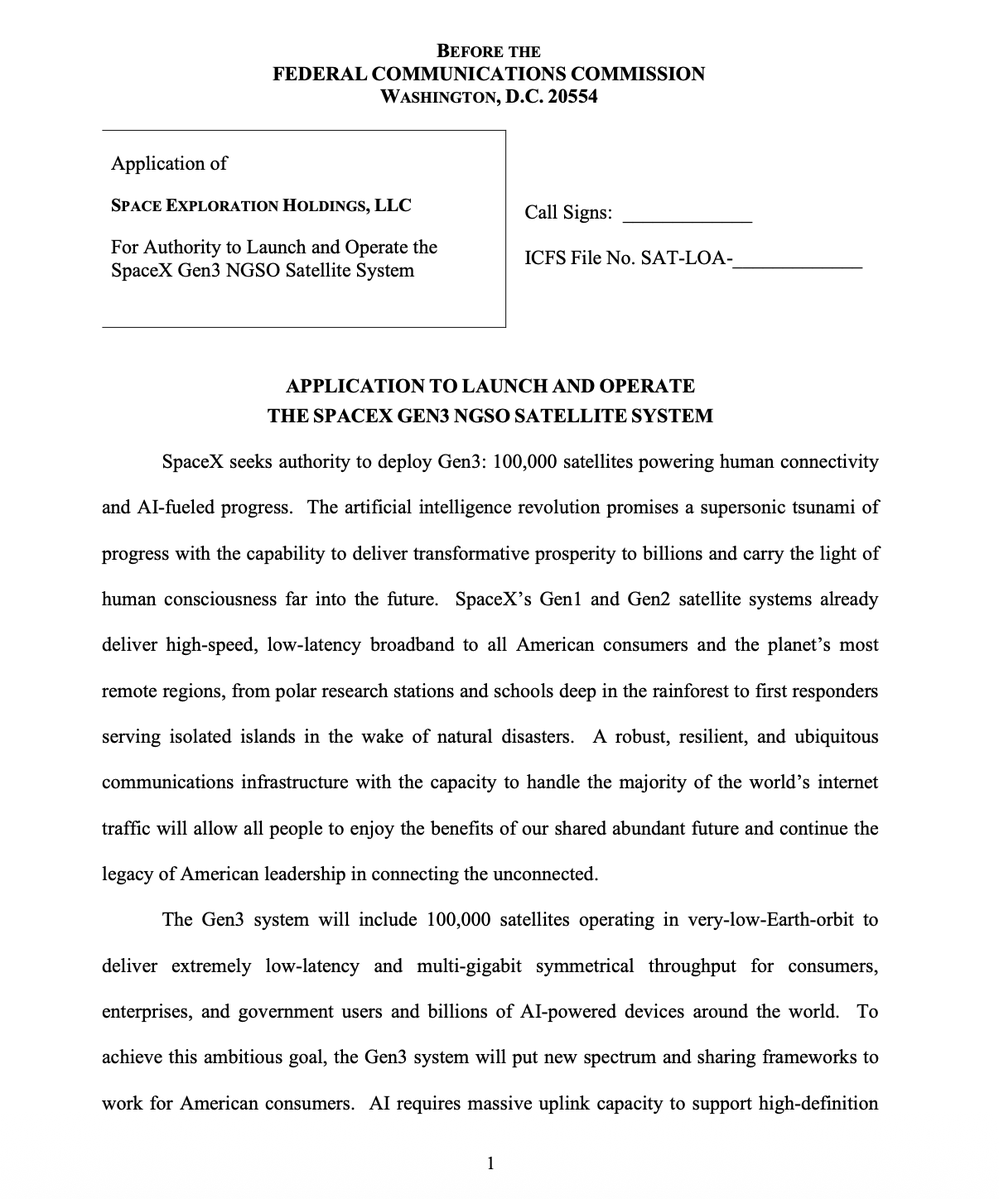
SpaceX has officially requested FCC approval to launch and operate a third-generation satellite constellation of 100,000 satellites, designed to power human connectivity and AI-fueled progress.
"The artificial intelligence revolution promises a supersonic tsunami of progress with the capability to deliver transformative prosperity to billions and carry the light of human consciousness far into the future. The Gen3 system will include 100,000 satellites operating in very-low-Earth-orbit to deliver extremely low-latency and multi-gigabit symmetrical throughput for consumers, enterprises, and government users and billions of Al-powered devices around the world. To achieve this ambitious goal, the Gen3 system will put new spectrum and sharing frameworks to work for American consumers. Al requires massive uplink capacity to support high-definition."
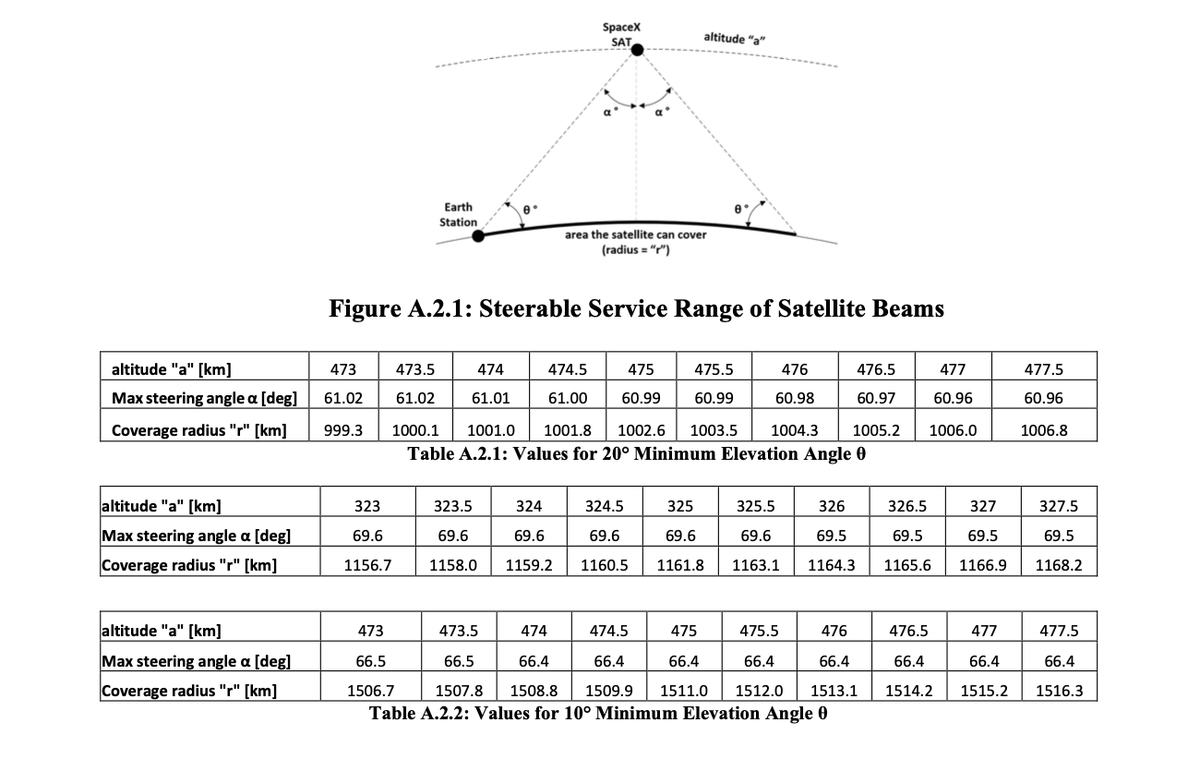
The Gen3 system will consist of 100,000 satellites, configured in two bands of thin, closely stacked operational shells with nominal altitudes between 323 and 327.5 kilometers and 473 and 477.5 kilometers. SpaceX seeks flexibility to operate its Gen3 system with inclinations ranging from 26 degrees to 96.9 degrees (sun-synchronous orbit) to optimize coverage consistent with evolving demand.
This new filing is separate from SpaceX's previous application to operate a constellation of up to 1 million AI satellites. They are two distinct constellations.
STARLINK: SpaceX filed FCC application SAT-LOA-20260630-00264 seeking authority to launch and operate up to 100,000 Gen3 NGSO satellites in two very-low Earth orbit shells at nominal altitudes of 323–327.5 km and 473–477.5 km with inclinations from 26° to 96.9°.
The system uses Ku-, Ka-, V-, E-, W-, and D-band spectrum, including 10.7–13.4 GHz, 17.3–21.2 GHz, 37.5–42.5 GHz downlink and multiple uplink bands up to 231.5–275 GHz, primarily on a non-conforming basis to deliver ultra-low-latency multi-gigabit symmetrical broadband for consumers, enterprises, government users, and billions of AI-powered devices worldwide.
It requests waivers of Section 2.106 and other rules to enable expanded contiguous channels for fronthaul/backhaul and massive uplink capacity, operating on a non-interference, non-protected basis with good-faith coordination for incumbents and federal users.
The constellation employs advanced phased-array beamforming, electronic beam steering, optical inter-satellite links, and dynamic power control for spectrum sharing and interference mitigation while meeting or exceeding orbital debris rules.
The filing incorporates Gen2 waiver precedents and leverages existing Gen1/Gen2 ground infrastructure.