This is insane 🔥
The FDA cleared the first human age-reversal trial
A Harvard professor proved you can reverse aging by 75% in 6 weeks in mice cured blindness, reversed Alzheimer's, MS, ALS, kidney and liver disease then confirmed it works in monkeys
Now humans are next. Life Biosciences raised $80M to make it happen
His words "The eye is just the beginning. We believe we can treat every tissue. A whole body reset"
Stunning sunset.
This happens because of a phenomenon called Rayleigh scattering: cirrus clouds scatter the longer, red wavelengths of light and give the sky an orange or reddish hue.
High above the snow line amid the vast Tianshan Mountains, at an altitude of 3,000–4,800 meters, the Xinjiang Tianshan snow lotus thrives in the extreme conditions of bitter cold, thin air and intense ultraviolet radiation.
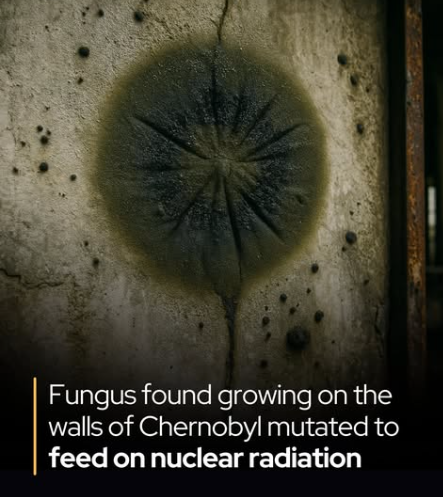
A black fungus feeds on radiation in Chernobyl.
In the radioactive ruins of Chernobyl’s Reactor 4, scientists found an extraordinary black fungus, Cladosporium sphaerospermum, thriving in one of Earth’s most toxic environments.
Rather than merely enduring radiation, this fungus seems to harness it through radiosynthesis—a process akin to photosynthesis but driven by gamma radiation, converting it into chemical energy. It’s among the rare organisms capable of this feat.
Even more remarkable, when tested on the International Space Station, the fungus flourished, forming a biofilm that blocked up to 84% of cosmic radiation, hinting at its potential as a living radiation shield for astronauts. With radiation posing a major hurdle for deep-space missions to Mars and beyond, this self-regenerating biological layer could revolutionize spacecraft design by replacing heavy, bulky shielding.
On Earth, researchers are exploring its use in bioremediation to detoxify radioactive sites too hazardous for humans, potentially transforming nuclear disaster recovery. As one scientist put it, “It’s like nature crafted a biological radiation shield.” From Chernobyl’s ruins to space, this humble fungus could help humanity thrive in the universe’s harshest environments.
September 28 will go down in spaceflight history.
September 28, 2008: Falcon 1 Flight 4 became the first Falcon rocket to reach orbit.
Exactly 18 years later, on September 28, 2026: Starship reached orbit for the first time.
The Sun just snapped a dark ribbon of plasma off its western edge — and flung it into space.
Earlier today a large filament rose and tore loose near the west limb. It was not a flashy flare. It was a slow, heavy lift: a long, dense rope of cooler solar material that finally lost its magnetic grip and erupted. Coronagraphs caught the aftermath as a partial halo CME — not a full bullseye at Earth, but a thick cloud expanding outward, with most of its bulk clearly racing west of our planet.
That is the good news and the tease at once. The core of the eruption is heading past us. NASA’s ENLIL model, however, still leaves the door cracked: a glancing blow remains possible around October 2, 2026. In other words, Earth may only catch the flank — a sideswipe of plasma rather than a direct hit.
If that flank arrives, do not expect a monster storm. Think unsettled to active conditions at best, with a chance of high-latitude aurora if the magnetic field cooperates. The bulk of the blast will miss. A thin edge of it might still brush Earth’s magnetic shield.
The Sun did not aim at us. It just may have clipped us on the way by.