I'm releasing a series of videos called "Quantum Computer Programming in 100 Easy Lessons".
https://t.co/lfKXwEIHWU
It will cover the 'usual' content (...CHSH, Grover, Factoring), but with some expositional innovations that I *hope* will make it easier for beginners.
FOCS 2026 Test of Time call for nominations is out:
https://t.co/yXzpjMii1X
Please submit your nominations! More info on the award here:
https://t.co/L7guxegDUb
and here's DBLP links for FOCS '16, '06, '96:
https://t.co/sDsJz4rrmW
https://t.co/2RARbtx09Z
https://t.co/aSS1vQaiV6
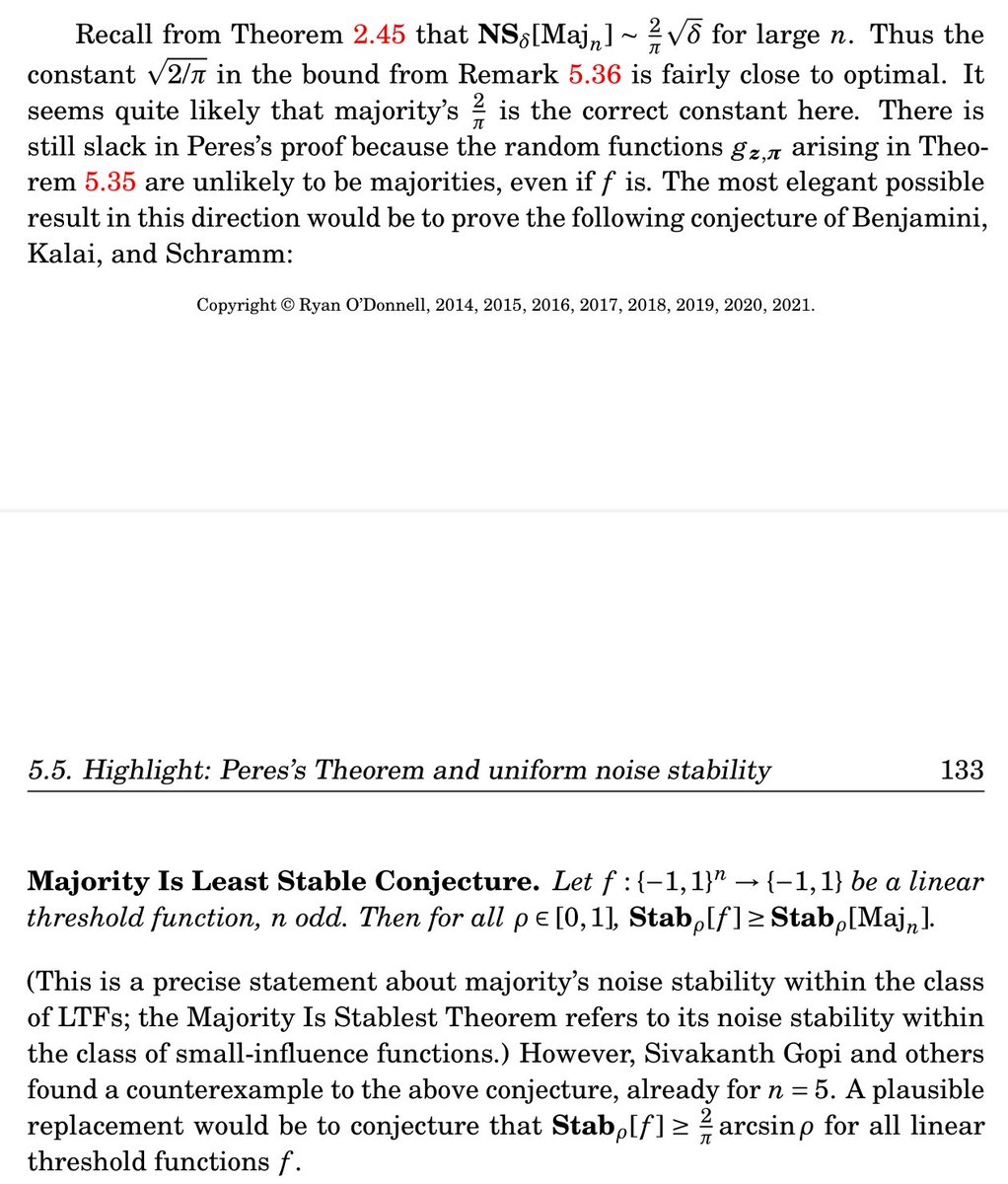
@SebastienBubeck To be fair, many people (e.g. Sivakanth Gopi) gave a simple n=5 counterexample to the similar 'Majority Is Least Stable' problem 10+ years ago...
New w/ Meghal Gupta, William He, @BooleanAnalysis
https://t.co/sUjeqEkBCK
We give a quadratically faster classical algo for noisy planted kXOR (k > large const), dispelling (for now) claimed quartic speedup for quantum algos. 🧵 (1/10)
@B1ar2n3a@AlgoSvensson Note that the answer is correct, but it has never given me a non-nonsensical proof. The proof always looks good until the key moment... A correct proof is the second paragraph of Theorem 4.1 here: https://t.co/zjzuB8wt8I
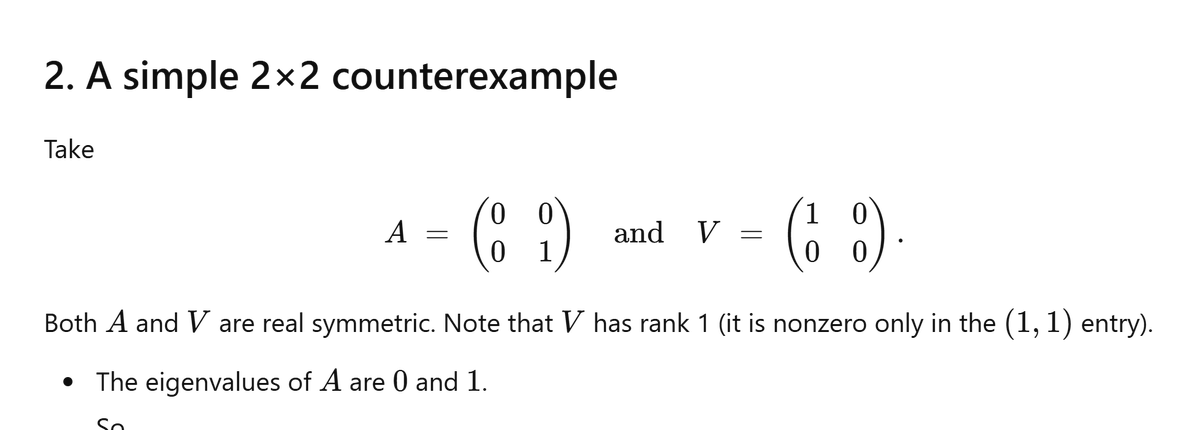
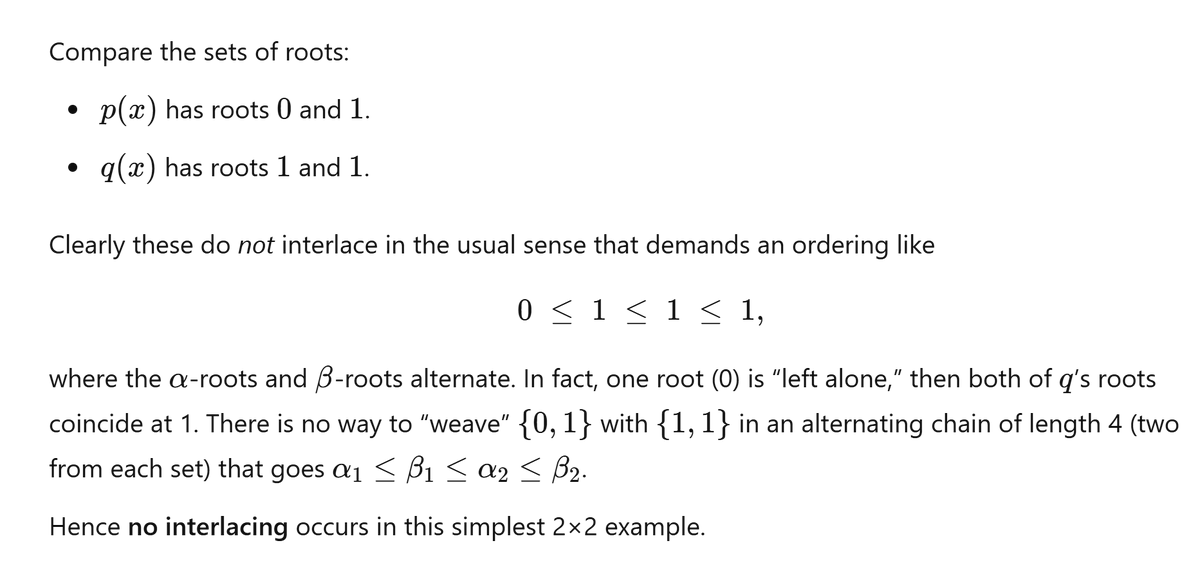
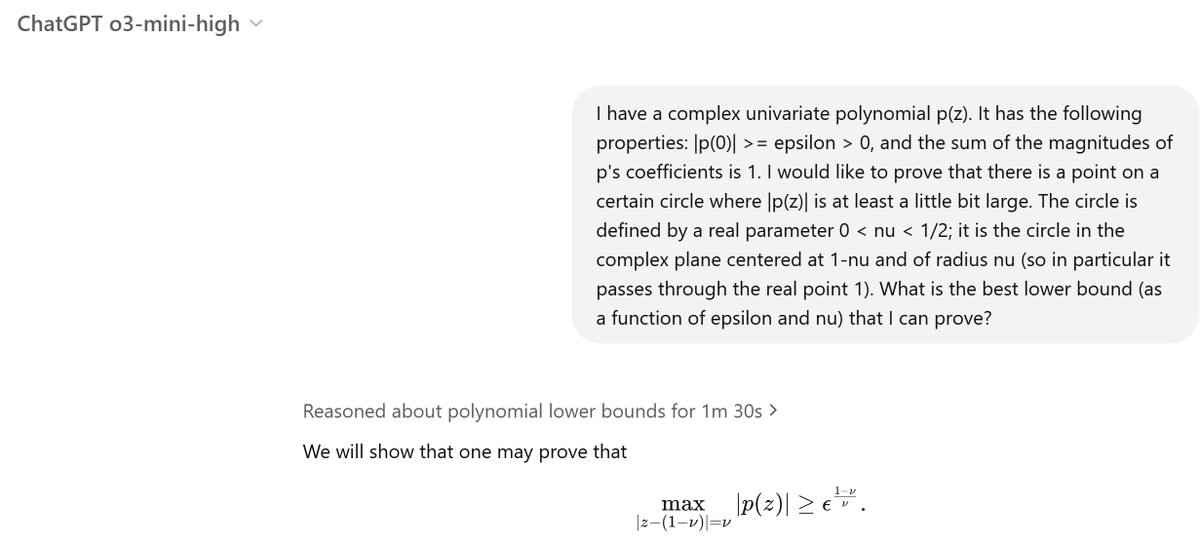
@AlgoSvensson@B1ar2n3a Am I the only one who's no good at this? I tried to get the $20 o3-mini-high to solve an elementary complex analysis problem and it gave nonsense despite huge hints. (On another recent attempt it insisted that 0<=1<=1<=1 is false.) What am I doing wrong...?
In case you're in Cambridge, MA on Tue. Dec. 10, I'll give a talk at 4pm (MIT 32-G449) about coboundary expansion in high-dimensional expanders.
It's kind of about group theory, though.
https://t.co/nLTm5kqfXl
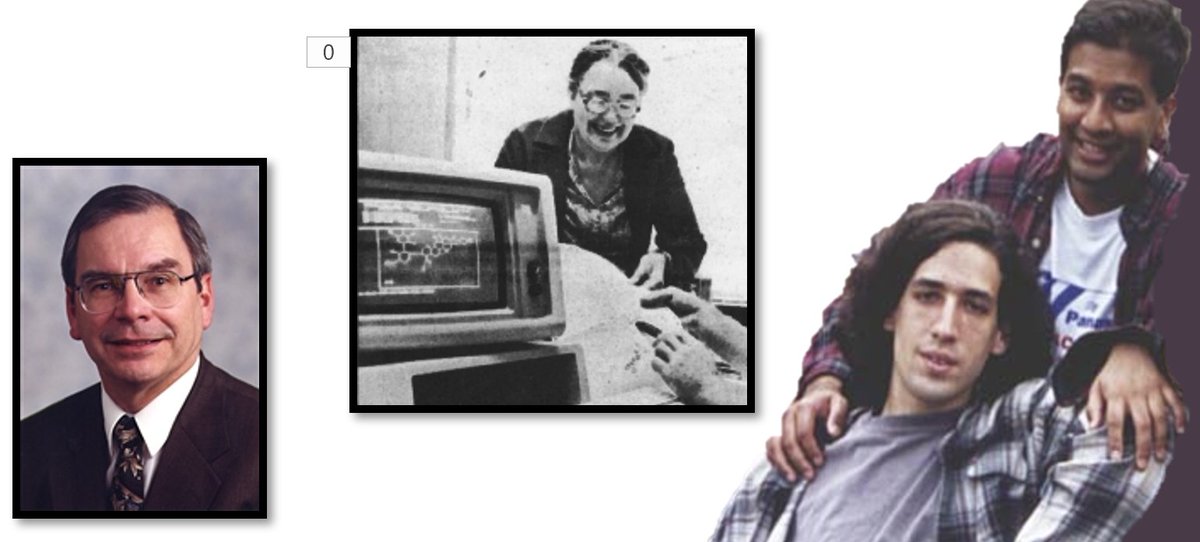
Besides coauthor @singerng_, here's the cast of characters:
@LongFormMath I don't know how to sell this any better than to say this is an extremely enjoyable video about Math + Halloween: https://t.co/fcgkghJV8E
So good!
Student I know wants to apply for a PhD program doing quantum computing. But she also wants to be in the *math* department.
My brain couldn't do the lookup "QC person but in Math dept." Any suggestions for universities having such a person? Diverse suggestions (by DM) welcome!🙏
After doing quantum counting by Grover+Binary Search, I found it natural also to do Phase Estimation by Binary Search plus the Hadamard Test. It felt less "magical" than doing it with QFT (even if maybe it's sort of the same thing in the end).
(The you also have the option of doing Factoring via Phase Estimation, rather than via QFT...)
Final quantum course tidbit #10: In the course, we do Grover's algorithm (i.e., SAT in (√2)ⁿ quantum time) before doing the Factoring algorithm.
Always seems funny to me that most courses do them in the other order. (Why is this? To follow the historical order?)
Not only is Grover much easier than Factoring, there's a straight through-line:
1. Distinguishing two 1-qubit states.
2. Distinguishing two 1-qubit rotations (or reflections).
3. Elitzur-Vaidman Bomb.
4. Grover.
5. Grover when you don't know the fraction of satisfying assignments, by binary search.
6. Rotation (Phase) Estimation for 1-qubit rotations.
7. Very high-precision 1-qubit Rotation Estimation, if you can do any power of the rotation efficiently.
8. General Rotation Estimation when you don't know the plane of rotation (i.e. Phase Estimation with an input eigenvector).
9. Applying Rotation Estimation to the permutation induced by "multiply by B, mod N".
10. Factoring N.
I just posted the 100th and final video in my YouTube course, "Quantum Computer Programming in 100 Easy Lessons".
If you're interested in learning quantum computing, and you have some 100 consecutive days with a half-hour free, maybe check it out :-)
https://t.co/lfKXwEIHWU
In case you're in the Boston area, I'll talk about "Quartic quantum speedups for planted inference" tomorrow (Sep. 13) at Harvard at 4pm.
This is at the Freedman CSMA Seminar. https://t.co/qOemh9Z7EZ