Moving a shot at the storyboard stage takes seconds.
After the shoot, the same change could mean a reshoot.
Use the window while it's open.
https://t.co/teNwNQtNS0
The script is in Google Docs. The boards are in Figma. The client notes are in email. That's where drift starts.
Keep the script and boards in the same place and changes flow through the whole project.
Boords keeps them together.
https://t.co/teNwNQulHy
New in Boords: Canvas and Refine, two new tools for AI image generation.
Sketch a layout and generate from it. Or brush over part of an image and prompt a change, all without affecting the rest.
Client approves on Friday. Changes their mind Monday.
The work didn't change - the conditions did.
→ Send boards before the call, not during it
→ Ask "is there anything you're not comfortable with?" → Confirm what was agreed in writing
🔗 https://t.co/teNwNQulHy
Feedback gets lost. It happens on every project.
Someone leaves a comment. It gets buried in email. The revision goes ahead anyway.
We built a notifications inbox in Boords to fix that. Every comment, mention and reply lands in one place.
→ https://t.co/c8wg9Z34ak
Boords now handles longer scripts better, including screenplay format.
Upload the whole thing and get straight to work. No splitting, no workarounds.
Supported formats: PDF, TXT, Markdown, HTML, CSV (up to 2MB).
→ https://t.co/SqDh4xE5j7
You're pitching against two other agencies. All three of you have solid creative ideas.
An animatic might be the edge you're not using.
A storyboard asks clients to imagine it. An animatic shows them.
Clients don't buy what they can't see.
Turning scripts into frames by hand can be mind-numbing.
Copy scene. Create frame. Paste. Number. Repeat 40 times.
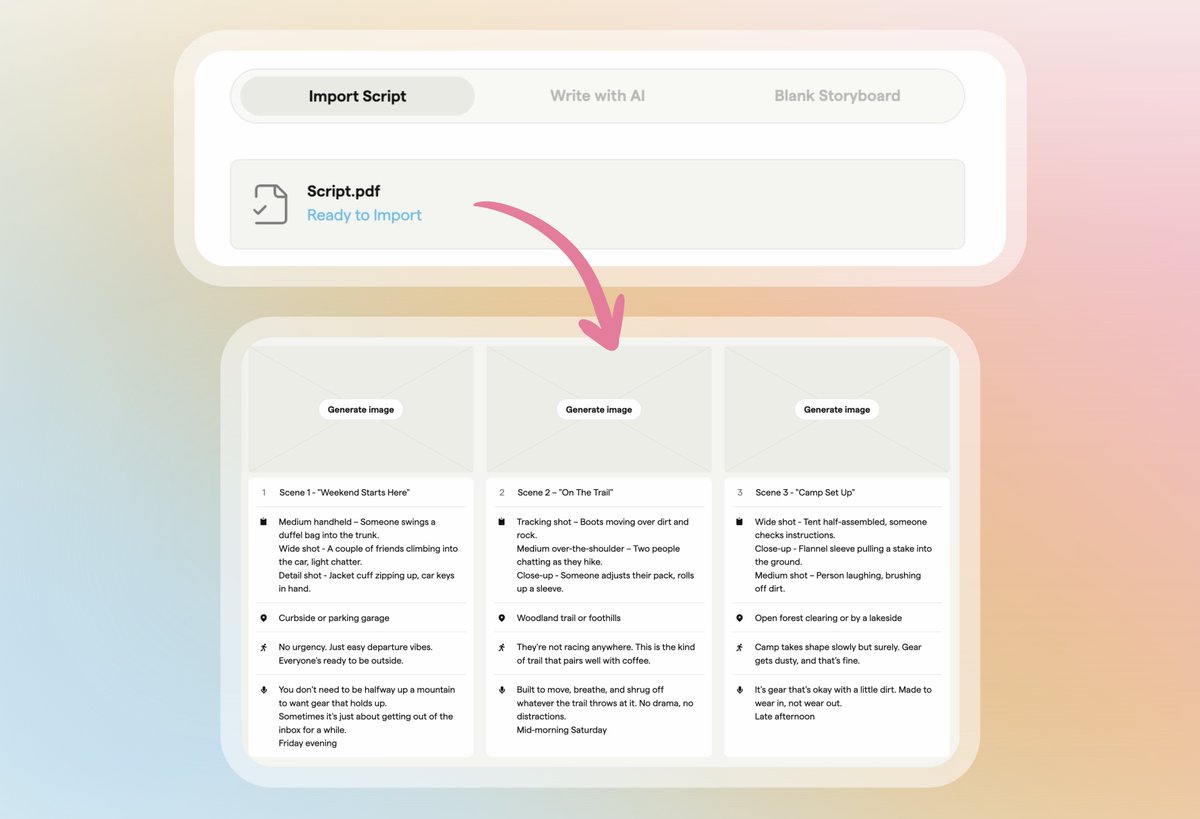
Upload your script to Boords and the frame structure builds itself in seconds.
Spend time on creative work instead of data entry. The way it should be.
Showing clients one concept is a trap.
Don't like it: you're starting over. Kind of like it: endless guessing.
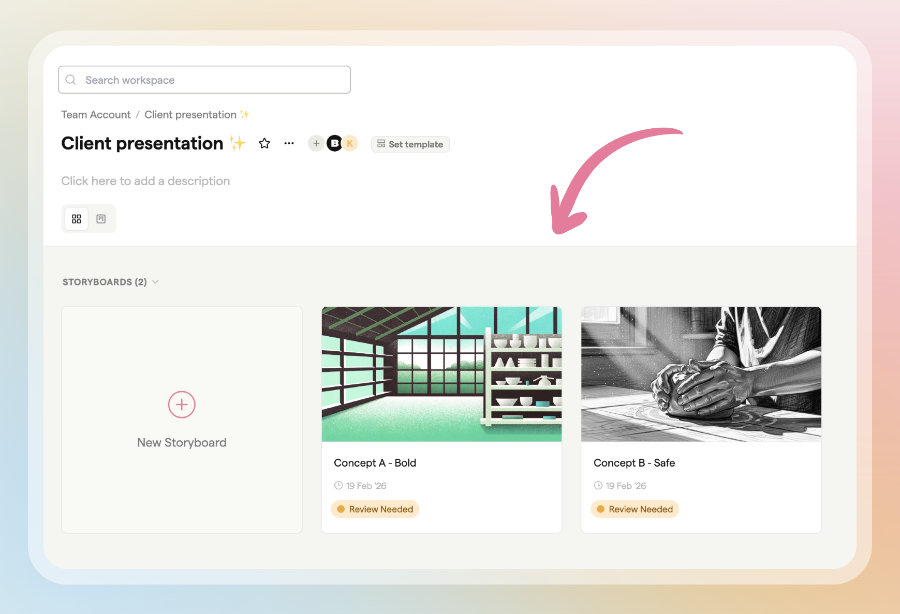
Show two. Your recommendation vs. strategic contrast.
Bold vs. Safe.
They choose. They're bought in.
Revisions on chosen work: minor. On tolerated work: endless.
"Make it pop" after animation is expensive.
"Pop" could mean:
→ Brighter
→ Faster
→ Different angles
→ More energy
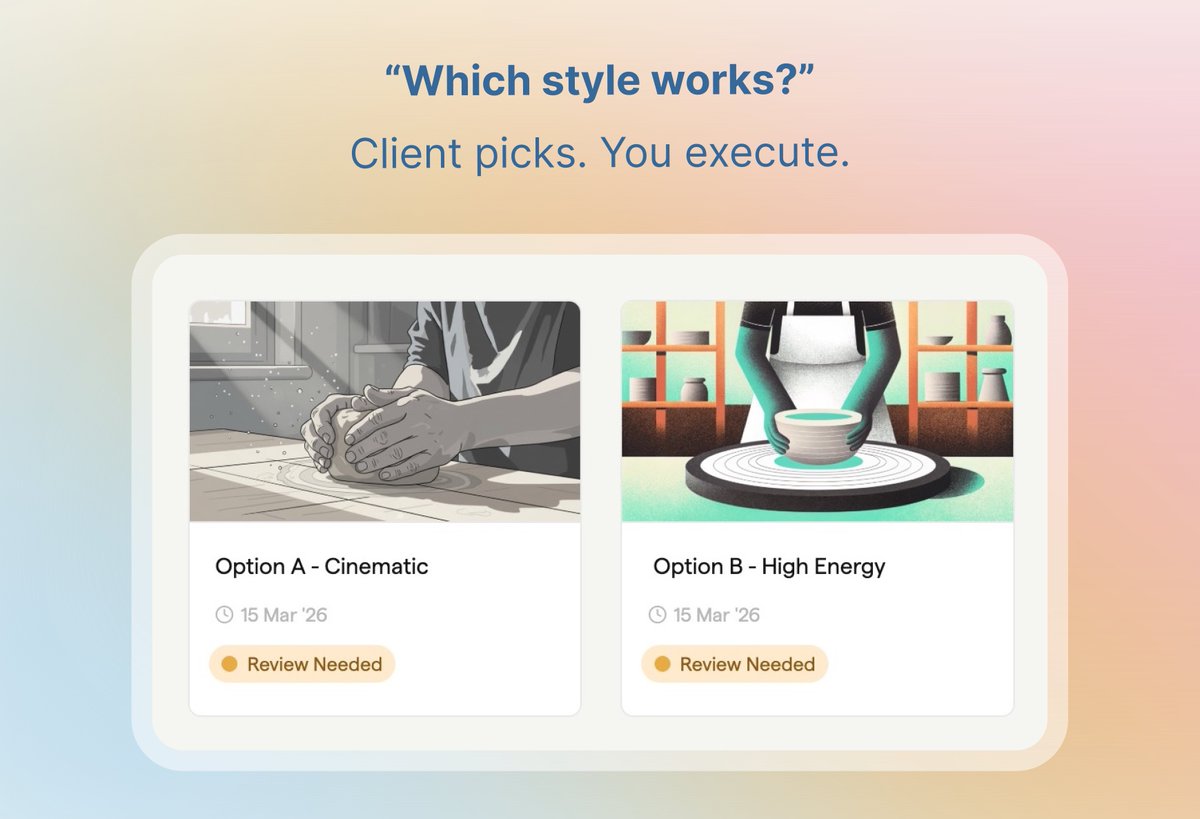
Show style options first.
Client picks. You execute.
Style change in storyboards: minutes.
After rendering: start over.
Lock style before production.
"This isn't what I expected."
It's not because the work is bad. It's because they never saw what they'd get.
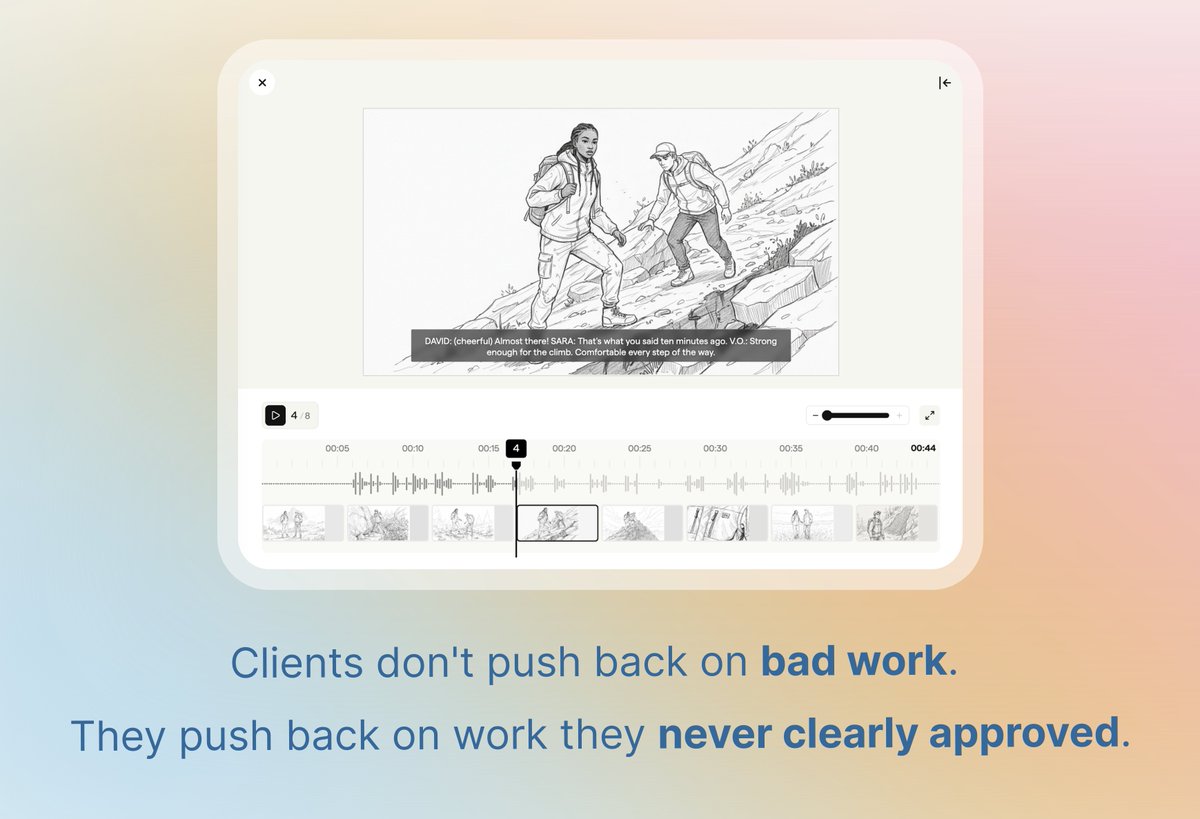
Storyboards show composition.
Animatics show timing.
When clients love the first cut, it's because they already watched the animatic.
Week 1: "We trust your creative vision"
Week 5: "This isn't quite what we meant"
Week 7: Your profit is gone
The problem was never week 7. It was week 1.
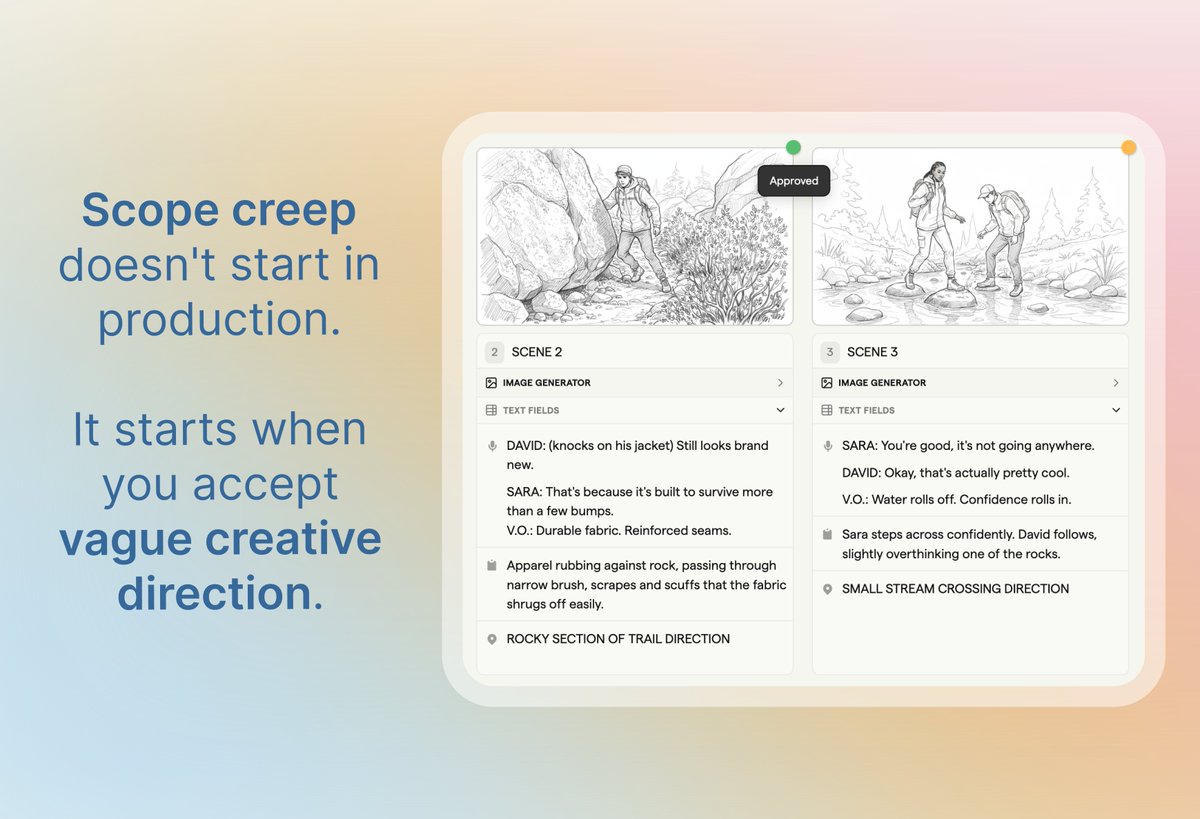
Lock scope before production. Not during. Before.
Big budget with misaligned vision: expensive disaster.
Small budget with clear alignment: smooth delivery.
The difference isn't money. It's whether everyone's working on the same thing.
Money can't fix misalignment. Clear storyboards can prevent it.
Post-production is for finishing. Not for figuring out what you're making.
Lock creative decisions in pre-production. Protect your weekends.
Your Saturday plans are worth defending.
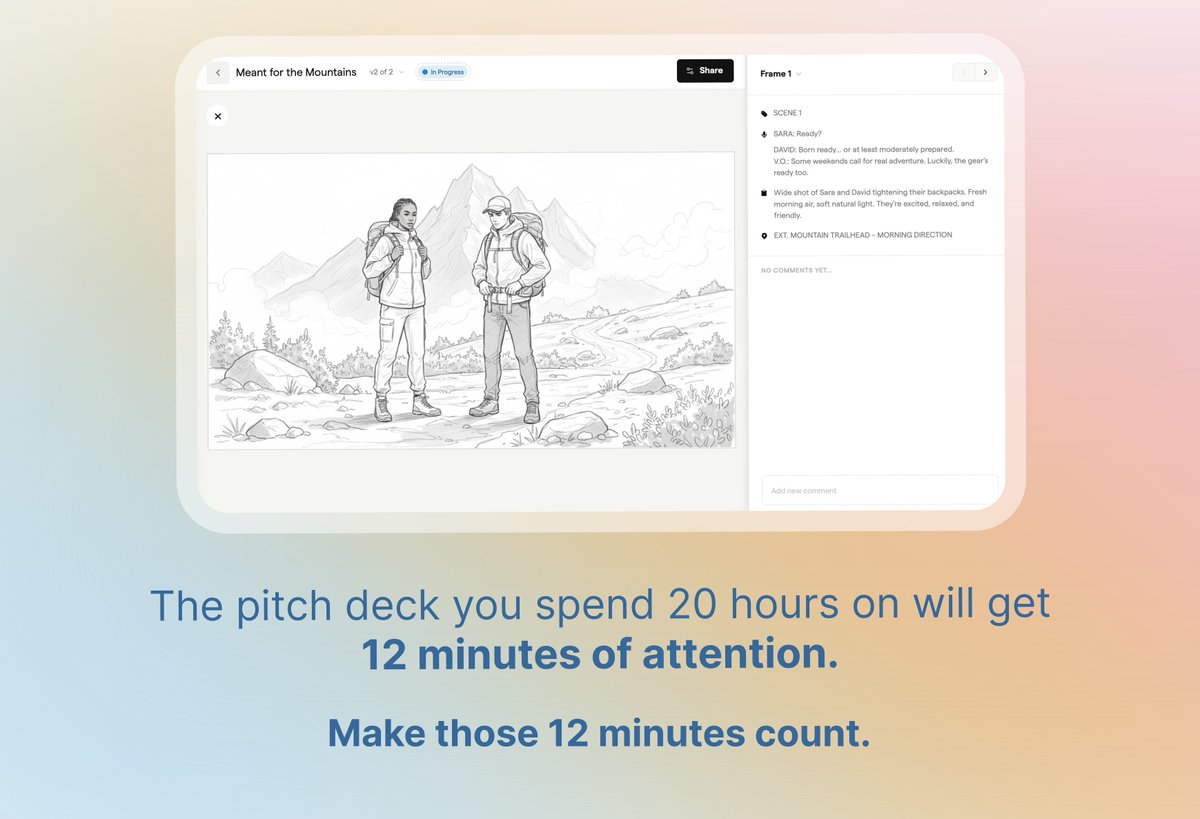
Your pitch deck gets 12 minutes of attention.
The agencies that are winning? Their boards look like they've already made the thing.
Professional storyboards = credibility.
Animatics = "they know what they're doing."
My British self-deprecation gene has resisted this for years.
But as software production itself becomes easier by the second, I'm leaning into what can't be replicated. Our experience, and why we're best placed to help studios and agencies run a smoother pre-production process (and ultimately better businesses).
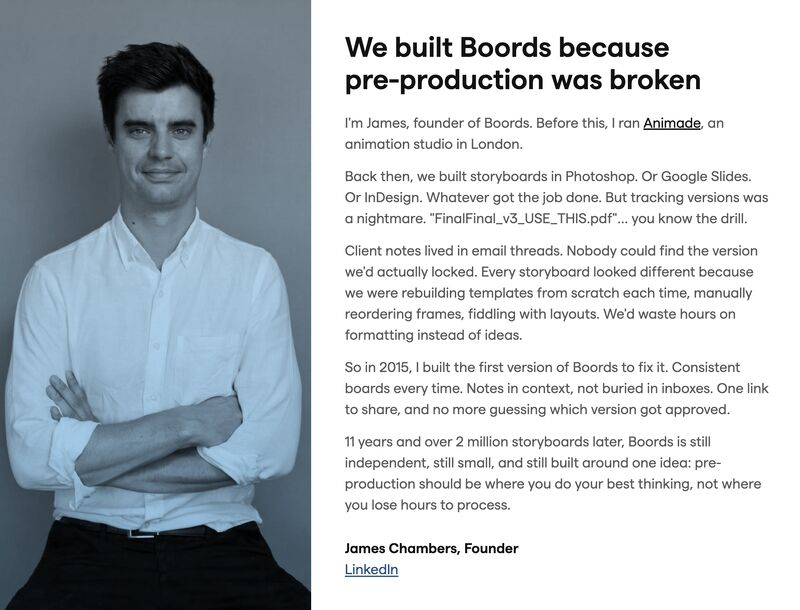
So this morning, I added this section to the marketing site about us (well, mostly me, if I'm being honest), our story, and why Boords exists.
The bet is that people work with people, whether that's in services or software. And whether I like it or not, that means putting my face out there.
So my new rule of thumb is, if it makes me feel a bit uncomfortable, I should probably do it.
And this makes me uncomfortable. So I'm doing it.
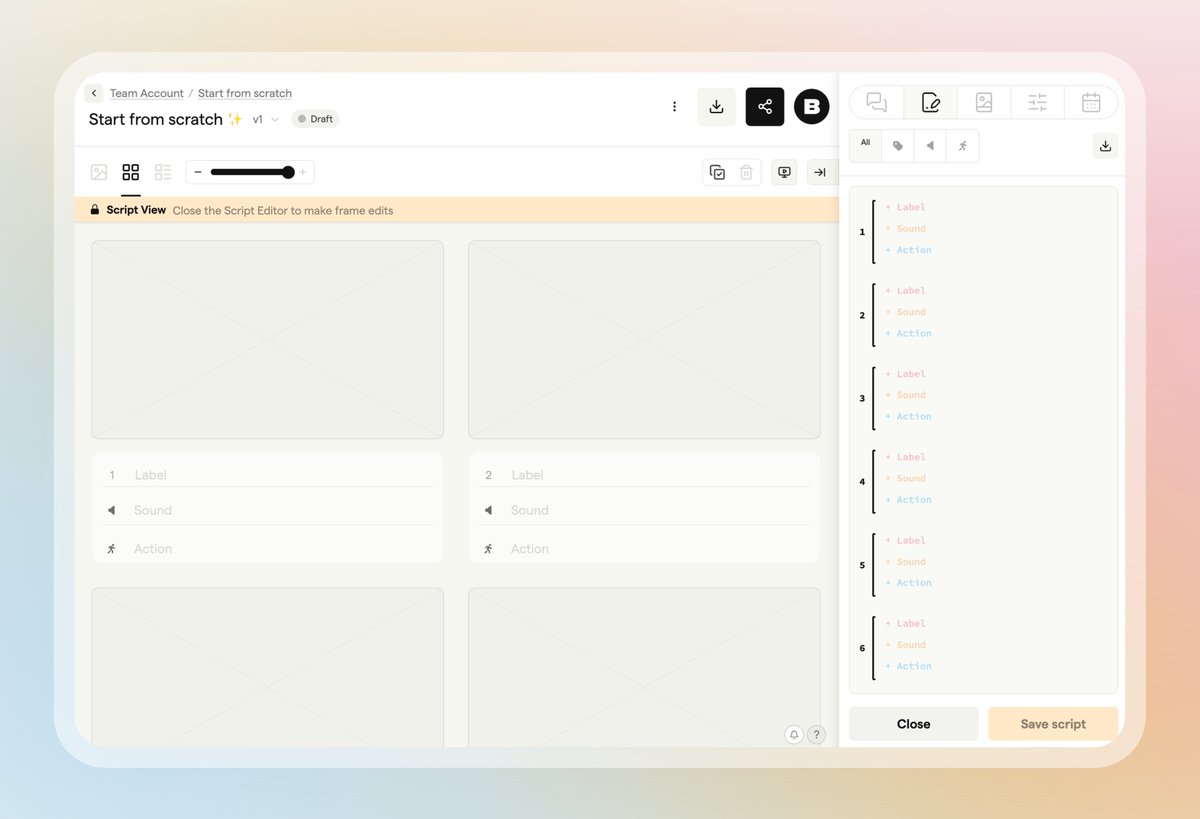
Sometimes the best place to start is with nothing at all.
A blank storyboard in Boords gives you a clean canvas - no script, no visuals, no constraints.
You decide whether to shape the story through words, frames, or both, in whatever order feels right.
Rough ideas don’t have to stay rough.
Add them to Boords and let AI help turn them into a draft script. Then the team can see the story take shape and play around with it.
Sometimes the hardest work is already done: the script is locked in.
Bringing a finished script into Boords helps teams focus on translating words into shots, pacing, and emotion. The conversation shifts from what happens to how it’s shown.