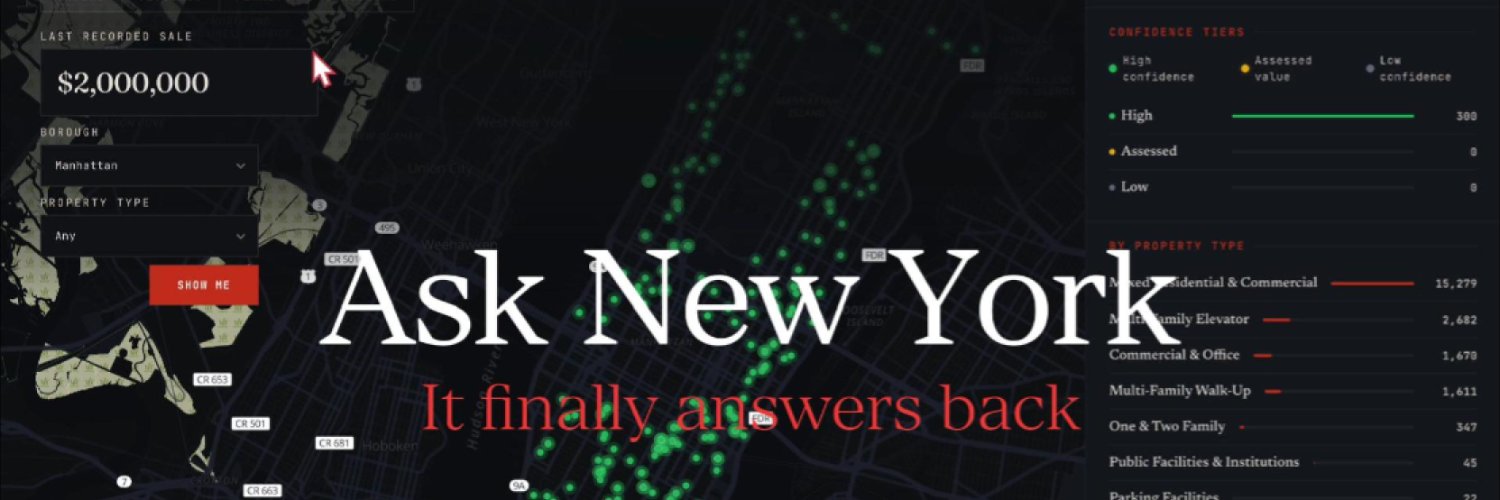
Ask New York— It finally answers back
Research Preview https://t.co/uC7zupdVF5
Every answer is an editorial grounded in NYC public records — deeds, permits, filings, assessments.
Every claim carries a citation. Nothing is scraped from the web. Nothing is generated from thin air.
Honesty and Privacy is preserved by constitutional design. What you get is the public record, made readable.
AI surface on Claude, Gemma, with AI Agent MoR marketplace built on Tempo and MPP Machines Payments Protocol for Human and Agent collaboration
Try asking:
What's the development pipeline around Atlantic Avenue?
Which corridors in Brooklyn are seeing permit activity spike?
What did comparable buildings sell for near my site last year?
Who are the architects filing the most permits in downtown Brooklyn?
How has the sales trend in Bed-Stuy shifted over five years?
Which licensed plumbers are most active in Queens right now?
Who are the electricians pulling permits in my neighborhood?
What trades are working on new construction in the Bronx?
Which mechanical contractors are filing in Manhattan this year?
Stay tuned for the next video: Ask New York NL interface
We're building 200,000 new affordable homes for New Yorkers. We're using every tool we have to fix our housing crisis.
Block by Block is the boldest housing plan our City has seen this century. It is what New Yorkers have been demanding for decades.
Learn more about our plan here: https://t.co/eBhvelJZNx
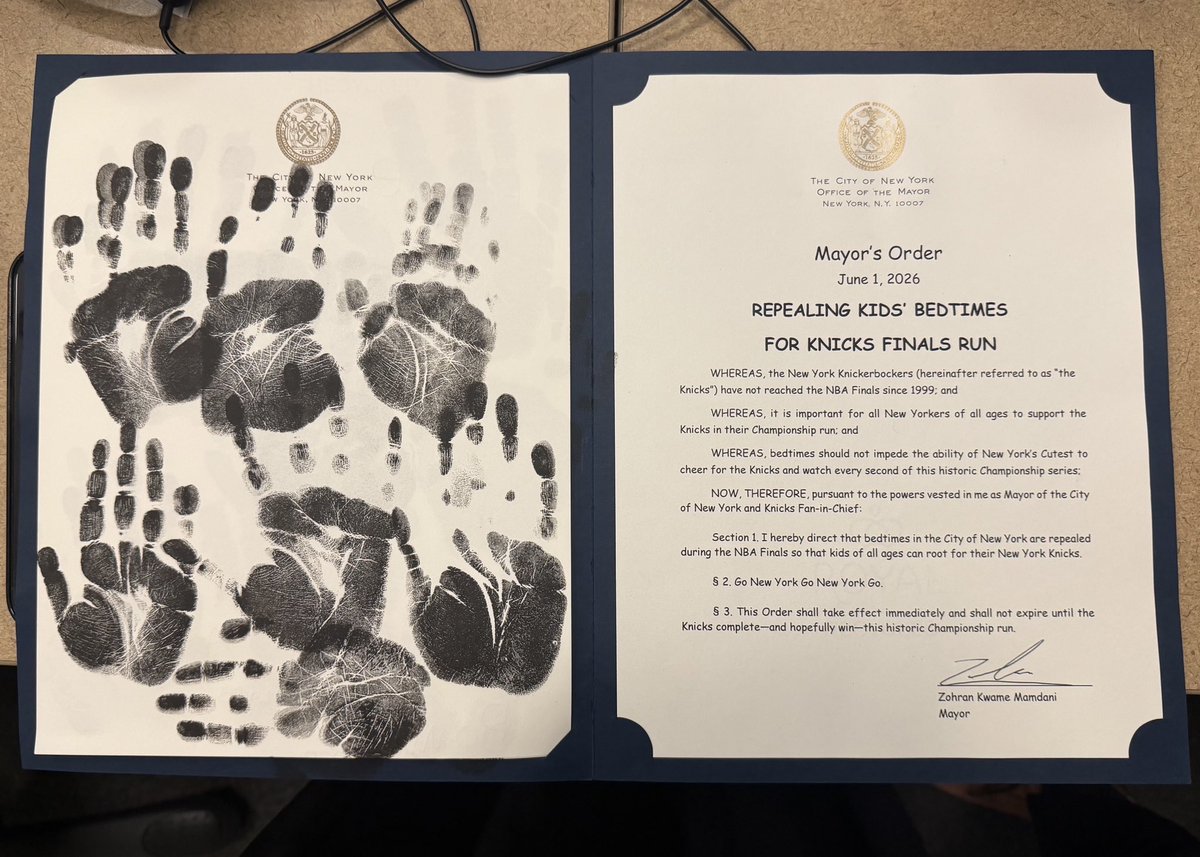
Today, I signed an Executive Order temporarily repealing bedtimes in the City of New York so that kids of all ages can watch our team in the NBA Finals.
As Mayor, you’re forced to make many difficult decisions. This was not one of them.
Go Knicks.
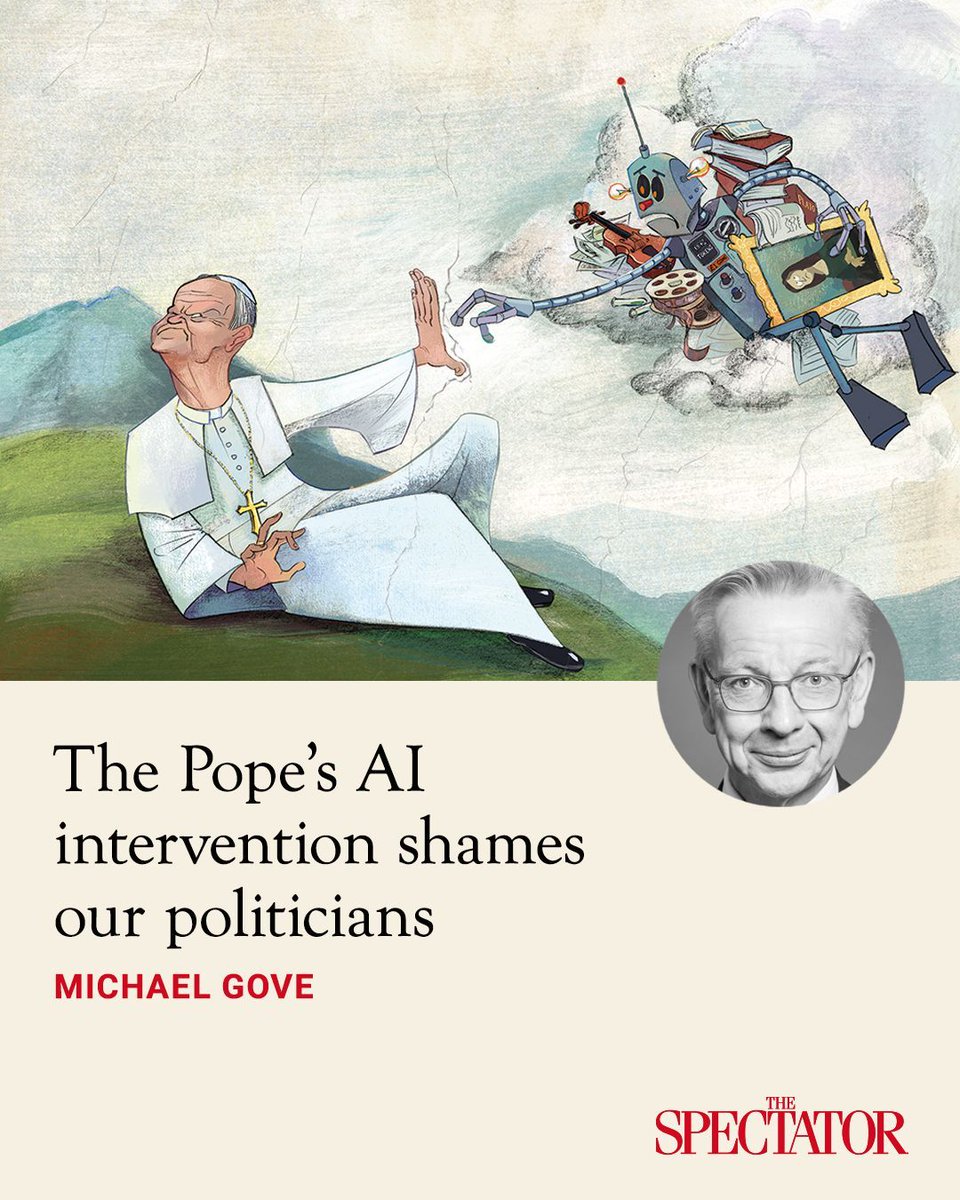
I was born into a sternly Presbyterian culture. Politically, I’m more Orange than Donald Trump’s skin tone. But today I am on my knees giving thanks to the Pope.
He has produced the most powerful political document of the year, taking on the greatest challenge of our times. His first encyclical, Magnifica Humanitas, deals with the changes which will be wrought to all our lives by artificial intelligence in the months and years ahead.
AI will transform our economies and societies massively and irrevocably; it will change what it means to be human; it may even mark the end of humanity itself. If it takes the Pope to alert us to this revolution then perhaps the Reformation wasn’t such a good idea after all.
✍️ Michael Gove
Article | https://t.co/ZZfyMFPFsX
I’m making a show about buildings.
The concept is simple: do for the man-made world what Planet Earth did for the natural world.
But, when I pitched the idea, the answer was that nobody would watch it.
So I released a pilot episode on YouTube. It’s got 5.4 million views, 379k likes, and 23k comments.
People are interested, and now it’s time to make the full show.
Six episodes, filming in the UK, France, Belgium, Germany, Italy, and the USA, and releasing on a streaming service like HBO, Netflix, or Prime.
Why does this show matter?
First: we’re surrounded by buildings all the time. Look around yourself, right now… what do you see? Buildings are the logical conclusion of everything a society believes in. That’s the real focus of this show: not the buildings themselves, but what they say about us.
Second: there’s global dissatisfaction with modern architecture. This feeling gets written about online, but nobody’s given a voice to it on film or TV. That’s what this show will be. But this isn’t just about criticising modernity. That’s easy. This is about learning from the past in order to understand and improve the present, for everybody.
Third: there’s a drought of high-quality culture shows. When I spoke to film executives they said that only documentaries about sports, music, or true crime get funded. That’s a colossal missed opportunity. Galleries are always full, content about architecture goes viral online all the time, and people spend their precious holidays visiting beautiful cities.
Why no shows about architecture, then?
Tourists flock in their millions to see (for example) the buildings of Antoni Gaudí in Barcelona. But, if you asked those same people if they’re interested in “architecture”, they’d probably say no.
To put that another way: not many people want to watch “a show about architecture”, but lots of people want to watch a show that illuminates the real world they’re living in, each and every day.
What will the show be like?
Six episodes, going chronologically through history and arriving at the present, each focussing on the architecture and design of a specific period:
1. Middle Ages
2. Renaissance
3. Enlightenment
4. The Nineteenth Century
5. Art Nouveau & Art Deco
6. Present Day
But, in each case, the point isn’t just to learn about that era; the point is to learn about our modern world through those eras and what they’ve left behind. If you watch the pilot episode (included below) you’ll see what I mean.
So the show’s not really “about” the past; it’s about the twenty-first century.
That’s why it’s called The Modern World.
When you think of a typical history show there are loads of interviews, stock footage, archive photos, historical recreations, and graphics. We’re doing none of that. Everything will be filmed on location, because we’re telling our story only through the real world that exists right now. And, rather than going to the most obvious places, we’ll focus on buildings that aren’t well-known but should be more famous.
But that’s all big picture; what will it be like on screen?
Buildings used to look different in every country, and now they look the same. Why? Because the weather is different everywhere, and buildings were always a way of dealing with that weather, using local materials. Now we have air conditioning and we ship concrete around the world, so we don’t need to design our buildings with regard to local weather or rely on local materials.
Look at really old clocks and you’ll notice something: they don’t have a second hand… because it was only invented 300 years ago! Then you look at the present and you realise we’re surrounded by timers, by seconds ticking down and ticking up relentlessly. If we’re looking for a cause of our anxiety-inducing culture, that might be it.
When you spend time with the sun-softened bricks and time-warped timbers of old cities you notice that synthetic materials like plastic have taken over. When we’re surrounded by things that feel temporary, how do you think it makes us feel?
It’s only by seeing 19th century train stations, designed like cathedrals, that you realise tradition and technology aren’t enemies. New things don’t have to look boring: if the Victorians had designed AI data centres, they’d look like Medieval castles.
In the 1920s, at the zenith of Art Deco, people believed technology would uplift humanity. That’s why they decorated their buildings with statues inspired by electricity. Only by seeing their enthusiasm can we realise our own cynicism, and perhaps begin to fix it.
All of that… and much, much more.
But, above all else, this show is about a way of seeing. If you want to understand any society then you need to look at what it creates, not what it says about itself.
There’s a worldview in every single object; our skyscrapers are designed the same way as our phones. Learn to look at this world, to notice its details, and everything else starts to make sense.
What now?
I’ve been quiet online recently because I’ve been researching and working on scripts for six full-length episodes. Production begins when we’ve raised the funding.
The Modern World is coming.
Technological progress — valuable in itself — requires careful discernment of the anthropological vision that guides it and the ends it pursues. If technological development advances without a corresponding ethical and social progress, the result may be an increase in means without a growth in humanity: “having more” without “being more.” There is a risk that individuals will be evaluated principally according to the outcomes they produce. #MagnificaHumanitas
https://t.co/6i9MWs7jyT
When I was asked by the American Academy of Arts and Sciences to write an essay on my thoughts on how AI will accelerate Science, I felt honored but also felt that it would require a lot of thoughtfulness and diligence to distill my thoughts on paper.
The essay has now been published and I cannot be more thankful to the @americanacad and @GoogleDeepMind teams for their feedback and encouragement during the process.
Key reflections from my essay:
🔭 AI is our newest revolutionary lens: Just as the telescope and microscope expanded our physical perception, AI is extending our cognitive reach, allowing us to decipher the immense complexity of the data-universe.
🧬 The rise of "machine intuition": AI is not just a computational engine. By detecting hidden structures across disciplines—from protein folding to extremal combinatorics—it acts as an ultimate bridge, accelerating the interdisciplinary breakthroughs that modern science depends on.
🏗️ From puzzle-solvers to architects of questions: As we transition toward open-ended, agentic AI systems that actively generate novel hypotheses, the burden of reasoning is shifting. We are evolving from being the solvers of intricate puzzles into the architects of profound scientific questions.
✨ Expanding human potential: AI won't replace scientists; it expands what we can imagine and achieve. Just as the telescope didn't make astronomers obsolete, AI is giving us the stars.
Read the full essay here: https://t.co/LCoF7ds7WZ
In order to protect the human person in the age of #ArtificialIntelligence, we must once again reflect on the common good, the universal destination of goods, subsidiarity, solidarity and social justice. #MagnificaHumanitas
https://t.co/Oe8yclDxkr
@jack "The story of 'open data' in Europe: Go to a government office, apply for an API key, wait for approval… only to learn the raw dataset isn't available. Just aggregated statistics or summaries.
@realsigridjin I build my own agents, skill and harness. Not sure its a wise decision but it delivers. Although I am just eyeballing the results at this stage