Bootstrap all-time numbers:
- $126k USD compounded in total
- 1,419 SOL compounded back into LPs
- $13.8M+ in volume processed
Start compounding: https://t.co/I4FbtvLsy0
Token Retirement:
Building Bootstrap over the past several months has been one of the most rewarding and valuable experiences to our team. This process has been a learning experience that we want to share with you all.
Thread below.
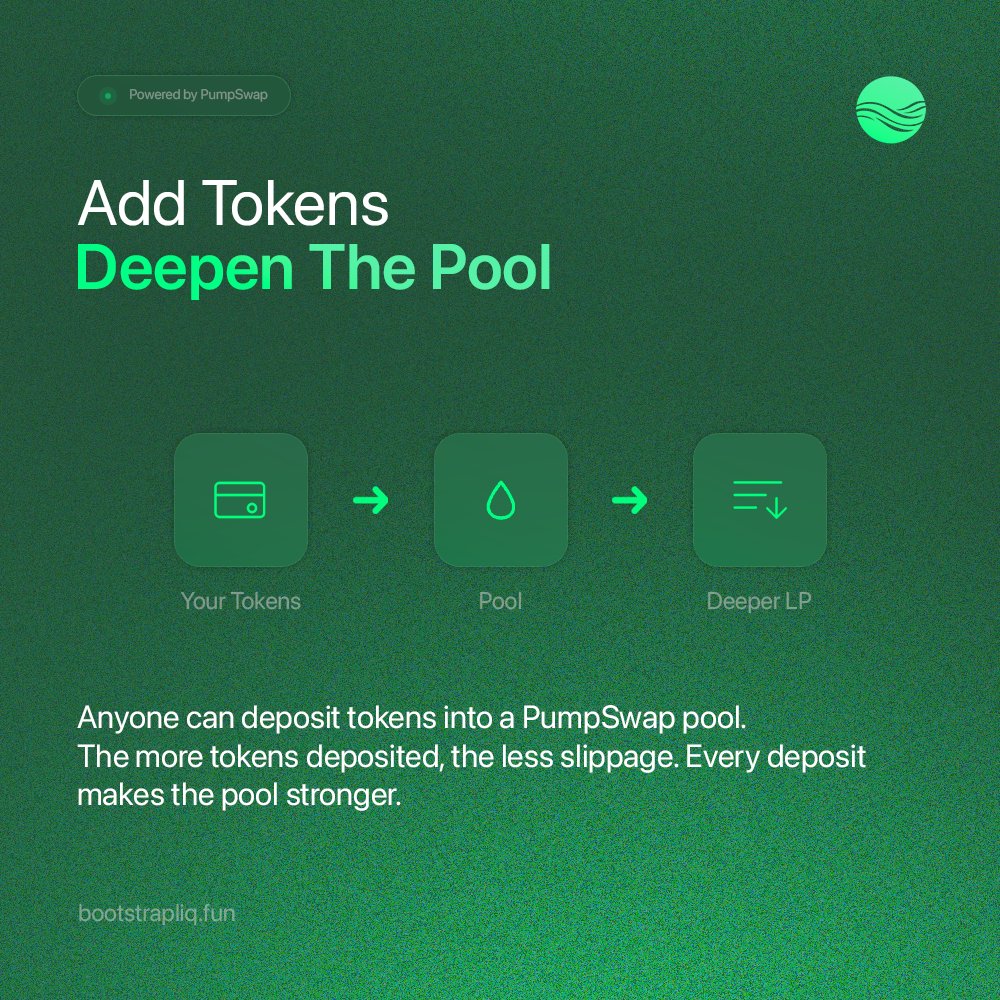
Depositing into liquidity pools is something every trader should know about.
A $500 swap on a $10K pool moves the price ~5%. Add $2K to that pool and the same swap moves it ~4.2%.
Liquidity depth matters.
Let's take a look at what compounding with Bootstrap Mode looks like on a chart:
Compounding takes effect post-migration.
Fees compound during the first phase of a token's launch.
Once a sufficient LP-to-market cap ratio has been achieved, fees are returned to the community.
This is intentional by design: tokens need time to deepen liquidity during crucial structural ranges.
Once the foundation is laid, fees return to the community to put towards further growth initiatives.
Introducing Bootstrap Mode:
A two-phase fee schedule that front-loads liquidity compounding when it matters most, then returns fee control back to the community.
Day 1:
70% to LP // 30% to the creator.
Day 2+:
20% to LP // 80% to wherever the community directs it.
Fee routing is reconfigurable at any time. The 70/30 and 20/80 splits are our starting point.
As we collect data we'll refine the schedule toward the optimal deployment strategy, including range-based and volume-based configurations.
One click at launch, transparent and public from day one.
Full thesis: https://t.co/8ftFMVIqwO
https://t.co/Zo8ka6M0gN
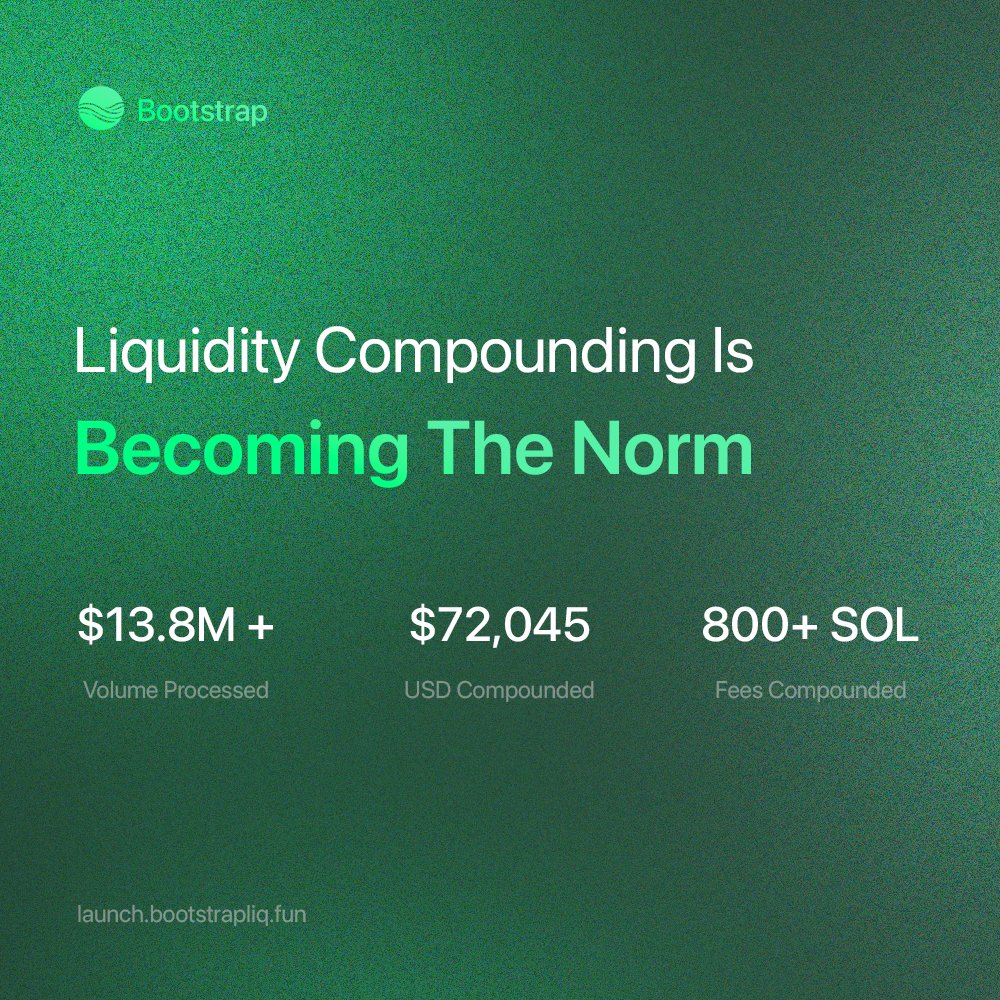
Liquidity compounding is becoming the norm.
We're happy to see what we've been building towards at the forefront of the conversation.
We built Bootstrap because we believe creator fees should be put to work. Every fee routed back into the LP is compounding the token's foundation instead of funding someone else's exit.
There's a healthy balance between compounding LP and deploying fees towards growth initiatives. That's exactly what we've set out to build.
When others start shipping the same thesis, that's not competition. That's validation. The conversation is moving in the right direction.
$13.8M in volume. 800+ SOL in fees compounded, and we're just getting started.
https://t.co/Zo8ka6M0gN
Liquidity depth shapes volatility.
The target is a pool calibrated to absorb pressure without killing momentum.
That's what Bootstrap builds toward automatically.
PumpSwap turns 1 today.
In its first year:
- $41.39B in total trading volume
- $225M in creator fees generated
Bootstrap was built to become the liquidity infrastructure layer for PumpSwap, turning creator fees into compounding LP provisions on the fastest accelerating memecoin launchpad in history.
When we started building liquidity infrastructure for https://t.co/gszAAEx5tI, we knew it would become more than just the dominant launchpad.
https://t.co/gszAAEx5tI just became the leading protocol in 24 hour DEX volume across all chains.
The best infrastructure bets are made before the obvious moment arrives.
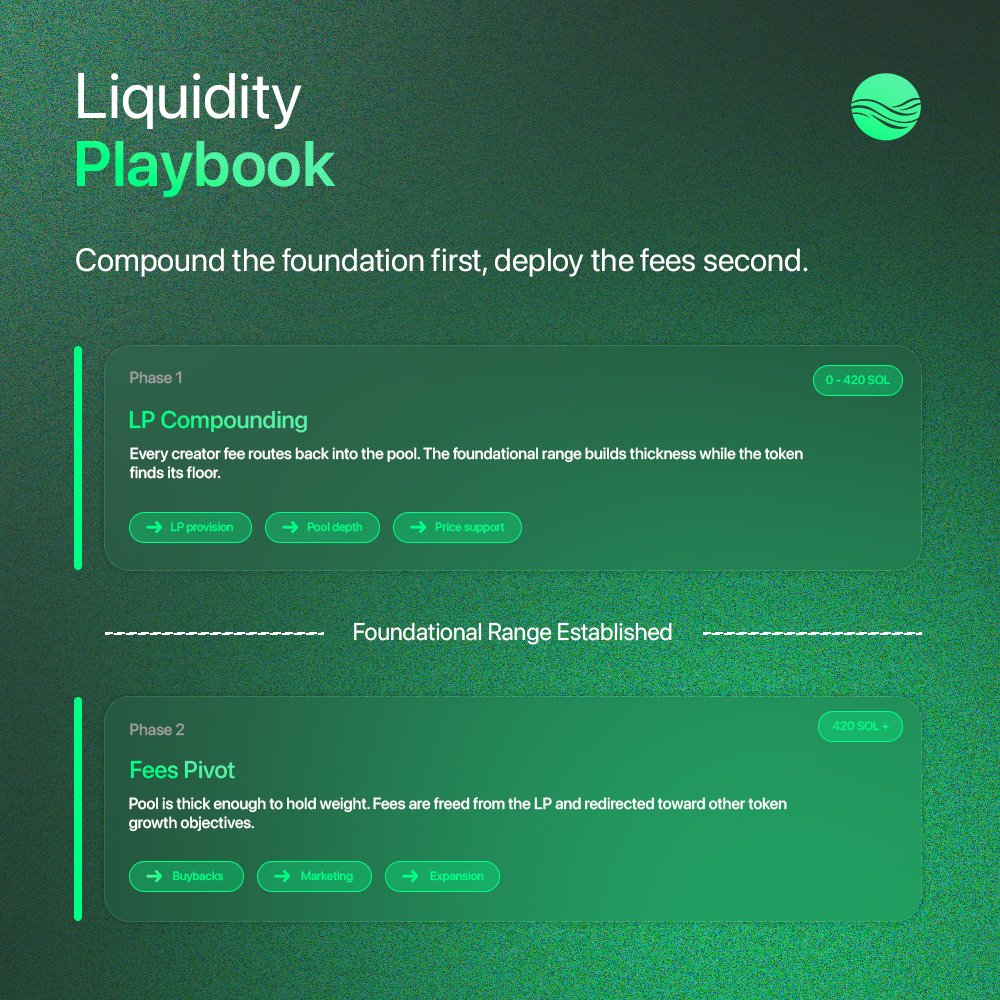
Managing liquidity doesn't have to be complicated. Here's a simple two-phase strategy we see working across successful Bootstrapped tokens.
Phase 1 - LP Compounding:
The 0 - 420 SOL range is the most critical window for liquidity compounding. Routing the majority of creator fees back into the LP during this stage has the highest impact on pool depth and price stability.
Phase 2 - Fees Pivot:
Once the LP has compounded enough to make a meaningful difference, fees can be redirected toward other token initiatives such as buybacks, marketing, and further expansion.
The principle is simple:
Give creator fees enough time to compound during the early stages first. A strong foundation doesn't just support the token, it compounds everything that follows.