Security tools are a pain to use.
We didn't want Borg to be one of them.
So we redesigned it. Here's a quick look:
(25 free PR reviews if you want to try it yourself!)
https://t.co/MgSF3AWPK8
Our scan of Norwegian internet infrastructure found over 12,000 servers predicted vulnerable to this week’s NGINX flaw.
If your company runs NGINX, watch this, then check your version.
Norway has over 12 000 vulnerable NGINX servers currently online.
The National Security Authorities of Norway has sent out a warning to bring attention to this and keep Norway safe.
412 packages, 31 advisories. ONLY 1 proven exploitable, with the exact file, the payload and the fix.
It doesn't just match CVEs to versions. It traces your code to prove what's reachable, and then validates by performing the vulnerability so your team fixes what matters and ignores the noise.
@Borg_Security
Book a demo → https://t.co/Km08ex928E
30 seconds, all assets, all repositories are mapped out and security work have started
This is a new feature we are working on, within just 30 seconds, security work can be layed out with a concrete plan on what to run, when, and why.
Next generation of cyber security @Borg_Security
Not every vulnerability in crypto lives on-chain.
Through our security research, we identified two security issues in the @SolanaFndn tokens repository, including an authentication flaw and a same-origin XSS on https://t.co/A5TdnTzT74.
Both were responsibly disclosed and quickly fixed.
Here's what we found and why it matters beyond crypto 👇
https://t.co/vUWSWRl8Hr
We just launched our new way of dependency scanning!
Normally, dependency scans leave you standing with hundreds of vulnerable packages in your codebase, but only a select few might be genuinely affecting your codebase.
On average, we cut volume of findings by 95%
Your Next.js app might have an unauthenticated RCE right now.
Here's what applies to whom:
next/image on Linux: RCE, patch now
App Router plus use cache (Next 16): RCE, no workaround
App Router plus Server Actions: DoS
Pages Router: only the image bug
Patch to 15.5.28 or 16.4.1
One of the largest web3 games by daily active users, @pixels_online has a live economy spanning $PIXEL, land NFTs, a player marketplace, and much more.
They were already doing scheduled pentests and running a public bug bounty when we started working together.
The problem: they were shipping faster than point-in-time security could keep up.
So we started working continuously, across auth, game systems, on-chain rewards, and open-source releases.
Read the full story:
https://t.co/HnjQqg9F55
We’ve worked alongside @BananaGun on security for more than two years.
Across that time, they’ve processed $16B+ in trading volume and 25M+ lifetime trades, while the product, infrastructure and attack surface have continued to evolve.
Our work evolved with it.
Here’s what two years of continuous security alongside Banana Gun has looked like:
https://t.co/O3cuj748MJ
687 findings in 7 days.
Every Critical and High was actively tested and triaged—not scanner noise.
Continuous security should mean continuous proof.
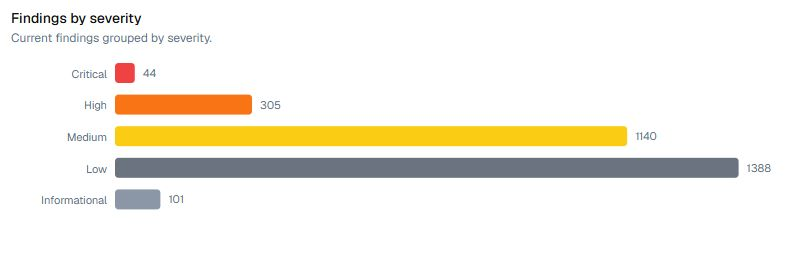
Across Borg’s current findings, we’ve now uncovered:
🔴 44 Critical
🟠 305 High
🟡 1,140 Medium
⚪ 1,388 Low
But volume alone isn’t the goal.
The real value is proving which vulnerabilities are actually exploitable, cutting through false-positive noise, and helping engineering teams focus on what genuinely puts the business at risk.
Mjolnir just landed a bug bounty on @immunefi
Our autonomous pentester found a critical application-layer vulnerability in one of Web3’s largest blockchain ecosystems.
Impact confirmed.
Payout confirmed.
$10,000 bounty.
Autonomous offensive security is starting to work.
@BorgHQ
PDF-based security reports are where findings go to die.
They slow down engineering, bury context, and turn remediation into archaeology.
Odin brings findings, tickets, integrations, and retesting into one workflow.
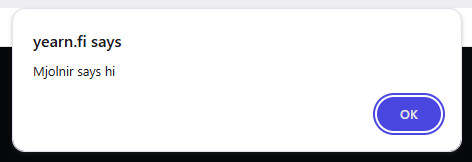
🏆Another win for Mjolnir: our autonomous agentic pentesting agent just earned $2,000 bounty from https://t.co/bz4xIxRZds!
The bug: reflected XSS through the /api/vault/meta endpoint on the https://t.co/bz4xIxRZds frontend.
Because wallets are often already connected on the webapp, the impact could have been severe; including potential loss of funds.
Frontend security in crypto is not optional.
Thanks to @yearnfi for a smooth dialogue and quick mitigation! Issue has been fixed, ref: https://t.co/de6hiVAk4C