old pitch: "we'll build you a chatbot".
new pitch: "every missed call gets a reply in under a minute".
old: "i'll build you a new website".
new: "i'll build a funnel that makes your slow months full".
old: "an AI marketing evaluation".
new: "i'll find where you can get more booked jobs from the traffic you already have, with no more ad spend".
you find the chatbot interesting. the owner finds their slow months interesting.
say what it does for them, in their words.
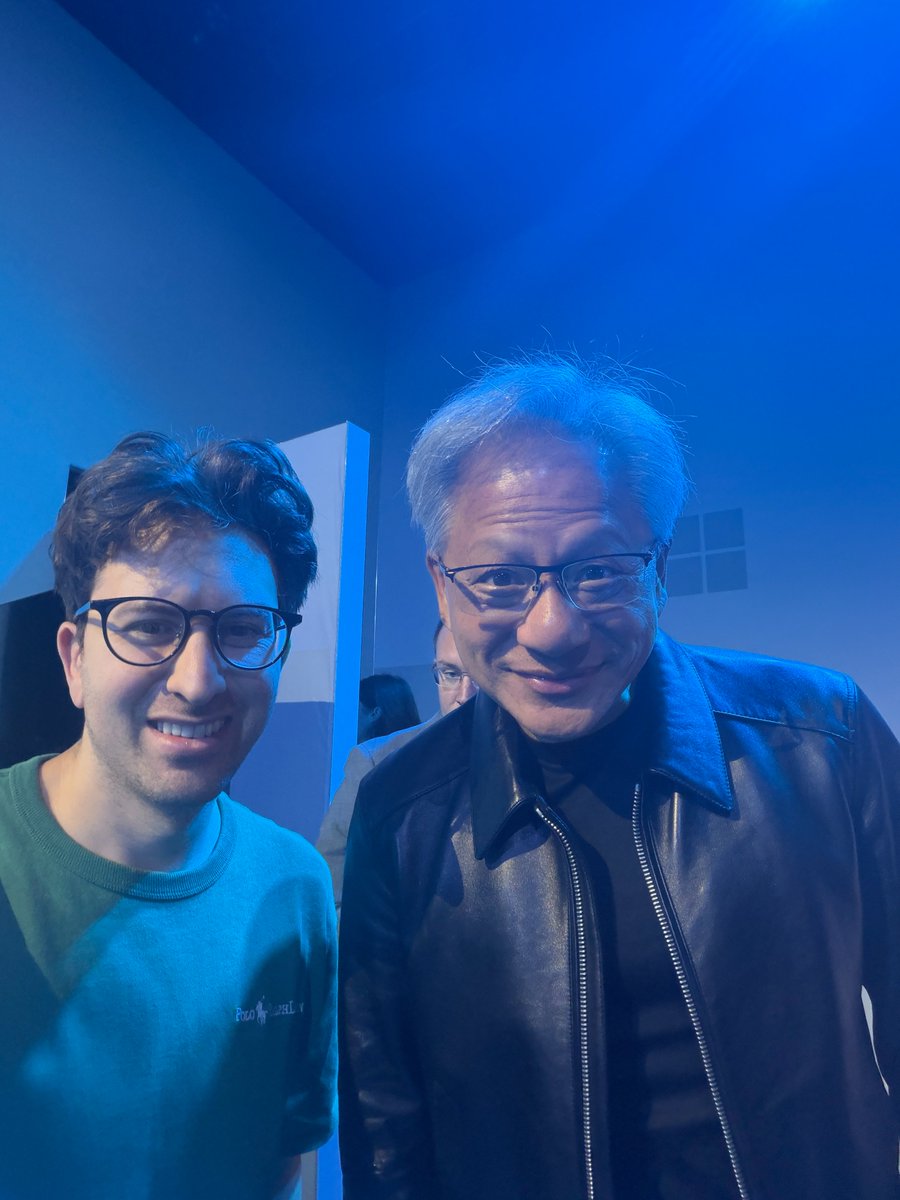
I spent 48 hours in SF hanging out with billionaires, data labs and AI founders and execs running $1B to $100B companies.
My observations:
1. Sooo MANY stories of data brokers making like $2M a WEEK selling company data to labs. I can't tell if it's the beginning or a bubble, and I kept wondering which niches are left. Digging into it actively.
2. At dinner, someone asked the table, "If a new model drops next month, does your company get better or worse?" HALF the table went quiet! I think that's the best question to ask about any AI startup right now.
3. The bar people talk about now is hitting $1B in revenue in 12 months (I guess that's the new unicorn?). What I didn't hear much about is retention. AI revenue can come in fast and leave fast, and I think we're going to see a lot of stories of AI companies with huge revenue and terrible retention.
4. It's pretty clear we're living through the reinvention of the computer. The model is the CPU, the harness is the operating system, and skills and plugins are the apps. Thinking about it that way makes it easier to see where the whitespace is.
5. We're maybe 12 months from an agent that can watch you work for a week and then do your job without any instructions. The screen recording plus agent memory plus local model combination makes this possible right now.
6. Agent harnesses feel like the new GPT wrappers, in a good way, especially vertical ones. The best teams I talked to treat the model as swappable. One founder walked me through routing different models to different jobs: one for taste and visuals, a cheaper one for the everyday stuff, another for text.
They use prompts they can move across models over fine-tuning, and A/B test the output on what users actually do with it: do they edit it, export it, share it? A vertical harness is basically four things: the connectors for that industry's data, evals written by people who know the work, rules for what the agent can and can't touch, and a clean screen for a human to review. The model is maybe 20% of it.
7. There's a lot of reverse engineering going on/cloning going on more than I've ever seen. People are decompiling software and rebuilding it with agents, and someone showed a suite of like 10 apps that are worth $5B+ each all that he cloned open source. Me and everyone are still thinking through what it means when software gets this easy to copy.
8. My guess is the value moves to data. If the software can be rebuilt quickly, what's worth paying for in a legacy SaaS company is the years of customer data and workflows inside it. Some SaaS companies are secretly data companies.
Gets me thinking about how do you truly value data for this saas companies? Like if we were buying these dying saas companies at 2x ARR before (as example), maybe there is a better metric. Idk, just thinking out loud here.
9. It feels like a good chunk of legacy software won't make it to the agentic era, especially anything built around people clicking through a lot of screens.
10. Every company I talked to wants to pipe its internal data into one place and expose it to agents through MCP. Then they look at the data and realize it's a mess: five versions of the same customer, old Slack channels, PDFs nobody can search. Cleaning that up feels like a big consulting opportunity!
11. A lot of founders are building the basic building blocks for agents: APIs, data layers and tools. Some of the companies I saw barely have a UI because the main user is an agent. I really believe the startups that build primitives to this agentic era will do extremely well. Building blocks is the best way to think about it.
12. Labs can get plenty of training data, but it's harder to get real examples of agents failing inside companies. Whoever has those logs has something valuable.
13. Someone running a big consumer company told me the next fight is over memory. The model that remembers the most about you wins, and the smartest model matters less than people think.
14. Physical AI came up a lot. Astra I think was the first model that got people into AI can actually do CAD, and I think a lot of people are thinking what does vibe manufacturing really look like. The line I keep thinking about came from a robotics founder: the hardest problems in AI are deployment problems now, not research problems. Their robots work on their own, call a human when they get stuck, and every one of those calls becomes training data.
15. Cybersecurity companies are having a moment and are actually cool companies to build now, especially the ones that clean up after a breach. Every agent with access to your systems is a new door into your company, and a lot of those doors were left open.
16. Some startups are worth more dead than alive now. A shutdown company with 5 years of Slack, email and code can get paid for licensing all of it. I wouldn't be surprised if founders start factoring that into when they shut down.
17. People are starting to talk about monetizing the agent web. It feels really early, but when the most popular user of the internet is an agent, what startups should you be building?
18. I think agent insurance is coming. Once an agent makes an expensive mistake, insurers will want audits before they cover anyone.
19. Several people said the hire they want most is someone with taste who can write evals. The models are getting good at generating ideas, so the hard part is judging which ones are good.
20. New trend I observed: startup raises VC, uses venture dollars to become a creator, startup fails, founder falls back on being a full-time creator and incubates other products bootstrapped.
21. Getting SIGNIFICANT distribution is HARD right now. Founders are sponsoring buses, buying billboards like crazy and throwing parties with famous DJs to get noticed. Kinda feels dotcom era in that sense.
Attention is what's scarce! The growth guy going viral sharing his UGC strategy from Wispr Flow is a good example. It's the sauce everyone wants, and I truly believe there are probably only 50 people on the planet who know how to scale these types of businesses efficiently in this era.
Always good to get that dose of SF. I felt sooo lucky to have such an incredible trip during such an incredible time in building businesses. Surreal in so many ways.
Happy to be home and locked in.
Until next time!
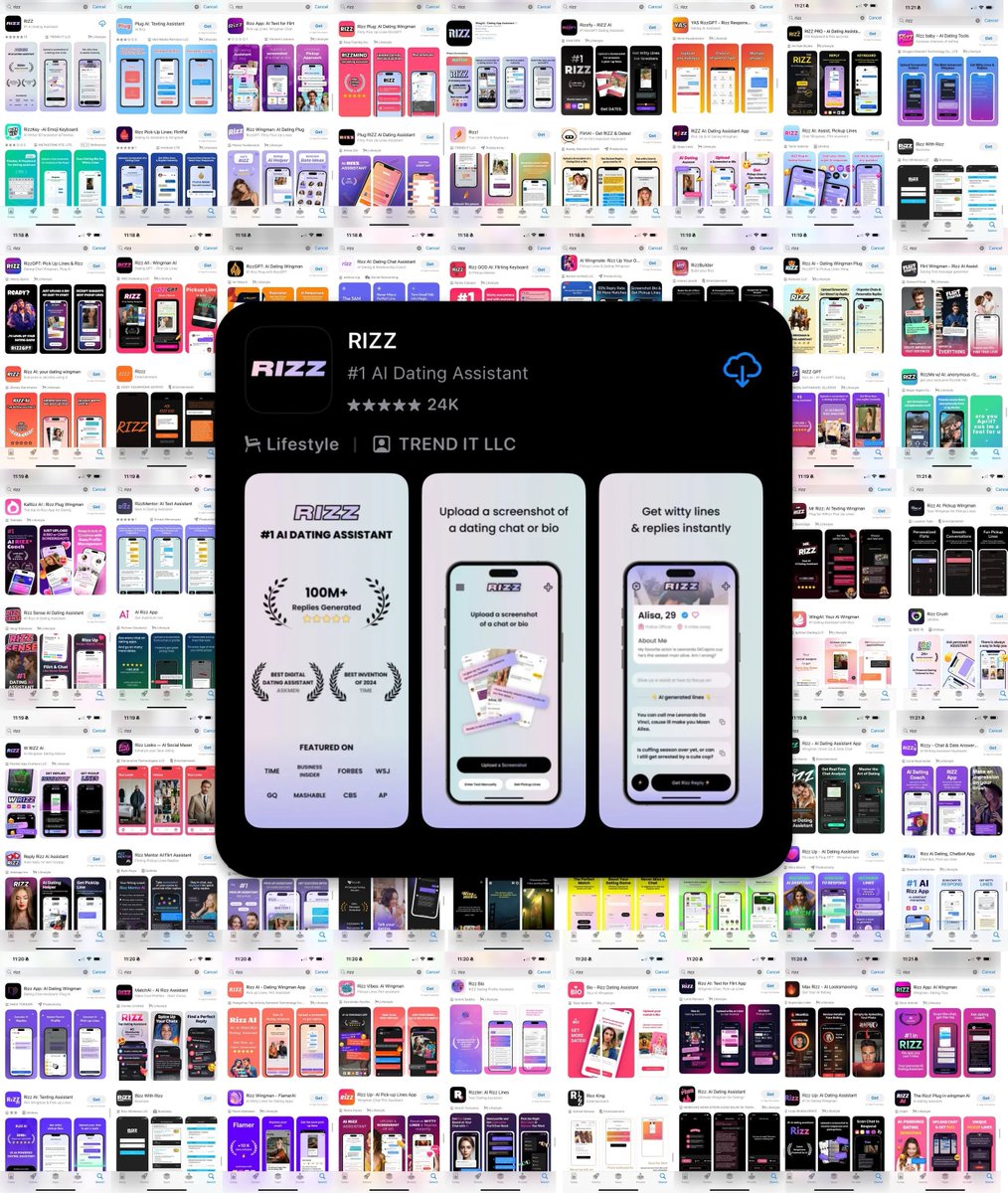
get ready for your app to be reverse engineered by thousands of ai agents
u need a strong brand and distribution moat to survive
we have hundreds of rizz copycats, but our brand & distribution capabilities are what made us the most famous app in the category
can you say what your competitor sells right after the first purchase? if not, go buy it.
pick their cheapest offer and write down:
- what they offer you next, and when
- where the bigger price shows up
- what you got before they asked for it
then build yours from that.
4 steps i'd follow to sell AI services to a local business:
1. find a boring business with big tickets and bad marketing
2. don't sell it as AI. sell more booked jobs
3. build the funnel with agents, in days or hours
4. set up a loop so you test and improve the offer every week
nobody's DMing the septic guy. start with step one. bad marketing is what qualifies them.
your timeline says there are no businesses left to start. Main Street doesn't know your timeline exists.
the agent demos, the MCPs, the vibe coding. a lot of it is people in AI selling to each other.
a local business owner just wants the phone to ring.
the test: call 10 local businesses this week, or walk in, and ask how they use AI agents. i'd bet most have heard of them and very few know what they'd do with one.
the best business to start with AI agents right now isn't an app. it's building funnels for local businesses.
1. find one with big tickets and bad marketing
2. sell booked jobs, not AI
3. build the funnel with agents in days
4. show the owner the numbers every monday
i write local business pages at a 5th to 7th grade reading level. they convert at 11.1%. the ones that sound professional convert at 5.3%.
the contractor writes "hydrostatic pressure remediation".
the customer says "water in my basement every time it rains".
read the headline out loud. if a homeowner wouldn't say it on the phone, rewrite it.
HOW TO BUILD YOUR AI SERVICES BUSINESS (targeting Main Street "boring businesses")
In 39 minutes:
- why you shouldn't sell ai automation, seo/aeo, or ad services
- why you shouldn't go after HVAC and plumbing companies
- why you should sell the ai reinvention of a $15,000-$20,000 service for $3,000-$5,000 with SOFTWARE margins
and exactly how I would do it...with a full funnel for a roofing company included
my neighbor runs a pool business. customers kept asking about saunas, so he started installing them. about $3,000 wholesale, around $10,000 installed.
every agency pitches HVAC and plumbing. go one door down and look for:
- $1,000+ tickets
- competitors who are weak online
if your client runs Google Local Services Ads, a missed call now costs them twice.
the caller books someone else. and if they held for more than 20 seconds during business hours, Google charges for the lead anyway. voicemail included.
fix the phone before the ads.
this is how you make money selling to "boring" businesses
you don't sell "ai automation" or "ai agents"
you sell the machine that turns traffic a business already gets into booked jobs and you build it with AI.
i had an agent walk 11 local business sites like a customer trying to book.
9 had no way to capture an email.
8 had no priced first step.
9 had a problem with the phone.
not one had a traffic problem. traffic is still what they'll get pitched this week. fix the page first.
the AI ad stack in 2026:
research → AI agents scrape competitors, map positioning gaps, surface winning angles in minutes
copy → Claude/GPT write 50 headline variants before your coffee's done
creative → Sora, Kling, Gemini Image APIs generate video + statics on demand
targeting → Meta's AI picks your audience. Google's AI picks your keywords. You just set the goal.
workflow → Manus AI is now inside Meta Ads Manager. Gemini is inside Google Ads. Claude Code can update your campaigns with natural language via API.
ad ops → connect your Google Ads + Meta API keys to OpenClaw or Claude Code and you have an agent that pulls performance, flags what's broken, rewrites copy, generates creative, and pushes changes — all from a message
what used to take an agency a week now takes one person an afternoon.
the AI ad stack isn't coming. it's here.
16 things i've learned about marketing, ads, and ai from @boringmarketer
1. proof beats persuasion.
the receipt is the ad. a real screenshot, a DM, a lab report — one artifact outperforms 10 clever headlines. believability is the bottleneck, not creativity.
2. persona first. always.
generic ads die. the line that only one specific person recognizes as their exact thought — that's the one that converts. start with the person, not the product.
3. the format does the selling.
you don't need to say much if the format says it for you. a tracker. a before/after. a lab bench. the structure is the message.
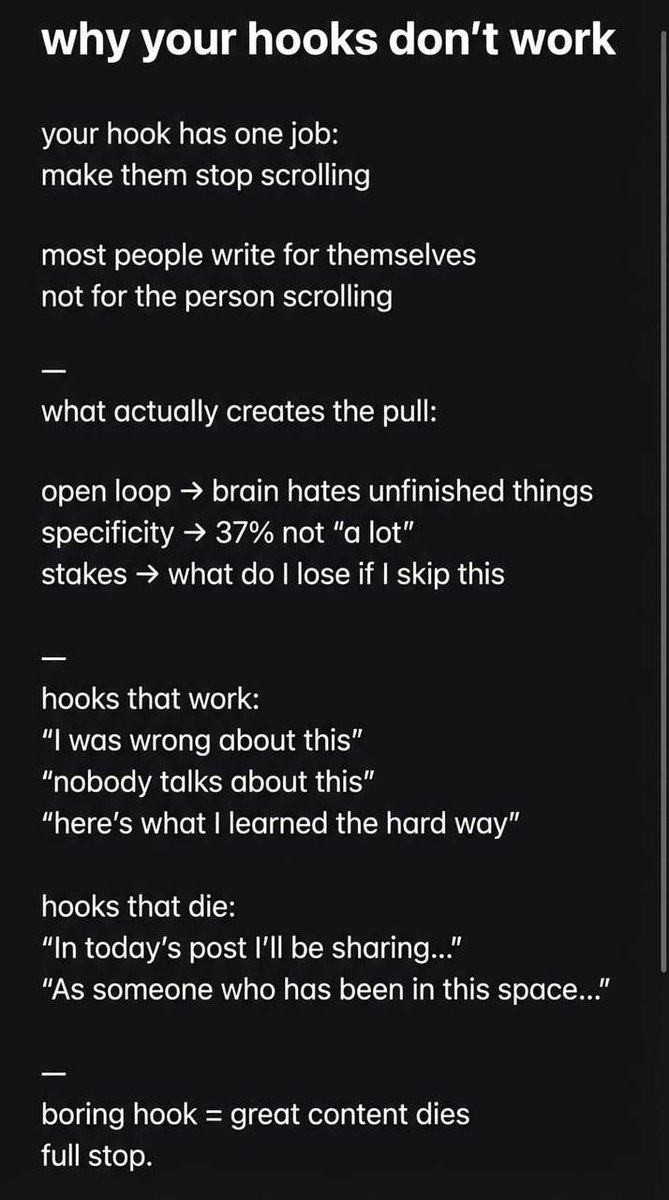
4. the hook is the whole game.
if the first 1-2 seconds don't stop the scroll, nothing else matters. one tight frame. one specific truth. no warmup.
5. ai is a testing environment, not a production shortcut.
generate 8 concepts. score them. ship the top 3. the speed isn't the point — compressing the feedback loop is.
6. the creative is a hypothesis.
every ad has a persona, a format, a hook type logged against it. if it performs you need to know exactly why so you can repeat it.
7. boring beats brilliant.
the most viral ai content is impressive and useless. what actually moves product is specific, plain, and looks like something a real person made.
8. dead lanes are data.
a 5.6 score isn't failure. it's knowing where not to spend time. kill fast, learn faster.
9. native texture wins.
lo-fi DM screenshots outperform polished visuals. people trust things that look like they weren't trying to be ads.
10. distribution is a research tool.
posting isn't just content. it's a live experiment. 35k views on a format tells you something no focus group ever could.
11. the product and the content are the same thing.
the lab informs the SaaS. the SaaS informs the lab. most founders keep these separate. collapsing them is the advantage.
12. ai handles repetition. humans set the taste.
the machine generates. the judgment stays human. that's not a limitation — that's the design.
13. the insight layer is the real unlock, not the output.
anyone can generate an ad. the people winning are using ai to understand why something works — what fear it addresses, what format signals