ESTE SUJETO CONDUCIA UN UBER EN CALZONES PARA VIOLAR A SU CLIENTE PERO....
Por motivos de mi seguridad y la de mi familia no dire mi nombre, pero hola soy "M" y quiero denunciar a este tipo ya que el dia 1 de Junio del presente año pedi un viaje en uber que iba del toreo a parque Delta, al llegar y abordar el vehiculo todo normal lo raro empezo cuando sobre periferico en la desviación que te saca a viaducto no se incorporo se siguio derecho, en ese momento le dije "oye ya te pasaste" el tipo sin decir nada subio su retrovisor y finalizo el viaje, seguia avanzando y yo le grite "oye 3stupidö ya te pasaste a donde me llevas?" no contesto y siguio avanzando en eso me percate que no tenia pantalón solo tenia una toalla tapandole las piernas, luego en mi teléfono vi el maps y decia desviación a toluca y fue cuando entre más en pánico ya que no sabia que hacer, le llame a una amiga del trabajo para decirle que le mande mi ubicación en tiempo real y llamara una patrulla ya que el del uber no se a donde me llevaba y no me dejaba bajar, seguia avanzando y en eso vi que metros adelante había un semáforo en rojo y carros parados por lo cual este tipo se puso atras de un taxi y yo abri la puerta del carro y si abrió, no tenia los seguros, en eso le grito "eres un idiötä a donde me querias llevar p3nd3jo" y sin decirme nada se arranco, unas señoras que estaban en la parada de autobus vieron todo y me dijeron "tranquila aqui estas segura" ya no pude más y llore de coraje y de miedo, no sabia ni donde estaba, al preguntar me dijeron que periférico y barranca del muerto, llame a mi trabajo para avisar, cuando pude tranquilizarme tome un taxi hacia mi trabajo compartiendo mi ubicación tiempo real, al llegar pedi permiso para levantar mi denuncia y asi lo hice siguiendo todos los protocolos, tristemente la fiscalía y la aplicación me dan largas y largas aun asi no voy a desistir, por favor les pido que me ayuden a compartir y difundir para que este degenerado no siga haciendo de las suyas.
GRACIAS A DIOS SOY AFORTUNADA Y PUEDO CONTARLO PERO HAY MUCHAS PERSONAS, EN SU MAYORÍA MUJERES, QUE NO LOGRAN REGRESAR A CASA CON SU FAMILIA.
Quiero hacer viral a este desgraciado enfermo para que tú, tu hija, tu familia o cualquier persona no viva momentos de angustia como lo viví yo.
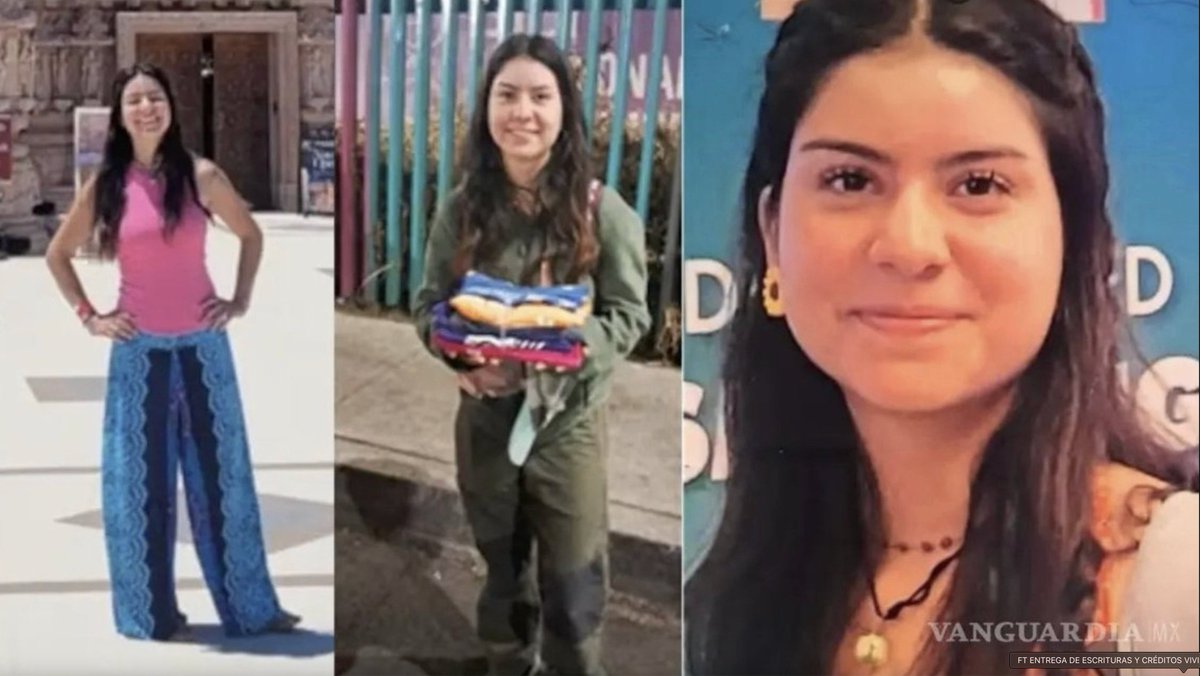
Sigue la búsqueda de Ana Amelí García Gámez, desaparecida el 13 de julio de 2025 en la colonia Héroes de 1910, alcaldía Tlalpan, Ciudad de México
#HastaEncontrarla@FiscaliaCDMX@FGRMexico@SSPCMexico
https://t.co/O7zixQAJZW
El tiempo nos dio la razón. Lo advertimos desde 2024.
Enrique Alfaro, su director del SIAPA, y su secretario de SEGIA, sabían que el SIAPA suministraba agua contaminada y tuvieron la audacia de negarlo y de, incluso, culpar a la ciudadanía.
Pablo Lemus, su ex director del SIAPA, y su actual director del SIAPA, saben que el SIAPA suministra agua contaminada y no tienen las agallas para salir a dar la cara , aceptarlo, y mostrar un plan para mitigar la crisis.
LOS EMPLEADOS DEL BANCO DEL BIENESTAR SIGUEN EL EJEMPLO DE ANDRÉS MANUEL LÓPEZ OBRADOR:
“Robar, mentir y traicionar”
Hagan viral a esta mujer, le robó dinero a una señora de la tercera edad de su pensión del bienestar, dinero que no sale del sueldo exclusivamente de Claudia, sale del dinero de todos los mexicanos, desde el ISR que te descuentan en la nómina, hasta el IEPS que te ensartar cuando compras un gansito.
#URGENTE | 🚨 PACIENTES TIENEN QUE LLEVAR SU PROPIA CAMA AL ISSSTE.
La farsa de la 4T o transformadera de cuarta se desmorona frente a nuestros ojos de la manera más cruel. En el Hospital del ISSSTE de Ocotlán, Tlaxcala, la negligencia llegó a otro nivel: ya no solo faltan medicinas, ahora faltan camas. Los pacientes tienen que llegar cargando su propio colchón para no quedarse tirados en el suelo.
Al paso que vamos, la lista de requisitos para consulta será: INE, comprobante de domicilio, almohada, base de cama y cada quien lleva sus medicinas. Mientras el oficialismo se llena la boca presumiendo que tenemos un sistema de salud "de referencia mundial" tipo Dinamarca, la gente más vulnerable paga las consecuencias de un sistema saqueado.
Hay dinero de sobra para las campañas de ego oficial, pero dejan los hospitales en la miseria absoluta. ¡No tienen madre!
¿A qué político te gustaría ver formado en el ISSSTE cargando su propio colchón para que sienta la realidad del país?
“¡Ya lo estamos arreglando!”, fue la respuesta de la presidenta @Claudiashein ante el reclamo de una madre en Baja California por la muerte de su hijo debido a la falta de oxígeno y atención médica.
Mientras la respuesta oficial es minimizar la tragedia, la realidad en el IMSS e ISSSTE es de abandono. En Tlaxcala, pacientes del @ISSSTE_mx en Ocotlán también denuncian falta de camas y nula atención.
¿Cuántas vidas más deben perderse para que dejen de decir que "ya se está arreglando"?
💔 “Papá, te estamos esperando”. Con esa frase, Ana Paula Ibarra hizo un desesperado llamado para encontrar a su padre, Francisco Javier Ibarra Rodríguez, piloto aviador y abogado de 56 años, d3saparecido desde el pasado 16 de junio en Los Mochis, Sinaloa 🙏
😔 La familia asegura que no sabe nada de su paradero y pide el apoyo de la ciudadanía para difundir su caso y aportar cualquier información que pueda ayudar a localizarlo.
✍️ Radio Fórmula
Es increíble que ya se cumpla un año de la desaparición de Ana Amelí, y no haya noticias de ella.
Es admirable la fortaleza de esta madre y su impulso por no dejar de buscar. Ojala las autoridades la acompañaran con el mismo ímpetu …
#AnaAmelí
“La persona que lo tenga por favor, devuélvamelo con vida”.
Ana Paula Ibarra Beltrán pide ayuda para localizar a su padre, Francisco Javier Ibarra Rodríguez, piloto aviador y abogado de 56 años, desaparecido desde el 16 de junio en Los Mochis, #Sinaloa
✈️🚌 SOLICITUD URGENTE DE APOYO PARA LOCALIZAR A AITANA 🚌✈️
Pedimos el apoyo d todas las aerolíneas, centrales d autobuses, líneas d transporte terrestre, personal d taquillas, operadores, sobrecargos, personal d seguridad y usuarios en general para ayudar a localizar a Aitana.
URGENTE: Se activa Alerta Amber en Tijuana localizar a una menor de 13 años, vista por última vez el pasado 14 de junio de 2026 en la colonia Balcón de las Huertas.
Por su edad, se encuentra en una situación de vulnerabilidad. Reporta datos al (664) 130-33-73 o al 089. 📞👇👇
Hoy les vengo a pedir un favor a todos. Este muchacho es pariente mío y se encuentra desaparecido. Les pido que compartan esta publicación por todos los medios posibles para ayudar a encontrarlo.
Muchas gracias.
No tendrían por qué esperar 72 horas, si las 12 primeras horas son vitales para encontrar a un menor desaparecido y después de las 48 horas las posibilidades disminuyen considerablemente.
RT, por favor!!
A Japanese immunologist spent 20 years proving that the chemicals trees release into the air walk into your bloodstream, hunt down your stress hormones, and arm your immune system in ways no therapist or pharmaceutical has ever matched, and most of the data has been sitting in Japanese medical journals for two decades waiting to be translated.
His name is Qing Li.
He is a clinical professor at Nippon Medical School in Tokyo and the president of the Japanese Society of Forest Medicine. The Japanese government has been funding his research since 2004, and the body of work he has produced is the reason forest bathing is now an officially prescribed clinical therapy in Japan and Korea.
The story actually starts in 1982, when the Japanese Ministry of Agriculture, Forestry and Fisheries coined the term shinrin-yoku to describe the practice of slow, mindful walking in a forest. They did it for a practical reason.
Japan was urbanizing fast, stress-related illness was climbing, and the country had thousands of square kilometers of forest sitting unused. The idea was to give people a reason to walk into the trees... They had no idea what was actually happening to the human body during those walks until Qing Li ran the first proper experiment in 2005.
He took twelve healthy adult men on a three-day, two-night trip to a forest park. They walked for a few hours each day. Nothing strenuous. No prescribed routes or breathing exercises. They simply walked slowly through the trees, breathing the air, looking at the forest.
Li drew blood and urine samples before the trip, on the second day, on the third day, on day seven after returning home, and again on day thirty.
The numbers that came back from the lab were not what anyone expected.
The activity of a specific type of immune cell called the natural killer cell, which is the cell your body uses to hunt down cancer cells and virus-infected cells before they can spread, had jumped by roughly 50 percent during the forest trip. The actual number of natural killer cells circulating in the bloodstream had increased significantly.
Three different anti-cancer proteins that those cells produce, called perforin, granzymes, and granulysin, had all risen sharply. And the effect did not disappear when the men went home. The immune boost was still measurable on day seven and was still partially present on day thirty.
Two hours a day in a forest had upgraded the immune system for a full month.
Li ran the same experiment with women a year later and found nearly identical results. Then he ran it with a control group who took a three-day trip through an urban area with the same amount of walking, the same hotel quality, and the same diet.
The urban group showed no measurable change in natural killer cell activity at all. The forest was doing the work, not the vacation.
The mechanism turned out to be a class of airborne molecules called phytoncides. Trees produce these compounds to defend themselves against insects, bacteria, and fungi. Pine, cedar, oak, and cypress trees release them in particularly large amounts, especially in warmer weather and after rainfall.
When you walk through a forest, you are inhaling those molecules into your lungs and absorbing them through your skin, and once inside your body they appear to directly stimulate the production and activity of the very immune cells Li was measuring in his lab.
Roughly 50 percent of the health benefit of a forest walk, according to Li's data, comes from the chemistry of the air itself. The other half comes from what the forest is doing to your nervous system.
This is where it stops being only about the immune system and starts being about stress.
A separate Japanese research team measured cortisol, the body's main stress hormone, in 84 participants across 35 different forest sites. They drew samples before and after a 30-minute walk in each forest and compared them to control walks in matched urban environments. The cortisol levels of the people who walked in the forest were lower than the cortisol levels of the people who walked in the city by a significant margin. Their heart rates were lower. Their blood pressure was lower.
The activity of their parasympathetic nervous system, which is the part responsible for rest and recovery, had gone up. The activity of their sympathetic nervous system, which is the part that drives fight or flight, had gone down.
Then a researcher at the University of Michigan named MaryCarol Hunter ran the cleanest version of this experiment ever done. She recruited participants from a city and told them to take a nature pill three times a week for eight weeks.
They were free to choose the time, the place, and the duration of the nature experience, as long as it was outside, in daylight, and free of phones, conversations, and aerobic exercise. They sent her saliva samples before and after each session so she could measure cortisol changes accurately and rule out the normal daily drop in stress hormones that happens to everyone.
The result was that participants experienced a 21.3 percent drop in cortisol per hour spent in nature, with the biggest payoff happening between minutes 20 and 30 of the walk.
After that, the cortisol kept dropping, but more slowly. The threshold dose for measurable stress relief was just 20 minutes outside in something that looked and felt like nature.
What none of this means is that nature is a substitute for therapy or for medication when someone genuinely needs them. Therapy treats different things than a walk does, and Li himself has been careful in interviews to call forest bathing a complementary intervention rather than a replacement for clinical care.
But what the research has settled is that the human body has a physiological response to being among trees that operates on the same biological systems modern medicine is trying to reach with drugs and clinical protocols, and that response is fast, measurable, and free.
The strangest part of Li's work is the implication he keeps repeating in interviews. The average person now spends more than 90 percent of their life indoors. Their cortisol stays elevated. Their natural killer cells stay sluggish.
Their parasympathetic nervous system rarely gets a chance to take over. The system that was tuned by millions of years of life under a canopy of trees is being asked to run permanently inside a box made of drywall and screens.
Your body has not forgotten what it is supposed to do in a forest. It is waiting for you to walk into one.