Let's record for posterity the moment Putin soiled himself before today's high-level meeting with the leaders of China and the United States, November 17, 2026, in China.
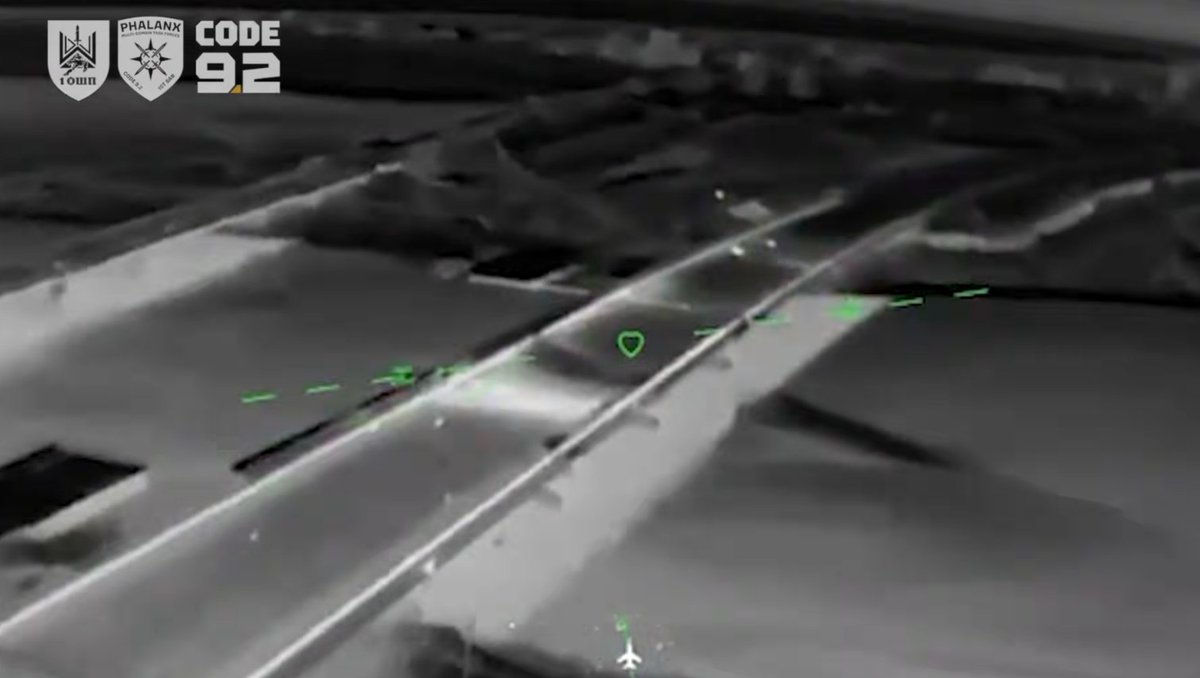
We've brought you exclusive footage of Ukrainian-made aerial weapons striking Putin's temporary crossing, known as the "Crimean Bridge," all set to a chilling autumn track.
And remember: We will stand. Moscow will fall through Crimea.
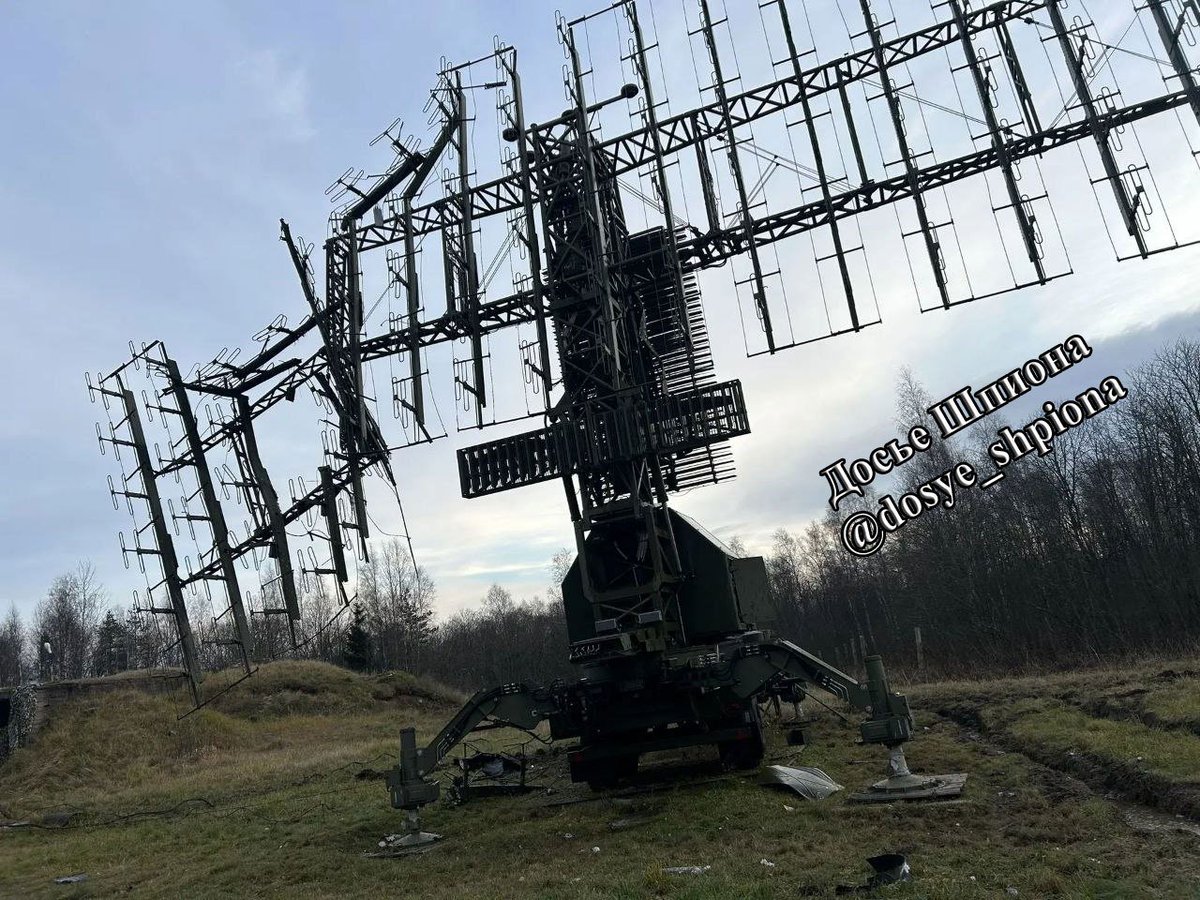
On November 11, 2026, an attack was carried out on the positions of a radar reconnaissance unit located in the Leningrad region.
The following were hit:
• "Nebo-SVU" radar station;
• Universal mobile antenna mast 40V6;
• "Sopka-2" trajectory radar complex.
Серед іншого в операцїі Карфаген обшуки пройшли у головного поліцейського Київщини Андрія Рубеля, який на момент подій з операції Карфаген-2 був головою Департаменту стратегічних розслідувань (це така реінкарнація УБОЗу, якби хто питав).
⚡️❗️It seems we finally know which three Russian aircraft were lost over Leningrad Oblast while repelling today’s Ukrainian drone attack:
Ka-52 — 2 crew members
Mi-8 — 3 crew members
MiG-31 — 2 crew members
All seven crew members died.
The more details emerge, the more baffling this incident becomes. How did Russia manage to lose three aircraft at the same time during a drone attack, and how did every single crew member aboard all three aircraft end up dead?
Ukrainian «heavy drones (like the Vampire) have radically changed the Russia–Ukraine war. Together with my guys, we were among the first to use them (June 2022, a heavy bomber with the number 07), and we quickly understood their potential.
By 2026 they are an integral part of the daily routine: logistics, mining, destroying targets, relay (in some cases, as in the video, an observation post). But when you fight a long war, you always run into the question of resources. And as the «technology» has developed, I have become more and more skeptical about so-called “heavy bombers.”
With the «Vampire» priced at $8,500 (the real price may differ slightly), we get the following capabilities:
- logistics to our positions, with a 9–12 kg payload;
- strikes on objects 9–12 km away with a 10 kg payload;
- use as a relay (which seems rather expensive for a relay);
- mounting a Starlink terminal, so we don’t have to think about EW or the horizon;
- mining even 13–15 km deep behind the notional line of contact.
That is quite a broad set of functions for a single platform, one that seemingly has no downsides. But how cost-effective is it?
Absolutely all of these functions, and even more (direct strikes), are performed by 15-inch FPVs, which can use other FPVs as relays and can fly 60–90 km (!) deep into enemy territory. If we set them the task of covering 10–12 km, as the “Vampires” do, they will do it significantly better than heavy bombers. And their cost, together with Starlink, would be $2,000 (instead of $8,500 for the Vampire without Starlink).
That is not to mention that the FPV platform unifies training, and as a combat unit you end up with universal pilots. And it’s very hard to shot 15 inch FPV with small arms and shotguns.
Are heavy drones needed? Without a doubt, yes. But for other tasks, with significantly different capabilities than the routine ones they are used for now.
Lyman direction. Winter 2026. A Ukrainian «bomber» that was landed on the ground is used as an observation post, filming Russian assault groups driving to an assault in foggy weather (all of them will be destroyed).
The Ukrainian 1021st Anti-Aircraft Missile and Artillery Brigade has demonstrated the use of the Stugna against Russian aerial targets.
Originally designed to destroy tanks and other armored vehicles, the Ukrainian-made Stugna is now being used in an air defense role
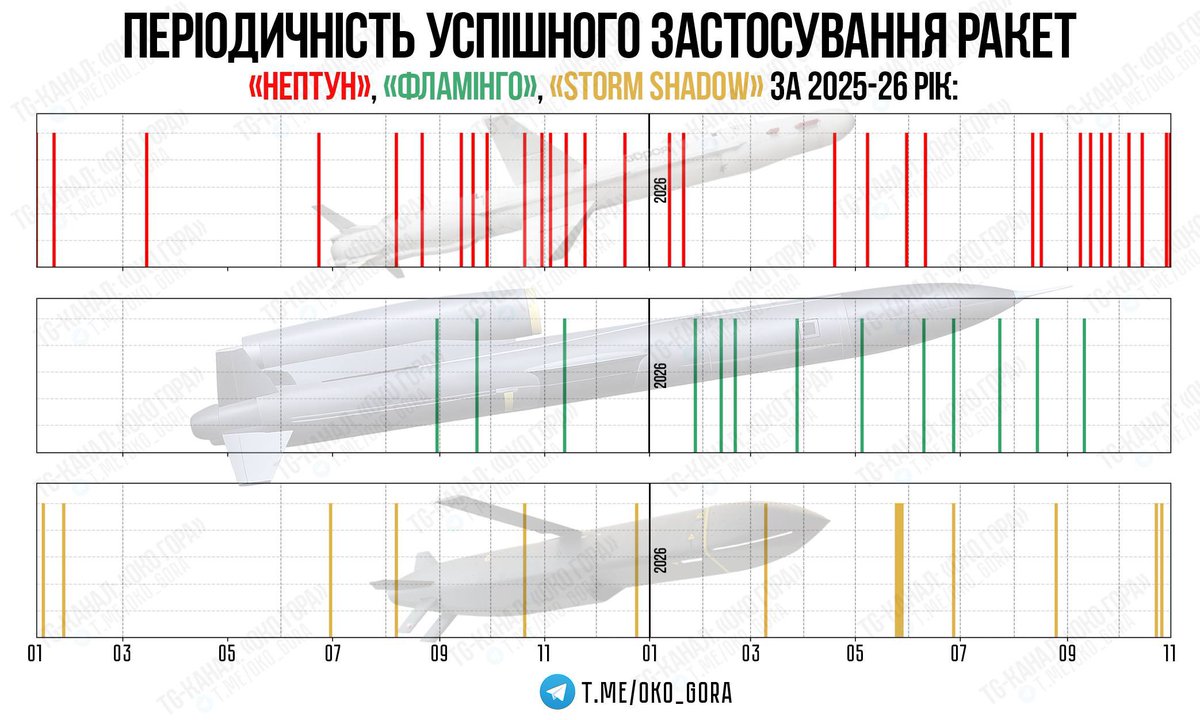
🇺🇦🚀 The frequency of successful launches of Neptune, Flamingo, and Storm Shadow missiles in 2025-26, - @oko_gora_tg
🔴Neptune – 30 strikes in 22 months;
🟢Flamingo – 13 strikes in 16 months;
🟠SS – 14 strikes in 22 months.
Storm Shadow, number of strikes depends on the missile batches supplied by Britain and France.