Youth Pastor | Supply Chain Expert | Passionate about empowering the next generation & optimizing logistics. Balancing faith and efficiency every day. #Leaders
Let me take this from another angle I experienced recently.
About a month ago, following the support and gifts I received from people across the globe after my story went viral, my siblings and I decided to improve our house in the village. For decades, we had lived without electricity.
Two weeks ago, my dad and I went to purchase electrical appliances at a particular store.The total bill was well over half a million naira, but the attendant mistakenly debited only ₦30,000 and released all the items to us.
The moment we got home, I noticed it. I expected a call at any moment, since we paid through a mobile bank linked to our phone numbers. A week passed, no feedback.
So, my dad and I had to return the balance. On getting there, we opted to meet personally with the CEO.
To my surprise, the moment I mentioned my name, he was astonished. He explained that he had come across my story on social media and gracefully left the balance as his personal contribution.
Today, the man even called me after he saw my BBC video to felicitate with me.
Fear of God and Integrity is actually underrated.
This submission is flawed in its entirety.
As a young man who witnessed the 2002 crisis between the Hausas (mostly Muslims) and the OPC/Yorubas in Ajegunle, I no longer see any reason to place Islam above my ethnicity.
The OPC/Yorubas were nearly annihilated by the Hausas during that conflict, but they were saved by the Ilejas (mostly Christians), who came to their rescue as fellow Yorubas. The Ilejas who joined the OPC to confront the Hausas did not care about religion; they simply saw a fellow Yoruba in need.
The Hausas, for their part, also paid no attention to religion. Once someone was identified as Yoruba, they were either killed or severely injured, regardless of whether they were Muslim or Christian.
While some Yoruba Muslims were preoccupied with religious brotherhood, the Hausas were busy protecting their fellow Hausas irrespective of religion and attacking Yorubas irrespective of religion.
If, in this day and age and in a country like Nigeria, some Yorubas are still publicly displaying this kind of mindset, then there is serious trouble in Yorubaland.
Being a Muslim or a Christian is a personal choice, but being Yoruba or belonging to any other ethnicity is not. It is the divine will that determines one’s birth into a Yoruba home and to Yoruba parents.
You can change your religion at any time, but you cannot change your ethnicity or tribe. That alone should make it clear that ethnicity comes before religion. It is your identity from before birth and will remain so after you depart this world. God/Allah/Eledumare made it that way.
May Eledumare help us in Yoruba land. 🤦
UK: there high number of mothers who want their kids to learn Yorùbá language.
Only kids of every generation can preserve Yorùbá language..... don't deprive them of it
#CatchThemYoung#YorubaGreatness
WHY I CAME BACK HOME
After almost 30 years in the United States working as an Interventional Cardiologist, people still ask me why I returned to Nigeria.
Every day at Tristate Hospital, Lekki, I am reminded that my return to Nigeria was not just a career decision. 1/8
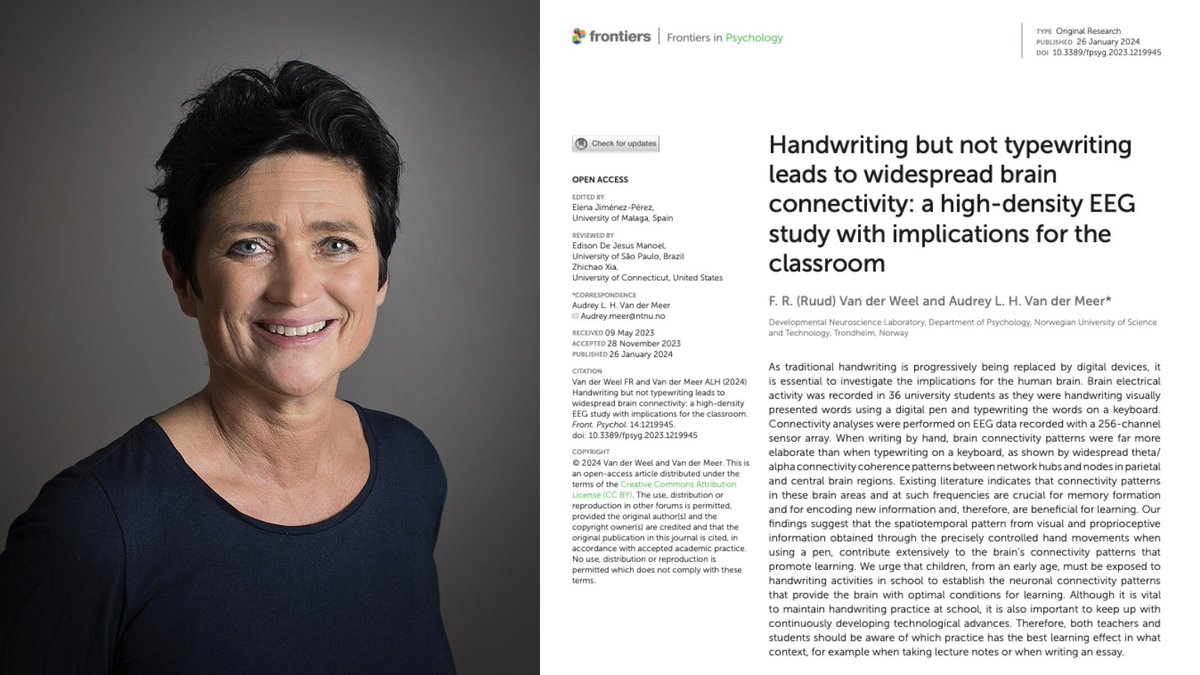
A Norwegian neuroscientist spent 20 years proving that the act of writing by hand changes the human brain in ways typing physically cannot, and almost nobody outside her field has read the paper.
Her name is Audrey van der Meer.
She runs a brain research lab in Trondheim, and the paper that closed the argument was published in 2024 in a journal called Frontiers in Psychology. The finding is brutal enough that it should have changed every classroom on Earth.
The experiment was simple. She recruited 36 university students and put each one in a cap with 256 sensors pressed against their scalp to record brain activity. Words flashed on a screen one at a time.
Sometimes the students wrote the word by hand on a touchscreen using a digital pen, and sometimes they typed the same word on a keyboard. Every neural response was recorded for the full five seconds the word stayed on screen.
Then her team looked at the part of the data most researchers had ignored for years, which is how different parts of the brain were communicating with each other during the task.
When the students wrote by hand, the brain lit up everywhere at once.
The regions responsible for memory, sensory integration, and the encoding of new information were all firing together in a coordinated pattern that spread across the entire cortex. The whole network was awake and connected.
When the same students typed the same word, that pattern collapsed almost completely.
Most of the brain went quiet, and the connections between regions that had been alive seconds earlier were nowhere to be found on the EEG.
Same word, same brain, same person, and two completely different neurological events.
The reason turned out to be something nobody had really paid attention to before her work. Writing by hand is not one motion but a sequence of thousands of tiny micro-movements coordinated with your eyes in real time, where each letter is a different shape that requires the brain to solve a slightly different spatial problem.
Your fingers, wrist, vision, and the parts of your brain that track position in space are all working together to produce one letter, then the next, then the next.
Typing throws all of that away. Every key on a keyboard requires the exact same finger motion regardless of which letter you are pressing, which means the brain has almost nothing to integrate and almost no problem to solve.
Van der Meer said it plainly in her interviews.
Pressing the same key with the same finger over and over does not stimulate the brain in any meaningful way, and she pointed out something that should scare every parent who handed their kid an iPad.
Children who learn to read and write on tablets often cannot tell letters like b and d apart, because they have never physically felt with their bodies what it takes to actually produce those letters on a page.
A decade before her, two researchers at Princeton ran the same fight using a completely different method and ended up at the same answer. Pam Mueller and Daniel Oppenheimer tested 327 students across three experiments, where half took notes on laptops with the internet disabled and half took notes by hand, before testing everyone on what they actually understood from the lectures they had watched.
The handwriting group won by a wide margin on every question that required real understanding rather than surface recall.
The reason was hiding in the transcripts of what the two groups had actually written down.
The laptop students typed almost word for word, capturing more total content but processing almost none of it as they went, while the handwriting students physically could not write fast enough to transcribe a lecture in real time, which forced them to listen carefully, decide what actually mattered, and put it in their own words on the page.
That single act of choosing what to keep was the learning itself, and the keyboard had quietly skipped the choosing and skipped the learning along with it.
Two studies. Two countries. Same answer.
Handwriting makes the brain work. Typing lets it coast.
Every note you have ever typed instead of written went into your brain through a thinner pipe. Every meeting, every book highlight, every idea you captured on your phone instead of on paper was processed at half depth.
You did not forget those things because your memory is bad. You forgot them because typing never woke the part of the brain that would have made them stick.
The fix is the thing your grandmother already knew.
Pick up a pen. Write the thing down. The slower road is the faster one.
Question: "What is your comment on the debate about whether Nigerian graduates are still great, as discussed on the Platform?"
My Response: I do not subscribe to the thesis that Nigerian graduates are not great. Rather, I posit that Nigerian graduates are not given sufficient opportunities to develop rapidly after school. A typical Nigerian graduate is just as capable as anyone globally; the challenge is that our systems often fail them by not creating pathways to scale their capabilities.
This debate is not new. In virtually every Nigerian university, graduates from one generation tend to believe that those who came after them were less prepared. But if we look deeper, we will realize something important: young people today are smarter, more exposed, and often more adaptable. The real issue is not raw capability; it is the absence of accelerated development opportunities.
When I was in FUTO, I knew nothing about “pitch deck”. Today, many FUTO graduates can prepare investor presentations, understand startup ecosystems, and navigate tools we never imagined. The difference is exposure. But unlike my time, when many strong students graduated on Friday and resumed work on Monday, today’s graduates may spend months, or even years, waiting for opportunities. That delay creates a developmental gap. So, the issue is not the students. The issue is the system.
At the same time, we must recognize that far more people are competing for limited opportunities today. In the 1950s or 1960s, a village might have sponsored only 5 boys to attend secondary school while others remained at home. The system had already filtered for the top 1%. Today, education is more democratized, and many more people have access. Some interpret this expansion as declining quality. I disagree.
This is also why I dislike comparisons between new African immigrants in America and the broader first generation Africans in United States. Some people wrongly assume the immigrants are inherently smarter or more capable. I say: not really. The immigration system itself is a filter. By the time the U.S. embassy issues visas, it has often selected from the top tier, perhaps the top 10%, of those applying. You cannot compare that filtered group to the entire first-generation population Africans in America. If you applied the same filter locally, you would discover the same caliber of people.
The real issue, therefore, is not whether Nigeria has talent. Nigeria has immense talent. The real issue is that too many organizations are not investing in developing young people. Our young people are victims of weak systems, not evidence of weak capacity.
If we provide the right support, mentorship, and opportunities, Nigerian graduates can build and power world-class systems. The capability exists. What is required is the ecosystem to unlock it.
I’m a wife, mother, daughter, sister, professor, business owner & I own some shares in different companies. I work, go home, cook, take care of our kids, I meet Hubstar’s sexual needs & help pay our kids’ car insurance & health insurance. Married 20 years PLUS!
P.N Okeke is one of my biggest inspiration.
It’s sad that he hasn’t been given the highest national honour.
I will donate his complete books set to every secondary school in the South East to keep in their libraries so students can study his work.
He is a genius!
@HabeebOmosidi We need to do so much more in upgrading our technical education, the way we down grade technical education has left Nigeria with abysmal performance in this field, and of a truth, the make up a large chunk of the hands on workforce, the degree holders are usually supervisors
Lautech is a state-owned University. They paid roughly over 300k+ every session.
The NELFUND initiative came as a relief to students (State and Federal) and also brought relief to parents.
NELFUND isn’t paying just only school fees; they’re also giving prompt monthly stipends to bolster students' morale.
NELFUND made Caleb’s dream possible. Accessing the funds reduces his struggles to pay school fees, mitigates low performance, and also bolsters his grades.
NELFUND is one of the best initiatives of PRESIDENT BOLA AHMED TINUBU RENEWED HOPE ADMINISTRATION. The initiative stands to reduce the number of out-of-school students, improve access to quality education, and avert an institutional strike.
No amount of propaganda would stop this best initiative. TELL A STUDENT TODAY TO APPLY!
Congratulations once again, CALEB. I wish you the best in life.
Dear @YhungProf0 Congratulations! This is a classical example of what citizen gain when the system is working. Now that you have experienced the dividend of democracy, specifically, the benefit of fuel subsidy removal, remember that your PATRIOTISM to the country is necessary for system sustainability.
I look forward to your testimony of repaying back this loan in cash and kind. Never join unpatriotic element to demarket the country that made this possible for you. Best of luck
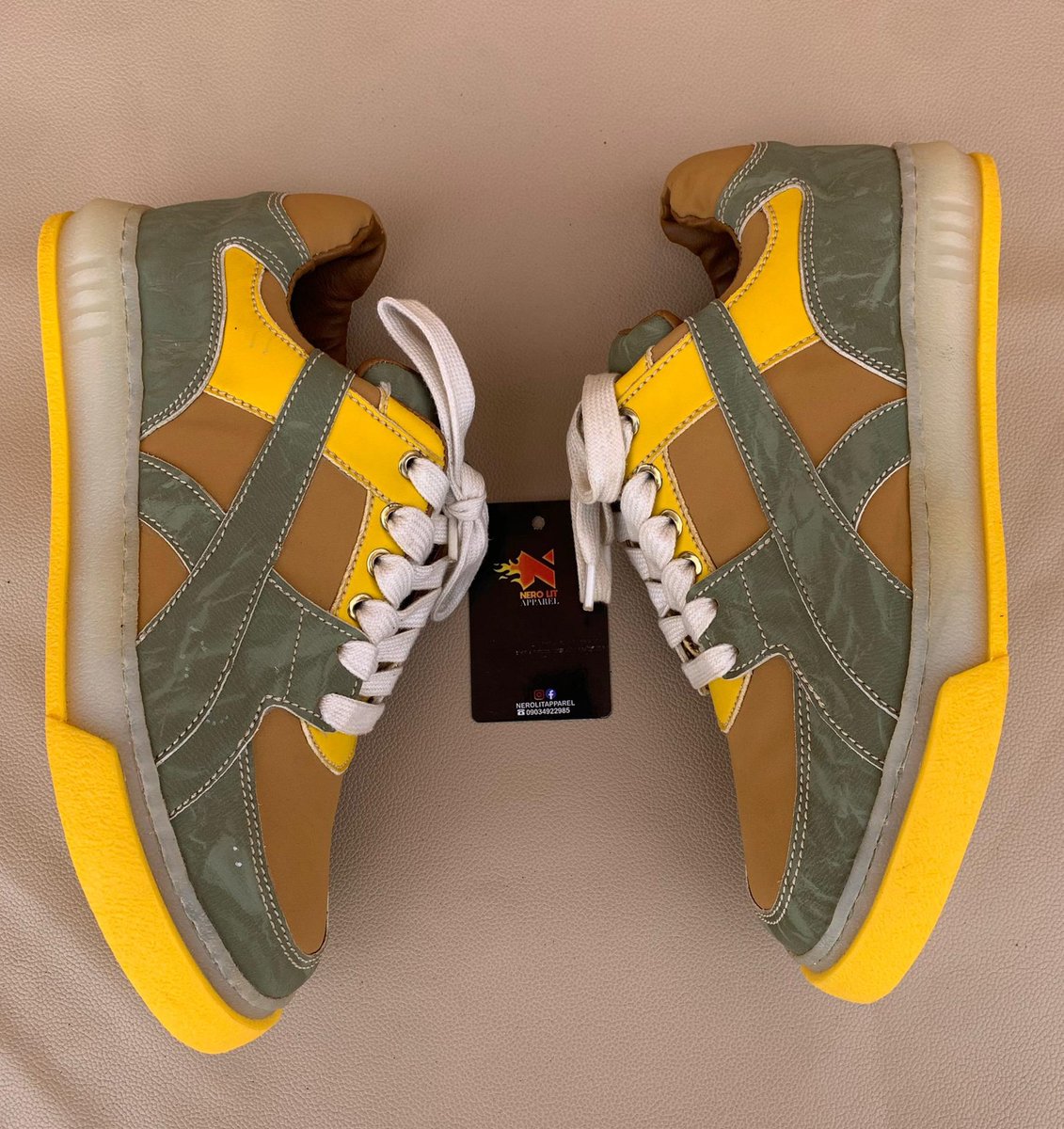
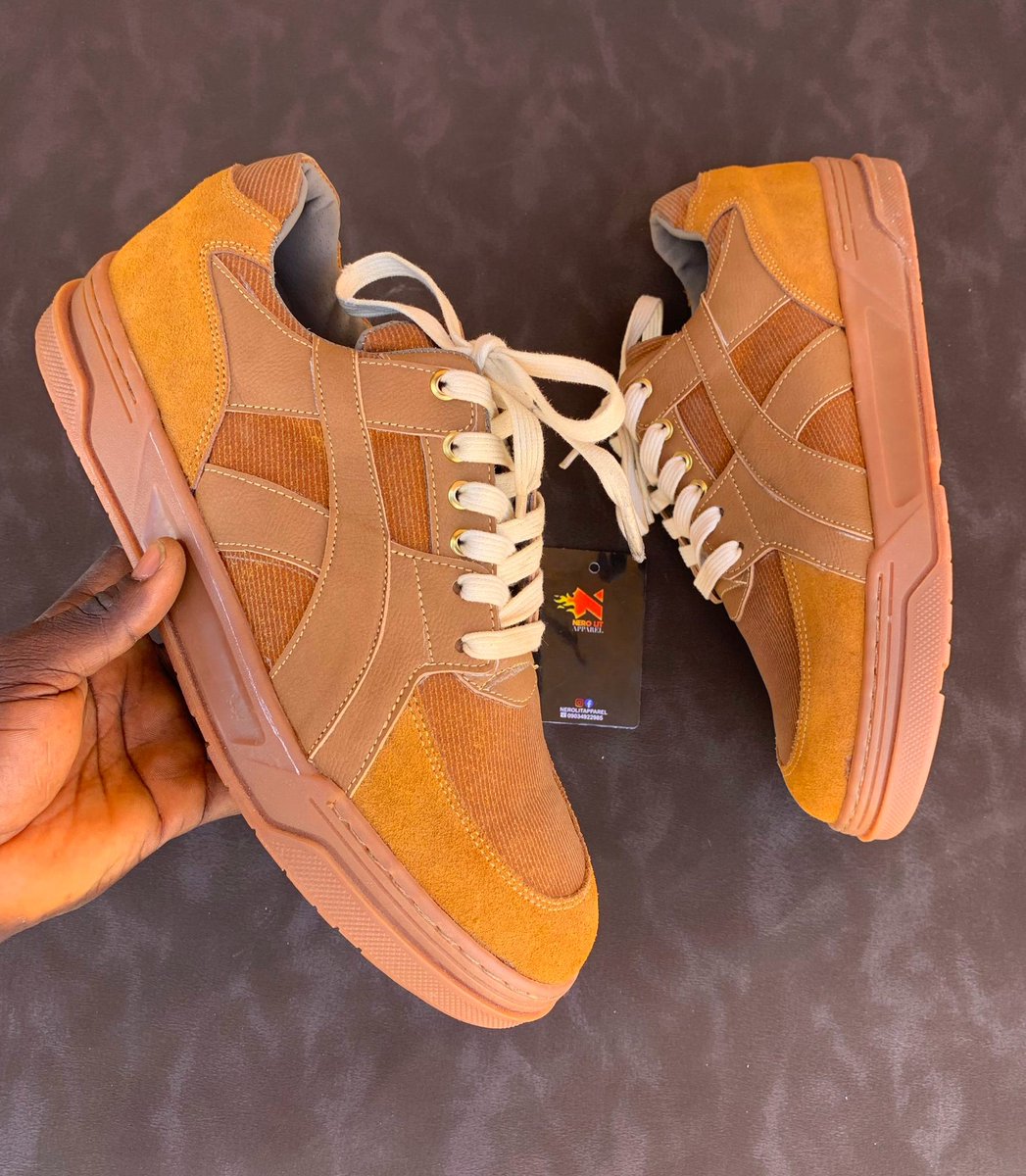
Let's normalize calling it Nigerian made,not ABA made because it's not only in ABA they make shoes in Nigeria
These are my creations and I make them here in kaduna state Nigeria with no specialized machine
Now,imagine what I can do with these machines at my disposal.
God pls,hear thy cry 🙏🏿🙏🏿
When you read your own Bible, you get to the point where kings and queens visited Solomon to pay to listen to his wisdom, you close your eyes to that.
You refuse to monetise your knowledge.
You’d instead pray for the same blessings that have already been bestowed, which just requires you to put structures in place to channel them into the bank.
You are on your own.
There's a physicist at Stanford named Safi Bahcall who modeled this exact principle and the math is wild.
He calls it "phase transitions in human networks." When you're stationary, your probability of a lucky event is limited to your existing surface area: the people you already know, the places you already go, the ideas you've already been exposed to. Your opportunity window is fixed.
When you move, your collision rate with new nodes in a network increases nonlinearly. Double your movement (new conversations, new cities, new projects) and your probability of a serendipitous encounter doesn't double. It roughly quadruples. Because each new node connects you to their entire network, not just to them.
Richard Wiseman ran a 10-year study at the University of Hertfordshire tracking self-described "lucky" and "unlucky" people. The single biggest differentiator wasn't IQ, education, or family money. Lucky people scored significantly higher on one trait: openness to experience. They talked to strangers more, varied their routines more, and said yes to invitations at nearly twice the rate.
The "unlucky" group followed the same routes, ate at the same restaurants, and talked to the same 5 people. Their networks were closed loops. No new inputs, no new collisions.
Luck isn't random. Luck is surface area. And surface area is a function of movement.
The lobster emoji is doing more work than most people realize. Lobsters grow by shedding their shell when it gets too tight. The growth requires a period of total vulnerability. No protection, no armor, soft body exposed to the ocean.
That's the cost of movement nobody posts about. You have to be uncomfortable first. The new shell only hardens after you've already moved.