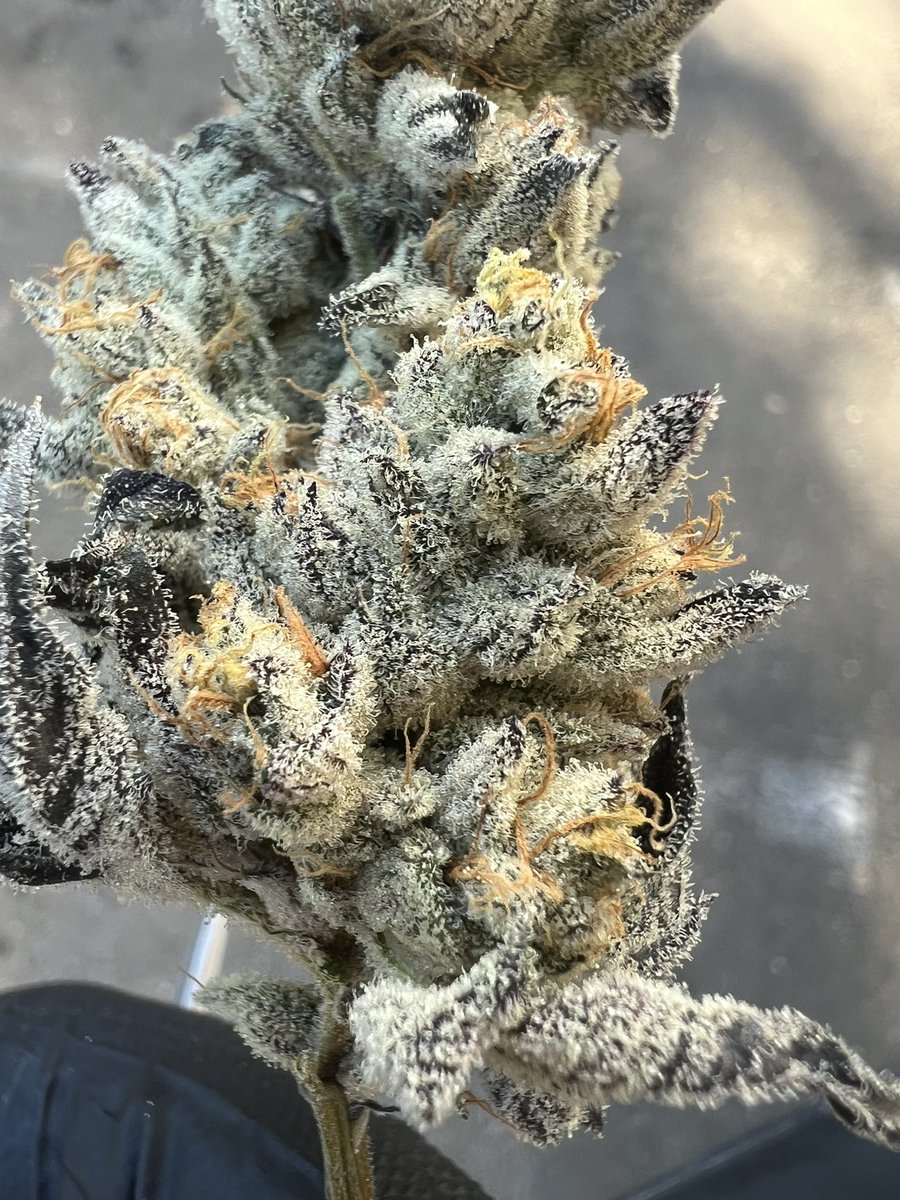
🔬 Quelque chose se prépare en Argoat…
De la sélection fine, du sol vivant et un premier croisement maison qui s'apprête à passer au révélateur du run test. 🌲🧬
Restez branchés, le premier carnet de bord de Botargoat arrive très vite. 🧵👇
#Botargoat#PhenoHunt#Breeding
Combien de Michel Zecler n'ont pas eu la chance d'être filmés ? Combien sont en prison à cette heure-ci, sur la base de fausses déclarations de barbares en uniformes ? Combien n'auront jamais justice après avoir été tabassés par la milice raciste nommée "police nationale" ?
LED vs HPS.
The electrical cost for running a LED vs HPS is the same if they are they same wattage.
A good LED delivers roughly 50–80% more usable plant light from the same wattage as a HPS.
Heat-wise, HPS is often described as converting roughly 1/3 of its energy into light and 2/3 into heat (with a lot of that heat radiated as infrared toward the plants).
However, I think that some like HPS during flower not because of the light but because of the spectrum.
HPS lamps put out a fixed spectrum that is heavy in yellow, orange, and red wavelengths, with very little blue (typically only about 4–6% of the photons in the blue range). That low-blue, red-heavy output has long been considered favorable for flowering.
Bruce Bugbee’s group at Utah State (Westmoreland et al., 2021, PLOS ONE) directly compared HPS (lowest blue, ~4%) against LEDs with increasing blue fractions up to 20%. When canopy light intensity was held equal:
Flower yield fell about 12% as blue increased from 4% to 20%.
The best efficient white + red LED (around 10% blue) produced only ~4.6% less flower per square meter than the HPS, but 27% more flower per dollar of electricity because of its higher efficacy (~2.5 µmol/J vs ~1.7 µmol/J for HPS).
Spectrum had no significant effect on cannabinoid concentration in that study.
Modern LEDs are not locked into one spectrum. Many fixtures use white + deep red, or are tunable, and can be set up with a relatively low blue fraction that is close to HPS. You can also add far-red if you specifically want more of that response. The spectrum advantage of HPS is therefore no longer unique.
In practice, the efficiency gap (more photons per watt), lower heat load, longer lifespan, and ability to dial spectrum usually outweigh the small spectral edge of HPS for most growers. The Bugbee study’s own conclusion was that fixture efficacy matters more for the economics of indoor cannabis production than the spectral differences.
In short: some people still like HPS for flower specifically because of that low-blue, red-heavy spectrum and the growth habit it produces. That preference is legitimate, but it is no longer a decisive technical advantage once you can get a similar spectrum from a more efficient LED.
The first run of something new is always the most interesting when it comes to timing harvest. My goal is to get as close to peak maturity as possible without pushing things into overripeness.
There’s a lot to consider, especially when running multiple strains in the same room. Each cultivar has its own timeline, and learning to read the trichomes alongside the plant’s overall maturity is part of the process.
Every run is another opportunity to learn…
@ZeroGravity510 It feels like many in the cannabis community are against those who are doing real genetic work. Asking for a higher price for genetic work has become immoral, and giving away someone else's hard work for cheap is now a righteous act.