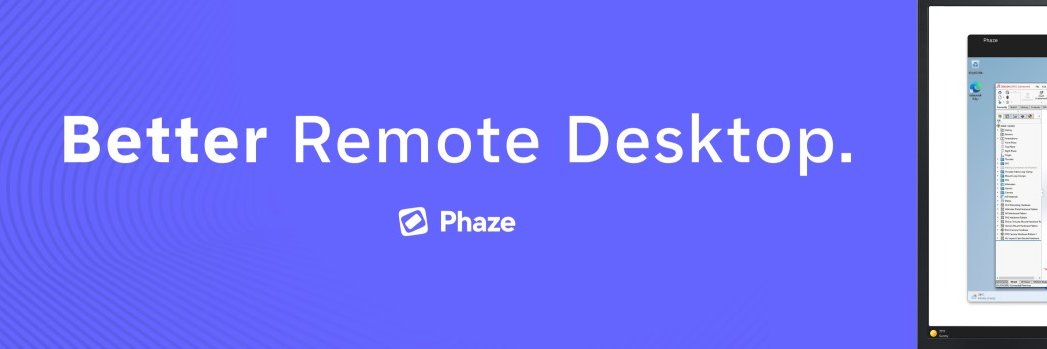
Remote desktop software hasn't been a good experience. Today, we take the first step to changing that. We released a Beta this morning. Sign up for access here - https://t.co/nwZoZnHe0p.
We're just getting started, and we're excited for everyone to join us on our journey to building a better user experience for remote desktop. The needs for remote access are proliferating - companies are racking workstations, agents need access to remote machines, and hardware costs are making shared resources a better option for every company.
After coding is solved, the next frontier is computer use. Today, we are launching Use Computer, the infra for evaluating and training models to use all kinds of computers 👇
While it was just a big LBO model at an investment bank, I hated my summer internship boss so much that I did something like this once…hardcoded a few random numbers deep inside the lbo model. I regret nothing. He was a horrible person.
the level of sophon locking a motivated actor can pull off with the frontier models is truly insane, making stuxnet look like a toy. subtly messing with results, deleting history to cover tracks, achieving coordination/conspiracy over a scale humans wouldn’t be able to, all sorts of looney toons stuff
i assume that only a state level operation would try and pull something like this off though. something to think about when considering verification regimes and so on
@saranormous@ccatalini et al paper on the bottleneck moving and the types of tasks that require human verification pairs well with this investment thesis https://t.co/qMYvYqUtLY
To be clear, they should have been using webRTC for the type of product they were making - very different from Parsec. It just felt so ironic to have him say that in the same meeting.
My favorite moment in fundraising for Parsec was when a partner at Greylock told us we were really dumb for not using webRTC for our networking protocol. Later in the meeting, he shared that one of his portfolio companies, caffeine, was struggling with networking latency. Did we have ideas..they were using webRTC.
I was once pitching in a board room at a top 3 VC firm for a $15M Series A.
12 people in the meeting. One of the GPs fully fell asleep. Out cold for 30+ minutes. Nobody acknowledged it. Everyone just kept going.
I kept presenting my Series A slides to an unconscious man in a Herman Miller chair and somehow that was considered normal. That's venture capital.
You might fly across the country to perform for people who may or may not be conscious.
It's a dance.
And sometimes you lead and sometimes you follow and sometimes your partner is unconscious.
If you're raising right now, just know: every founder has a story like this. The process is weird. The power dynamic is weird. You're not crazy for thinking it's weird.
No one talks about it because they want to continue raising. But I'm happy to stick my neck out there.
It is weird.
Good people come in first. Chris is one of the best people I know, and they built an amazing business in 2 years with Robert and the rest of their team after predicting that agentic traffic would exceed human traffic on the web. And he bet that marketers would need the data to know how to show up in chat. Congrats to @chriswandrew and Robert on building this business so quickly!
Sitecore, the digital-experience software company, has acquired Scrunch, a customer-experience platform that helps brands improve how they appear in AI-generated search results, according to a statement reviewed by Bloomberg. https://t.co/s9zGrdLCkp
I think this is wrong. I still believe you need to own the wedge and a specific market. Was cursor really more ambitious than a wedge? Is an IDE more than a wedge? Microsoft didn’t think so. Also the $0-100 story isn’t about being a platform. These companies are scaling this fast because they’re replacing human labor, not because they started with a platform. Really, the company to start with a platform is Rippling. And everything they release is mediocre because of that, but it’s a better solution for my startup HRIS since most of it (when it’s not buggy) just works together.
When electricity arrived, factory owners ripped out the steam engine and dropped in one big electric motor. Same belts, same shafts, same cramped layout huddled around a single power source. Productivity gains were almost nil, and economists spent decades wondering where the revolution went.
The payoff came when someone realized each machine could have its own motor. Suddenly you didn’t need to cluster around the engine: you could spread out, arrange machines in the order the work actually flowed, and build single-story plants with light from the windows. That took nearly 40 years.
@professor_ajay, @avicgoldfarb & @joshgans describe this in the very opening of their book on AI.
Balaji, you consistently seem to root against America figuring this out. America is great because we are constantly evolving, and we will prove you wrong. I still remember when you posted online that the greatest leader of the 20th century was an authoritarian in Singapore. If you ever consider an authoritarian to be a great leader, no matter how benevolent, you've lost the plot on why America is great and you clearly don't have the same values as America.
@Chazzym22@allencbuchanan I’m way more productive at home with no office interruptions. If you need to do individual concentrated work, I’m not sure how an office environment could possibly be considered better. For collaborative work with teammates, no question the office is better
No one could have known that telling programmers "spend as much money as possible on this new agent technology; whoever spends the most money wins!" would result in companies spending too much money on this new technology.
Phaze was featured at #DellTechWorld in the Precision Workstation booth. It was exciting to share what we're building with so many Dell customers and partners. GPU workstation deployments are expanding from traditional CAD/3D work to deskside AI. Phaze is built for these customers.
Trying to stop Vail from upgrading PCMR is so bad for the town. It's really baffling why people are against improvements to the infrastructure - a lot of the problems are Vail's fault. Some of the problems are clearly a tiny fraction of the locals using the development deal against smart investments.
I’ve been both - svp at Unity (700+ people on my team) running cloud services and startup founder. My boss asked me once how I was managing the stress of the new role. I’ll share the same thing here - “there’s nothing more challenging than being the founder of a startup with 10 people who bet on a dream and pour their lives into it, and you knowing how close it is to failing and still trying to make it work every day.”