Chaos ruled Miguel Cotto's barnburner with Ricardo Torres in Atlantic City, New Jersey, #OnThisDay in 2005.
HBO's Harold Lederman scored five of the six completed rounds 10-8, with both fighters dipping in and out of dire straits. Torres hit the deck in rounds one, four and six. Cotto was floored in the second – the first knockdown of his career – and was wobbling regularly, most notably in the fifth, while overcoming several rocky moments in a brutal back-and-forth brawl. It was all over in the seventh, as Torres went down again. This time, there was no getting up, as Cotto retained his WBO title by knockout.
Years later, a reflective Cotto said it was that epic super-lightweight slugfest with the big-punching Colombian that put him on the map.
"I think the fight with Torres is the one that put Miguel Cotto on the map," he said. "It was the way the fight was happening that night, and the way I got up off the canvas after getting knocked down – that's the fight that put Miguel Cotto on the map."
Oliver McCall was a relative unknown when he faced WBC heavyweight champion Lennox Lewis at Wembley Arena #OnThisDay in 1994. Those familiar with McCall's abilities – he'd sparred with Mike Tyson for years and reportedly once dropped him – knew he was hard-as-nails and very dangerous, and Boxing News had warned Lewis of a tough night ahead.
Lewis had won the WBC title in 1992 after demolishing Razor Ruddock, but his form since had been shaky: a grinding decision over Tony Tucker, a rocky stoppage of Frank Bruno, and a lacklustre win over Phil Jackson. Still, bookmakers made McCall a 5-1 underdog.
The build-up turned ugly when Lewis's trainer, Pepe Correa, taunted McCall with a suspender belt, sneering: “That’s the only belt you’ll get to wear this week.” In McCall's corner was the far more respected Emanuel Steward, working his 94th world title fight. With a Bowe rematch and a potential Tyson superfight already being discussed for Lewis, McCall felt overlooked – even receiving a good-luck call from Tyson himself before the bout.
McCall entered the ring in tears, visibly overwhelmed with emotion – a state the then-BN editor, Harry Mullan called the most intense he'd witnessed in 25 years. Early in the fight, after Steward had coached McCall to exploit Lewis's habit of dropping his guard, McCall landed a thunderous right hook that sent Lewis crashing down. Lewis rose but was unsteady, and referee José Guadalupe Garcia stopped the fight despite Lewis's protests. McCall, earning $3 million, celebrated wildly as his first reign as champion began.
Lewis rebuilt his career with Steward now in his corner, eventually retiring undefeated as champion in 2003. He avenged the loss to McCall in 1997, stopping him in the fifth round — a fight remembered less for Lewis's win than for McCall's visible breakdown in the ring amid his struggles with substance abuse.
Heavyweights don’t hit much harder than Corrie Sanders, the former WBO champion who was killed at 46 in his native South Africa.
On September 22, Sanders was celebrating his nephew’s birthday at a restaurant when armed robbers opened fire. Hit in the stomach, he later died in hospital #OnThisDay in 2012. The South African had famously beaten Wladimir Klitschko in 2003.
Born in Pretoria, Sanders was a talented all-rounder who played cricket and rugby before taking up golf later in life. As an amateur, he won national titles and recorded 196 victories in 200 bouts.
After turning professional in 1989, the southpaw raced to 16-0 before encountering Johnny Nelson in 1992. Despite being outweighed by two-and-a-half stone, Sanders won over 10 rounds. “He was strong and fast,” Nelson recalled. “What I remember most about him is how nice he was.”
Sanders suffered his first defeat in his 24th fight, stopped by Nate Tubbs, but bounced back before a thrilling 2000 clash with Hasim Rahman. The pair traded knockdowns before Rahman prevailed in the seventh.
His frightening power was evident again against Michael Sprott in 2001. “He was definitely the hardest puncher I’ve faced,” Sprott said. “As soon as he hit me, I said to myself, ‘I’m in trouble here’.” Sprott was stopped inside a round.
Two fights later came Sanders’ defining moment. Given just five weeks’ notice to challenge Wladimir Klitschko for the WBO title, the 40-1 outsider dropped him twice in the first round before finishing him in the second.
A year later, Sanders challenged Wladimir’s brother Vitali for the WBC title, but was stopped in eight rounds. He continued fighting sporadically until 2008, retiring with a 42-4 record, including 31 knockouts.
“He was a great fighter with a big heart,” the Klitschko brothers said after his death.
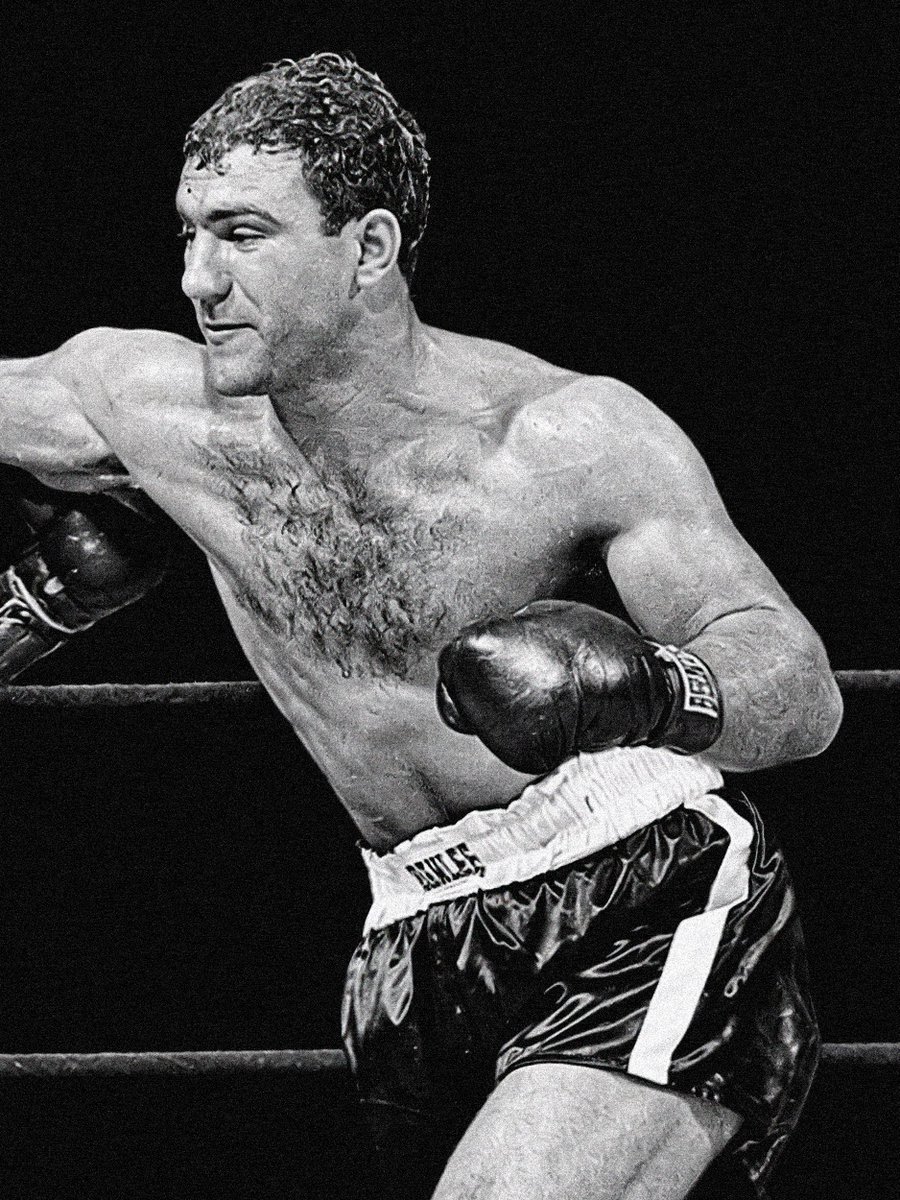
While it’s easy to say Jersey Joe Walcott, at 38, was well past his best by the time he fought Rocky Marciano #OnThisDay in 1952, it is worth remembering, too, that Walcott had just twice defeated Ezzard Charles, winning and defending the heavyweight title in the process.
That doesn’t indicate he was in his fighting prime necessarily but it should certainly silence any suggestion that Walcott was there for the taking or merely turning up to be pummelled into retirement by Marciano.
Indeed, Walcott’s threat, even at that advanced stage in his career, was demonstrated during the 15-rounder they shared, particularly early. He did, after all, drop Marciano in the very first round of the fight and, furthermore, seemed in control and on top for much of it.
It was only later in the contest, in fact, when Walcott started to fade as Marciano came on strong, that the champion began to show signs of a man nearing the end of what had been a legendary career. By that stage, Marciano, a man who knew only one way to fight, had grown increasingly confident that he was going to find the punch to reduce any potential scorecard deficit and this belief became a reality in round 13 when he unleashed perhaps the most iconic punch in heavyweight history.
The shot, a short right hand thrown to Walcott’s jaw, sounded to ringside observers like a shotgun being fired and left Walcott paralysed against the ropes. It delivered Marciano, meanwhile, the world heavyweight title.
𝐈𝐧𝐭𝐫𝐨𝐝𝐮𝐜𝐢𝐧𝐠 𝐭𝐡𝐞 𝐚𝐧𝐧𝐮𝐚𝐥 𝐁𝐨𝐱𝐢𝐧𝐠 𝐍𝐞𝐰𝐬 𝐏𝐨𝐰𝐞𝐫 𝐋𝐢𝐬𝐭 𝐢𝐬𝐬𝐮𝐞: Counting down from No. 50 to numero uno, we reveal the most influential figures in boxing today.
Plus, an exclusive interview with Zuffa Boxing boss Dana White.
On sale now 🔗 https://t.co/mPnUejQFS3
#BoxingNews #ThePowerList
Georgio Visioli claims Matchroom received radio silence from @curmelmoton1's team when they got in contact about a fight...
He also raised concerns about the American's career trajectory 😬
"𝐈'𝐦 𝐧𝐨𝐭 𝐬𝐚𝐲𝐢𝐧𝐠 𝐭𝐡𝐞𝐲'𝐫𝐞 𝐛𝐨𝐭𝐡 𝐬𝐡𝐨𝐭, 𝐛𝐮𝐭..."
Top trainer Mark Tibbs gives his thoughts on the long-awaited showdown between Tyson Fury and Anthony Joshua 🇬🇧
Ultra White Collar Boxing gives ordinary people a chance to shine in the ring, all while raising money for charity.
But in allowing raw novices to fight after just eight weeks of training, can it really live up to its self-proclaimed ‘gold standard’ for safety?
@OscarrPickk investigates...
[A thread] 🧵








![BoxingNewsED's tweet photo. 𝐓𝐡𝐞 𝐁𝐍𝟓𝟎: 50-41 📊
Part one of our countdown of the 50 most influential figures in boxing today.
[A thread] https://t.co/eLFPjBHQ2C](https://pbs.twimg.com/media/HR7qP-0X0Acq8yV.jpg)


![boxingnewsmax's tweet photo. The P4P top three during recent World Cup tournaments 🏆
[1/2] 🧵 https://t.co/uXXuWI3vVM](https://pbs.twimg.com/media/HMoaUL_WEAAJYnF.jpg)
![BoxingNewsED's tweet photo. Ultra White Collar Boxing gives ordinary people a chance to shine in the ring, all while raising money for charity.
But in allowing raw novices to fight after just eight weeks of training, can it really live up to its self-proclaimed ‘gold standard’ for safety?
@OscarrPickk investigates...
[A thread] 🧵](https://pbs.twimg.com/media/HMYD7D7X0AAKCF-.jpg)


