is that time of the month again! 😊 #Alkoholfreiday
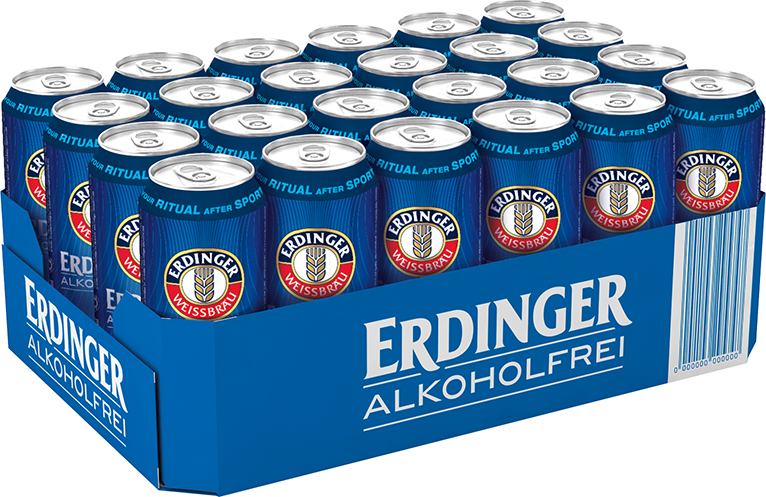
The chance for two lucky winners to #win a case of #Alkoholfrei 🍻
Simply repost and your name goes into the hat 🎩
Winners announced at 5pm(ish) today, #fteiday 🍻
GOOD LUCK!!
#giveaway#competition
Just keeping a running tally of the things Reform/DOGE hate…
- The Eisteddfod
- The Welsh language
- Mistar Urdd
- The FAW
- The WRU
- The existence of the Senedd
It’s almost as if they just hate anything distinctly Welsh 🤔
JULY IS HERE!!! ☀️
And so is our monthly #competition to #win a case of #Alkohofrei 🍻
Simply repost and your name will go into the hat 🎩
TWO WINNERS will be announced at 5pm(ish) today #Freiday - GOOD LUCK!!!
Empty ambulances being set on fire in North London = COBRA meetings & hysterical mass media coverage.
Actual people being burned out of their homes by masked gangs rampaging through the streets in Northern Ireland = no such thing.
Please RT until this changes.
Thanks.
WOW! Seems such a long time since we had our last #giveaway 🍻
WHO WANTS TO #WIN A CASE of #ALKOHOLFREI? 🍻
We will pick 2 winners at around 5pm(ish) today #Freiday, so get reposting!!! #competition
GOOD LUCK!!!
Oxford University has done the maths on "drill baby drill" vs a fully renewable UK.
Maximum North Sea extraction: saves households £16–£82/year.
But ONLY if the government takes every penny of tax revenue and hands it back to households. If they don't, zero benefit.
Full renewables: saves households up to £441/year. Recurring. Every year. Indefinitely.
The North Sea runs out around 2040. Renewables don't.
The analysis was done using January 2026 prices — before the Iran war sent oil to $116 a barrel. Even with cheap fossil fuels as the baseline, renewables win.
This isn't ideology. It's arithmetic.
Smith School of Enterprise and the Environment, University of Oxford. March 2026.
This one will require a stiff drink.
In the early 1990s, the government came up with a clever idea. Instead of borrowing money cheaply to build hospitals, schools, and roads, it would get the private sector to build them and then pay the private sector back over 25 to 30 years. The Private Finance Initiative. PFI.
The attraction was obvious. You got a shiny new hospital today. The bill didn't show up on the government's books. The cost was deferred into the future. Politicians got ribbon-cutting ceremonies without the awkward conversation about borrowing.
It was, in effect, the nation's credit card. Buy now, pay later. Except the interest rate was extraordinary.
The total capital value of everything built under PFI was around £50 billion. As of March 2024, there were 665 PFI contracts still running across the UK, with roughly £136 billion in remaining payments stretching out to the early 2050s. These are payments public bodies are contractually locked into. Hospitals, schools, councils, government departments. Paying for buildings that in many cases were constructed twenty or thirty years ago.
And the terms are extraordinary.
PFI contracts were structured so the private sector would not just build the facility but manage its services. Cleaning. Maintenance. Catering. Portering. These services are bundled into long-term contracts with built-in inflation increases that the public sector cannot renegotiate, cannot exit without paying massive penalties, and often cannot even fully scrutinise because of commercial confidentiality clauses.
In one case raised in Parliament, a hospital was charged £333 to change a lightbulb. That isn't an urban myth. It was cited in Hansard.
The NHS has been hit hardest.
According to parliamentary analysis, the capital cost of NHS PFI projects was around £13 billion. The total repayments are estimated at around £80 billion. And the peak of NHS PFI annual repayments isn't even here yet. It arrives in 2029. The bills are still going up.
In 2020-21, NHS trusts paid £457 million purely in interest charges on PFI contracts. Not services. Not maintenance. Interest. In the last five years, NHS trusts have handed over more than £1.8 billion in PFI interest alone. We Own It calculates that money would have covered the starting salaries of over 50,000 new doctors.
One NHS trust, Essex Partnership, has reportedly paid back 27 times what was originally borrowed. Some hospitals are spending more on PFI repayments than on medicines for patients. And remember, these repayments come out of the same NHS budget that's supposed to fund patient care, staff, and equipment.
Scotland got it just as badly. Audit Scotland reported that Scottish taxpayers will pay a cumulative £40 billion for PFI assets worth just £9 billion. North Ayrshire Council will have paid £440 million by 2038 for four schools that cost £83 million to build.
Now here's what makes this worse.
Many of these contracts are starting to expire. The buildings are being handed back to the public sector. And the NAO has warned of significant risks around the handback process, including cases where public bodies were dissatisfied with the condition of assets being returned to them. Decades of payments. And some of these buildings may come back needing significant further investment.
So what actually happened?
The government could have borrowed money at significantly lower rates to build these hospitals and schools itself. Sovereign borrowing has always been cheaper than private finance. Instead, it paid the private sector to borrow at a premium and passed the inflated cost on to the taxpayer. The private sector took the profit. The taxpayer took the risk. The buildings are now ageing. The debts are still being paid. And the services that were supposed to benefit are being squeezed partly because so much of their budget is locked into contractual obligations they cannot escape.
PFI wasn't investment. It was an accounting trick. A way for governments to build things without the borrowing showing up in the national debt figures. It made politicians look fiscally responsible while loading future generations with obligations they had no say in and no ability to renegotiate.
Both parties did this. The Conservatives created PFI in 1992. Labour massively expanded it after 1997. More than 700 projects were signed. The coalition eventually wound it down. The current government scrapped the latest version. But the contracts remain. The payments continue. And the damage is already done.
This is what it looks like when a country chooses to buy its infrastructure on hire purchase instead of investing properly. You lock in above-market rates for decades. You lose control of the assets. You tie the hands of future governments. And when the bill keeps coming due, you're told there's no money for doctors, teachers, or social care.
There was always money. It just went somewhere else.
THE FIRST #FREIDAY OF APRIL AND IT'S GOOD #ALKOHOLFREIDAY!!! 😁
A chance to #win a case of ERDINGER #Alkoholfrei delivered to your door 🍻
Simply repost and your name goes into the hat 🎩
Two winners will be drawn at approx 5pm(ish) today - GOOD LUCK!!
🧵 THREAD: How Britain gave away the North Sea
In 1970s Britain 🇬🇧 discovered one of largest oil windfalls in modern history.
Harold Wilson initially saw it for what it was, a once-in-a-generation chance to build national wealth. The idea was simple: Use North Sea oil to create a sovereign wealth fund
👉 Like Norway later did
👉 To invest for future generations
A long-term national asset.
🧵
This is what Reform thinks of the Welsh language. 😠
They're not fit to be anywhere near power here in Wales. Vote Plaid Cymru on 7 May to stop Reform. 🏴
This is an outrage to Wales, its people and devolution.
If you are a Labour politician in the Senedd, it is also illustrative of the lack of faith your party colleague in charge in Westminster has in you.
This is highly embarrassing for Labour and will exacerbate splits.
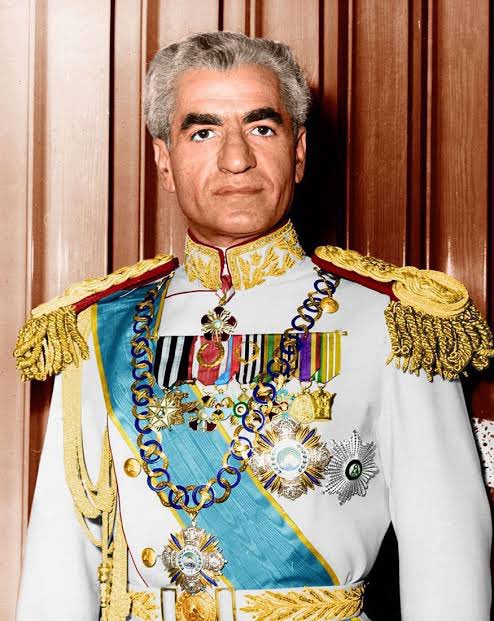
History you aren’t taught: The coup against Iran’s Prime Minister Mohammad Mossadegh by the CIA and MI6 in 1953
Mosaddegh had pursued nationalist policies and was widely-popular, having nationalised Iran’s oil to stop British exploitation of Iran’s natural resources. Winston Churchill considered Iranian oil to be Britain’s.
Contrary to the US’ and UK’s claims to promote democracy and freedom around the world, the US and UK backed The Shah of Iran Mohammad Reza Pahlavi to overthrow Mossadegh and return Iran to authoritarianism, while being a compliant leader that followed Washington’s and London’s orders.
After the coup, Iran’s oil was once again privatised and divided up among the UK, US, and some European countries through a new oil consortium in 1954. 40% of the shares went to the British oil company BP. 5 American oil companies had significant stakes in the consortium.
The dictatorship of Pahlavi, enforced by the ruthless SAVAK, for Western oil companies to steal Iran’s oil, triggered such anger among the Iranian population that it led to the revolution in 1979, which gave birth to the Islamic Republic of Iran.
The roots of the war on Iran today are the MI6’s and CIA’s attack on Iranian democracy in 1953…but the US and Israel claim to be perpetrating this destabilising and disastrous war to advance democracy and ‘freedom’.
History shows they are lying.
EXCLUSIVE: Wales legend Jess Fishlock says she felt compelled to become an ambassador for the 2027 EuroGames in Cardiff because of the "political climate" for LGBT people in the UK.
We talked football in her home suburb, trans athletes and padel, here...
https://t.co/Xu4hBHQEX0