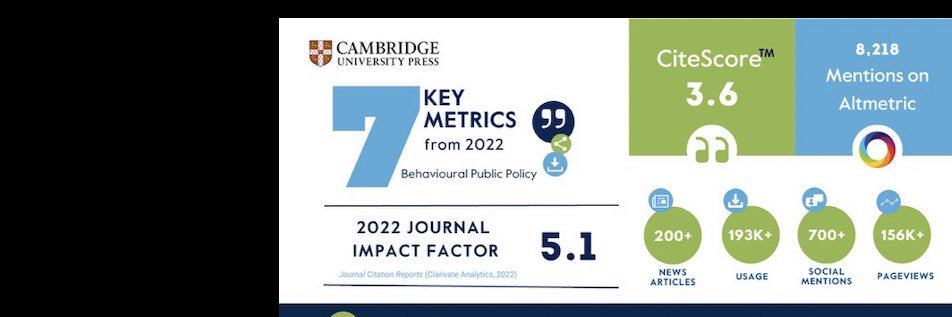
@CambridgeUP 7. Our Friday bonus: Has Behavioural Public Policy become just an opportunistic magpie? A blog by Rupert Gill (2024)
https://t.co/8ySsptGoC0
🎄 The holidays bring families together—but polarising conversations can sometimes get in the way.
At BIT, we used conversational receptiveness— a research-backed approach—to build trust in public health. Learn how CR can help to engage constructively: https://t.co/9D6DdEZCrI
New Cambridge Element Democracy in Trouble by Myles Williamson, Christopher Akor and Amanda B. Edgell is now free to read for 4 weeks!
https://t.co/cbTeWb3vqo
#cambridgeelements#politics
Why does manifesting deserve attention? How can misinformation threaten your well-being?
We spoke to Cambridge author Professor Sander van der Linden about the 2024 @CambridgeWords Word of the Year, 'manifest', and his new book on misinformation. 🔗 https://t.co/ArydU1NYdi
In a recent @PNASNexus paper, Co-Director @angeladuckw, Team Scientist @LyleUngar, & co-authors found “a potentially worrisome side effect” of human-AI interactions: people tend to judge other humans more critically after engaging with AI. Read the full article: https://t.co/dASO1fNYuN
Big shift 1️⃣ for behavioural science
@mhallsworth shows how we can 'see the system' & embrace complexity to create stronger outcomes for people, organisations and society.
Read more 👇 https://t.co/C0syDta4WP
📢 Tonight, Professor Adam Oliver will describe how he became involved in the still relatively new field of behavioural public policy.
Come and join the discussion!
#LSEEvents In person and online. More info 👇
https://t.co/TQonKcKWMc
@dmcdaid@1969ajo Probably a subtle joke about behavioural framing and the Reference Point in Prospect Theory? Leicester is, after all, far north for many
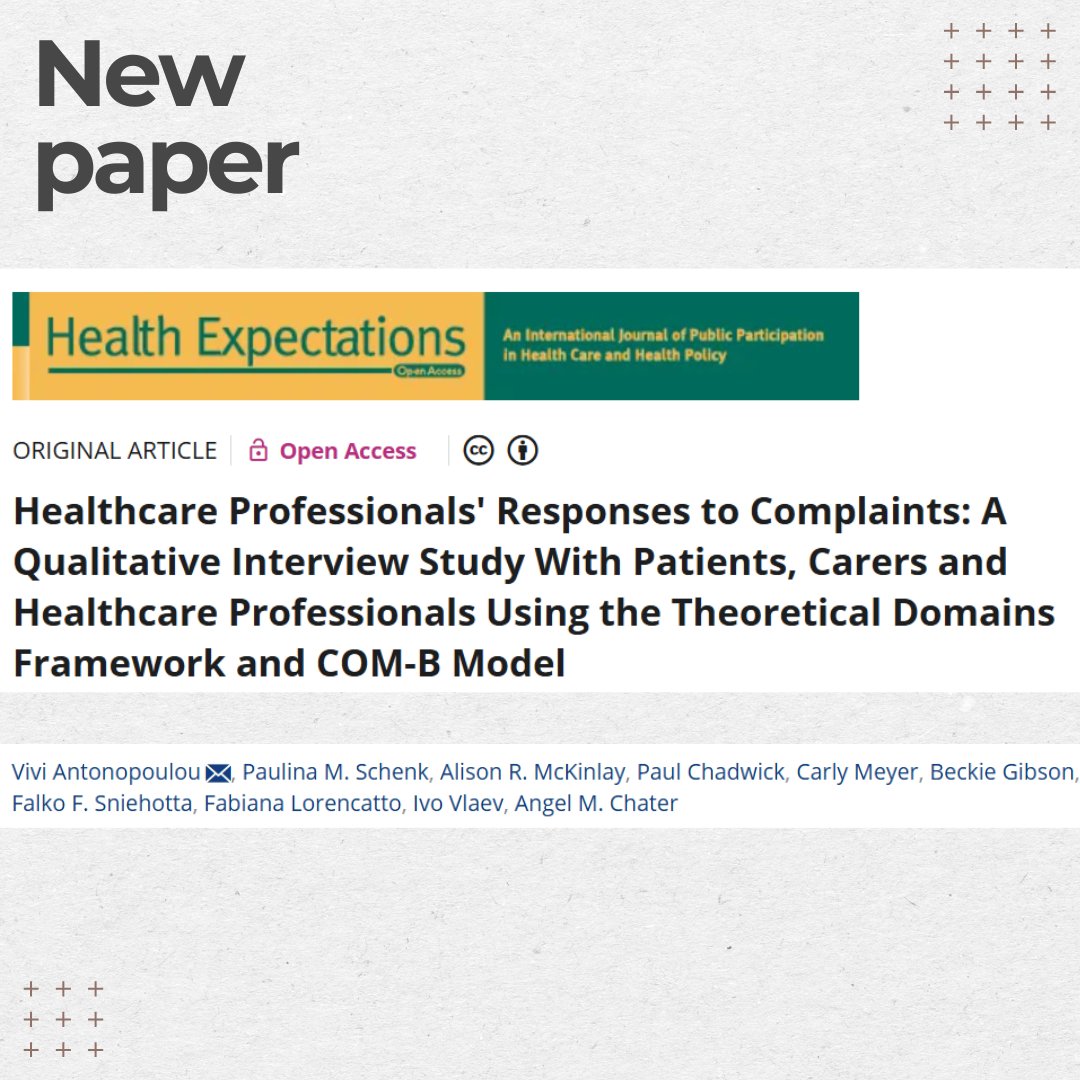
🚨 New paper: the COM-B model & TDF were applied to explore healthcare professional and patient & carer views on complaints' management. The findings highlight the importance of strong support systems and organisational openness to patient feedback.
🔗https://t.co/ydpcRvBhTZ
@CambridgeUP 8. To finish off this dive into our blog archive … Richard Thaler (2017) responds to a critique of #Nudge (which turned out to be a long-term task)
https://t.co/PnD2bd5fWt
As encouragement for would-be BPP blog authors - over the coming week we’ll share some of our most popular blogs. First up - @a_marcoci & @LucBovens (2020) on #gender-neutral toilet design
https://t.co/z6uM2oTGv9
#edi#transgender#inclusive#nudge
@CambridgeUP 7. Our Friday bonus: Has Behavioural Public Policy become just an opportunistic magpie? A blog by Rupert Gill (2024)
https://t.co/8ySsptGoC0
6.30pm UTC today: Prof Adam Oliver dives into his personal history in behavioural public policy. Live at LSE & online at LSE Live or later on LSE Youtube
**New Paper Alert**
Field Experiments have matured from academic curiosity to bona fide contributor to policymaking and scientific knowledge in the past few decades. Yet, the political economy of their deployment in government remains ill-understood.
We provide insights on both the demand and supply sides in a new working paper, available here: https://t.co/seDZXGNj5X