MBAGATHI HOSPITAL SPEAKS
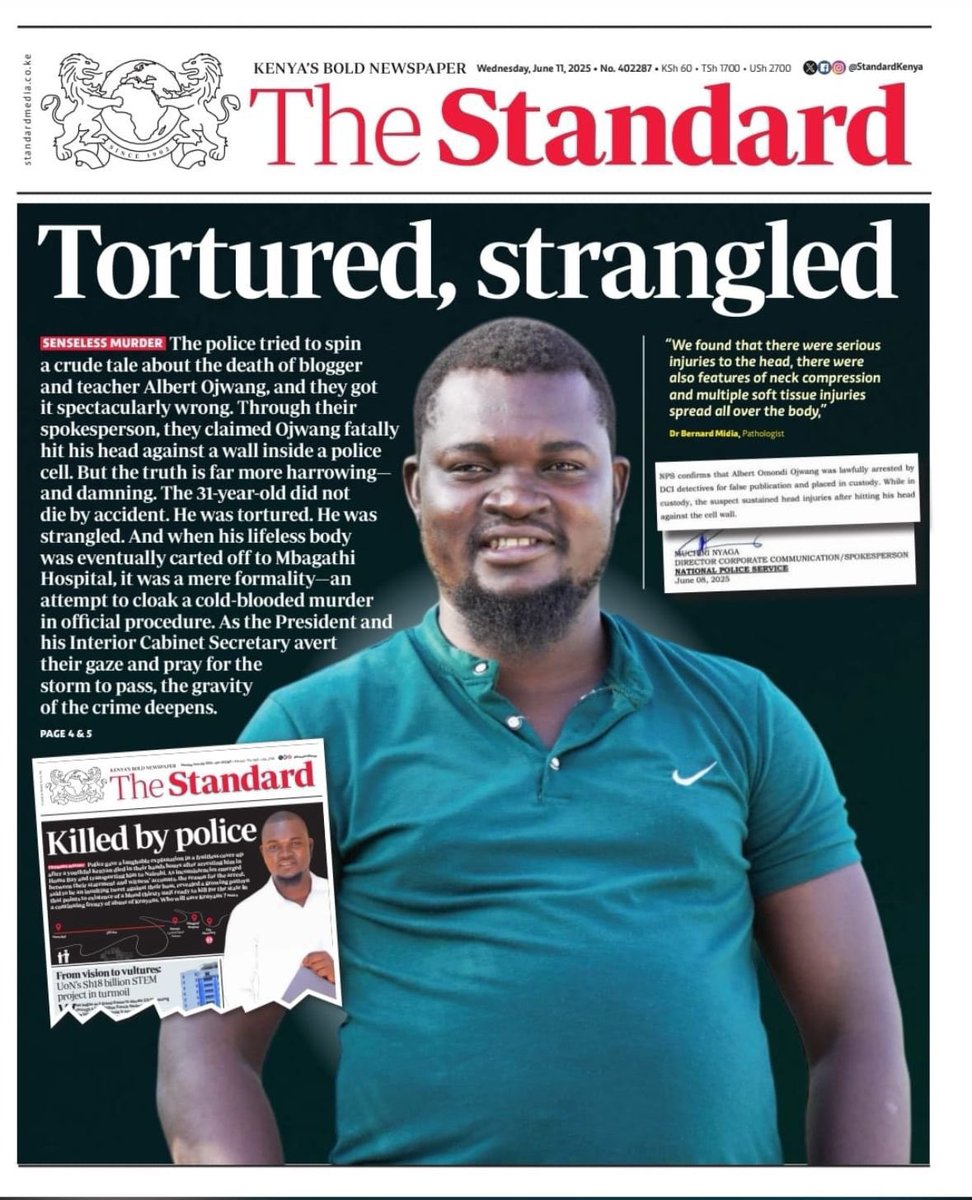
According to the CCTV footage provided by Mbagathi Hospital, at 1:36 AM, the police vehicle arrived at Mbagathi with three police officers. All three officers were seated in the front of the vehicle, meaning Albert Ojwang, while still "alive," was sitting alone in the back of the car.
They stated they took him to Mbagathi because he had injuries, but upon arrival, they weren't in a hurry. They got out and stood outside, talking on their phones. They moved slowly, like a tortoise, and went inside to speak with the nurses. They then came out again, and keep in mind, Albert, with his emergency injuries, was still in the car.
It wasn't until 1:46 AM that they brought out the stretcher to carry Albert. By 1:58 AM, they finally removed Albert from the car to take him to the emergency ward. And after 10 minutes, they emerged with Albert's body. Initially, the police bosses said they were told he had already died upon arrival.
At 2:15 AM, they left the hospital. The hospital stated that when he was brought in, he had very severe injuries, and his body was cold.
The questions are: If they took Albert from the police station to rush him to the hospital, why did they leave him alone in the back of the car? Why, upon arriving at the hospital, were they not in a hurry, wasting 15 good minutes before Albert was removed from the car and taken to the ward? That can only mean one thing: Albert left the police station already deceased. That's why they used gloves to remove him from the car, and they weren't in a hurry because they knew he wasn't there to be treated.
May Albert get justice in his death.
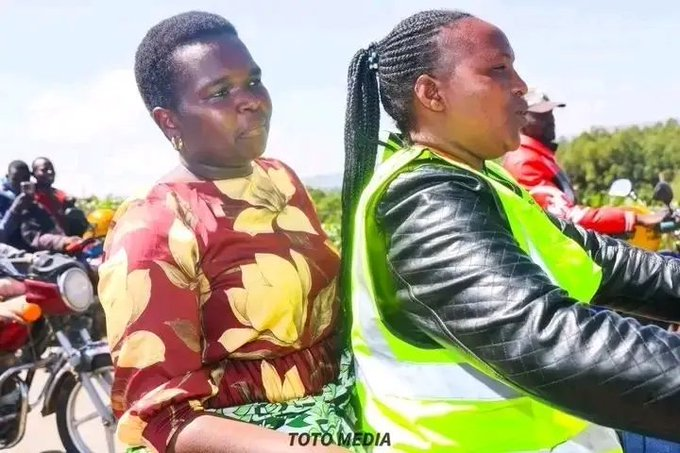
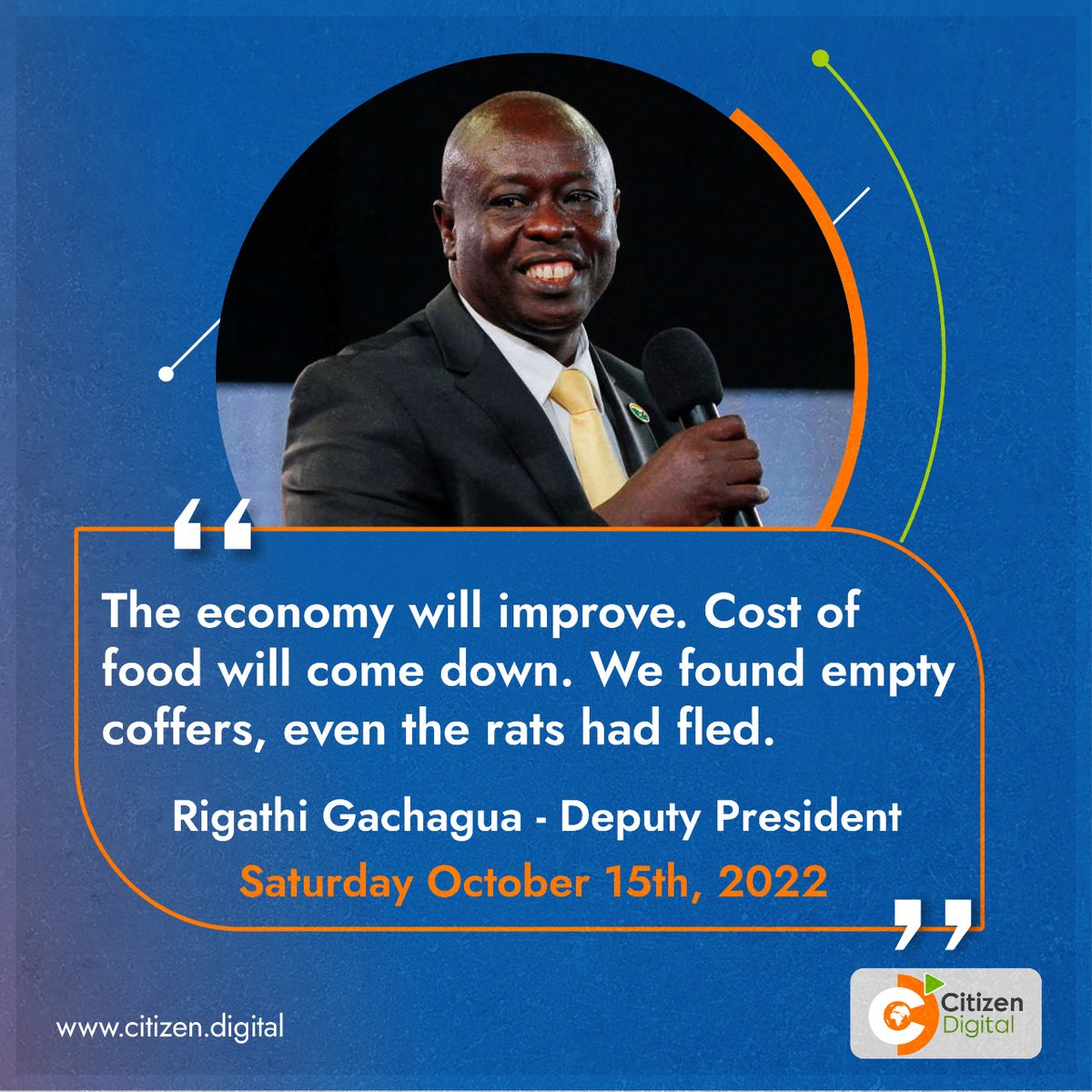
Can she pray for the prices of fuel and the cost of living to go down?
We are being sold religious slanders now that we are nearing elections again!
This is the same strategy they used to get sympathy votes in 2022!
Same script, different times, similar agenda!
Shetani ashindwe, pepo mbaya, saaaitan miguu mbili! Shindwe kabisa!
#RutoMustGoNow
About DP Ruto's chicken farm that makes him KSh. 1.5M every day:
"We request that in his wonderful act of transparency, he shows us his very big payment to KRA" - Raphael Tuju #NTVAtOne
Breaking update on fuel Prices:
EPRA has sharply increased fuel prices for the month of May 15 to June 14, 2026.
— Super petrol up by Sh16.65 to Sh214 per litre
— Diesel up by Sh46 to Sh243
— Kerosene remain Unchanged.
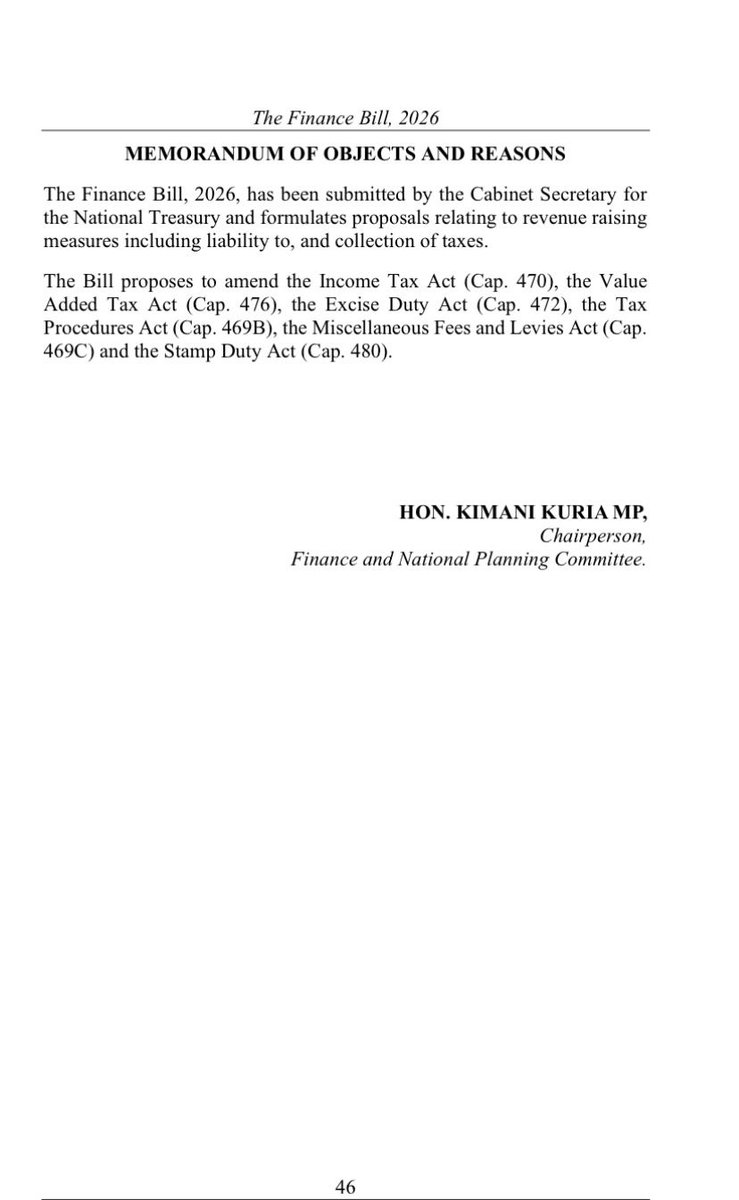
The Finance Bill, 2026 was published on 30th April and is now before Parliament and every Kenyan deserves to know what is in it.
The government targets Ksh3.63 trillion in revenue for 2026/27 and a wider budget deficit of 5.3% of GDP in the 2026/27 fiscal year (July-June) up from 4.7% in 2025/26. These are not unreasonable fiscal objectives but the manner in which the burden of achieving them is distributed is a cause for serious concern.
On tax filing timelines, the Bill moves the income tax return deadline to April 30th which is two months earlier than the current June 30th and compresses nil return filing to January 31st. This reduces the time available for audit completion, cash flow planning and compliance. For small businesses and individual traders, this is not administrative reform. It is an additional compliance cost they can ill afford.
On mitumba, the Bill inserts a new Section 12H into the Income Tax Act which deems profit at 5% of customs value payable upfront before goods are released by KRA as a final tax. A trader importing a bale worth Ksh1 million pays Ksh50,000 regardless of whether they make a profit or a loss. I cannot in good conscience describe this as equitable.
The Bill increases residential rental income tax from 7.5% to 10%. Absent a serious enforcement framework, this will drive non-compliance rather than revenue. The government must fix the enforcement gap before it increases the rate. One without the other is burden-shifting.
On digital financial services, the Bill removes existing VAT exemptions on money transfers and payment processing. These are the tools of financial inclusion that millions of Kenyans including the very people this government says it wants to reach rely on daily. Making them more expensive will not serve the objective of a broader tax base.
By including interchange and merchant service fees within the definition of management or professional fees for withholding tax purposes, the Bill introduces a compliance burden into automated banking processes. That burden will be passed on to businesses and ultimately to consumers.
The amendment to Section 24 of the Income Tax Act empowers KRA to deem at least 60% of a company's undistributed income as dividends for tax purposes. This fails to account for legitimate decisions on reinvestment, working capital and business growth. It is a retrogressive measure that sends the wrong signal to the investors Kenya needs.
A 25% excise duty on telephones for cellular and wireless networks is proposed. A phone is not a luxury. It is how Kenyans bank, communicate, conduct business and access government services. Parliament must interrogate this carefully.
On PAYE, Kenyans were led to expect relief and a restructuring of the tax bands to ease the burden on salaried workers. That proposal does not appear in this Bill. That is not a minor omission. An explanation is owed to every employed Kenyan who was waiting for it.
To be fair, the Bill is not without merit. The reduction of corporate tax for non-resident companies from 37.5% to 30% improves our investment climate. The extension of the tax amnesty to cover liabilities up to 31st December 2025 provides a genuine and welcome pathway to compliance. VAT exemptions on electric buses, bicycles, dialysers, animal feed raw materials and PPP infrastructure are sensible measures. The clarity introduced on trust taxation ensuring beneficiaries are not taxed on income already taxed at the trust level and the recognition of gratuity contributions as exempt income are also steps in the right direction.
Be that as it may, we cannot afford a repeat of June 2024. Parliament must discharge its oversight role with the seriousness this moment demands. They should not merely rubber-stamp what the Treasury has placed before it. Every clause must be scrutinised. Every punitive or ambiguous provision must be rejected or amended.
#FinanceBill2026 #PublicParticipation