In Japan, I don’t think the people responsible for AI adoption at companies follow model and product differences as closely as the people reading this thread.
So once Claude is introduced, it often becomes:
“Claude works fine. Why change?”
On top of that, IT and security teams are often very cautious about introducing another AI tool. Even if someone internally wants to use OpenAI, the adoption can stop there if they don’t have enough concrete material to justify it internally.
That’s why I think OpenAI needs to communicate much more concretely, and on a case-by-case basis, to companies using Business plans.
For example:
“Here’s how your company could use OpenAI for this specific workflow.”
“Here’s how secure ChatGPT Business is, and what protections are already included.”
“Here’s how to explain the security and governance model to your IT/security team.”
“If you’re handling this type of data, here’s the configuration you can use.”
“For this kind of engineering team, here’s how Codex can change the development workflow.”
“With higher-tier seats, here’s what becomes possible with Codex and agents.”
It needs to get down to the level where each company and each team can clearly see how they would actually use it.
Generic feature announcements and benchmark comparisons alone probably aren’t enough to convince a company to rip out Claude once it has already been adopted.
It’s not just about saying “OpenAI is better.”
OpenAI needs to show exactly what would change for your company if you switched — and give people enough material to actually get that decision through IT and security.
The main reason I switched to Codex is that I feel the overall product quality is simply higher.
The Codex app feels very polished, and the mobile experience is excellent. With Claude, the CLI is still the only interface I genuinely enjoy using. In terms of speed and stability, OpenAI also feels better overall.
Another major advantage is being able to control Codex with voice input. Being able to work with images and even generate images within the same ecosystem is also something I see as a unique strength of OpenAI.
Support is another very important factor for me.
Frankly, I’ve become extremely frustrated with Anthropic’s support. Endless AI-driven support loops, unclear security-related restrictions, and the difficulty of reaching an actual human when something important happens have made me increasingly uncomfortable relying on their ecosystem.
What I’d love to see from OpenAI:
I really like the app-server architecture. I’d love to see interfaces such as the voice input experience already available in the Codex app exposed through the Codex SDK and app-server as well. That would make it possible for developers to bring Codex-like experiences into their own products.
Please keep the ecosystem open and easy for developers to build on.
And unlike the direction Anthropic seems to be taking with AI-first support, I hope OpenAI continues to provide real human support for important account, security, and business issues.
That developer-friendly ecosystem is one of the biggest reasons I’m moving more of my work to Codex.
This is exactly the problem with Anthropic.
When cases like this get noticed on X, someone may step in and fix them. But there are probably countless users whose cases never get that visibility and who end up stuck in endless automated AI support loops with no real resolution.
I hope OpenAI makes sure there’s always a way to reach a real person when automated support fails.
@thsottiaux This is great news, but when the limits are reset this often, carefully managing my weekly usage to stay within 100% and deciding which effort level to use starts to feel a little pointless 😅
Could you change it from a weekly limit to a two-day limit?
@thsottiaux I kept using it, and now the 5-hour limit is already at 0%. More concerningly, my weekly limit dropped from 100% to 71% after only about five hours of use. This seems unusually aggressive. Is this expected?
@thsottiaux Thanks for the reset! Mine reset at 3:00 PM JST. After about 30 minutes, I had 50% of the 5-hour limit remaining, and just a few minutes later it’s already down to 36%. Is the limit draining much faster than before, or could there be an issue with the usage meter?
@ClaudeDevs Interesting, but does the cost include all context/cache read costs for both Sonnet and Fable advisor calls?
In real coding workflows, cache reads often dominate the bill.
Also, I’d want to see Sonnet + Opus advisor as a baseline before calling this the best cost/perf tradeoff.
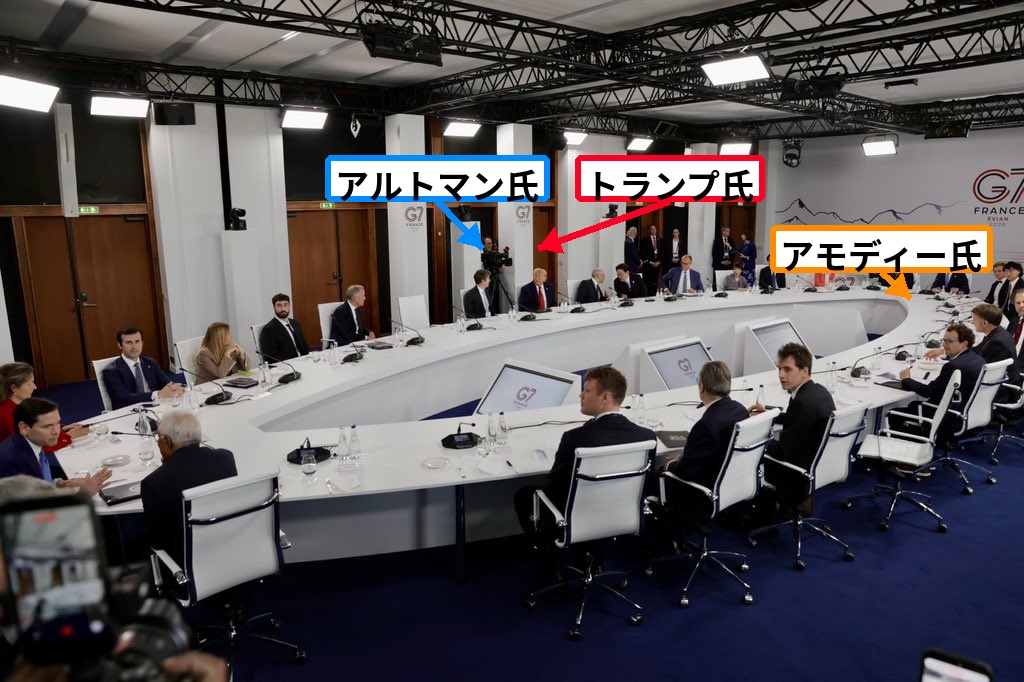
Important G7 session on AI.
AI is developing exponentially. It is the most important technology of our time.
It comes with immense potential, but also risks for free, democratic societies.
I believe Europe and the US should work together on AI.
Together, we represent 70% of the world market.
We have complementary strengths, shared security interests, and a common responsibility to lead.
So we should deepen our cooperation.
Invest together.
Accelerate adoption everywhere, from industry to healthcare.
And ensure that the most powerful models are trustworthy and safe.