Technology, fun, family and recreation sport is what I live on. All else is a transitory view from the bus-of-life. Here to opine, not to endorse or argue.
Many BJP spokespersons are foolish, uninformed, and arrogant.
They do not read about or understand the issues for which the govt is facing criticism before participating in TV debates or writing on social media. The only things they specialize in are shooting the messengers and using anecdotal arguments to claim that any criticism against the govt is a conspiracy by some lobby or the deep state. To them, the actual issue is not important; it is never addressed on its merits but simply dismissed as a conspiracy against India.
Such spokespersons do not add any value to the BJP. In fact, they repel potential voters with their arrogance, superficial arguments, and refusal to engage in meaningful dialogue.
Her name is Chhaya Sharma.
In December 2012, a young woman was gang raped on a moving bus in Delhi and left to die. The whole country knew her story. Almost nobody knows the name of the woman who hunted down the men who did it.
She was a police officer, then Deputy Commissioner of Police in south Delhi.
When the case landed, the pressure was unlike anything the force had seen. Crowds filled the streets. Cameras waited outside her office. Every hour without an arrest was another headline calling the police useless.
She did not let any of it touch her team. She stood between them and the noise, and told them to do the work properly.
For six days her team chased the accused across five states. She kept her people focused on one thing, evidence.
Every detail documented, every forensic sample handled correctly, nothing rushed, nothing sloppy, because a case this big could collapse on a single mistake.
All of the accused were caught within days.
Then came the part that mattered even more. Her team filed the chargesheet in just eighteen days. It was built so carefully that it survived every level of the courts, all the way up to the Supreme Court, and ended in conviction with the maximum punishment.
The rest of her career has been quieter and just as hard. She has spent years going after human traffickers, and has led operations that pulled children out of the hands of people who were selling them.
In 2019, an international award for courage was given to her in America, an honour once given to Malala Yousafzai.
The nation cried for the victim, and rightly so. But justice did not arrive on its own. A woman in uniform went out and dragged it back, and then went quietly on to the next case.
Elon Musk was asked by a room full of Stanford students what single trait separates people who change the world from people who don't. Everyone expected him to say intelligence. Or work ethic. Or vision.
He said pain tolerance.
The room wasn't sure if he was joking. He wasn't. He explained that intelligence is common. Ambition is common. Even good ideas are relatively common. What is genuinely rare is the ability to absorb punishment day after day, year after year, and keep building anyway.
He said most people he's met who are smarter than him quit after the first real failure. Not because they weren't talented. Because the pain of failure exceeded their tolerance for it. They found something easier and redirected their intelligence there.
He said the entire history of SpaceX is just a story about absorbing explosions, literally and financially, and refusing to interpret them as signals to stop.
Nobody writes that on a motivational poster. Nobody puts "pain tolerance" on their LinkedIn profile. But it's the actual filter. Not who can dream the biggest. Who can bleed the longest.
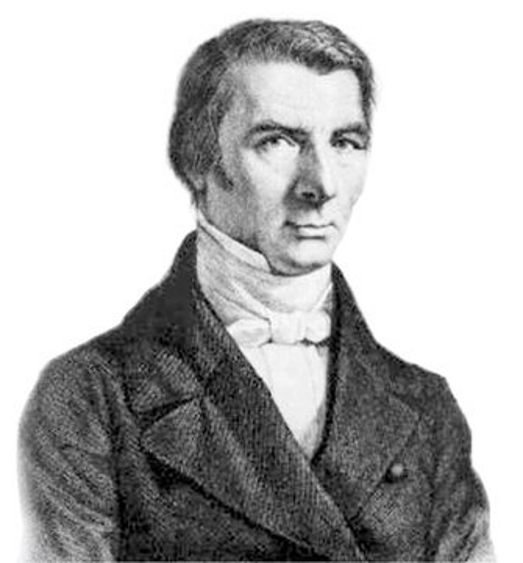
Frédéric Bastiat captured the essence of modern politics in a single sentence:
“The State is that great fiction by which everyone tries to live at the expense of everyone else.”
Once the state becomes the primary mechanism for distributing resources, politics stops being about protecting rights or creating the conditions for voluntary cooperation. It becomes a contest in which every group attempts to extract wealth from others through taxation, subsidies, regulation and welfare.
Farmers demand agricultural subsidies. Pensioners demand higher benefits. Students demand free tuition. Corporations demand bailouts and protection from competition. Each group frames its demands as a matter of justice or necessity, while ignoring that the money must come from someone else’s labour and property.
This creates a deeply corrosive dynamic. Instead of producing value through trade and innovation, people invest time and resources in political activity designed to redistribute existing wealth. The result is not greater prosperity, but higher taxes, expanding bureaucracy and a culture of dependency, victimhood and resentment.
The state transforms society into a zero-sum game. When everyone is encouraged to view government as a source of unearned benefits, the moral and practical foundations of a free society are steadily undermined. The fiction eventually collapses under the weight of its own contradictions.
Elon Musk was once asked in a private dinner what he would do if SpaceX and Tesla both failed completely and he lost everything.
The people at the table expected him to say he'd start over. Or that failure wasn't an option. Or some variation of billionaire confidence.
Instead he went quiet for a long time. Then he said something that nobody at that dinner has forgotten. He said he'd probably become a physics teacher. Not to be humble. Because he said the only thing that has ever consistently made him feel calm is explaining how the universe works to someone who wants to understand.
Rockets, cars, tunnels, neural interfaces. All of it is just applied physics to him. The companies aren't the thing. The physics is the thing. The companies are just the most efficient way he's found to do physics at a scale that actually matters.
Most people chase the outcome. The money, the company, the title. Elon chases the mechanism. How it works. Why it works. How to make it work better. The billions are a byproduct of that obsession, not the object of it.
That's why he can't stop. It was never about the money. You can get enough money. You can never get enough understanding.
The faster technology moves, the more I think about Bezos' question
What won't change in the next 10 years?
Things I've been writing down over time:
- Humans will always need shelter, food, energy, and healthcare.
- The desire for ownership and the accumulation of wealth.
- The physical world will move more slowly than the digital one.
- Every increase in technological capability, especially AI, will require more energy.
- People and businesses will continue to need access to capital.
- Capital will continue to seek returns that exceed inflation.
- Underwriting methods evolve, but demand for credit (loans) is persistent.
- Trust remains scarce and becomes increasingly valuable as content, code, and fraud become cheaper.
- Verified identities and reputation becomes more important as information becomes abundant and synthetic.
- Long-term wealth creation and dynastic (multi-generational) thinking predate modern technology, and will persist.
- Coordination and transaction costs never fully disappear; market friction will continue to justify the existence of firms and intermediaries.
- People will continue to compete for status.
- Consumers will pay a premium for products and services that confer status.
- Time remains fixed at 24 hours per day.
- But attention is a finite resource and an enduring constraint.
- Products that credibly save time (or enable delegation) have a perpetual market.
- Inaccessible, proprietary data will be a persistent moat. The more inaccessible and difficult to aggregate, the deeper the moat.
- People want accountability, recourse, and clearly identifiable responsibility when things go wrong.
- Regulation consistently lags technological innovation.
- Compliance requirements, licensing, and regulatory moats persist even when machines can perform the underlying task.
- Local knowledge remains valuable and difficult to replicate.
- Heterogeneous markets (like real estate) continue to reward people with deep contextual understanding.
- Incumbent organizations tend to underinvest in disrupting their own businesses, which always creates opportunities for challengers.
Bezos' insight on what wouldn't change in 10 years was "Customers will always want lower prices and faster delivery."
It's boring/ true, but I think that's the point.
Everything we build today can and will be rebuilt more cheaply, faster by someone else.
Build on the invariants, not the trends.
What have I missed?
This is one of the best breakdowns on the fundamentals of LLMs I've ever read.
Anytime someone asks me for resources to climb the steep AI learning curve, I always provide the same list.
1) @3blue1brown's neural network videos
2) @karpathy's zero to hero playlist
3) @dwarkesh_sp's whiteboard explainers
Now @_raghavdixit_'s "Vectors are all you need" and future articles in the explainer series are getting added to the list.
So, Mr. Modi, is this the ‘Space Technology’ you promised for our roads? Or was that just another hollow slogan while citizens risk their lives in death-trap potholes? The reality on the ground is horrific and inexcusable.
#ENGvsIND
This is Amaira's room, the Class 4 student who died by suicide at Jaipur's Neerja Modi School, due to classmates bullying and a teacher's apathy.
Imagine the agonizing plight of her parents. Every morning, they wake up to a quiet house, forced to step into an empty bedroom that still smells like their daughter, surrounded by her toys, books, and clothes. They are trapped in a nightmare where they must live with this crushing pain every single day, weeping into the silence with absolutely no relief. It cuts straight through your heart. No child, no parents deserve this.
Parents, save yourself from this situation: do not leave your child's safety and happiness to schools, society or the state. Be unapologetically protective. Look at every angle, anticipate every danger. Build a bond so solid that they know they can tell you anything without fear of judgment. Teach them to recognize when something is wrong, empower them to speak up and then, most importantly, handle the situation, because not handling a child's current problems to their expectations from you builds a wall that stops them from sharing future ones.
Life is too short to worry about stupid things. Have fun. Fall in love.
Regret nothing and do not let people bring you down.
Study, think, create and grow. Teach yourself and teach others.
—Professor Richard Feynman
Finish something. Anything. Stop researching, planning, and preparing to do the work and just do the work. It doesn’t matter how good or how bad it is. You don’t need to set the world on fire with your first try. You just need to prove to yourself that you have what it takes to produce something.
There are no artists, athletes, entrepreneurs, or scientists who became great by half-finishing their work. Stop debating what you should make and just make something.
The older I get, the more I realize this:
A $50K Mercedes and a $25K Toyota will still take you to the same place.
A $5 million mansion and a $500,000 home will still give you the same sleep.
Happiness is not found in things.
It’s found in peace, purpose, and the people you love.
if i had to guess the “secret sauce” of Fable i’d say it’s these 3 things:
1) scale - this model is has the most “big model smell” imaginable. it contains worlds, so it can go really deep on anything
2) Extreme agentic RL - fable is a workhorse, it just chugs and chugs and never seems to get lost, looped, or lazy. this implies that anthropic has cracked the formula for long horizon agentic RL and has scaled it up as far as they can.
3) The constitution - i’ve always loved Claude’s constitution not just as a safety guideline or product vision, but as a clear materialization of how to understand and evaluate the model’s behavior from data to training tasks to reward models to evals. Training a model is the culmination of thousands of decisions, and it’s much easier if there’s a constitution guiding those choices (both by humans and AI)
all in all Fable is the most impressive piece of technology i’ve ever seen. bravo to the @AnthropicAI team, they’ve created something truly special and it’s a testament to their talent, vision, and focus
A 28-year-old PhD student was drinking beer with friends at a Montreal bar in 2014 when someone bet him that neural networks would never be able to generate realistic images on their own.
His name was Ian Goodfellow.
The argument that night was fierce. His friends were trying to build a system that could dream up new photos of faces, animals, anything, and it kept failing. The images came out as blurry, distorted messes. They had tried every approach the field knew. Nothing worked.
Goodfellow disagreed with their entire strategy.
He sketched out an idea on a napkin at the bar. Instead of one neural network trying to generate images and grade its own work, what if you used two networks that fought each other? One would generate fake images. The other would try to catch the fakes. Every time the detector got better at spotting fakes, the generator would be forced to make them more realistic. They would train each other in an endless arms race.
His friends told him it would never work.
He went home drunk that same night and coded the entire thing.
It worked on the first try.
He called it a Generative Adversarial Network. GAN for short. He submitted the paper a few weeks later. Yann LeCun, one of the founding fathers of modern AI, later called it the most interesting idea in machine learning of the last 20 years.
Every AI image you have ever seen is downstream of that napkin.
Deepfakes run on GANs. Midjourney's early architecture drew from GANs. Every celebrity face swap, every AI-generated portrait, every synthetic photo that has fooled millions of people online, all of it traces back to two networks that Goodfellow set against each other in a bar argument.
He was 28 years old with a fresh PhD when he wrote the paper.
Within four years, GANs were being used to generate faces so realistic that a website called thispersondoesnotexist .com was showing a new fake human every time you refreshed the page. Nobody could tell they were fake.
Governments started worrying about deepfake elections. Hollywood started using GANs to de-age actors. Fashion companies started generating models that had never existed. The entire generative AI wave that ChatGPT would ride five years later had its first real proof point in Goodfellow's napkin idea.
He joined Google Brain. Then Apple. Then DeepMind.
He is one of the most cited AI researchers alive.
He wrote the paper that started the entire generative AI era while drunk, in one night, after his friends told him the idea was stupid.
The bar bet made the future.
What’s app forward
Carlo Ancelotti on why he did not celebrate wildly after Gabriel Martinelli’s late winner for Brazil against Japan:
🗣️ “People asked me why I didn’t celebrate, but football is also about respect. Yes, we were happy to win, but I looked across and saw a Japanese team that had given absolutely everything. They fought with incredible courage, and I know exactly how painful a defeat like that can be.”
“Of course I celebrated inside because my responsibility is to Brazil and qualifying was our objective. But I’ve been in football for many years, and I’ve experienced both victory and heartbreak. Sometimes the best way to respect your opponent is to remain humble in your biggest moments.”
“Japan made us suffer for ninety-five minutes. They deserved our respect, not exaggerated celebrations. Brazil are through, but we know we must improve. Tonight we celebrate the qualification, but tomorrow we go back to work because the World Cup only gets more difficult from here.”
Carlo Ancelotti is a legend
We’ve received notice that the Department of Commerce has lifted export controls on Claude Fable 5 and Mythos 5.
We'll begin restoring access tomorrow, and will share an update soon.
We’re grateful to our users for their patience, and to everyone who worked with us on redeploying the models.
Skills that have nothing to do with money but are worth dedicating an immense amount of practice to:
- Charisma
- Metacognition
- Critical thinking
- Sitting with discomfort
- Articulating what you believe and why
- Changing your beliefs when presented with new information
Almost nobody actually practices these and it shows.
10 Timeless Lessons from Elon Musk:
1. If you do something like read a lot of books and talk to a lot of people, you can learn almost anything.
2. Criticize the action, not the person. We all make mistakes.
3. It's OK to be wrong. Just don't be confident and wrong.
4. When hiring, look for people with the right attitude. Skills can be taught. Attitude changes require a brain transplant.
5. Don’t aspire to glory; aspire to work.
6. Failure is irrelevant unless it is catastrophic.
7. Never ask your troops to do something you're not willing to do.
8. The measure of success in my life is: “How many useful things can I get done?”
9. Physics is law. Everything else is a recommendation. I've met many people who can break the laws of man, but I have never met anyone who could break the laws of physics.
10. When something is important enough, you do it even if the odds are not in your favor.