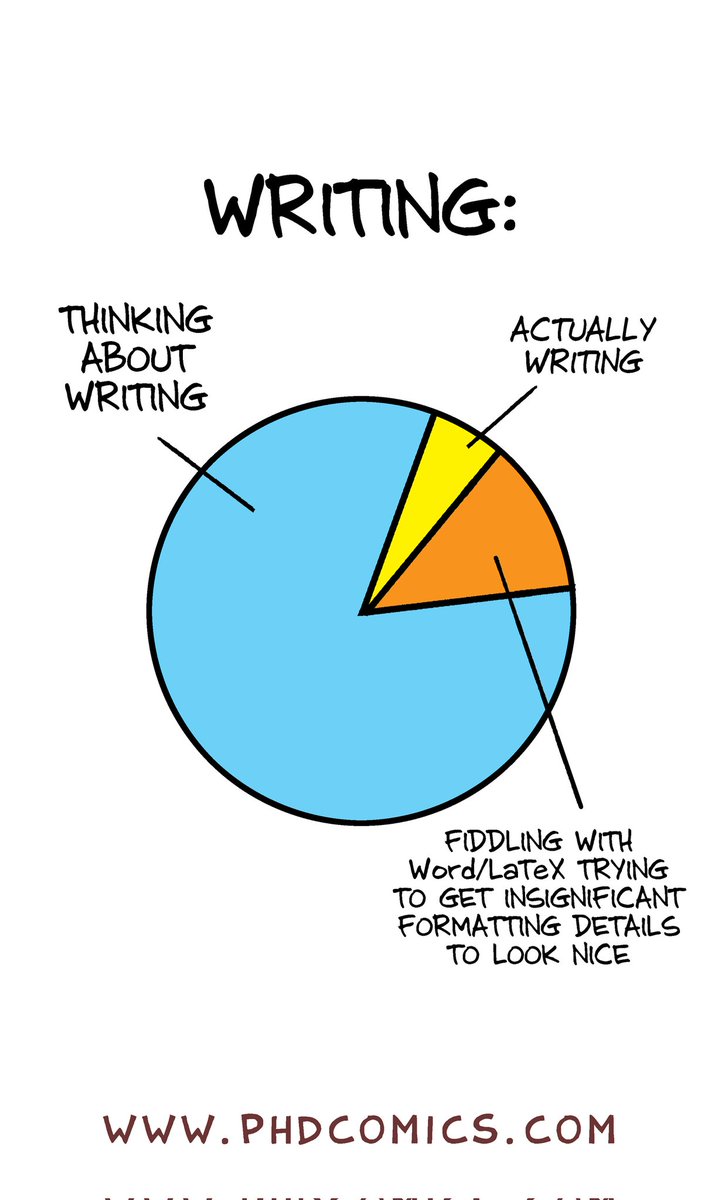
I just completed my service in my NIH study section. Some thoughts - with the disclaimer that these are personal, subjective impressions and do not reflect the opinion of any official body. Other than the one attached to my head. (1/10)
@Nature Along with developing more sophisticated models, we need to understand better what those models are doing to the human mind. https://t.co/rnwpGMX8Lm
It was my privilege this weekend to hood Dr. Benjamin Mass, who received his PhD in biomedical engineering for his work in treatment resistant depression. I am very proud of the scientist, engineer, and man he has become. His future is bright! #wfugrad@WakeBME
New Post: I make the case that increasingly, technology and AI are conspiring against the cognitive space for incubating ideas. https://t.co/ubVv9BjLTa #AI#brain#cognition@PantheonBooks
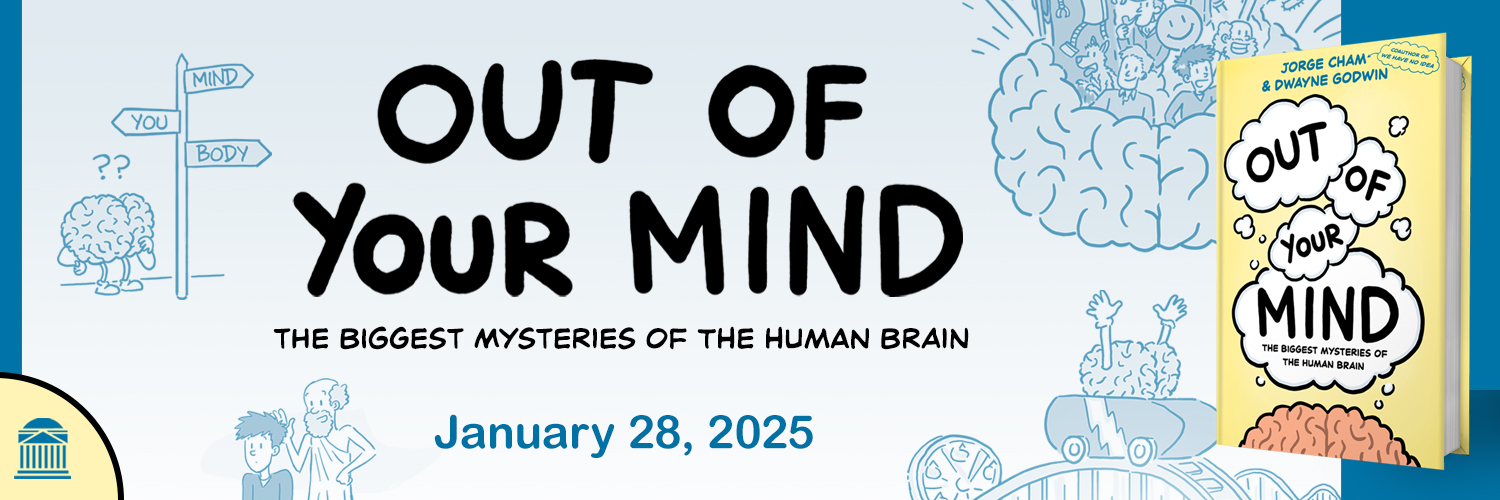
¡Hola, amigos! Me complace anunciar la traducción al español de «Out of Your Mind: The Biggest Mysteries of the Human Brain». Las historias incluyen las contribuciones de los neurocientíficos Ramón y Cajal y José Delgado. ¡Ya disponible! @PHDcomics https://t.co/1TFAGTs7yQ
Now that Artemis II has launched we have 10 days to get everyone on Earth a Planet of the Apes costume so we can do something hilarious when the astronauts return 😁
In observance of #BrainAwarenessWeek I'm reposting the public lecture my friend @PHDcomics and I gave last year at Harvard. We covered a lot of topics, and it was a ton of fun! https://t.co/XjFTFeRlvh #BrainWeek@PantheonBooks
Are You Thinking What I'm Thinking? The hidden assumption behind every conversation you've ever had. @phdcomics@PantheonBooks#neuroscience https://t.co/lnjCH1i0oe
Here's the longer version of our Nature piece.
Our argument is simple: statistical approximation is not the same thing as intelligence.
Strong benchmark scores often say very little about how LLMs behave under novelty, uncertainty, or shifting goals.
Even more importantly, similar behaviors can arise from fundamentally different processes. In another paper, we identified seven epistemological fault lines between humans and LLMs.
For example, LLMs have no internal representation of what is true. They often generate confident contradictions, especially in longer interactions, because they do not track what is actually true.
Another example. Yes, LLMs have solved some open mathematical problems, but these cases typically involve applying known methods to well-defined problems. LLMs cannot invent anything that is truly new and true at the same time, because they lack the epistemic machinery to determine what is true.
None of this means LLMs are useless. Quite the opposite: they are extraordinarily useful.
But we should be careful about what they are and what they are not.
Producing plausible text is not the same as understanding.
Statistical prediction is not the same as intelligence.
So despite the hype from the usual suspects, AGI has not been achieved.
*
paper in the first reply
Joint with @Walter4C and @GaryMarcus
Hey, I talked with my friend @PHDcomics on his podcast about the weird and arcane neuroscience of popping your joints. TRIGGER WARNING: Knuckles will be cracked! #neuroscience#brain https://t.co/WXDyPKYYCR