Losing full knee extension after ACL surgery is a major hurdle, and cyclops syndrome is often the culprit. 🚫
New research outlines the key risk factors to keep on your radar: higher BMI, postoperative bracing, a narrower femoral notch, and anterior tibial tunnel positioning
🤔 What do patients want from their first physiotherapy appointment for low back pain?
And more importantly. do clinicians know what the patient wants?
This cross-sectional survey compared patient's expectations with physical therapist's perceptions during the initial consultation for low back pain.
The findings revealed an interesting disconnect: https://t.co/RigYjxk98W
#Low back pain #Physical therapists #Patient preference #Health knowledge #Attitudes #Practice #Cross-sectional studies
Directional preference need to change to “preferred directional loading strategy. Directional preference is a misnomer, more often than not patients with acute conditions do not respond well to loaded movements, but do respond unloaded. Time for change.
Labral Tears Of The Shoulder in Adults:
Labral tears are among the most overcalled/overtreated findings in my specialty. They're almost never the source of pain in adults... not never, but almost never. Thus... the gap between what shows up on your MRI and what's actually causing your pain is wider than you think.
A recent review article, Resistance Exercise Minimal Dose Strategies for Increasing Muscle Strength in the General Population, highlights a practical issue we see often: many individuals do not perform resistance training, and lack of time remains one of the most common barriers. The authors make an important point that minimal dose resistance exercise should not be viewed as the ideal or the ceiling for training, but as a realistic entry point when no resistance training is currently being performed.
The paper outlines five minimal dose strategies:
• Weekend Warrior training: resistance training completed in one weekly session.
• Single set resistance exercise: one set of multiple exercises performed two or more days per week.
• Resistance exercise “snacks”: brief bouts of resistance exercise performed once or more per day.
• Practicing the strength test: very low repetition, high effort exposures.
• Minimal dose eccentric resistance exercise: low volumes of eccentric focused work.
From an strength coach standpoint, strategies 1 through 3 may serve as a practical maintenance bridge during busy periods when full training volumes are difficult to sustain. Strategies 4 and 5 may also have value, but because they involve higher effort exposures or eccentric focused work, they should be supervised by a skilled strength and conditioning coach.
The main takeaway for me is simple: these strategies should not replace well designed, progressive resistance training when time, resources, and readiness allow. But during periods of compressed schedules, travel, operational tempo, or competing demands, they may help maintain continuity and avoid complete loss of the resistance training stimulus.
DB PCL reconstruction shows lower OA progression and improved knee stability vs SB at >2 years post-op, with a trend toward higher IKDC scores. #PCL#Arthroscopy
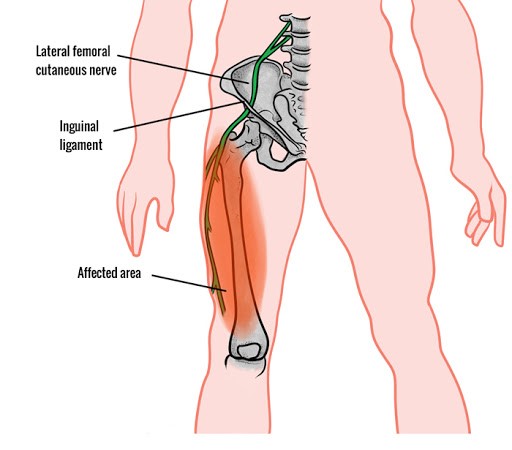
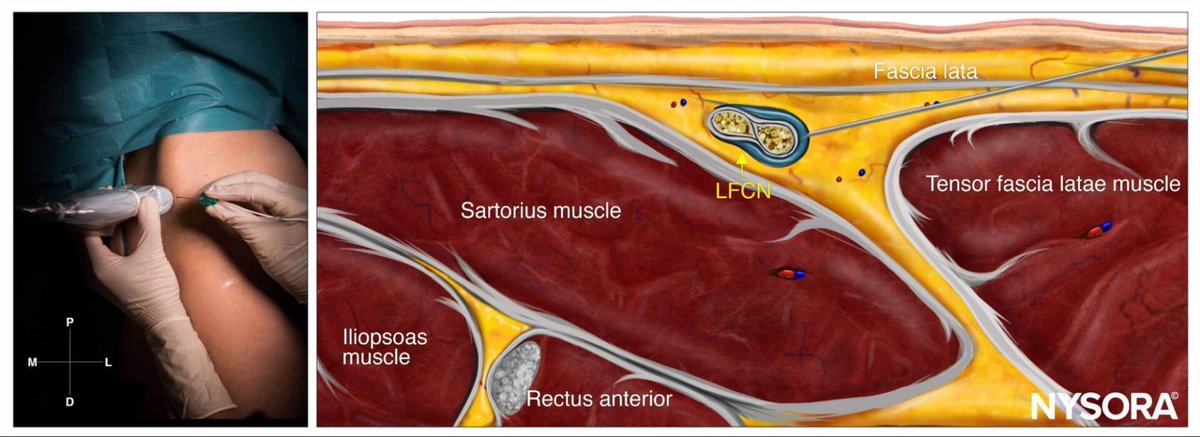
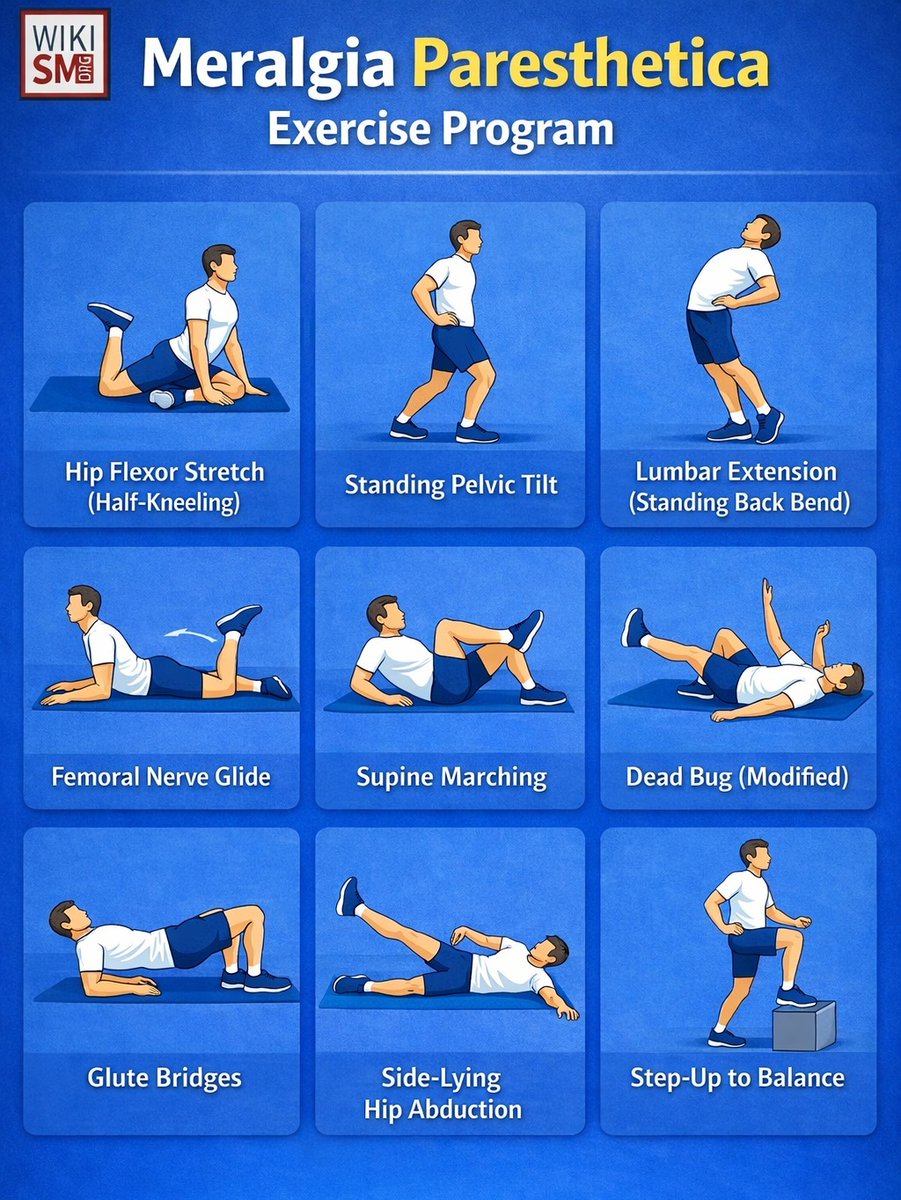
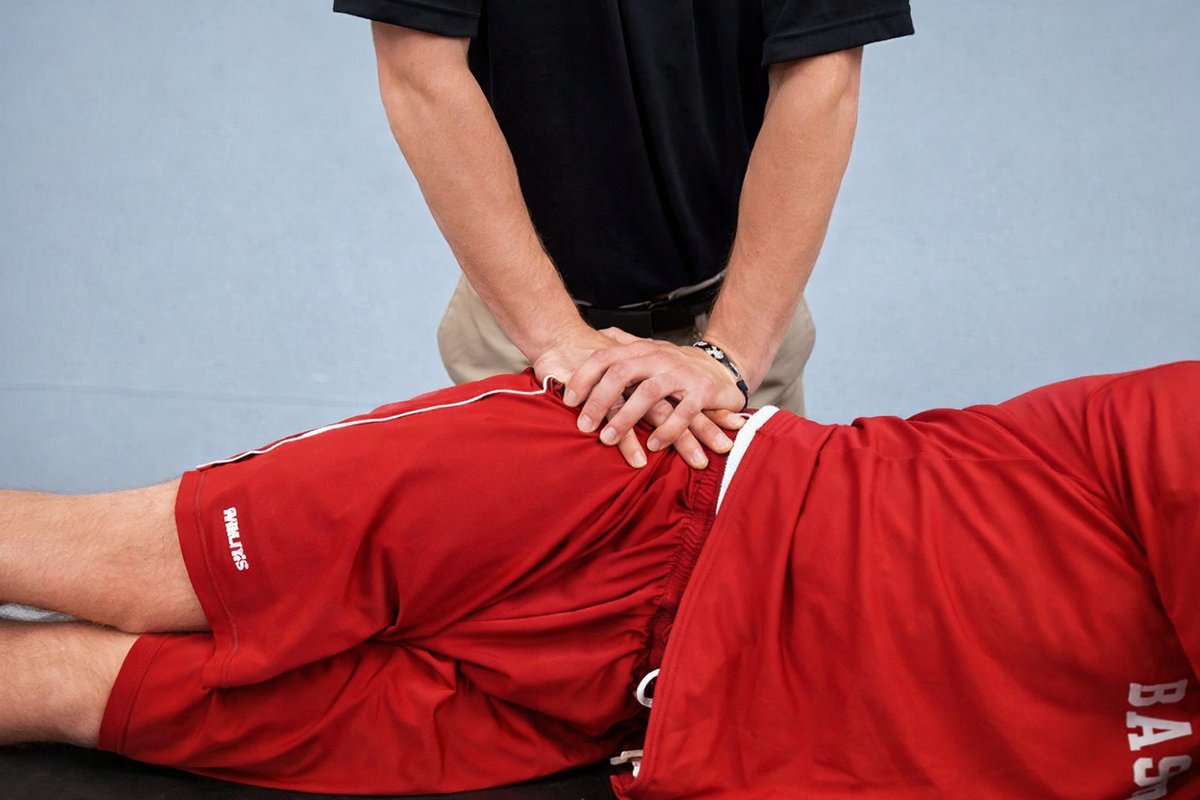
The pelvic compression test evaluates for meralgia paresthetica. The patient is positioned in the sidelying position with the symptomatic side facing up. The examiner applies a sustained downward compressive force to the pelvis, maintaining pressure for approximately 45 seconds. A positive test is indicated by alleviation of the patient’s symptoms during the maneuver. Sensitivity is 87-95%, specificity is 93%.
Read: https://t.co/gZcZFHIdau
Watch: https://t.co/gvMpxQCAa6
#MedicalEducation #MedEd #Physio #ATC #Orthopedics #SportsMedicine #PhysicalTherapy #AthleticTraining #Rehab #InjuryPrevention #SportsInjury #SportsRehab #PhysioTherapy #FOAMed
Brilliant research from @Hoenig_tim and colleagues in @BJSM_BMJ has given us a great overview of return to sport times for low and high risk bone stress injuries. See paper for details 🔗 https://t.co/BaQXGABx1v
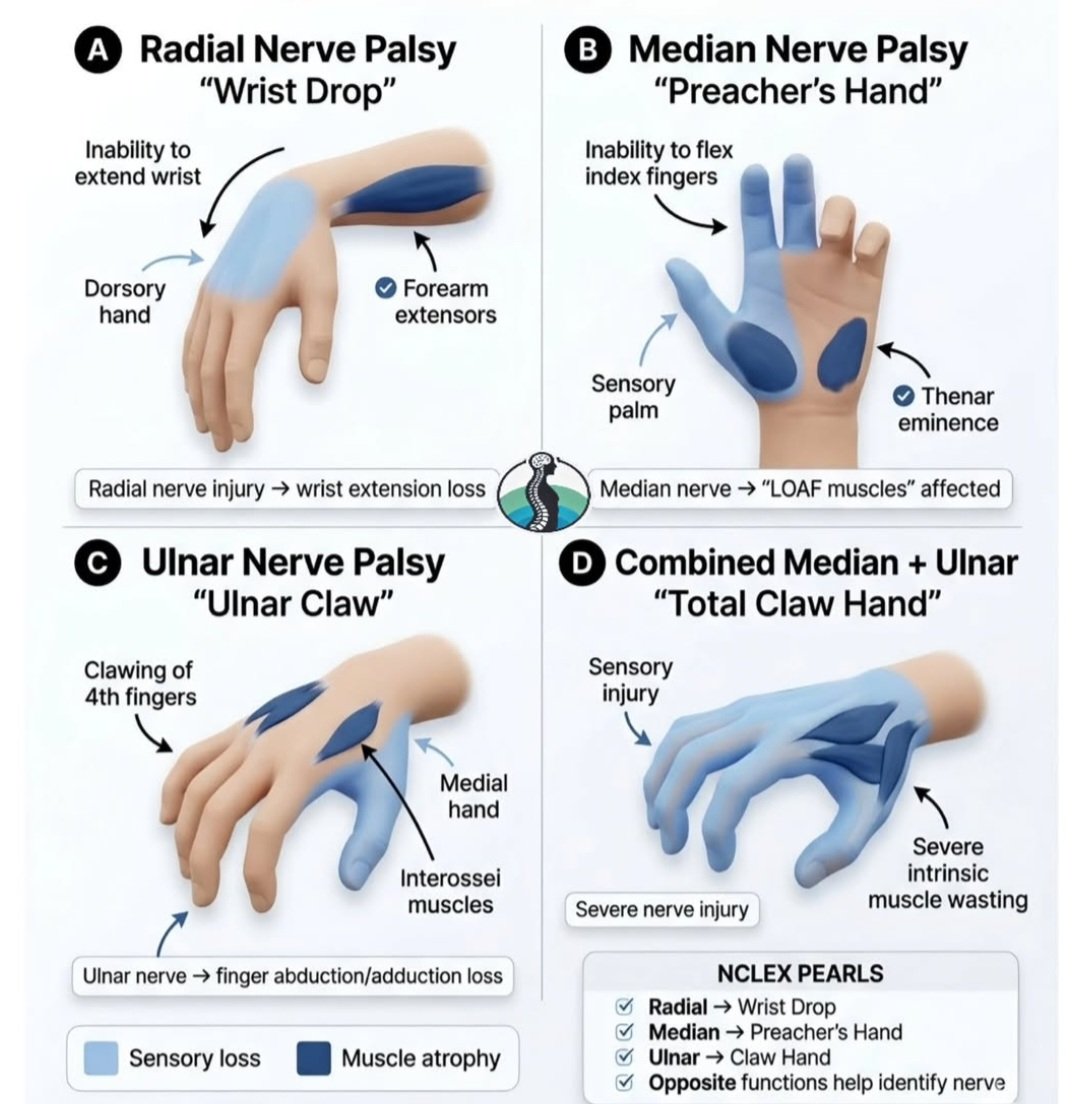
Various hand deformities resulting from nerve injuries (palsies). It highlights the visual appearance, muscle involvement, and sensory loss patterns associated with the radial, median, and ulnar nerves.
Quick Tip:
To identify the nerve, think of the opposite of its normal function. If the radial nerve normally extends the wrist, its injury causes the wrist to drop.
https://t.co/DUq4eHwoTR
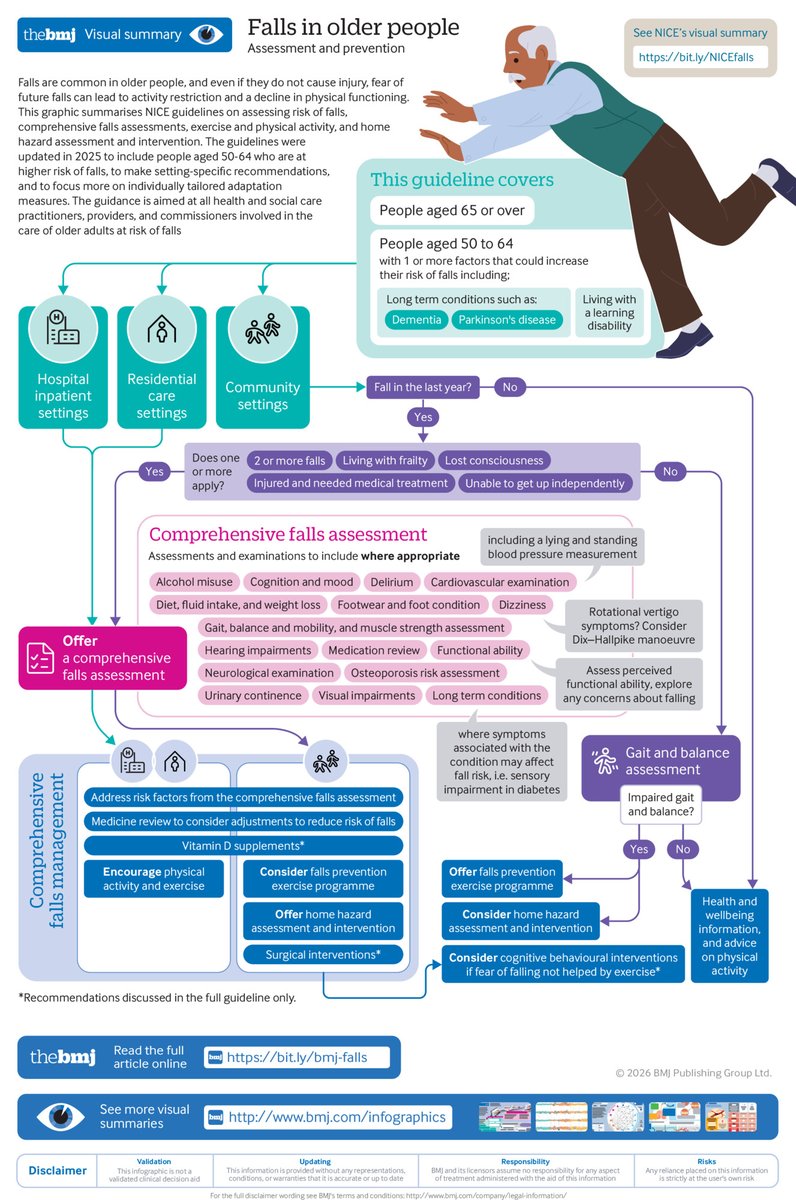
Falls are common in older people, and fall related injuries are a substantial cause of morbidity and mortality.
How should doctors assess the risk of falls? A summary of NICE guidelines, including a #BMJInfographic
https://t.co/s3P7sATuvU