The research behind this is wild. Your brain can’t flip from full alert to sleep like a light switch. It needs a runway. And reading builds it faster than almost anything else.
A University of Sussex study found that just 6 minutes of reading cut stress by 68%, more than music (61%), tea (54%), walking (42%), or video games (21%).
The effect is surprisingly physical. When you read, your nervous system shifts from fight-or-flight into rest-and-digest mode. Heart rate slows, breathing deepens, muscles release tension. The neuropsychologist who ran the study, Dr. David Lewis, described it as entering “an altered state of consciousness,” where focused imagination activates the part of your brain that tells your stress response to stand down.
A 2021 randomized trial tested this directly. Researchers split nearly 1,000 people into two groups: read a book in bed for seven nights, or don’t. After one week, 42% of readers reported better sleep versus 28% of non-readers. Nothing else changed.
Now compare that with what 86% of Americans actually do before bed: scroll their phones for an average of 38 minutes a night. A 2025 Norwegian study of 45,000 university students found that every additional hour of screen time in bed raised insomnia risk by 59% and cut sleep by 24 minutes. A separate American Cancer Society study of 122,000 adults found daily screen use before bed was tied to 50 fewer minutes of sleep per week.
Screens hit you with two sleep-blockers at once. Blue light suppresses melatonin, the hormone that tells your body it’s time to sleep, by about 50% according to a Harvard study. But the bigger problem is the content itself. News, social media, work emails, all of it fires up your brain’s threat-detection mode and spikes your stress hormones right when they’re supposed to be at their lowest point of the day. A physical book sidesteps both problems entirely.
The long game matters too. A Yale study tracked 3,635 adults over 12 years and found that people who read 3.5+ hours per week were 23% less likely to die during the study. That worked out to living roughly 2 years longer, regardless of gender, wealth, or education. Books beat newspapers and magazines. The researchers pointed to deep, sustained reading creating a kind of workout for the brain that protects it as it ages.
So the 5-10 minutes he’s describing? The science says 6 minutes is the threshold where your body starts winding down. His brain is switching off its stress response and easing into a state where sleep becomes almost automatic.
Observing some people close to me with chronic health conditions, it's striking how useful Reddit frequently ends up being. I think a core reason is because trials aren’t run for a lot of things, and Reddit provides a kind of emergent intelligence that sits between that which any single physician can marshal and the full rigor of clinical trials.
Why aren’t trials run for a lot of things? Well, they’re of course slow and expensive (median cost of $19M for a pivotal trial in 2015[1]; after adjusting for inflation and other phases, maybe that corresponds to a total of $40M today?). But they’re also hard to fund when the intervention in question lacks IP protection since the ensuing knowledge can’t be monetized. As such, trials for diet, over-the-counter supplements, and lifestyle interventions are under-pursued. To give one prosaic example, lots of people think that magnesium improves sleep, but, as far as I know, no trial has ever been run assessing its ability to improve sleep in non-elderly adults without sleep disorders.
So, Reddit — in a pretty unstructured way — makes a limited kind of “compounding knowledge” possible. Best practices can be noticed and can imperfectly start to accumulate. For people with chronic health problems, this is a big deal, and I’ve heard lots of stories between “I found something that made my condition much more manageable” all the way to “I found a permanent cure in a weird comment buried deep in a thread”. (Of course, one also sees this outside of medical conditions. I’ve enjoyed the recommended routine in the BodyWeightFitness subreddit, as a comparable kind of distilled practical wisdom[2].)
An interesting and somewhat more formalized example of this approach was recently used for long COVID and published earlier this year[3]. After surveying 3,900 individuals, the paper analyzes patient-reported outcomes for 150 different treatments, yielding the figure reproduced below. There are evidently no silver bullets, but it is striking that, say, about half of people find that antihistamines are helpful. I know a number of people who found the learnings from this study to be impactful in improving their daily quality-of-life.
Seeing this paper and the Reddit experience makes me wonder whether the approach could somehow be scaled: is there a kind of observational, self-reported clinical trial that could sit between Reddit and these manual approaches? Should there be a platform that covers all major chronic conditions, administers ongoing surveys, and tracks longitudinal outcomes?
I don’t really know what the best way to go about this would be, but it feels to me that there could be something important here. There’s a lot of latent data in patients’ subjective experiences that is not today being properly gathered or analyzed.
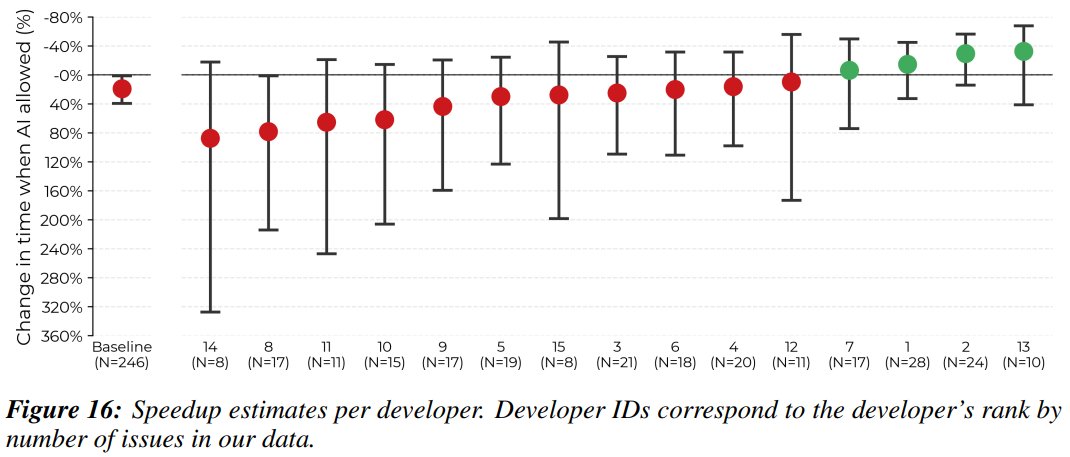
I was one of the 16 devs in this study. I wanted to speak on my opinions about the causes and mitigation strategies for dev slowdown.
I'll say as a "why listen to you?" hook that I experienced a -38% AI-speedup on my assigned issues. I think transparency helps the community.
He'd rather his children have agency than turn out exactly as he wants.
Because agency - the ability to take control over one's life & actions - is the hardest thing for a child to develop.
Parenting by force only leads to the opposite of agency.
The key insight?
“I was wondering what would break first… Your spirit, or your body.”
~ Jordan Mailata busting out Bane quotes mid game lmao
The greatest trash talk ever. A mad man.
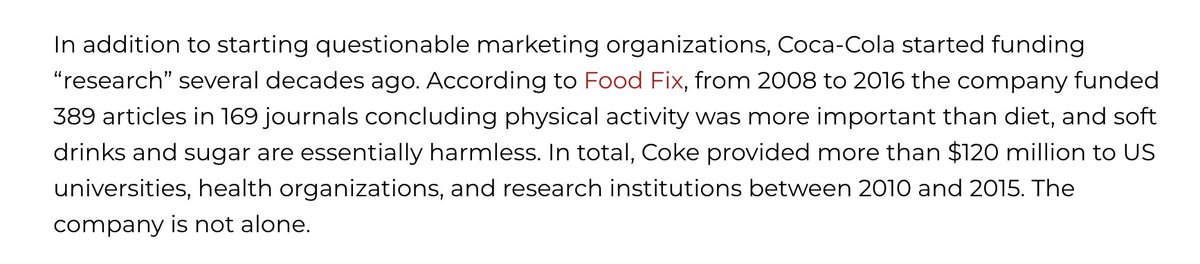
Meanwhile private companies like Coca-Cola are plowing hundreds of millions of dollars into funding research articles concluding that exercise is the number one determinant of health.
Coke spent $120 million dollars on 389 articles in 196 journals in only 8 years
@jwmares







![patrickc's tweet photo. Observing some people close to me with chronic health conditions, it's striking how useful Reddit frequently ends up being. I think a core reason is because trials aren’t run for a lot of things, and Reddit provides a kind of emergent intelligence that sits between that which any single physician can marshal and the full rigor of clinical trials.
Why aren’t trials run for a lot of things? Well, they’re of course slow and expensive (median cost of $19M for a pivotal trial in 2015[1]; after adjusting for inflation and other phases, maybe that corresponds to a total of $40M today?). But they’re also hard to fund when the intervention in question lacks IP protection since the ensuing knowledge can’t be monetized. As such, trials for diet, over-the-counter supplements, and lifestyle interventions are under-pursued. To give one prosaic example, lots of people think that magnesium improves sleep, but, as far as I know, no trial has ever been run assessing its ability to improve sleep in non-elderly adults without sleep disorders.
So, Reddit — in a pretty unstructured way — makes a limited kind of “compounding knowledge” possible. Best practices can be noticed and can imperfectly start to accumulate. For people with chronic health problems, this is a big deal, and I’ve heard lots of stories between “I found something that made my condition much more manageable” all the way to “I found a permanent cure in a weird comment buried deep in a thread”. (Of course, one also sees this outside of medical conditions. I’ve enjoyed the recommended routine in the BodyWeightFitness subreddit, as a comparable kind of distilled practical wisdom[2].)
An interesting and somewhat more formalized example of this approach was recently used for long COVID and published earlier this year[3]. After surveying 3,900 individuals, the paper analyzes patient-reported outcomes for 150 different treatments, yielding the figure reproduced below. There are evidently no silver bullets, but it is striking that, say, about half of people find that antihistamines are helpful. I know a number of people who found the learnings from this study to be impactful in improving their daily quality-of-life.
Seeing this paper and the Reddit experience makes me wonder whether the approach could somehow be scaled: is there a kind of observational, self-reported clinical trial that could sit between Reddit and these manual approaches? Should there be a platform that covers all major chronic conditions, administers ongoing surveys, and tracks longitudinal outcomes?
I don’t really know what the best way to go about this would be, but it feels to me that there could be something important here. There’s a lot of latent data in patients’ subjective experiences that is not today being properly gathered or analyzed.](https://pbs.twimg.com/media/G01qjOOawAAvKZw.jpg)