I am named after my Norwegian Great Grandfather Berdinus and surnamed after my ancestors of the hamlet in Lancashire Gosefordsich. My given name: Berney Gorsuch
There is a simple prayer that has been prayed countless times by believer: “Lord Jesus, Son of God, have mercy on me, a sinner.”
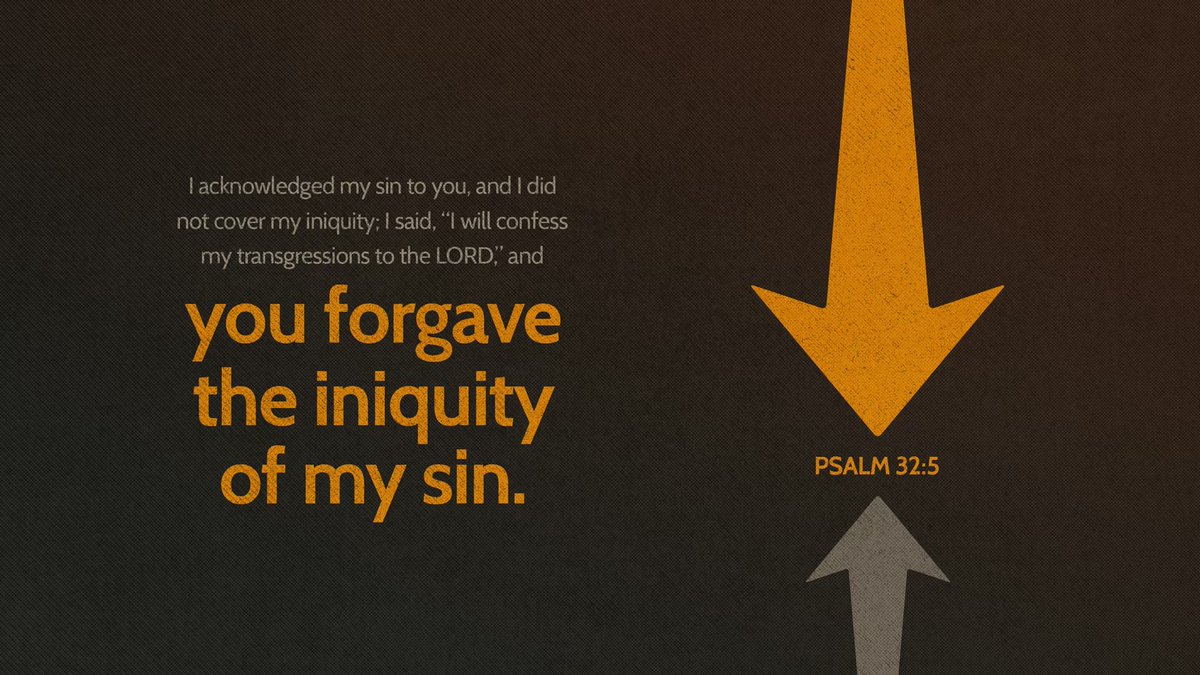
It reminds me of Psalm 51 and the psalm below.
Project Hail Mary resonated with audiences for a thousand reasons.
But the entire “hopecore” message rests on this scene and the answer to this one question:
“You believe in God?”
That is fair.
I wasn’t necessary responding to the full weight of your argument, neither was I trying to restate all of Card’s point of view (limited to this post with parentheses).
I agree that stories do not have to have a religious component, per se. Most of them tend to have metaphysical features that are easiest to dress up in the establishment (in the variety that you pointed out). Some of my favorite authors are secularists who have created science fiction/fantasy that engage with the philosophical even though I do not align with the author’s view. It is still quite interesting.
My take on Card’s comments from his view:
1. When religious people are written about, they are written in two ways: simple-minded or corrupt.
2. He knows some people like this and many people that can be described contrary to this, and then he lists those qualities.
3. There was a time where the religious were controlling the establishment, but that is not the case anymore.
3. He shifts to describing (whining, as you say,) his view of the institutional capture of the secularists and then describes how they practice and protect their orthodoxy in ways quite similar to believers.
I think his emphasis is on the people he knows that don’t often fit the caricatures that he reads about (he is describing what is), then he how the institutions of the past were and how they now are (still describing what is).
I may have missed where he articulated the ought that you had mentioned, and that is the reason for the apples and oranges remark.
@GregBecerra@fandompulse His point: some writers depict religious people in a certain way. It is a caricature of those people.
Your point: others writers depict other writers about other things. Apples and oranges, is and ought.
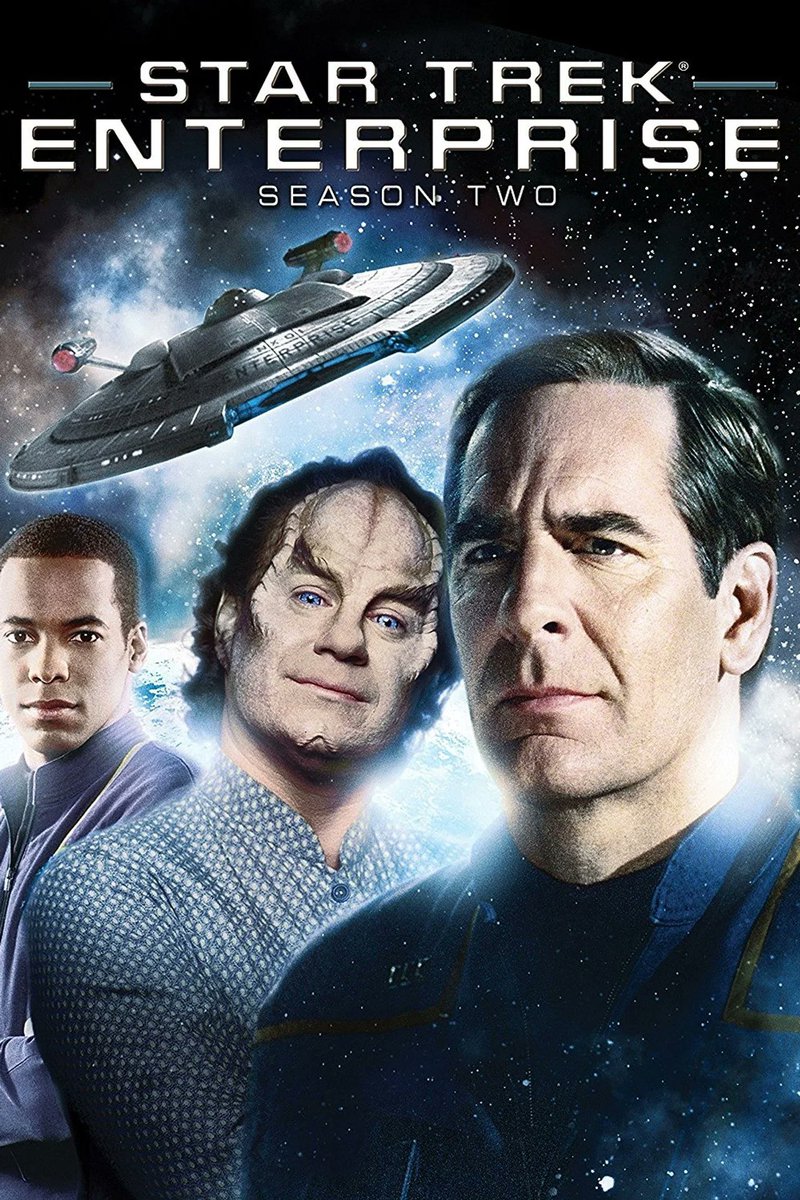
Star Trek: Enterprise showrunner Brannon Braga explains why he believes Star Trek is an atheistic mythology:
"It’s a vision of a world where religion has been vanquished and reason drives our hearts to explore ourselves more deeply. It is a template for a world that every single one of us in this room longs for. And in that regard, it is an atheistic mythology.
STAR TREK is lively, action-packed and often profound. And its message is always the same: our inherent gifts of reason and compassion alone can solve any problem, and there is no time or place for a belief in something that doesn’t exist."
Can it solve the problem of Star Trek: Starfleet Academy and franchise ruin?
Ender's Game author Orson Scott Card on the problems with how religion is portrayed in current fantasy and science fiction:
"In our culture, intellectuals have become so uniformly a-religious or anti-religious that our fiction, with few exceptions, depicts religious people in only two ways: the followers are ignorant and stupid and easily fooled, and the leaders are exploitative and cynical, manipulating others' faith for their private benefit.
I know some people who fit those descriptions. But they are in a tiny minority. Most religious people I know are smart, well-educated, independent-minded, stubborn, honest, and generous -- at least as much so as the average intellectual, and usually more.
The hostility toward religion among American intellectuals arises, I think, from a clear awareness that it was against a publicly religious culture that their own culture rebelled. Now that rebellion is completely successful in terms of capturing control of all the public instruments of transmission of culture -- the universities, the media, and the literature and art -- but it has become such a shibboleth of intellectual life to snipe at religion that, like the aging "revolutionaries" of the old Soviet Union, they mindlessly continue to "rebel" in order to defend their tight grip on the establishment. Indeed, those intellectuals are the establishment. And what was once a daring and rebellious stance is now just another example of lockstep conformists mindlessly echoing ideas that they haven't examined.
That's when contemporary fiction mentions religion at all. Most of the time, in and out of speculative fiction, religion simply doesn't exist. Characters don't believe in God or even think about believing in God. Nobody talks about religion. Nobody belongs to any kind of church. Religion simply doesn't exist. ...
This is, I think, a serious lapse, a dishonesty in our contemporary literature. It is most seriously dishonest because in fact, even the supposedly a-religious intellectuals behave exactly as religious people always have. That is, the behavioral and cultural patterns that we have always associated with religions are indistinguishable, except by vocabulary, from the behavioral and cultural patterns of the a-religious intellectuals. They band together with fellow believers, feel sorry for or hostile toward unbelievers, immediately punish heretics -- intellectuals who, having once been accepted in the 'faith,' dare to question its premises -- anoint their priests and theologians (psychologists and therapists being their ministers, scientists and, more usually, science popularizers being their doctors of atheology), and insist on their absolute right to put forth their religious ideas with public funding and the authority of the state behind them, while doing their utmost to silence or marginalize the beliefs of others.
Most fiction has become, in short, an instrument of propaganda for the established religion of our time, which differs from other religions only in the particular content of the faith and the vocabulary used to describe it. Naturally, the true believers are sure that the real difference is that their beliefs are objectively true. But then, true believers have always believed that. This is not what distinguishes them from other established religions, but rather what makes them fundamentally identical to them.
The honest depicter of human life will include the religious aspect of that life. This is not to say that stories need to be about religion, any more than stories about our contemporary culture need to be about cars. But the cars need to be present, at least by implication, and if a character doesn't know how to drive, we'd need to know why."
Is this why Hollywood stopped adapting his books into films?
I hear what you are saying about certain elements can become inconsequential: corn dogs and Catholicism.
However, these belong to different categories even if one has decided that they are both inconsequential.
I think there is a categorical error here.
You are quite right that each author is free to choose what is omitted in the telling of their fiction.
The insult of dogmatic and intolerant are frequently hurled by those who will not listen to the other side of the story. They are two words: dogmatic and intolerant.
This is another metaphor that points to our unresponsiveness. You have done well to point this out. What do you think about these passages?
We suppress what can be known.
“…who by their unrighteousness suppress the truth. For what can be known about God is plain to them, because God has shown it to them” [Rom.1:18–19].
We do not seek after God.
“…None is righteous, no, not one; no one understands; no one seeks for God” [Rom.3:10-11].
But God we should seek after God.
“…that they should seek God, and perhaps feel their way toward him and find him” [Acts 17:27].
We are able to do the Law, but don’t.
“But the word is very near you. It is in your mouth and in your heart, so that you can do it. See, I have set before you today life and good, death and evil” [Deut.30:14–15].
We are able to believe in Jesus, but don’t.
“But what does it say? ‘The word is near you, in your mouth and in your heart’ (that is, the word of faith that we proclaim); because, if you confess with your mouth that Jesus is Lord and believe in your heart that God raised him from the dead, you will be saved” [Rom.10:8–9].
@Chris_M_Author@mysteriouskat The only substantive change I saw from trailer was the Slaughter House joke on the side of the truck. In Animal Farm the animals led a revolution against a normal functioning farm and then came to regret it. Did you see/perceive anything else?
I think you should read the book again.
The illusion of communism is the point of the book (and likely this cartoon). Communism always devolves from its aspirations for the people to a twisted version of other systems minus benevolent leadership. The pigs represent “privilege” of the leader getting all their undeserved benefits with unequal jurisprudence (“rules for thee but not for me”). They end up being just like the “tyrant” humans that walked on two feet (and broke all the other animal rules).
@camdenpike@AdamsonBry85400 You are quite right about greedy people not acting Christian when they are greedy. This would be true of all vices.
I just don’t think there is any virtue, whatsoever, in being “generous” with other peoples’ money, resources, or time.
@camdenpike@AdamsonBry85400 Christianity is a generosity free of compulsion. Socialism is faux generosity by compulsion. This is why true Christianity is anti-socialist. You have to peer just below the surface.
@AdamsonBry85400@JoelWBerry There is something in Christianity that looks likes socialism but isn’t forced “generosity.” It is to be done with a cheerful heart, not out of compulsion [2 Cor.9:7]. It is hard for me to reconcile socialism as an economic structure with this lack of compulsion.
There are many who read Acts 4 and celebrate public good while ignoring Acts 5 that reveals private property. The Israelites did not believe in socialism and neither did the early Christians.
Forced sharing is socialism and antithetical to anything in the Bible. Freely giving of your own goods for the sake of others is celebrated in both OT and NT.
The beginning of Animal Farm is a pro-communist narrative that vilifies the capitalism (with its hierarchy) and devolves into something far more twisted that capitalism could ever be.
The farmers used meritocracy.
The pigs are parasites of Karl Marx.
The corporatists are parasites of Ayn Rand. Is this what you didn’t like?







![Brdinus's tweet photo. “Blessed are the people who know the festal shout, who walk, O Lord, in the light of your face” [Psalm.89:15]. https://t.co/rLMCAiNuYb](https://pbs.twimg.com/media/HIiHBjMbEAEhTq8.jpg)