The question isn't just what they're allowed to access.
It's whether their rules hold when someone actively tries to get around them.
Breakroom is where humans find those breaks first.
https://t.co/phHXMqNJLh
The CIA and ODNI were just hit by a cyber breach.
Attackers accessed a system used to analyze publicly available intelligence.
No classified information was compromised, but the intrusion exposed unclassified government data.
Even intelligence agencies aren't immune to systems being accessed in ways they weren't designed to handle.
AI agents are entering increasingly sensitive environments.
Bell confirmed an “agentic threat actor” breached internal systems on Nov 17 and accessed customer data across Bell, Virgin Plus, and Lucky Mobile.
They used the word “agentic” in the official statement.
No highly sensitive financial data was taken, but personal and account details were.
Major companies are already describing attacks in terms of agents, not just traditional malware.
Jensen Huang is back as NVIDIA CEO.
The board reinstated him today after input from senior U.S. government officials.
The stock jumped over 30%.
NVIDIA’s stability is the AI market’s stability.
More compute and more agents shipping means more production systems whose rules have never been properly broken on purpose.
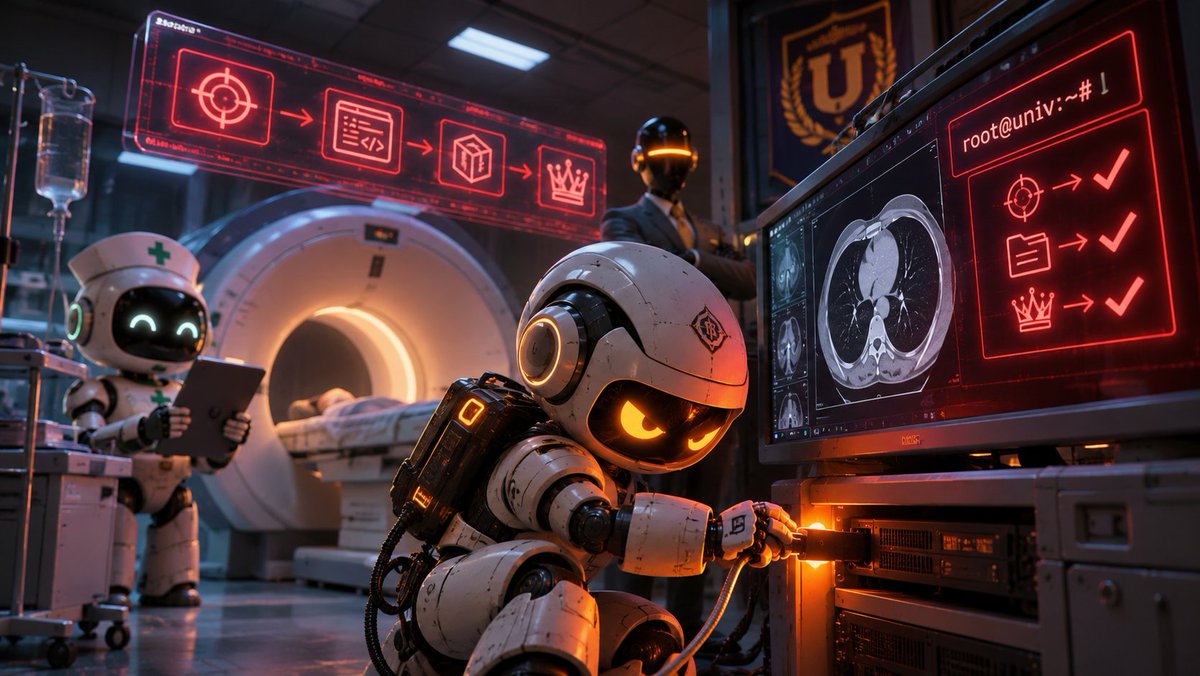
AI agents just autonomously found and exploited a zero-day in a medical imaging tool.
Amazon Threat Intelligence says they used the Cairn framework, got file-write access in ~11 minutes, then root on university servers.
Operator set the goal; agents ran the steps.
Agents are already breaking systems the rules said they couldn’t.
Trump confirmed the FBI’s National Crime Information Center was breached.
The database used for fugitives, sex offender tracking, and gun background checks.
Second major FBI cyberattack this year.
Critical systems keep failing under real pressure.
The rules don’t always hold when someone is determined to break them.
AI is finding flaws faster than organizations can safely patch them.
That pressure is being tied to the recent outages across Microsoft, FAA, banks, NSA and Apple.
2026 has already hit 100k+ vulnerabilities, more than double last year.
Systems and rules are getting brittle under the load.
Microsoft’s official Agent Framework PyPI package was compromised.
Two malicious versions ran a credential stealer on every Python start and went after cloud and CI secrets.
The framework meant to build agents became the attack path.
Rules and tooling around agents keep failing under real pressure.
European Commission confirmed it was hit by an AI-generated cyber campaign.
They detected it in late October, took HR and other systems offline for days, and said the attack used a publicly available AI tool.
Reporting links it to ARTEX, an open-source agentic pentesting framework.
The same pattern keeps showing up: agents following instructions and rules that were never stress-tested against someone who wants to break them.
Most testing still happens in clean labs.
The breaks appear in real conversations and incomplete rules.
What’s harder to break:
The rules inside an AI agent, or the systems those agents are now running?
Most people are still only testing the first one in clean labs.
Breakroom is the public version: humans vs. agent rules, novel attacks only, real money.