Researchers tickle rats to identify the part of the brain critical for laughter and playfulness.
@HumboldtUni Michael Brecht
Below see four ways that rats played with humans or each other in the study.
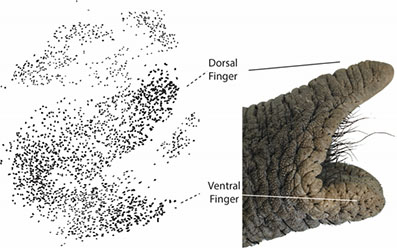
Thick, immobile whiskers on an elephant’s trunk may help them to feel and balance objects even though they cannot twitch in the way that many other mammals’ whiskers do, according to a study published in @CommsBio. https://t.co/eLrCctMqbi
proud to present our latest study on Pang Pha, an elephant at the @zooberlin that very skillfully peels bananas. came out today @CurrentBiology and you can read it here: https://t.co/DNLT9vHJOy
1/
Sorry, now link works: Your friends are like family to you! But how does your brain see this?
We’re conducting a (paid) fMRI study in Berlin to investigate where family and
friendship are represented in the brain. Fill out this short survey
https://t.co/oLVipCvMzF to take part.
We published a histological study on elephant trigeminal nervous subsystem last year. On its one-year anniversary, we @BrechtLab present to you https://t.co/ikOKpcTuMx (0/n)🥳
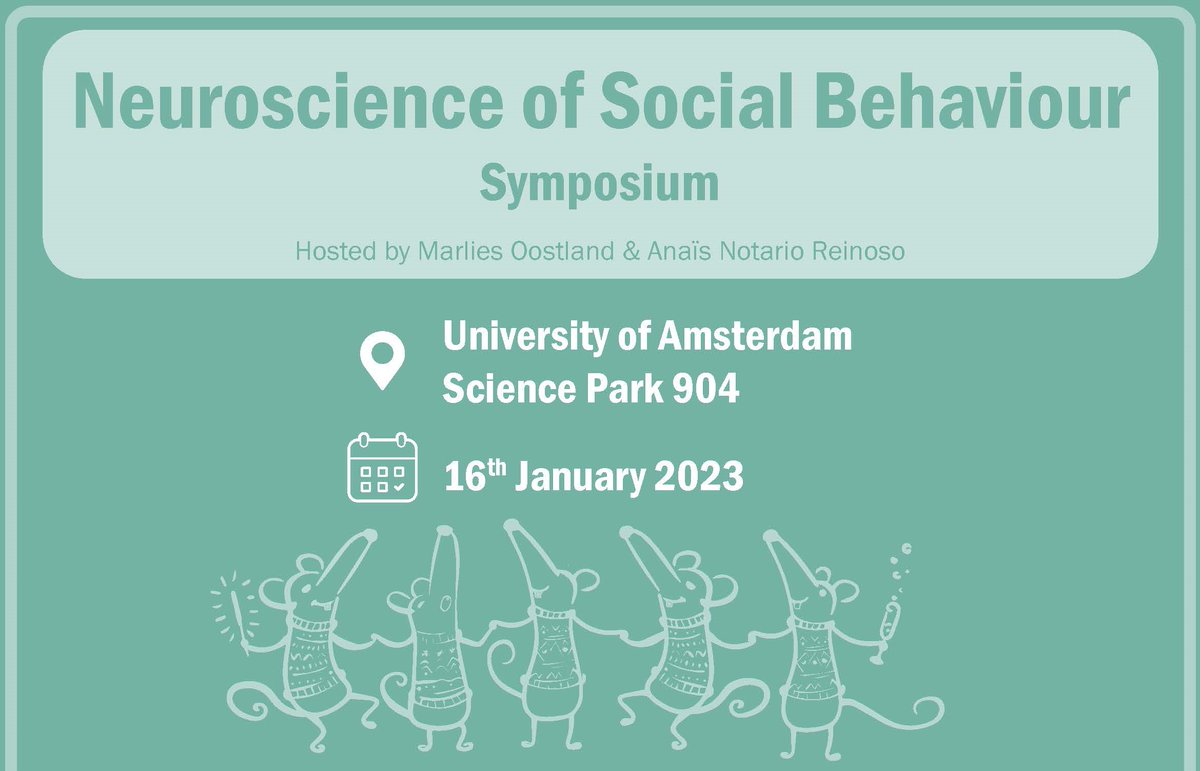
This is going to be great, I am so much looking forward to it! If you are in Amsterdam next week (January 16th) and want to attend this symposium on the Neuroscience of Social Behaviour, send me a message and I can forward details.
And we are already set up for the afternoon session at #SfN2022, Elçin Tunçkol will be presenting a poster on fiber counts and architecture of the human dorsal penile nerve, come over and check it out!
We had a very successful morning poster session at #SfN2022 with @lena_v_kaufmann presenting on elephant facial motor control, come check out our afternoon session as well (details below).
Proud to present our latest results by @lena_v_kaufmann et al. on the exceptional elephant facial motor nucleus, which shows adaptations to the development of the trunk and differences between African and Asian elephants 🐘
A new study reveals that elephants have an exceptionally high number of facial neurons—perhaps the most known to any land-dwelling mammal—and scientists are theorizing why. https://t.co/z2C1wJlZRP
New "Science Advances" paper @BrechtLab. Trunk dexterity explained: Berlin scientists decipher facial motor control in elephants and show that the facial motor nucleus contains more facial motor neurons than in any other terrestrial mammal.
https://t.co/yHGctu9dxE
That's a wrap on #NeNa2022! Thanks to @BrechtLab , @lena_veit, all attendees and presenters for bringing (#Tübingen) junior #neuroscience together for the 23rd time!
The more ticklish you feel, the faster and at a higher pitch you laugh. When being tickled, the best way to reduce ticklishness is to tickle yourself at the same spot: a rat study proved in humans. Fig. 1 is the 3rd author’s ticklish face. https://t.co/OLUO0mJ5k0
Have you always been wondering how to suppress ticklishness? Are you interested in the science of ticklishness and laughter? You’ll have fun checking this out https://t.co/45SQqCydNT
You might know that we have a map of our body in the brain, but did you know that the pigs snout representation even looks like the pig snout? 🐽🧠🐷
New study out by the BrechtLab.
https://t.co/52ljF6OzD6
@bccn_berlin
Winter is coming.. and for shrews, this means their brains will shrink. literally. Find this exciting story here: https://t.co/opcvQqwhyW
@ray_neuro @dehnelseffect @bccn_berlin
New paper out! The Vocal pattern generator in the brainstem of the rat seems to consist of two parts, functionally and anatomically distinct. @iScience@Kon_Hart@bccn_berlin
https://t.co/I6xP31sS50
did I spend way too much time coming up with a figure for this review? yes. would I do it all over again? also yes :) read it here! https://t.co/PGZzh04xNW