Zoom updates its Terms of Service to become the NSA 2.0:
I'm in disbelief at this update because of how far-sweeping it is, yet here we are. Direct quotes from section 10.2
"You consent to Zoom's access, use, collection, creation, modification, distribution, processing, sharing, maintenance, storage of [ the stuff you say in meetings ] for any purpose....
... you hereby unconditionally and irrevocably assign to Zoom ... and your end users to unconditionally and irrevocably assign to Zoom all right, title, and interest in and to [ the stuff you say in meetings ], including all Proprietary rights... "
Does this strike anyone else as far-reaching, utterly insane, and totally unethical?
Gentle reminder that Google Meets is free, and that Zoom insists workers come into the office because they admit their business model only made sense in the pandemic.
You can read more about Zoom's claims to own all the stuff you say during meetings, the stuff your users say in meetings, and probably the things your children will say near your phone when it's locked here, on their website, as they commit corporate suicide:
https://t.co/78NLiOC2PU
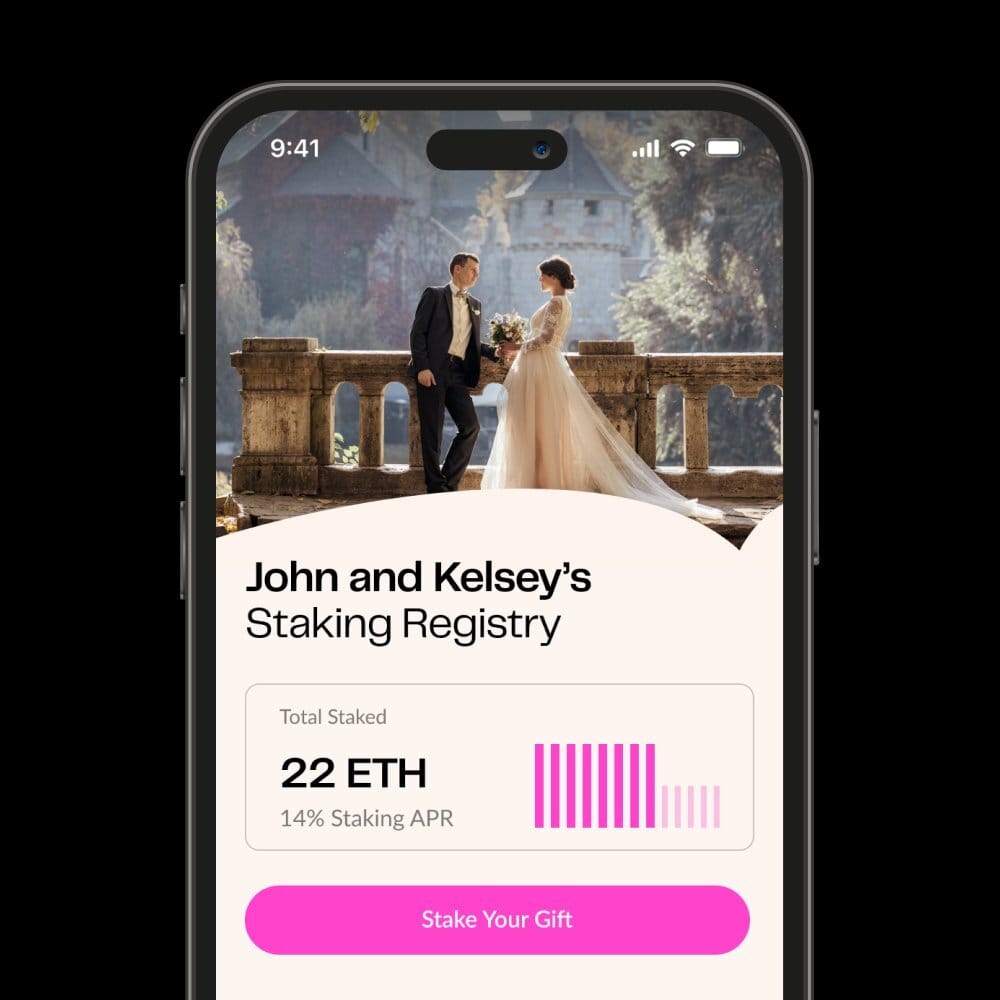
An interesting web3 concept for weddings: Staking Registry
How it works:
• Friends and family can stake ETH as a wedding gift.
• As long as the couple stays married, they get to keep the rewards.
• If the couple gets divorced, the ETH and rewards get redistributed to friends and family.
(h/t @0xDesigner)
I've been experimenting with multiple of these, announcing important messages as they come in, morning briefings, noting down ideas and memos, and browsing agents.
I couldn’t resist - here's a playful (unscripted!) video of two talking to each other prompted to be AI’s from "Her
Prove you can do hard things
When a teenager asks why they need to learn calculus, what should you say?
You know they will never use it in adulthood, outside of certain career choices.
You could say, “It’ll help you get into college,” but then they’re left wondering why college cares if you know calculus.
And once they’re in college, maybe you could say, “To get a good job,” but why would a potential hirer care how you did in multivariate calculus if your job doesn’t require any knowledge of calculus?
But I recently realized there is a very good reason to take Calculus. It’s to prove you can do hard things.
The ability to do hard things is perhaps the most useful ability you can foster in yourself or your children. And proof that you are someone who can do them is one of the most useful assets you can have on your life resume.
Our self-image is composed of historical evidence of our abilities. The more hard things you push yourself to do, the more competent you will see yourself to be.
If you can run marathons or throw double your body weight over your head, the sleep deprivation from a newborn is only a mild irritant.
If you can excel at organic chemistry or econometrics, onboarding for a new finance job will be a breeze.
But if we avoid hard things, anything mildly challenging will seem insurmountable.
We’ll cry into TikTok over an errant period at the end of a text message. We’ll see ourselves as incapable of learning new skills, taking on new careers, and escaping bad situations.
The proof you can do hard things is one of the most powerful gifts you can give yourself.
My goal with our kids is to avoid lying to them as much as possible.
I won’t tell them that calculus is super important or even that grades are super important. The truth is, they aren’t, so long as you have other plans.
Calculus is a great way to prove you can do hard things if you have no other proof to show.
But if you’re learning programming and building apps in your free time, or winning soccer championships, or writing a novel, then you are doing hard things. Probably harder than Calculus.
This is also why there’s so much survivorship bias and bad advice in the “C students hire A students” trope. Most C students are not doing other hard things instead of school. They’re just goofing off, so they end up working for the A student.
But some C students are getting C’s because they’re obsessed with other projects. Hard projects. And that obsession with doing hard things lets them blow past their Excellent Sheep peers over time.
So if you have a C student who’s obsessed with something hard, you probably don’t have to worry. If they’re getting high and watching TikTok, well…
I don’t particularly care what grades my kids get once they start school. But I do care that they consistently prove to themselves they can do hard things. If Calculus is how they want to do it, fine, but there are many, many more options.
And if you’re not someone who knows they can do hard things, find a way to prove it to yourself.
Build a habit, learn a skill, create something, whatever it is that turns your default stance on challenges from “that seems hard” to “I can figure it out.”
Create proof you can do hard things.
3 weeks after this conversation took place, Peters bank was taken into receivership and his clients still don’t have access to their money. Centralized trusts kills. #Bitcoin
In early 1992, an aspiring director asked James Cameron,
How do you become a successful director?
Cameron's movie "Terminator 2" was the top-grossing movie of 1991, so Cameron, who had no formal film education, was arguably the best person in the world to ask.
Cameron replied,
“If you have to ask somebody how to be a film director, you’ll probably never do it."
Cameron added that this is his reply to everyone who asks him that question. For 2 reasons:
Number 1...
In his books on screenwriting, Syd Field writes that the core trait of all great characters is the character's “dramatic need.”
With a “dramatic need” (to get something, to go somewhere, to beat someone, etc.), the character persists through the story’s relentless series of obstacles, problems, and conflicts.
To become a successful film director, Cameron says, you need to have a dramatic need.
Like a good story, the filmmaking process, Cameron explains, is a relentless series of obstacles, problems, and conflicts.
Someone who gets discouraged by his reply, Cameron says, clearly does not have the “dramatic need” needed to persist.
But “if [my reply] pisses you off, and then you go out and say, ‘I’m going to show that Jim Cameron; I am going to be a director’—that gives you the kind of true grit you need to have in order to go through with it.”
Number 2...
Of all the successful filmmakers Cameron knows, he said, “No two people ever did it the same way.”
Their career trajectories were each uniquely shaped by their unique strengths and weaknesses.
“Whatever your strengths and weaknesses,” Cameron says, “you have to find the path that’s going to work for you.”
This made me think of a line from the comparative mythologist Joseph Campbell:
“Where there’s a way or path, it is someone else’s path; each human being is a unique phenomenon. The idea is to find your own path."
- - -
“I’ve always felt that people seek out the information and knowledge they need. They seek it out and find it...Nobody will give you the pathway. It’s something you have to find yourself.” — James Cameron
Follow @bpoppenheimer for more content like this!
1/
The #Marlowe suite has been designed and developed with a security-centric focus. Here's the lowdown of Marlowe security features, covered in the latest blog. https://t.co/4k636f4j3G 🧵👇
Crypto is about more than just making money.
It’s built on the principles of transparency and trustlessness.
Where your privacy is respected and upheld.
This is non-negotiable and we stand firm on this.


![Andercot's tweet photo. Zoom updates its Terms of Service to become the NSA 2.0:
I'm in disbelief at this update because of how far-sweeping it is, yet here we are. Direct quotes from section 10.2
"You consent to Zoom's access, use, collection, creation, modification, distribution, processing, sharing, maintenance, storage of [ the stuff you say in meetings ] for any purpose....
... you hereby unconditionally and irrevocably assign to Zoom ... and your end users to unconditionally and irrevocably assign to Zoom all right, title, and interest in and to [ the stuff you say in meetings ], including all Proprietary rights... "
Does this strike anyone else as far-reaching, utterly insane, and totally unethical?
Gentle reminder that Google Meets is free, and that Zoom insists workers come into the office because they admit their business model only made sense in the pandemic.
You can read more about Zoom's claims to own all the stuff you say during meetings, the stuff your users say in meetings, and probably the things your children will say near your phone when it's locked here, on their website, as they commit corporate suicide:
https://t.co/78NLiOC2PU](https://pbs.twimg.com/media/F25hcJFb0AAmUv-.jpg)


![bpoppenheimer's tweet photo. In early 1992, an aspiring director asked James Cameron,
How do you become a successful director?
Cameron's movie "Terminator 2" was the top-grossing movie of 1991, so Cameron, who had no formal film education, was arguably the best person in the world to ask.
Cameron replied,
“If you have to ask somebody how to be a film director, you’ll probably never do it."
Cameron added that this is his reply to everyone who asks him that question. For 2 reasons:
Number 1...
In his books on screenwriting, Syd Field writes that the core trait of all great characters is the character's “dramatic need.”
With a “dramatic need” (to get something, to go somewhere, to beat someone, etc.), the character persists through the story’s relentless series of obstacles, problems, and conflicts.
To become a successful film director, Cameron says, you need to have a dramatic need.
Like a good story, the filmmaking process, Cameron explains, is a relentless series of obstacles, problems, and conflicts.
Someone who gets discouraged by his reply, Cameron says, clearly does not have the “dramatic need” needed to persist.
But “if [my reply] pisses you off, and then you go out and say, ‘I’m going to show that Jim Cameron; I am going to be a director’—that gives you the kind of true grit you need to have in order to go through with it.”
Number 2...
Of all the successful filmmakers Cameron knows, he said, “No two people ever did it the same way.”
Their career trajectories were each uniquely shaped by their unique strengths and weaknesses.
“Whatever your strengths and weaknesses,” Cameron says, “you have to find the path that’s going to work for you.”
This made me think of a line from the comparative mythologist Joseph Campbell:
“Where there’s a way or path, it is someone else’s path; each human being is a unique phenomenon. The idea is to find your own path."
- - -
“I’ve always felt that people seek out the information and knowledge they need. They seek it out and find it...Nobody will give you the pathway. It’s something you have to find yourself.” — James Cameron
Follow @bpoppenheimer for more content like this!](https://pbs.twimg.com/media/F0pFwg8X0AEXFaj.jpg)




