Video is an effective way to communicate, and we want to make it as easy as editing slides - that's why we created Google Vids (https://t.co/Z0lp7dvIRB).
We are launching major enhancements to AI avatars, voiceovers, and video generation in Google Vids.
Using these new updates, you can:
- Turn Google Slides presentations into engaging videos
- Craft awesome videos across 24 languages, including Hindi :)
- Demo your products and services with custom avatars
More details on this and more below...
🧵 1/5
Open-source / self-hosted AI is starting to feel less like a hobbyist lane and more like a real enterprise strategy.
Why:
1. Open models are getting good enough for many workflows.
2. Most tasks don’t need frontier-model intelligence.
3. Hosted models are getting more constrained.
4. Local compute is getting cheaper.
5. Companies don’t want sensitive data flowing everywhere.
Opus for hard reasoning.
Open/local models for routine work near private context.
AMD Ryzen AI Halo. The ultimate local AI developer platform.
Pre-order now: https://t.co/Ny0ZV8LOYi
⚡ Up to 128GB unified memory
⚡ Support for models up to 200B parameters
⚡ Windows & Linux support
⚡ Ready-to-run AI workflows out of the box
Build, prototype, and deploy locally without cloud constraints.
The biggest AI productivity block may not be model quality.
It may be context engineering - connecting LLMs to a knowledge base + repeatable operating loops
Obsidian = memory
LLM = reasoning
Loop = compounding
The boring stuff wins.
The most powerful systems aren't built from complex parts, they're built from *the right* simple parts. A single concept that does one thing well beats a dozen features that do everything halfway.
As a manager in a big tech company using AI daily... the job isn't going away, it's just getting weirder. The hardest part isn't the work — it's telling folks who spend most of their time updating trackers and writing meeting notes that their job is going to be replaced soon
Let's take a look at how Seattle's DoorDash law actually turned out.
In 2024, Seattle implemented "PayUp" — a minimum wage law for food delivery drivers, setting the rate at $26.40/hour. The intent was to protect workers. Here's what actually happened:
DoorDash added a $5 fee to every order. Customers stopped ordering. Within two weeks, 30,000 fewer orders. UberEats volume dropped 30%. Drivers — the people the law was supposed to help — saw their available deliveries cut in half and earnings per hour fall 25%.
A new National Bureau of Economic Research study confirmed what the numbers already showed: higher per-delivery pay was completely offset by fewer deliveries and lower tips. Active drivers saw zero net gain in monthly earnings.
KUOW reported this week that two years in, the results are undeniable — Seattle is now the most expensive delivery market in the country. Denver, Portland, and San Francisco, cities without these laws, saw delivery revenue grow 20-40%. Seattle stagnated.
The parallel to what's happening with WA tax proposals is obvious. SB 6346 would impose a 9.9% income tax on high earners. The QSBS add-back bills would strip federal tax exclusions from founders. The argument is always "just a small tax on those who can afford it." But capital moves. Founders move. Companies incorporate elsewhere.
The DoorDash data gives us a controlled experiment: same company, same product, same time period, different policy environments. The city with the heaviest regulation saw the worst outcomes — including for the workers it tried to protect.
Incentives matter. Every time.
https://t.co/0rusleqBbk
#StartupLaw #WashingtonState #PolicyMatters #QSBS #Founders #waleg
3 THINGS YOU NEED TO BUILD IMMEDIATELY WITH OpenClaw:
1. Activity feed
2. Calendar
3. Global search
All 3 will super power your workflow
• Activity feed actively tracks everything your OpenClaw does. This is critical, because if you have it working autonomously, this will give you insight into EVERY SINLGE THING it does, to make sure it's not wasting tokens
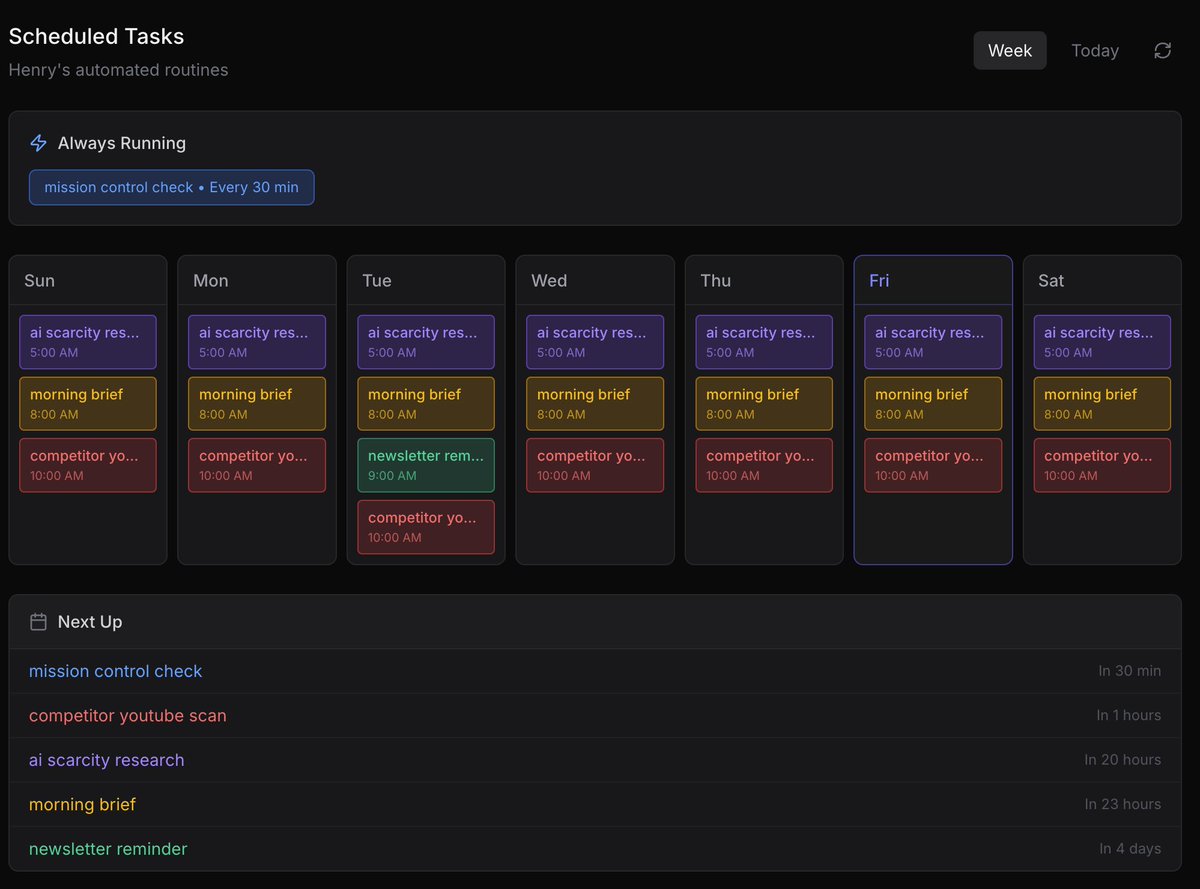
• Calendar lets you see all of OpenClaw's scheduled tasks. Now you can verify when it's going to work proactively for you. Also will let you know when it has scheduled tasks you might not want it to do anymore, saving more tokens
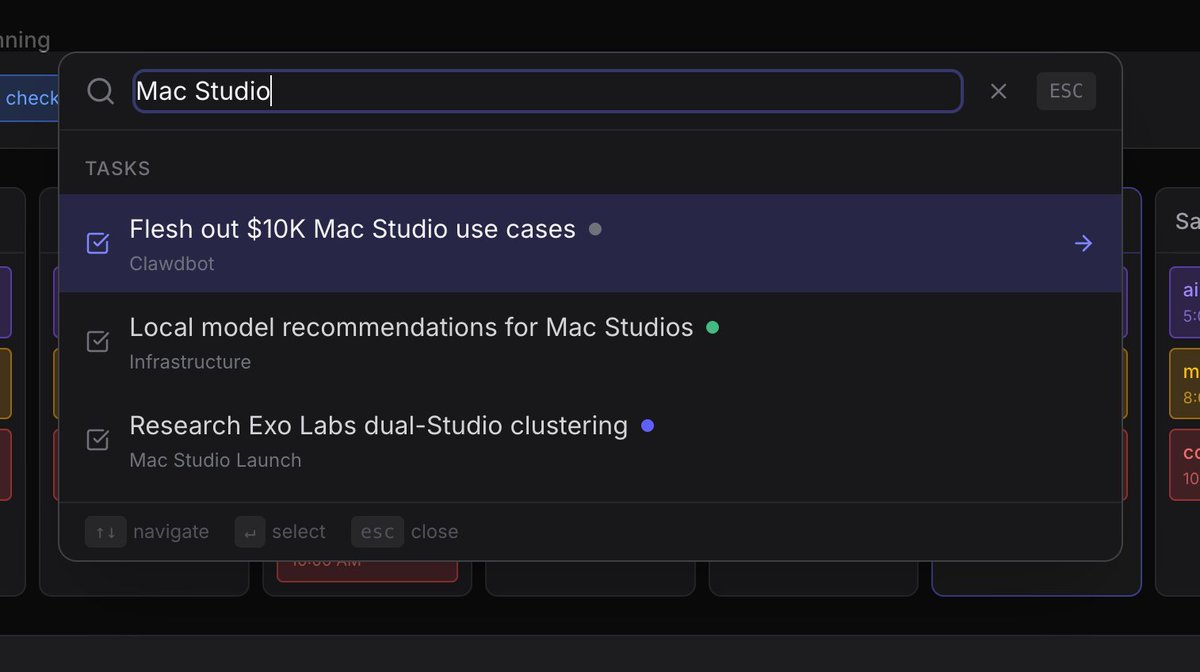
• Global search allows you to search through ALL of OpenClaw's memories, tasks, documents and past conversations. OpenClaw has such incredible memory, but no interface to view any of it. Now you can search through it easily and find old nuggets you talked about.
Steal this prompt to get it all installed:
"I want you to build out 3 things for me. In a Mission Control dashboard, build out an activity feed first. This activity feed will record EVERY SINGLE THING you do for me, so I can see a history of every action and and task you've completed. I want a calendar view that shows me in a nicely formatted screen every scheduled task you have in the future in a weekly view. And I want a global search where I can search for any term and you display any relevant memory, document, or task from our workspace. Use NextJS as the framework, Convex as the database, and Codex to code it all out"
My ClawdBot fixed its own code today.
Then it found a guy who turned $95 into $1,669 betting on whether JD Vance would say the word Ass.
I am not joking.
I asked Clawdbot to find quiet snipers on Polymarket. Not election gamblers. Not crypto degens. People who found broken corners of the market.
It came back with this: https://t.co/sWgsDQKriD
I opened the profile expecting meme bets.
What I found made me sit back in my chair.
This guy does not predict elections. Does not analyze Fed policy. Does not care about GDP.
His full-time job? Betting on words.
Mention Markets. Will Trump say China in his speech? Will Biden say democracy? Will Vance drop an f-bomb?
He bet $95 that Vance would say Ass at a January 22 conference.
Vance said it.
$95 to $1,669. 17x.
I scrolled through his history.
$23,000 per month. 80% winrate. All from predicting which words politicians cannot resist saying.
Here is what hit me:
This is like betting on whether your friend who says 5 minutes will actually show up in 30. You are not predicting the future. You are predicting pattern.
Politicians love certain words. They cannot help themselves. He just waits.
While we are building complex models to predict global trends, this guy profits from the fact that JD Vance cannot keep it PG.
I looked at my Clawdbot, which just connected three APIs by itself.
Then at this trader, who found the dumbest edge I have ever seen.
Same principle: do not work harder. Find where the game is broken.
Real question is this genius or is this exactly the kind of edge that disappears the moment I post about it?
Tell me I am wrong.
🦞 OpenClaw 2026.1.30
🐚 Shell completion
🆓 Kimi K2.5 + Kimi Coding: run your claw for free
🔐 MiniMax OAuth: one more model just a login away
📱 Telegram got a glow-up — 6 fixes from threading to HTML rendering
Plus a bunch of community-contributed fixes across LINE, BlueBubbles, routing, security & OAuth.
The lobster provides 😏 https://t.co/KyWuiuTzos
Convinced $UBER bears have no idea what $UBER's strategy has been since they are hyper-focused on AV's killing them but I will share some thoughts...
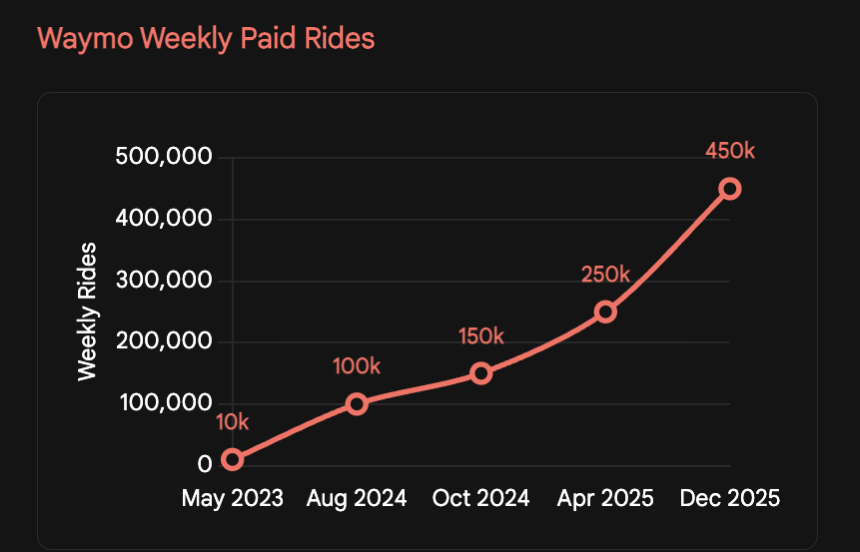
The Q3 '25 numbers... gross bookings are up 21% to nearly $50B. That doesn't look like a dying business. In fact, they are reaccelerating despite Waymo marketshare being the largest it has ever been in markets where it is not partnered with $UBER.
The logic of $UBER being the demand aggregator is very sound:
Utilization: Robots are expensive assets. You can't have them sitting idle. This will be tough for bears to understand 🤣 but the demand for ride-sharing fluctuates A LOT. Relying on AV networks would likely mean there would be an oversupply of AV's a majority of the time (and most of the time these depreciating assets will be fighting each other to fill demand during a majority of the non-peak hours)
How does Uber fix this issue? Uber uses AV's for the predictable base demand and human drivers for the peaks (rush hour, weird routes).
That's why Waymo partnered with them in Austin and Atlanta. Waymo gets instant volume/utilization without having majority of idle depreciating assets (wait what Uber network actually has value???). Uber keeps the customer interface.
They aren't getting replaced. They're becoming a bigger/better aggregator.
Another extremely large (and largely ignored) plot-hole in AV's dominating $UBER to consider is climate. AV's have only proven to work in sunbelt states (ideal climate conditions). They are beginning to map out in harsher climate cities but places like the mid-west during the winter would likely never work for AV's in the near future.
My last thought is Avride entering Texas (partnering with Uber in both delivery and rideshare) is pretty much the last nail in the coffin for the thesis that AV's are killing Uber. Before when it was just TSLA and waymo in the market there could have been a chance of a duopoly squeezing Uber out. With Avride plugging into the Uber network along with other future OEM projects that will come online very soon it is very clear that the market WILL be fragmented for most use-cases. It doesn't matter if waymo is better at inter-city travel because a majority of use-cases all AV's will be a commodity. The fragmented market essentially takes the the AV issue out of the equation and makes Uber the dominant demand aggregator that it already is.
I tried to keep it simple for $UBER bears but prove me wrong that none of these hold. Please, I am a reasonable/logical person 🤣
NEW: Uber is preparing to take on Waymo in San Francisco with driverless rides next year
Road testing of the vehicles — Lucid Gravity SUVs outfitted with Nuro’s self-driving technology — is currently underway with drivers manually operating them
Nuro still needs to obtain driverless testing and passenger service permits in SF from DMV and CPUC
https://t.co/kha8ZS7gOE
Every trip, every delivery, every day: we’re building @Uber to be the best platform for flexible work. Today at Only On Uber we announced new tools to make earning easier, safer, and more fair. Read more → https://t.co/1Hfilsl1tL