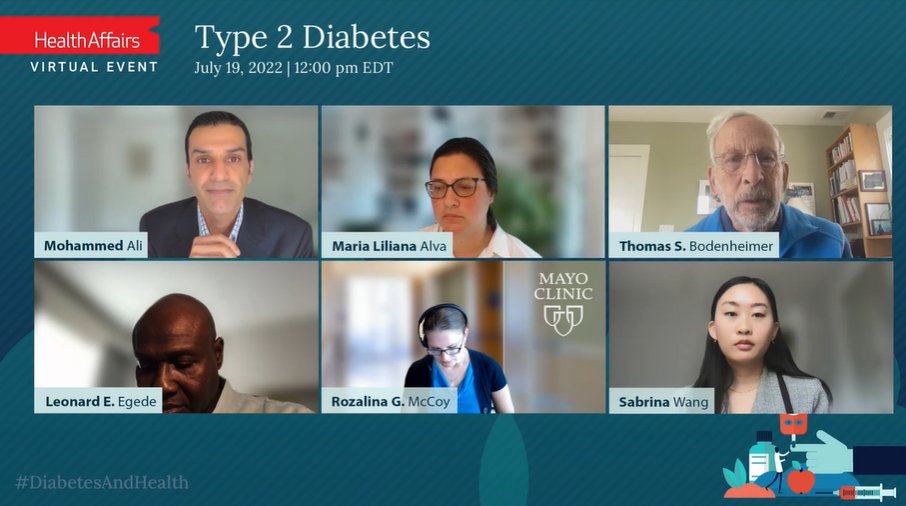
my first ever (!!) first author paper—out today in @Health_Affairs. really grateful for my coauthors and especially my PI, Dr. Elbert Huang, for his mentorship and support.
@ChronicDiseaseU@UChiPritzker
6️⃣@UChicago's S. Wang + coauthors analyze alt. payment models for diabetes care. “The fragmented US health care system, w/ its myriad payers & payment models, is structurally at odds w/ the need for care continuity for chronic conditions such as diabetes.” https://t.co/pMOxGi50QU
"In this uncertain environment, wage equality within hospitals -- measured by the ratio between what employees and executives are paid -- matters more than ever."
Read the #OpEd from researcher and resident physician in surgery @brinawang at:
https://t.co/Q2r73XJkWO
so full circle that the research paper i worked on throughout med school got published on my first day of internship 🙂
our work on social factors, race, and diabetes progression now in the Journal of Racial & Ethnic Health Disparities: https://t.co/lHoMdHy4Sk
this week, I've had the opportunity to present my research at both #asc2024 and at community org @claretiancares headquarters. feeling honored, grateful, and reminded of the importance of multisector solutions in achieving equity in trauma care.
back on youtube today talking about a topic near & dear to my heart: how to write an op-ed!
storytelling is one important way to advocate for the social changes we believe in -- hope this is a useful resource for those of you with something to say 😌
https://t.co/4EbJrOyuTq
i truly hope that these blows to the fragile diversity, access, inclusion frame encourage students, staff & faculty to organize for more transformational education, like open enrollment, free tuition, dropping standardized tests, community control mechanisms over private boards
Sharing this piece I wrote in 2020 for Abolition for the People explaining why Black cops don’t make policing any less anti-Black.
In fact Black cops & politicians often act to reify systemic racism while claiming their presence indicates racism is over
https://t.co/UN9Z9ec3f3
with rising rates of gun violence affecting our nation’s adolescents, “stop the bleed” training can be life-saving.
more info on the training and how to complete it (takes just 30 min!) in the piece below—give it a read!!
Grateful to have written this piece for the @Suntimes especially in light of recent tragedies to strike our CPS community.
Youth need to be trained on how to respond to life-threatening emergencies they witness https://t.co/1vXIL3pTsp
Outstanding @UChiPritzker student @SymphonyFletch presenting her research on provider knowledge of our violence recovery programs at the National Research Conference on Firearm Injury Prevention! @uchicagosurgery@UChicagoEM
Happening Tomorrow! The July issue of @Health_Affairs is devoted to papers discussing how we can prevent diabetes & improve care & outcomes for patients. Join us for a discussion with the authors and analysts as they present their work. #DiabetesAndHealth https://t.co/uIkttw8sqj
as we write: “the fragmented U.S. healthcare system, with its myriad payers & payment models, is structurally at odds with the need for care continuity.” we maintain that for diabetes & other chronic conditions, greater system level alignment is needed to truly improve outcomes.
my first ever (!!) first author paper—out today in @Health_Affairs. really grateful for my coauthors and especially my PI, Dr. Elbert Huang, for his mentorship and support.
@ChronicDiseaseU@UChiPritzker
6️⃣@UChicago's S. Wang + coauthors analyze alt. payment models for diabetes care. “The fragmented US health care system, w/ its myriad payers & payment models, is structurally at odds w/ the need for care continuity for chronic conditions such as diabetes.” https://t.co/pMOxGi50QU
—finding that most improvements have been modest and restricted to process measures (eg A1c testing) rather than outcomes (eg A1c control.) we should consider these results as we continue to innovate in the pursuit of a more effective, accessible, and equitablehealthcare system.
to force people to carry/deliver unwanted pregnancies undermines the beauty and sacrifice of parenthood. the decision to take on bodily trauma in order to create life is so meaningful. without roe, trauma is forced onto the body instead, and that meaning is completely gone. 5/5
i’ve spent the last two weeks on my OB-GYN rotation, helping deliver babies and care for patients with high risk pregnancies.
i’ve always been pro-choice, but these two weeks have made today’s decision overturning Roe v. Wade feel even more chilling. 1/
this illustrates the sacrifice of parenthood. 25 yrs ago, my mom—like many of my patients—laid down and allowed herself be cut open so i could come into the world and live. there is so much beauty in that: in wanting a child so much that you’re willing to face all the risks. 4/