Based in @UQpsych (Brisbane, Australia).
Directed by @jesstaubert
We study the mechanisms that underlie social intelligence in humans and other animals.
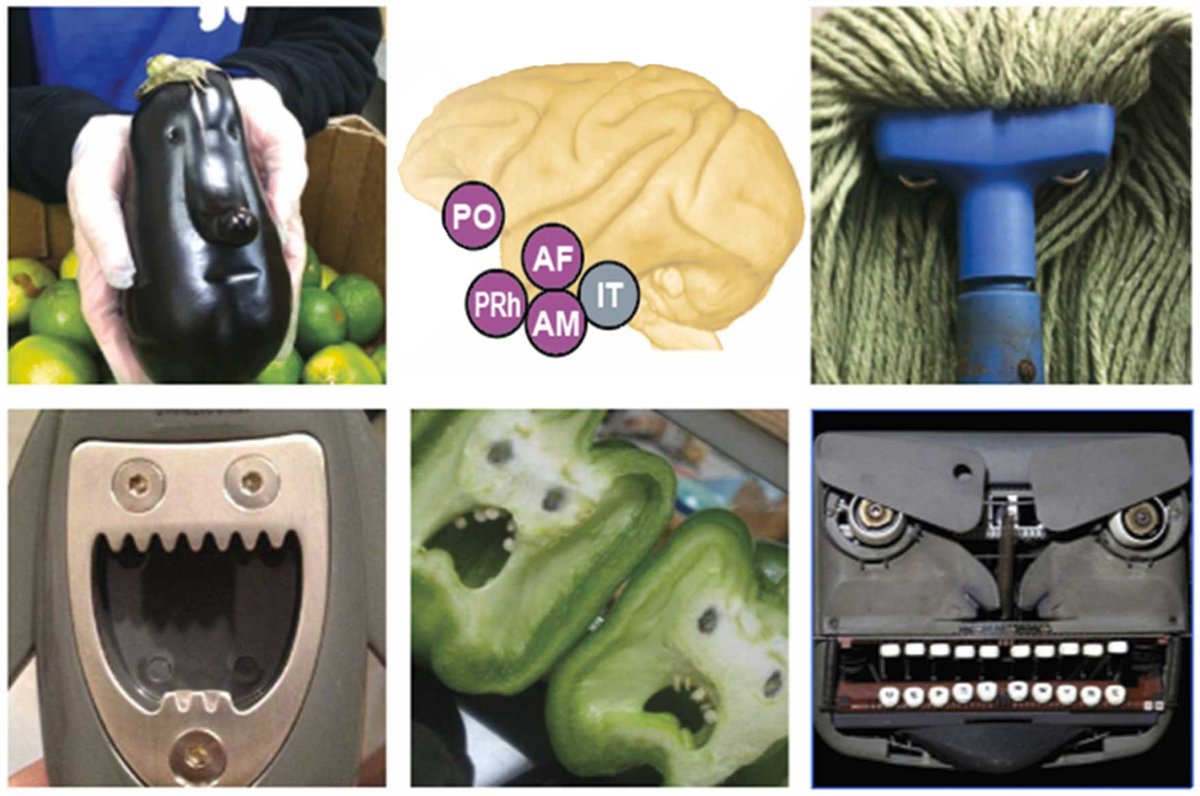
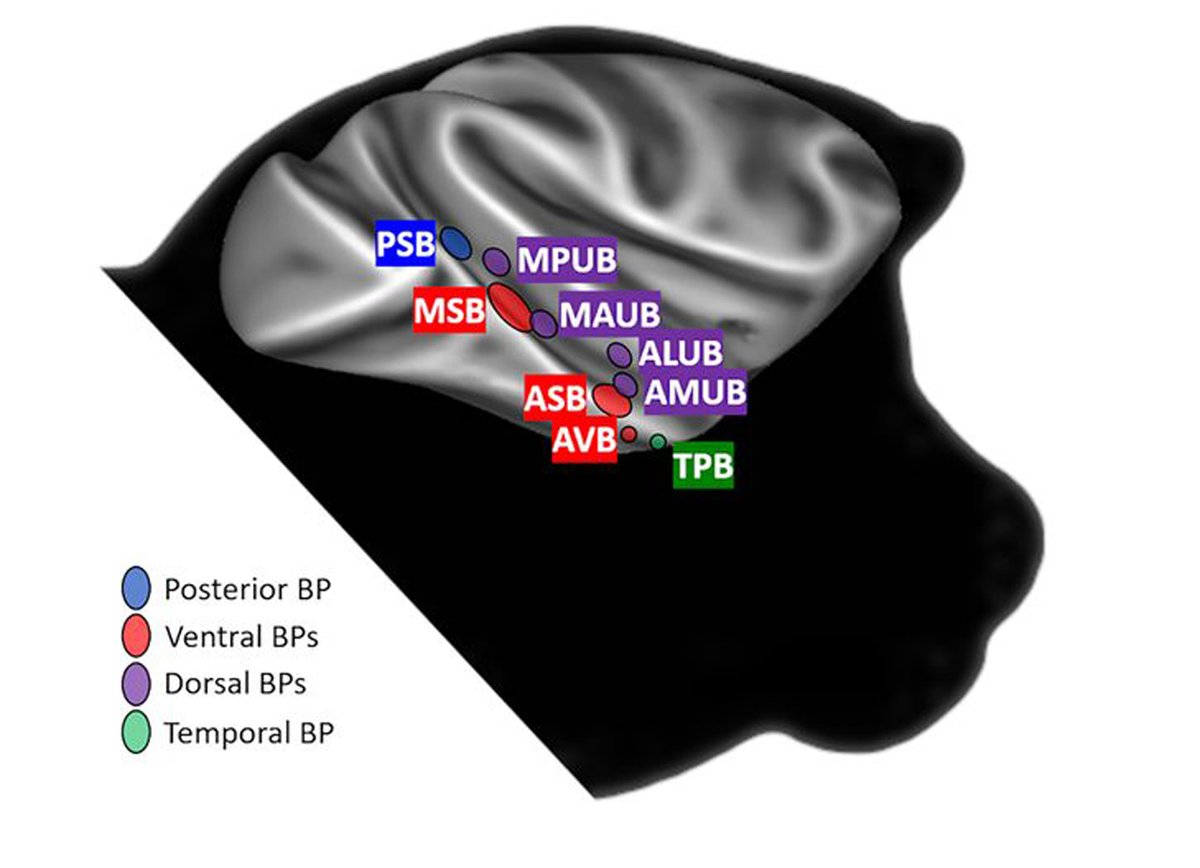
Here, @koyanokw et al. show that 🐒 neurons in certain face patches barely react to pareidolia (illusory faces in objects).
https://t.co/rqwaeLQ5qs
To those who have argued that the brain "obviously" processes stimuli that look like faces as faces—it's not that simple.
Are we sensitive to pain-related facial expressions?
Chris Buckland is interested in what genuine pain looks like and whether its recognition elicits approach or avoidance behaviors from observers.
His first paper looks at injury-related expressions:
https://t.co/8yWUIfavSK
New research by @_EleanorMoses et al. isolates the nasal hemiretina via a monocular viewing paradigm to probe the subcortical pathway's visual sensitivity. A nuanced look at how our brain detects fear! 🧠👀@UQpsych
https://t.co/U6XmfGao8M
🎉 Huge congratulations to Zihe Wei on winning a People’s Choice Award at HDR Day @UQpsych! 🏆 Her presentation on the neural coding of faces for social perception captivated the audience and highlighted the exciting research she's been doing! Well done, Zihe! 🌟 #HDRDay
Every year the UQ school of psychology challenges students (and staff) to transform their lecture material and research topics into art. Today, we showcased nearly 50 entries at the Psychology As Art Exhibition.
@UQPsych
Congratulations to all the winners!
I am very pleased to announce that @lina_teichmann is visiting @UQPsych this week and will be presenting her latest scientific discoveries in a special talk tomorrow at 10AM. Please join us!
BIG congratulations to recent graduates, @_EleanorMoses and Linda!
Its been such a privilege to have you working in the @Brisbrain_lab during your pre-doctoral studies and we are collectively so proud of everything you have accomplished.
By going "beyond faces" they unearthed preliminary evidence that the amygdala does not encode putative stimulus categories or visual properties like the visual cortex. Instead, the amygdala may be encoding stimulus meaning, which *will* vary across individual subjects.
Previous research has focused on understanding how the primate amygdala responds to face stimuli. In this new paper, @jesstaubert@susanwardle Amanda Patterson and @Chris_I_Baker examined its larger response profile using NHP fMRI.
https://t.co/Eny3x0hg2j
How many research papers have content that is fascinating to both researchers and toddlers? Some of the stimuli in this face pareidolia study are top-tier 😀
A great eye-tracking study from @jesstaubert and colleagues, using the TRACKPixx3 and VIEWPixx!
This is a fun collab with @OttmarLipp where we looked at socio-emotional biases in the perception of #facepareidolia
The upshot is that we categorise happy illusory expressions faster when the illusory face is perceived as feminine.
https://t.co/9TfVdbob20
Does #facepareidolia reflect a failed prediction on the part of a detection mechanism?
In a new @SciReports paper, @BlakeSaurels and @nataliepeluso report a bias towards #facepareidolia in the periphery - a result consistent with the detection hypothesis.
https://t.co/QUmrdZcH38
@_EleanorMoses has published her research investigating the impact of oxytocin administration on the neural processing of visual stimuli that differ in social relevance and emotional valence
@nicole__nelson@jesstaubert and Alan Pegna
https://t.co/ZjfA1pGEdx
Sustained looking at faces at 5 months of age is associated with socio-communicative skills in the second year of life #OpenAccess https://t.co/wKiqpZeG2X
First experiment from my PhD!
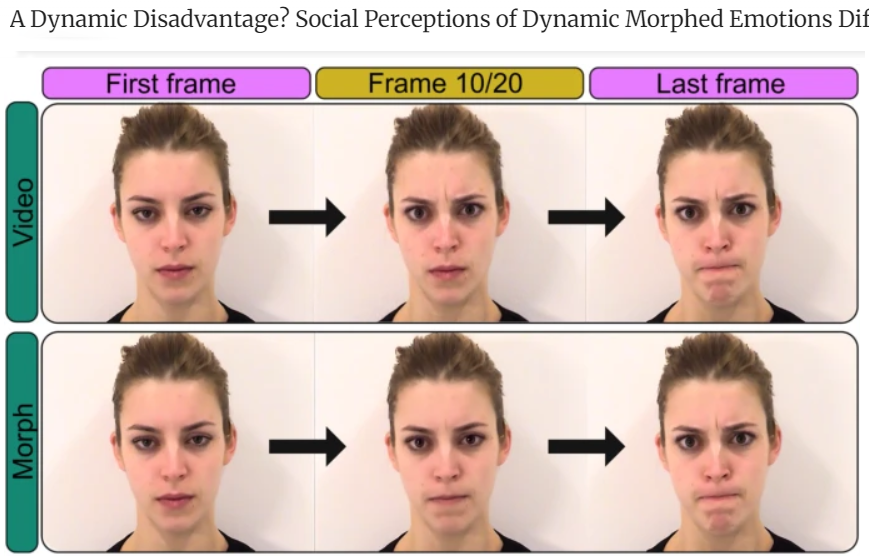
Dynamic faces are great, but videos are a nightmare for experimental control, so many of us use dynamic morphs of photos.
Except we showed that if you can’t use videos with natural face motion, you might be better off using static faces 😬
https://t.co/FJFDTSCM1p
Today our lab has to farewell @GBStuartt because she is moving on to bigger and better things.
Greta has played many roles in the lab over the last few years. This preprint showcases just a few of her research skills and her interest in #facepareidolia: https://t.co/6OwkDeqnrd
Are representations in visual cortex organised according to stimulus features or affordances?
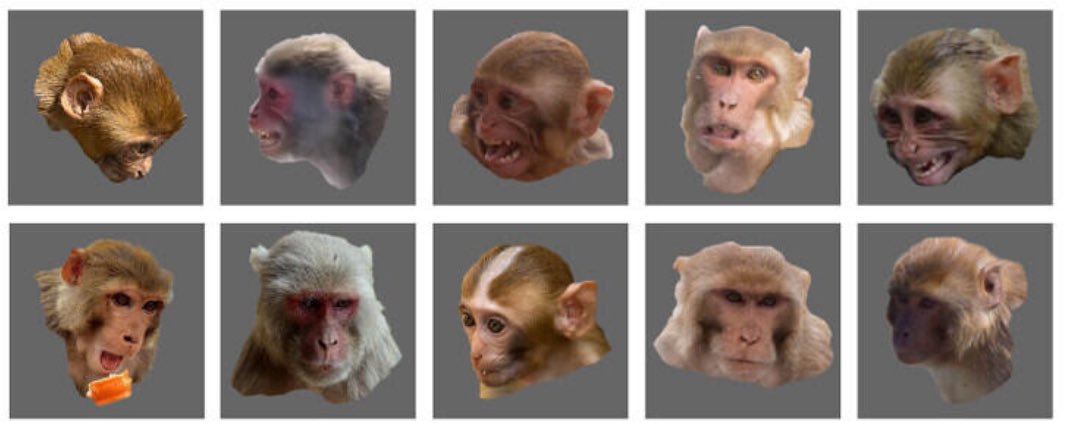
Here, @ShrutiJapee and I measured responses to highly variable facial expressions in 🐵
The upshot: exact visual features were not as important as we thought!
https://t.co/P2IQyO1S4v