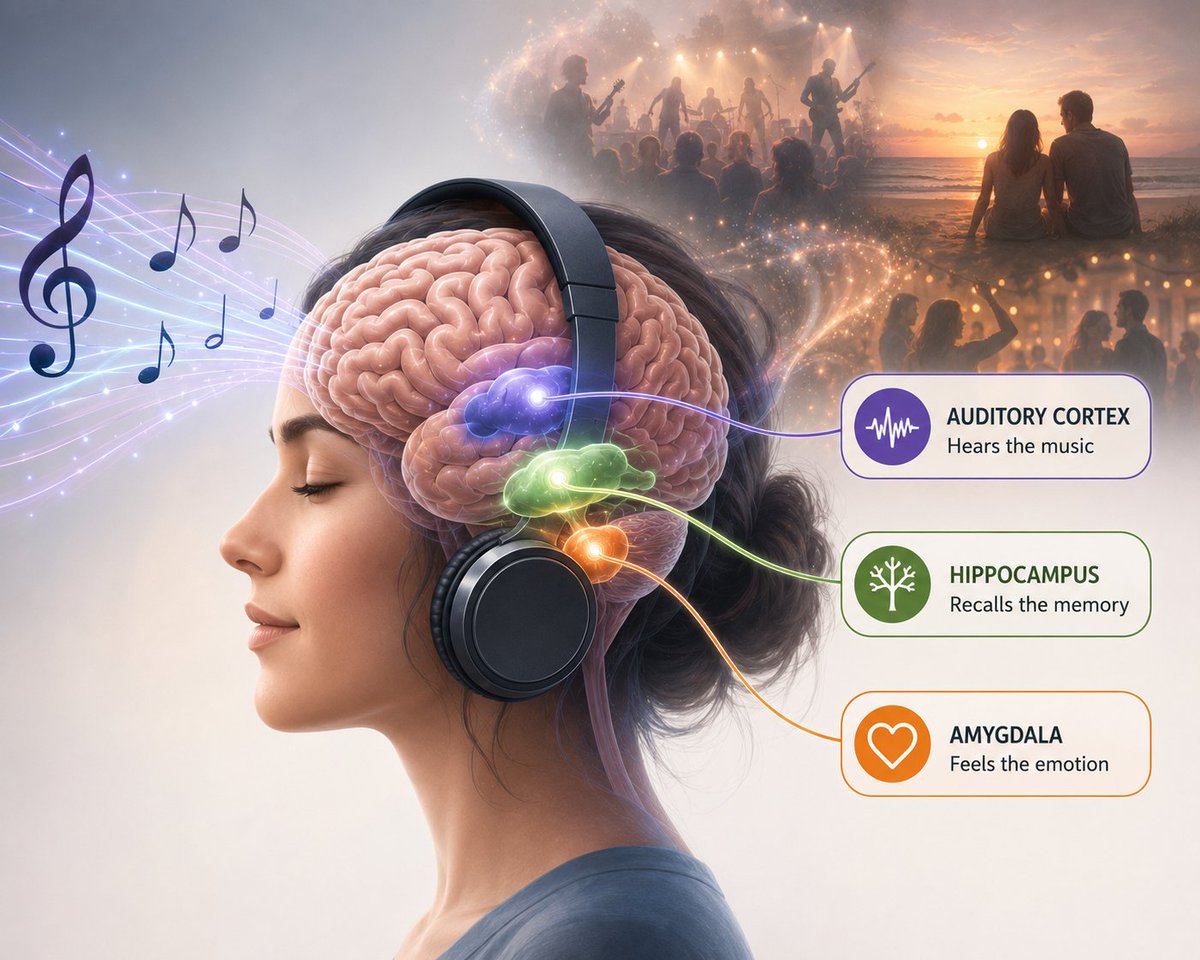
Inside the Brain & Spine - Ever wondered why one song can instantly take you back in time? The auditory cortex hears the music, the hippocampus recalls the memory, and the amygdala brings back the emotion. The brain doesn't just remember our lives - it remembers how they felt!
What do ALIF & TLIF have in common? What can a baby's laughter tell us about the developing brain?
Find out in our latest newsletter, featuring a guide to lumbar fusion surgery, a tribute to Prof Richard Scolyer & more fascinating brain & spine facts.
https://t.co/0bA5ifyJv3
International Scoliosis Awareness Day highlights the importance of recognising scoliosis early. Often developing during childhood & adolescence, it can be easy to miss. Greater awareness leads to earlier assessment, treatment & improved outcomes. Early detection matters.
US researchers have reported promising phase 1 clinical trial results for a personalised DNA vaccine for GBM. The findings add to growing evidence that personalised vaccines and cell therapies may have a role in future glioblastoma treatment.
Read more: https://t.co/M40MXNIFX7
Inside the Brain & Spine – the door slams, you jump! This startle reflex is a brainstem response that happens before conscious thought, briefly preparing the body for “fight or flight”. In babies, this is the Moro reflex, which fades by 4–6 months. The brain - always on alert!
Inside the Brain & Spine – driving on autopilot. With repetition, the brain turns driving into a learned motor routine. The basal ganglia and cerebellum help automate steering, braking and coordination, while the brain constantly scans for hazards, reacting in milliseconds.
World Brain Tumour Day: Around 300,000 people are diagnosed with brain and nervous system tumours each year. Many are found too late, so early diagnosis matters. See you GP if something feels off. Treatments are improving & early detection gives the best chance.
Inside the Brain & Spine: The body is about 60% water, so even a 1–2% drop can hit your brain hard. That tiny change disrupts fluid balance, causing brain fog, slower reactions & poor focus. Dehydration can even temporarily shrink the brain! The fix is simple - rehydrate.
Scientists have managed to reverse memory loss in dementia‑like mice by restoring the brain’s energy factories - the mitochondria. It’s early research, but it points to a bold new path for future Alzheimer’s treatments. Read more: https://t.co/tgvfiknLDd
Inside the Brain & Spine: Pain isn’t just felt in the body - it’s interpreted by the brain. Signals travel through the spinal cord to the brain, which works out where pain is, how intense it is & how it feels. Sharp, dull, stabbing or even from a missing limb - thanks brain!
Do you have questions about brain cancer? Join @IconCancerCtre for a free online Q&A session in an open, supportive environment. Our own neurosurgical nurse practitioner, Vivien Biggs, is ready to answer your questions. Tonight at 6:30pm (AEST). https://t.co/aXhihvetlr
Inside the Brain & Spine: Referred pain is when pain is felt somewhere other than its true source — like a spinal nerve issue causing arm or leg pain. It happens because nerve pathways overlap. Treatment targets the underlying cause, not just the symptoms.
Today is World Ankylosing Spondylitis Awareness Day. This chronic inflammatory condition affects the spine causes ongoing pain, stiffness, fatigue and reduced mobility. A moment to recognise those living with this often misunderstood condition. Learn more: https://t.co/ddga7oWU4P
What happens when you say yes to surgery? Do you know whay myelopathy is? And just how do you do keep your balance? You can find the answers to these questions and more in our latest newsletter!
https://t.co/DqjaeykgDS
Exercise is good for the body...and the brain too! It boosts chemicals that support memory & learning and even help grow new neurons. The result? Better focus, mood & sharper thinking. Moderate aerobic exercise is ideal - but every bit counts. Read more: https://t.co/klyDM40ytI
Inside the Brain & Spine — Walking feels effortless but your spinal cord is doing the real work. Central Pattern Generators in the lower spine create the rhythm of stepping & handle timing, coordination & balance once the brain says “go.” A complex system running with every step!
Tonight we Spark the Night for the 12 million people worldwide living with Parkinson’s. Brisbane landmarks will glow blue in honour of the 150,000 Australians affected — a reminder that no one walks this journey alone. Let’s shine together and #SparkTheNight.
Inside the brain & spine: You step up to speak. The crowd applauds. Your mind goes blank. It’s an amygdala hijack! Your brain’s fear centre overrides rational thinking, triggering fight, flight or freeze. Slow breaths, a sip of water, can help reset. It's a dramatic pause…right?
Patient Notice - 8 & 9 April. Please allow extra travel time for your appointment. Thompson St (from Edmondstone Rd to Murray St) will be closed due to Energex works. Our car park can be accessed via Abbotsford Rd or the northern end of Thompson St. Thanks for your patience.