@AbiyAhmedAli@AdanechAbiebie@ShimelisAbdisa May be one day your kids might be end up like this for the crime and unprecedented corruption you committed to the Ethiopian people! Our struggle will not be faded till you evil creatures face the wrath of the Ethiopian ppl justice!
This is what Ethiopia looks like today. The same country that opened its territory to the UAE despite the killing of Sudanese civilians and threatened Eritrea with war. FANO has captured hundreds of Ethiopian government troops, and this has been going on for months, not just today.
Ethiopia: Reports that several senior ENDF colonels have been killed across the Amhara Region during Fano counter-offensives, including Colonel Abera who was killed by Tewodrose commands of the Amhara Fano National Movement
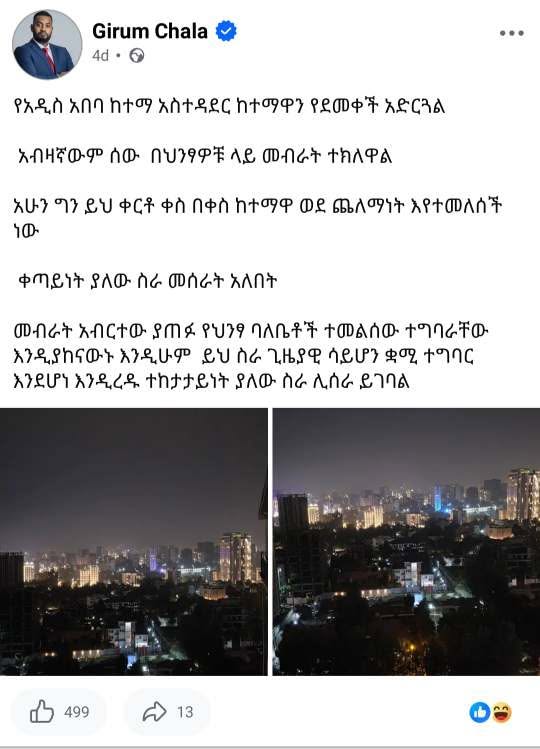
Girum Chala, if exposing thieves like you, who displace Oromo farmers, steal their land, and then squander the proceeds on luxury cars and brag about it makes me a sellout, then I would wear that label with honor.
@AbiyAhmedAli the monster in chief who rein Ethiopia with terror & brutality has cost so many Ethiopians life just keep your power! Leave us alone and give Ethiopians relief you punk! Since you came to power Ethiopian social fabric destroyed millions died our diginity deminished!
HRF condemns Ethiopia’s sham June 1 general elections, which crowned dictator Abiy Ahmed and his Prosperity Party with a landslide victory following an electoral process void of genuine democratic competition and discredited by opposition boycotts, political repression, the exclusion of significant parts of the electorate, and a campaigning overwhelmingly skewed in favor of the incumbent.
@AbiyAhmedAli@ShimelisAbdisa@AdanechAbiebie you are such a psychopath, narcissist and a bunch of punk! Go ahead and jailed the entire Ethiopians since all of us hate you to the core!
Why #AbiyAhmed’s 2026 Vote is a Sham, a Coronation, and a Cruel Joke on the Ethiopian People
1. The election was not national in any meaningful sense. There was no voting in #Tigray, and large parts of #Amhara and #Oromia were affected by conflict and insecurity, excluding millions of Ethiopians from meaningful participation.
2. It was held under war, insurgency, and nationwide repression. This was not a normal election in a peaceful country. It took place in the middle of active conflict, shrinking civic space, and deep political fear.
3. The process was non-competitive by design. In dozens of constituencies, only Prosperity Party candidates were standing. That is not democratic competition; it is structural domination.
4. The real opposition was never allowed to compete freely. Opposition parties could not campaign openly, recruit and mobilize supporters freely, or even secure venues for public meetings. Harassment, arrests, licensing barriers, intimidation, and administrative obstruction shaped the political field long before election day.
4. The ruling party manufactured the appearance of pluralism. In some areas, it left selected constituencies uncontested, not to allow real competition, but to create the impression of a more diverse parliament without risking power.
5. Polling-day procedures were used to hide pre-election coercion. The issue was never whether some polling stations opened smoothly. The real issue was whether Ethiopians were offered a genuinely free, inclusive, and competitive national choice. They were not.
6. Independent media and civic space were systematically narrowed. The government muzzled independent media, harassed critics, and constrained public debate so there could be no meaningful or robust election.
7. Millions were effectively excluded. In more than half of Ethiopia, there were no real conditions for people to participate freely and safely. We are talking about millions and millions of citizens living under insecurity, fear, or outright exclusion.
8. The outcome was predictable from the start. This was never a real contest with uncertainty about the result. It was widely understood, both inside and outside Ethiopia, that Prosperity Party would dominate the outcome.
9. That is why so many observers and Ethiopians alike described it as a coronation. This was not a democratic mandate. It was a sham election staged to manufacture legitimacy for Abiy Ahmed’s authoritarian rule through electoral theatrics.
10. In many respects, it was even worse than the so-called elections under the EPRDF era. At least those were widely understood as authoritarian exercises. This one was carried out under war, territorial exclusion, nationwide repression, and an even narrower political space, while still trying to market itself as democratic progress.
===============
For more, please refer the following reports among others:
Reuters, June 21, 2026: Prosperity Party won 438 seats; no voting in Tigray; insecurity in Amhara and Oromia continued to shape the election.https://t.co/kn423glFOw
AP, June 21, 2026: Prosperity Party won 438 of 501 seats; 143 polling stations were disrupted by insecurity; Tigray was again excluded; critics said dissent was suppressed and the vote was not free or fair.https://t.co/JqKg6gFll5
CNN, late May 2026: Ethiopia was described as deeply divided, under violent ethnic conflict, speech restrictions, and crackdowns on dissent; observers called the vote a mere coronation.https://t.co/zbEUVMVd6V
Clingendael, May 2026: “Managed elections, unmanaged conflicts” — the elections were unlikely to be free and fair and could legitimize the government’s military-first approach.https://t.co/0jsAxRN0ky
Journal of Democracy, May 2026: the election was described as another sham election, with an “architecture of predetermination.”https://t.co/gTGozXgfJb