I didn't think today could get any better after Trump got his arse kicking, but here's a pathetic sniveling video of Tommy Robinson admitting what a pathetic arse wipe he really is.
And there's fuck all he can do except cry. A LOT🤣
@stuart_humour We’ve got previous We watched when we were relegated Those that still go (not me anymore) will b entitled to the success when it comes 🇳🇱
@itsskitime@jonmikesav8 He like the previous managers will leave under a cloud But it’s not them Certainly not all We need serious surgery as has been said b4 But the greedy cunts won’t go til this is just a carcass of a Football Club
@pierrestanley45@henrywinter Como plyd very and cld have won anyway But as a Utd fan l wasn’t impressed the way we plyd or the effort put in Respct to Como all the same Worthy winners
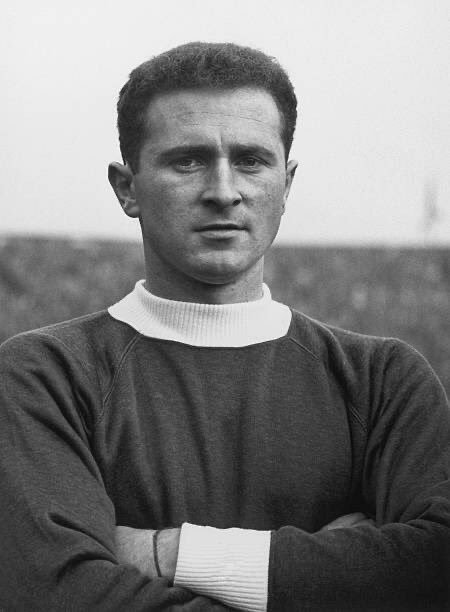
👹 Roger Byrne 1949
Position: full-back
Roger Byrne was the captain and a key player for Manchester United during the 1950s, playing an instrumental role in the rise of the club under the legendary manager Sir Matt Busby. Known for his leadership, tactical intelligence, and consistency, Byrne was one of the finest defenders of his generation. He played as a left-back, although he had the versatility to operate across the defensive line, showcasing his adaptability and footballing intelligence.
Byrne was a central figure in Busby's Babes, the young and talented team that dominated English football in the mid-1950s. He captained Manchester United to two First Division titles in 1956 and 1957, becoming a symbol of the club's dynamic and attacking football. His leadership on the field was crucial in guiding the team, and he was known for his strong positional sense and ability to read the game.
Despite being a defender, Byrne was heavily involved in United's attacking play, often pushing forward to support the attack, which was an innovative style for a full-back at the time. His ability to initiate counter-attacks and his calmness under pressure made him an indispensable part of the team.
Munich Air Disaster:
Tragically, Roger Byrne's life and career were cut short in the Munich Air Disaster on February 6, 1958, just two days before his 29th birthday. Byrne, along with several of his teammates, was among the 23 people who lost their lives when the plane carrying Manchester United's team, staff, and journalists crashed on its return from a European Cup match in Belgrade. His death was a devastating blow to the club and the football world.
Disgust of Trump Reaches New Levels in Europe
A gilded statue of Donald Trump titled "Orange Plague," also known as "King of Injustice," is on display this week inside the European Parliament in Strasbourg.
Danish artist Jens Galschiøt was invited to show the work by Danish MEP Per Clausen. The copper sculpture, covered in 23-karat gold leaf and standing about 2.6 meters (8.5 feet), depicts a naked Trump seated on the shoulders of a much smaller, clothed man. He holds the scales of justice in one hand and a golf club in the other, beside a golf ball shaped like the Earth.
The plinth reads: "I am sitting on the back of a man. He is sinking under my burden. I will do anything to help him. Except stepping down from his back."
Galschiøt says the piece was inspired by Hans Christian Andersen's "The Emperor's New Clothes," the story of a vain ruler whose subjects are too afraid to tell him he is naked. "Trump represents one of the greatest threats to the rules-based world order, democratic values, and our common effort to solve the climate crisis," he said. "We must address this issue and stand together against such destructive influence."
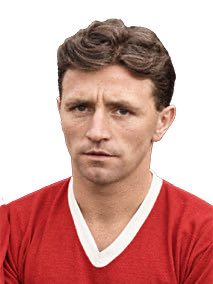
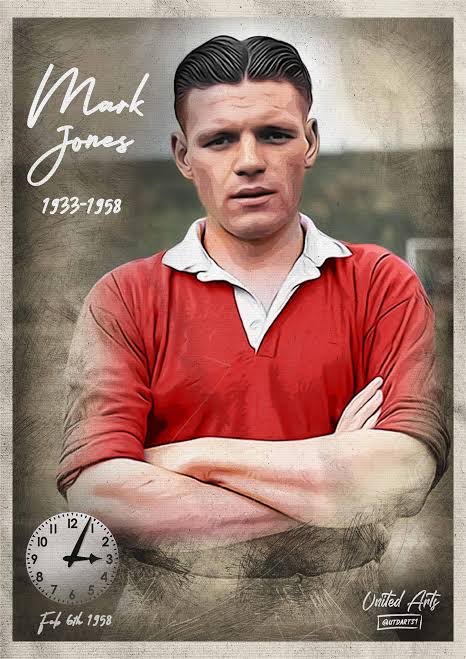
👹 On October 7, 1950, seventeen-year-old center-half Mark Jones stepped onto the Old Trafford pitch to make his official debut for Manchester United.
Handed his start by legendary manager Matt Busby after a youth recommendation from Jimmy Murphy, Jones filled in seamlessly during a 3–1 victory against Sheffield Wednesday.
Born in Barnsley, the physical yet technically gifted defender had joined United as an apprentice at just fifteen. This debut marked the quiet arrival of a foundational player who would go on to win back-to-back First Division championships in 1956 and 1957. Amassing 121 appearances for the club, Jones became an integral part of the fabled "Busby Babes" era before his life was tragically cut short in the 1958 Munich air disaster.